
Creating Wildlife-Friendly Gardens in Small Urban Spaces
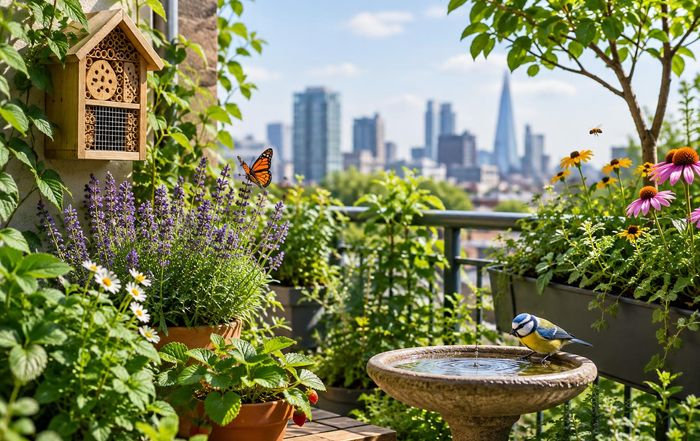
A small garden, balcony, courtyard, or even a narrow strip beside a building can do far more for nature than many people assume. In dense cities, tiny green spaces often become stepping-stones for pollinators, birds, and beneficial insects moving through an otherwise hard landscape. They can also cool overheated streets, absorb rain, and make daily life feel a little less sealed off from the natural world. The challenge is not size so much as design: a compact space has to work harder, and every plant, pot, and surface needs to earn its place. That is why wildlife-friendly gardening in urban settings is less about creating a perfect miniature meadow and more about making smart, layered choices that provide food, water, shelter, and seasonal continuity.
The approach is also practical. Biodiversity is under pressure globally, and cities are increasingly important in conservation because they concentrate people, habitat loss, and opportunity in the same place. Organizations such as the UN Environment Programme, Convention on Biological Diversity, and IUCN have all emphasized the importance of protecting and restoring nature in everyday environments, not only in remote reserves. For urban householders, that means a balcony planter or a postage-stamp yard can be more than decorative. It can function as part of a wider ecological network, especially when it is connected to nearby green roofs, street trees, parks, and community plots. For readers interested in the broader idea of urban nature, Eco Natur's guides to biodiversity and wildlife provide useful context.
Start with what the space can actually support
The most successful wildlife-friendly urban gardens begin with a realistic assessment of light, wind, moisture, and access. A south-facing balcony in a windy high-rise behaves very differently from a shaded courtyard or a small front yard hemmed in by walls. Wildlife value depends on matching plants to those conditions rather than forcing a style that looks good in photographs but struggles in practice. In small spaces, stressed plants usually mean fewer flowers, less nectar, and less cover for insects and birds. It is better to choose a limited number of species that will thrive than to cram in a large assortment that needs constant rescue.
This is also where design discipline matters. A compact garden can feel richer when it includes vertical layers, repeated plant groupings, and a few structural features rather than a clutter of unrelated pots. Climbers on trellises, hanging baskets, raised containers, and small shrubs can create the impression of depth without taking much floor area. If you are planning a more intentional layout, Eco Natur's design and sustainable living sections are useful companions because they connect aesthetics with low-impact everyday choices. The basic rule is simple: build a space that works with the site, not against it.
Plant for food across the seasons
Wildlife-friendly planting is most effective when it offers something at different times of year. Insects need nectar and pollen over long periods, not just a brief burst of flowers in spring. Birds need berries, seeds, and shelter, especially in colder months or during migration. In a small garden, this usually means choosing a compact mix of native or well-adapted plants with staggered bloom times, rather than relying on a single showy display. Native plants are often valuable because local insects have evolved alongside them, but non-invasive nectar-rich ornamentals can also help if they are carefully chosen and not ecologically risky.
The most useful planting strategy is often to think in functions. Groundcover can suppress weeds and keep soil cooler. Herbs such as thyme, oregano, and chives can provide flowers for pollinators while also serving the kitchen. Small flowering shrubs can offer structure, nesting cover, and seasonal interest. Even a few containers of lavender, salvia, or heather can support bees and butterflies if the conditions suit them. For gardeners who want to connect food growing with habitat, Eco Natur's organic food and lifestyle pages align well with the same low-chemical, high-diversity mindset. The aim is to make the garden productive for wildlife without turning it into a rigid collection of species chosen only for human convenience.
Make water and shelter part of the design
Many urban gardens provide flowers but overlook the basics of survival. Water is one of the simplest and most effective additions, and it does not require a pond. A shallow dish with clean water, pebbles for landing spots, or a small recirculating basin can help bees, birds, and other visitors, especially in hot weather. The key is safety and maintenance: water should be shallow enough to prevent drowning, refreshed regularly, and positioned where it is not likely to become stagnant or mosquito-prone. In very small spaces, even a careful saucer beneath a pot can serve as a temporary drinking point if it is managed properly.
Shelter matters just as much. In the wild, wildlife needs places to hide from predators, rest, breed, and overwinter. Urban gardens can mimic some of that complexity with dense planting, climbers, twig piles, log sections, and small gaps left deliberately undisturbed. A tidy garden is not always a wildlife-friendly one. Hollow stems, seed heads, and leaf litter can support insects through winter, while evergreen cover can help birds and invertebrates shelter from wind and rain. If you are trying to reduce waste while gardening, Eco Natur's zero-waste and recycling pages offer related ideas for reusing materials in practical ways, such as repurposed containers or compostable garden debris.
Reduce harm before adding features
A wildlife-friendly garden is not just about what gets added; it is also about what gets removed or avoided. Pesticides, herbicides, and synthetic fertilizers can undermine the very species the garden is meant to support. Even products marketed as "natural" can be harmful if they are overused or applied without care. In a small urban space, chemical drift and runoff matter because there is less room for dilution and less distance from neighboring plants, drains, and shared surfaces. Choosing low-input methods is therefore both an ecological and a neighborhood consideration.
The same logic applies to materials. Plastic planters, synthetic weed fabrics, and decorative features that shed fragments over time can create avoidable waste. Durable terracotta, metal, untreated wood, and recycled materials often age better and are easier to integrate into a long-term planting scheme. For a broader view of low-impact choices, Eco Natur's plastic-free coverage is relevant, especially for readers trying to reduce disposable gardening habits. The broader point is that wildlife gardening works best when it is part of a wider sustainability practice rather than a one-off aesthetic project.
Think in terms of connections, not just square footage
Small urban gardens become more valuable when they are linked to nearby habitat. A balcony with flowering containers may not seem significant on its own, but it can be part of a chain of nectar sources across a neighborhood. The same is true for front gardens, window boxes, schoolyards, and shared courtyards. This is why city greening programs often focus on networks rather than isolated plots: wildlife moves through patches, and a series of modest spaces can matter more than one highly manicured site. The idea is familiar in conservation science and increasingly important in urban planning, where fragmented habitat is one of the main barriers to biodiversity.
For home gardeners, that means the local context matters. A space in London, Toronto, Berlin, or Sydney may attract different species and face different climate pressures, but the design logic is similar: provide continuity, avoid sterile surfaces, and leave room for spontaneous life. In wetter climates, drainage and fungal pressure become important; in hotter regions, shade and drought tolerance are central. In all cases, the best gardens are adaptable. Readers who want a wider environmental lens may also find Eco Natur's sustainability and global pages helpful for connecting individual choices to larger environmental systems.
Keep maintenance gentle and seasonal
The maintenance style of a wildlife-friendly garden is different from the maintenance style of a display garden. Regular attention is still needed, but the goal is to guide rather than control. Deadheading every flower, clearing every leaf, and trimming every stem can reduce habitat value. Instead, it helps to leave some seed heads standing, delay major cutbacks until late winter or early spring, and accept a certain amount of natural messiness. That does not mean neglect. It means understanding that the "untidy" parts of a garden may be doing important ecological work.
Seasonal observation is especially useful in small spaces because changes are easy to notice. Which plants are most visited by bees? Where do birds perch? Which corners dry out first? Which containers stay productive longest? Those observations can shape future decisions far better than generic advice. Over time, a small urban garden becomes a local experiment in microclimate, species preference, and practical resilience. It also becomes easier to maintain when the planting palette is narrowed to species that genuinely suit the site. That is often the difference between a garden that looks wildlife-friendly for a month and one that supports life year after year.
A small space can still be ecologically meaningful
The appeal of wildlife-friendly gardening in urban areas is that it turns limited space into something active and reciprocal. Instead of treating a balcony, courtyard, or tiny yard as a decorative leftover, the gardener treats it as habitat. That shift changes the design brief entirely. Flowers become food, containers become microhabitats, and maintenance becomes a form of stewardship. The result may not resemble a traditional garden, but it can be richer, more resilient, and more useful to the living world around it.
For many people, the most important lesson is that ecological value does not depend on scale alone. A well-chosen cluster of plants, a source of water, a few sheltered corners, and a refusal to overmanage can make a real difference in the middle of a city. That is especially true when many small efforts are happening at once. A single garden may be modest; a neighborhood full of them can be transformative.
