
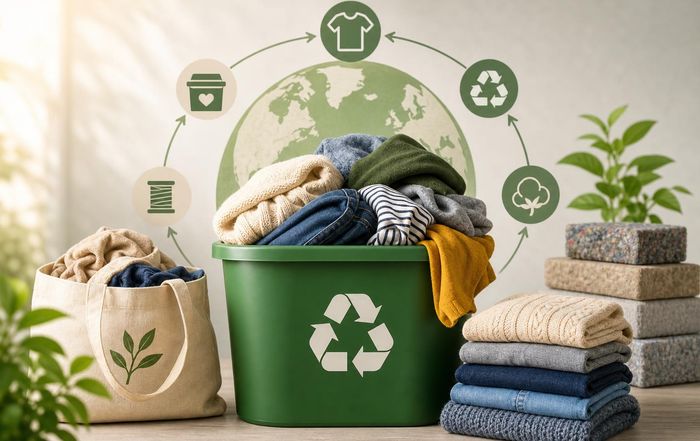
How Textile Collection Programs Support Material Reuse
A New Chapter for Clothing in the Circular Economy
Across the world, clothing and household textiles are moving from being disposable commodities to valuable resources within a circular economy. As consumers, policymakers and businesses confront the environmental impacts of fashion, textile collection programs have emerged as one of the most practical and scalable tools for keeping materials in use for longer, reducing waste and supporting the transition to more sustainable living. For readers visiting today, who are already familiar with concepts like sustainable living and zero waste, textile collection is a natural extension of the desire to live more lightly on the planet while still enjoying comfort, style and quality.
In many regions, from North America and Europe to parts of Asia, Africa and South America, textile collection points in neighborhoods, retail stores and municipal recycling centers have become increasingly visible. These programs, operated by a mix of municipalities, non-profit organizations and private companies, are reshaping how households think about clothing at the end of its life. Instead of being thrown away, garments, linens and shoes can be sorted, reused, repaired or recycled, creating environmental, social and economic benefits that reach far beyond the donation bin.
Why Textile Waste Matters
The scale of global textile waste is substantial and has been documented by organizations such as the Ellen MacArthur Foundation, the United Nations Environment Programme (UNEP) and the European Environment Agency (EEA). Research from the Ellen MacArthur Foundation's "A New Textiles Economy" initiative explains that the equivalent of a truckload of textiles is landfilled or incinerated every second worldwide. UNEP has highlighted that the fashion industry is responsible for significant greenhouse gas emissions, water consumption and pollution, as well as microplastic release from synthetic fibers into rivers and oceans. Readers can explore these issues in more detail through resources from the Ellen MacArthur Foundation and UNEP's Sustainable Fashion pages.
In the United States, the U.S. Environmental Protection Agency (EPA) has estimated that textiles make up a notable share of municipal solid waste, with millions of tons discarded each year, even though a large portion is suitable for reuse or recycling. Similar patterns have been reported by the UK's Waste and Resources Action Programme (WRAP), which has studied clothing lifecycles in the United Kingdom, and by the EEA in its analyses of textile flows within the European Union. While specific figures vary by source and year, multiple datasets converge on the conclusion that only a fraction of textiles are currently collected for reuse or recycling, leaving vast room for improvement.
For an audience concerned with sustainability, this waste is not only an environmental issue but also a missed opportunity. Textile production requires land, water, energy and chemicals; it depends on agricultural systems for cotton and other fibers, and on petrochemicals for synthetics. When garments are discarded prematurely, all of those inputs are lost. Textile collection programs intervene at this critical point, offering a pathway for those resources to be recaptured and revalorized.
How Textile Collection Programs Work in Practice
Although the details differ from country to country, most textile collection systems share a similar architecture. Households deposit unwanted clothing, shoes, household linens and sometimes accessories into designated containers or bring them to staffed drop-off locations. These may be operated by municipalities, charities such as Oxfam, Goodwill Industries or the Salvation Army, or by specialized textile recyclers and fashion retailers. In many European cities, for example, textile containers managed by non-profit organizations or contracted companies are a standard part of the urban landscape, while in the United States and Canada, donation centers and retail take-back programs are more common.
Once collected, textiles are transported to sorting facilities where trained workers grade items by quality, material type and potential end use. High-quality garments in good condition are prioritized for resale in local thrift shops, charity stores or second-hand boutiques. Items with minor defects may be directed to repair and refurbishment programs, which are growing in importance as repair becomes central to circular fashion strategies. Lower-grade textiles that cannot be easily resold are sorted for recycling, where they may be mechanically shredded into fibers for insulation, industrial rags or nonwoven materials, or in some cases chemically processed into new fibers, depending on the technology available and the material composition.
Organizations such as Textile Exchange and Fashion for Good have documented the expansion of mechanical and chemical recycling technologies, particularly for cotton and polyester, although these systems are still evolving and face technical and economic challenges. Readers interested in the technical side of fiber-to-fiber recycling can explore resources from Textile Exchange or the Global Fashion Agenda, which publishes analyses on circular fashion systems. The role of textile collection as a feeder for these innovation pipelines is becoming increasingly clear: without reliable, well-sorted input streams, advanced recycling technologies cannot scale effectively.
For Eco Natur, which emphasizes recycling and circular design, these programs illustrate how infrastructure, consumer behavior and technological innovation must align. Collection alone is not enough; it must be integrated into a broader ecosystem of reuse, repair and recycling that extracts maximum value from each item.
Environmental Benefits: Extending Lifecycles and Reducing Impacts
The most immediate environmental benefit of textile collection programs is the reduction in waste sent to landfills and incinerators. Landfilled textiles can contribute to methane emissions as natural fibers decompose under anaerobic conditions, while incineration releases carbon dioxide and may generate air pollutants if not carefully controlled. By diverting textiles into reuse and recycling pathways, collection programs help lower these impacts and ease the burden on municipal waste management systems.
However, the deeper environmental gains arise from extending the active life of garments through reuse. Studies by WRAP in the UK have shown that extending the life of clothing by just nine months can significantly reduce its carbon, water and waste footprints, because fewer new items need to be produced to provide the same level of clothing service. When consumers donate clothing through collection programs and those garments are resold or redistributed, the environmental benefits accrue across the entire supply chain, from cotton fields in India and the United States to manufacturing hubs in countries such as Bangladesh, Vietnam and Turkey.
International organizations including the International Labour Organization (ILO) and OECD have noted that circular practices like reuse and recycling can contribute to more resource-efficient economies, though they must be implemented with attention to social and labor conditions. By making second-hand clothing more accessible in both high-income and lower-income countries, textile collection programs can support more sustainable consumption patterns and reduce pressure on ecosystems that are already under strain from intensive fiber production. For readers of Eco Natur who care deeply about biodiversity and wildlife, this shift is essential, as land and water previously dedicated to resource-intensive textile crops can be conserved or managed more responsibly when demand for virgin materials stabilizes or declines.
Social and Economic Dimensions: Jobs, Affordability and Inclusion
Textile collection programs also generate social and economic value that extends beyond environmental benefits. In many countries, charitable organizations depend on revenues from second-hand clothing sales to fund social programs, job training and community services. Goodwill, for example, uses the income from donated goods to support employment and training initiatives across North America, while Oxfam's charity shops in the UK and other regions help finance development and humanitarian work. These models illustrate how reuse can be integrated into social enterprise, creating a virtuous cycle of environmental and social impact.
The sorting, grading and resale of textiles create employment opportunities, often in local communities where other forms of industrial work may be limited. Research by WRAP and the European Commission has suggested that circular economy activities, including repair and reuse, can generate more jobs per unit of material than traditional disposal or linear production systems. While job quality and labor standards vary widely by region and operator, there is growing recognition that textile collection and reuse can support inclusive, community-based economies when implemented with robust governance and worker protections.
At the consumer level, second-hand clothing markets supported by collection programs make garments more affordable, which is particularly important in times of economic uncertainty. In the United States, Europe and many parts of Asia and Africa, thrift shops, charity stores and online resale platforms offer access to quality clothing at lower prices, enabling households to maintain dignity and comfort while spending less. For eco-conscious consumers, this also aligns with a desire to reduce overconsumption and prioritize durable, well-made items, a theme that resonates strongly with Eco Natur's focus on sustainable lifestyle choices.
Policy Developments and Extended Producer Responsibility
In recent years, governments in multiple regions have begun to recognize that voluntary collection programs, while valuable, may not be sufficient to address the scale of textile waste. This has led to growing interest in regulatory frameworks such as Extended Producer Responsibility (EPR), which require companies that place textiles on the market to contribute financially or operationally to their end-of-life management.
The European Union has been at the forefront of this shift. Under the EU Waste Framework Directive, member states are required to establish separate collection systems for textiles, and several countries, including France, the Netherlands and Sweden, have either implemented or are actively developing EPR schemes for textiles. France's long-standing EPR system, managed by organizations such as Refashion, provides a practical example of how producer fees can fund collection, sorting and recycling infrastructure, while also encouraging eco-design and durability. The European Commission has outlined these measures within its Circular Economy Action Plan, which aims to make sustainable products the norm across the EU single market.
In the United States, policy developments are more fragmented but evolving. States such as California and New York have debated or introduced legislation related to textile waste, transparency and corporate responsibility in fashion, while municipalities across the country have experimented with local collection initiatives. Canada, particularly provinces like British Columbia and Quebec, has shown interest in EPR frameworks more broadly, and discussions about applying these to textiles are ongoing. Similar conversations are taking place in countries including Australia, where the Australian Fashion Council and government agencies have explored national stewardship schemes, and in regions such as South Korea and Japan, which have strong waste management systems and growing interest in circular textiles.
For businesses, these regulatory trends underscore the importance of integrating circularity into core strategy. Readers who are involved in or curious about sustainable enterprise can learn more about sustainable business practices and the broader green economy through the resources here. Textile collection programs, whether mandated by policy or developed voluntarily, are becoming a critical part of how responsible companies manage their environmental and social footprints.
Innovation in Textile Recycling and Design for Reuse
While collection and sorting are essential, the long-term success of textile reuse depends on advances in recycling technologies and design practices that prioritize longevity, repairability and recyclability. Over the past several years, there has been a surge of innovation in fiber-to-fiber recycling, with companies and research institutions working on mechanical and chemical processes that can transform old garments into new high-quality fibers.
Chemical recycling technologies for polyester, developed by companies such as Worn Again Technologies and supported by initiatives from H&M Group and other major brands, aim to depolymerize polyester textiles and reconstitute them into virgin-equivalent fibers. For cellulosic fibers like cotton and viscose, innovators including Renewcell and research teams at institutions such as RISE in Sweden have piloted processes that dissolve and regenerate fibers from post-consumer textiles. While some of these companies have faced financial and scaling challenges, they have demonstrated the technical feasibility of turning old clothing into new fibers, providing a foundation for future commercial models.
Mechanical recycling remains more widely used, particularly for cotton-rich textiles, where garments are shredded and re-spun into yarns or used in nonwoven applications like insulation and padding. However, this process often leads to shorter fibers and lower-quality outputs, which is why many experts, including those at Textile Exchange and the Global Fashion Agenda, emphasize the importance of blending mechanical and chemical approaches and improving sorting accuracy to ensure that the right materials reach the right technologies.
Design for circularity is another crucial piece of the puzzle. Brands and designers are increasingly adopting principles that reduce mixed fiber blends, avoid problematic dyes and finishes, and create garments that can be easily disassembled for repair or recycling. The Sustainable Apparel Coalition and tools like the Higg Index help companies assess and improve the environmental performance of their products, while initiatives such as the Better Cotton Initiative and Global Organic Textile Standard (GOTS) promote more sustainable fiber sourcing. For readers of Eco Natur who are interested in organic food and farming, these standards offer a parallel in the textile world, where organic cotton and regenerative agriculture practices aim to reduce pesticide use, improve soil health and support rural livelihoods.
Textile collection programs play a decisive role in enabling these innovations by providing the post-consumer material streams needed for testing and scaling new technologies. As brands commit to using higher percentages of recycled content in their products, reliable and high-quality feedstock from collection systems becomes a strategic asset rather than a waste management burden.
Consumer Participation and Behavioral Shifts
No textile collection program can succeed without active participation from individuals and households. The choices made at home, in shops and online determine whether garments are worn longer, repaired when damaged, and ultimately returned to collection systems rather than discarded. Education and awareness campaigns, often led by municipalities, NGOs and responsible businesses, are therefore essential to building the culture of reuse that underpins circular fashion.
Organizations such as Fashion Revolution and Clean Clothes Campaign have helped raise public awareness about the human and environmental costs of fast fashion, encouraging consumers to ask "Who made my clothes?" and to consider the full lifecycle of what they wear. At the same time, local initiatives-from community repair cafes in Germany, the Netherlands and the Nordic countries, to clothing swap events in cities across North America, Asia and Africa-demonstrate that sustainable fashion can be social, creative and enjoyable.
For Eco Natur, supporting this behavioral shift means offering practical guidance on sustainable living, plastic-free choices and mindful consumption, while also highlighting the links between textiles, health and well-being. Choosing natural, responsibly produced fibers, avoiding unnecessary synthetic blends that shed microplastics, and caring properly for garments to extend their life all contribute to a more holistic approach to sustainability. When consumers then return those garments through reputable collection programs, they close the loop in a way that is tangible and empowering.
Global Diversity and Local Realities
Textile collection and reuse take very different forms across world regions, reflecting variations in infrastructure, income levels, cultural norms and regulatory frameworks. In Europe and North America, formalized collection systems, charity shops and online resale platforms are widely established, although participation rates and quality of collected materials still vary. In many African and South American countries, vibrant markets for second-hand clothing-often supplied by imports from Europe and North America-play a major role in local economies, providing affordable garments and livelihoods for traders, tailors and small business owners. These markets, however, have become the subject of debate, with some policymakers and industry groups expressing concern about their impact on local textile and apparel production.
Reports from organizations such as UNCTAD and UNIDO describe both the opportunities and challenges associated with second-hand clothing flows, including issues of quality, waste and trade policy. While some studies suggest that imported second-hand clothing can coexist with and even complement local industries, others warn that poorly managed imports and low-quality waste can strain municipal systems and undermine domestic producers. This complexity highlights the importance of designing textile collection and export practices that respect local contexts, ensure that exported goods are genuinely reusable rather than waste, and support capacity-building for local circular systems.
In Asia, countries such as Japan and South Korea have developed sophisticated waste management and recycling infrastructures, with textile collection often integrated into broader municipal systems. Japan's long-standing culture of repair, reuse and minimal waste, exemplified by concepts such as mottainai, provides a strong cultural foundation for circular practices. In emerging economies across Asia, Latin America and Africa, informal sectors often play a critical role in textile collection and reuse, with waste pickers, small traders and local artisans operating at the frontlines of circularity, sometimes under precarious conditions. Recognizing, supporting and formalizing these contributions, without undermining livelihoods, is an important challenge for policymakers and development organizations.
For a smart and hippy like audience, Eco Natur can help connect these diverse experiences, showing how textile collection programs, whether community-based or industrial, contribute to a shared goal of reducing waste and preserving resources. By highlighting best practices from different countries and regions, the platform can inspire solutions that are adapted to local realities while aligned with global sustainability objectives, as outlined in frameworks like the UN Sustainable Development Goals.
The Role of Eco Natur in the Next Phase of Textile Reuse
As the world moves further into 2026, textile collection programs stand at a crossroads. On one hand, they have already proven their value in diverting waste, supporting reuse and feeding emerging recycling technologies. On the other, they face challenges related to funding, quality of collected materials, technological limitations and the need to align with evolving regulatory landscapes. The success of these programs will depend on collaboration among governments, businesses, civil society and consumers, as well as continued innovation and transparency.
Eco Natur is uniquely positioned to support this transition by providing accessible, trustworthy information that bridges technical expertise and everyday practice. By curating resources on recycling, renewable energy, global sustainability trends and circular design, the platform can help readers understand how textile collection fits into the broader transformation of economies and lifestyles. It can highlight pioneering initiatives from cities in Europe, community projects in North America, social enterprises in Africa, and innovative technologies in Asia and Oceania, demonstrating that progress is possible across very different contexts.
Most importantly, Eco Natur can encourage its happy community to see textile collection not as a marginal or charitable activity, but as a central pillar of a more regenerative, resilient and equitable system. Each garment placed in a collection bin, each item repaired instead of discarded, and each choice to buy second-hand or support responsible brands contributes to a powerful collective shift. By amplifying positive stories, sharing practical guidance and connecting readers with credible organizations-from UNEP and WRAP to local charities and innovators-eco-natur can help ensure that the clothes people wear today become the resources of tomorrow, rather than the waste of yesterday.
In this way, textile collection programs become more than just a waste management solution; they represent a tangible expression of the values that Eco Natur champions: respect for nature, commitment to community, and confidence in the ability of individuals and organizations to create meaningful, lasting change.
