
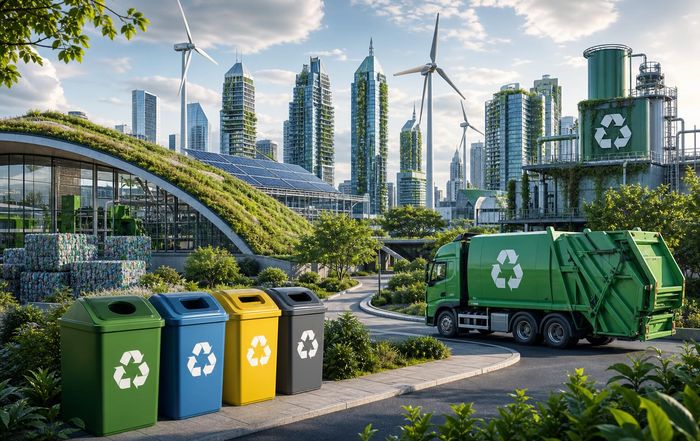
Recycling Infrastructure Trends Across Global Cities
Urban Recycling at a Turning Point
Across the world's major cities, recycling has shifted from a peripheral environmental initiative to a core pillar of urban policy, economic planning, and community identity. While the pace and form of progress differ across regions, a clear pattern is emerging: cities that invest strategically in recycling infrastructure, public engagement, and circular-economy innovation are beginning to decouple economic growth from waste generation, and in doing so, they are laying foundations for more resilient and equitable urban futures. For climate saving readers here are deeply engaged with sustainable living, responsible consumption, and the transformation of local systems, the evolution of recycling infrastructure offers a powerful lens through which to understand how cities are reimagining their relationship with resources, communities, and nature.
This transformation is not occurring in isolation. It is interwoven with broader movements toward sustainable living, zero-waste design, climate action, and the protection of biodiversity, as well as with changing expectations from residents, investors, and policymakers who increasingly view waste as a design flaw rather than an inevitable by-product of modern life. The story of recycling infrastructure in cities is therefore also a story of governance, innovation, social justice, and the emerging circular economy.
From Landfills to Circular Systems
In many industrialized countries, the first generation of recycling infrastructure emerged in response to rising landfill costs, public health concerns, and growing awareness of pollution. Municipal programs focused initially on basic collection of paper, glass, and metals, often through simple curbside schemes or drop-off centers. Over the past two decades, this has evolved into far more sophisticated systems that integrate material recovery facilities, advanced sorting technologies, extended producer responsibility mechanisms, and public education campaigns.
Organizations such as the Organisation for Economic Co-operation and Development (OECD) and the United Nations Environment Programme (UNEP) have documented how cities from San Francisco to Seoul and Stockholm are increasingly aligning recycling infrastructure with broader circular-economy strategies, in which materials are designed for reuse, repair, and recovery rather than disposal. Readers can explore how these ideas connect to everyday choices through resources on sustainability fundamentals and zero-waste principles at eco-natur.
In practice, this shift means that recycling is no longer treated as a stand-alone service but as part of an integrated resource management system that includes waste prevention, reuse networks, composting of organics, and energy recovery from residual fractions where appropriate and carefully regulated. Leading cities are also beginning to embed circular thinking into procurement, infrastructure planning, and building codes, thereby creating demand for recycled materials and closing loops that were previously left open.
The Global City Landscape: Different Paths, Shared Goals
While the vision of circularity is increasingly shared, the pathways cities take are shaped by local conditions, regulations, and cultural norms. In North America, many large cities have relied on single-stream recycling, where residents place all recyclables into one bin, with sorting carried out at centralized facilities. This approach, used widely in the United States and parts of Canada, has helped raise participation rates but has also created challenges with contamination, especially after shifts in global recycling markets.
In Europe, where the European Union has implemented ambitious waste and recycling directives, cities such as Berlin, Milan, Vienna, and Copenhagen have adopted more differentiated collection systems. These often involve separate streams for paper, plastics, metals, glass, and bio-waste, sometimes with pay-as-you-throw schemes that charge households according to residual waste volume. Such models, documented by the European Environment Agency, have contributed to higher recycling and composting rates in many EU member states, although performance still varies significantly between and within countries.
In Asia, rapid urbanization and economic growth have created both acute waste challenges and opportunities for innovation. Seoul and Tokyo have developed highly organized systems that combine strict sorting rules with advanced treatment technologies. Singapore, guided by its Zero Waste Masterplan, has invested in integrated waste and resource management facilities and is working to extend product lifecycles. Meanwhile, cities in China, following the introduction of more stringent waste import restrictions and evolving domestic policies, are building large-scale sorting and processing capacity and experimenting with digital tools to improve household participation.
In the Global South, including parts of Africa, South America, and South and Southeast Asia, recycling infrastructure often depends heavily on informal waste pickers and small-scale enterprises. Cities such as São Paulo, Bogotá, and Johannesburg are gradually integrating informal recyclers into formal systems through cooperatives, service contracts, and social protection measures. This is increasingly recognized by organizations like UN-Habitat and the World Bank as essential for achieving both environmental and social outcomes, especially where municipal budgets are constrained and collection coverage is incomplete.
Technology and Data: Smarter Sorting, Cleaner Streams
One of the most visible trends in urban recycling infrastructure is the adoption of more advanced technologies for sorting and processing materials. Modern material recovery facilities, especially in Europe, North America, and parts of Asia, are increasingly equipped with optical sorters, near-infrared scanners, robotics, and AI-driven quality control systems that can separate plastics by polymer type, remove contaminants, and improve the consistency of output bales for reprocessors.
Reports from organizations such as the Ellen MacArthur Foundation and the International Solid Waste Association highlight how these technologies can enhance recovery rates and make recycling more economically viable, particularly for complex packaging streams. In cities where mixed waste collection remains common, mechanical-biological treatment plants are being used to separate recyclables and stabilize organics, although experts frequently emphasize that source separation at household and business level remains more effective for achieving high-quality recycling.
Digital tools are also transforming how cities manage and monitor recycling systems. Smart bins equipped with fill-level sensors, route optimization software for collection vehicles, and mobile apps that guide residents on proper sorting are becoming more common in cities across Europe, Asia, and North America. These tools enable data-driven decision-making, allowing municipalities to allocate resources more efficiently, identify neighborhoods with high contamination rates, and tailor outreach efforts.
For readers of eco-natur, this technological evolution connects directly to everyday action. Understanding how sorting accuracy and contamination affect downstream processes reinforces why personal habits matter. Resources on recycling best practices and plastic-free living help bridge the gap between high-tech infrastructure and household decisions that determine whether materials actually get recycled.
Policy Shifts: Extended Producer Responsibility and Beyond
Infrastructure alone cannot drive systemic change. Policy frameworks are increasingly shaping how recycling systems are financed, designed, and operated. Extended Producer Responsibility (EPR), in which producers are made financially and sometimes operationally responsible for the end-of-life management of their products and packaging, has become a central mechanism in many regions.
Countries across the European Union, including Germany, France, Italy, Spain, and the Netherlands, have long-standing EPR schemes for packaging, electronics, and other product categories. These systems typically require producers to join collective organizations that fund collection and recycling, set eco-design incentives, and report on performance. More recently, jurisdictions in Canada, several U.S. states, and places such as South Korea and Japan have expanded or refined EPR frameworks, often in response to rising waste volumes and pressure on municipal budgets.
Internationally, the negotiation of a global plastics treaty under the auspices of the United Nations is influencing national and local policy debates, with many cities seeking to align their recycling strategies with emerging commitments to reduce plastic pollution and encourage reuse systems. While the exact contours of the treaty are still being negotiated, the direction of travel is clear: greater responsibility for producers, more attention to design for recyclability, and stronger measures to phase out problematic and unnecessary plastics.
At the municipal level, policy tools such as landfill taxes, incineration levies, mandatory recycling ordinances, and bans on specific single-use items are shaping the economics of recycling and encouraging innovation in service delivery. Some cities have adopted pay-as-you-throw systems that charge households based on the quantity of residual waste they generate, thus providing a direct financial incentive to separate recyclables and organics. Others are experimenting with deposit-return schemes for beverage containers, which have demonstrated high return rates in countries like Germany, Norway, and Canada, as documented by the Container Recycling Institute and similar organizations.
Integrating Organics: The Missing Piece of Urban Recycling
While public conversations often focus on plastics, metals, and paper, organic waste represents a significant share of municipal solid waste in most cities. Food scraps, yard trimmings, and other biodegradable materials, if landfilled, generate methane, a potent greenhouse gas. Consequently, many cities are expanding separate collection of organics and building composting or anaerobic digestion facilities.
In San Francisco, Seattle, and several European cities, source-separated organics collection has become standard for households and businesses, with materials processed into compost for agriculture, landscaping, and soil restoration, or used to produce biogas that can generate renewable energy. The Food and Agriculture Organization (FAO) and other international bodies emphasize that reducing food waste at the source, alongside recycling organics, is essential for climate mitigation and food system resilience.
For Eco Natur readers interested in organic food systems and soil health, the integration of organics into urban recycling infrastructure is particularly relevant. Compost produced from clean organic waste streams can enhance soil structure, support biodiversity, and reduce the need for synthetic fertilizers, thereby linking city waste management to rural sustainability and regenerative agriculture.
However, implementing organics programs at scale presents challenges. Contamination with plastics and other non-compostable materials can compromise product quality, while limited space in dense urban areas can constrain facility siting. Successful examples often involve strong public communication campaigns, clear labeling standards, and collaboration between municipalities, waste haulers, and end-users of compost and digestate.
Social Dimensions: Inclusion, Equity, and Community Engagement
Recycling infrastructure is not merely a technical system; it is also a social system that reflects and shapes relationships between communities, workers, and institutions. In many cities, especially in Latin America, Africa, and parts of Asia, informal waste pickers have long been central to material recovery, collecting and sorting recyclables from streets, households, and dumpsites. These workers contribute significantly to recycling rates and resource conservation, yet they often operate in precarious conditions without legal recognition or social protections.
Recent years have seen growing efforts to integrate informal recyclers into formal systems, supported by organizations such as WIEGO (Women in Informal Employment: Globalizing and Organizing) and municipal authorities in cities like Bogotá, Pune, and Cape Town. Approaches include forming cooperatives, providing access to infrastructure, establishing service contracts, and ensuring that policy reforms such as EPR do not displace livelihoods. While progress is uneven, these initiatives demonstrate that inclusive recycling systems can deliver environmental benefits while advancing social justice.
In higher-income cities, equity considerations also arise in relation to service coverage, facility siting, and participation barriers. Low-income neighborhoods and communities of color have historically borne a disproportionate burden from landfills, incinerators, and transfer stations, a pattern documented by environmental justice scholars and public health researchers. Modern recycling and resource recovery facilities, if poorly planned, can perpetuate these inequities. Leading cities are therefore beginning to incorporate environmental justice assessments into infrastructure decisions, engage communities early in planning processes, and prioritize investments that improve services in underserved areas.
Community engagement is central to the success of any recycling system. Education campaigns, school programs, neighborhood outreach, and partnerships with local organizations help translate complex policy and technical changes into understandable and actionable guidance for residents and businesses. Platforms like eco-natur, with its focus on sustainable lifestyle choices, health and environment, and global sustainability perspectives, play an important role in bridging the gap between policy frameworks and personal practice.
Economics of Urban Recycling: Costs, Markets, and Innovation
Recycling infrastructure requires substantial investment in collection systems, sorting facilities, processing plants, and supporting digital tools. The financial viability of these systems depends on a combination of public funding, producer contributions, service fees, and revenues from the sale of recovered materials. Fluctuations in global commodity markets, such as those triggered by changing import policies or economic cycles, can create volatility that challenges municipal budgets and private operators.
Analyses by the World Bank, the International Finance Corporation, and other institutions highlight that while recycling can reduce long-term costs associated with landfilling, pollution, and resource extraction, short-term financial pressures can discourage investment, especially in cities facing rapid growth or fiscal constraints. Policy instruments such as EPR, green public procurement, and minimum recycled content requirements are therefore increasingly seen as essential tools for creating stable demand for recycled materials and de-risking infrastructure investment.
At the same time, the emergence of the circular economy is generating new business models and opportunities. Start-ups and established companies are developing technologies for advanced material sorting, chemical recycling of certain plastics, reuse platforms for packaging, and digital marketplaces for secondary materials. Cities like Amsterdam, London, New York, and Sydney are positioning themselves as hubs for circular innovation, often supported by incubators, public-private partnerships, and research institutions.
For readers interested in the intersection of sustainability and economics, the focus on sustainable business models and the green economy provides context for understanding how recycling infrastructure fits into broader economic transitions. The key insight is that recycling is not simply a cost center; when embedded in circular strategies, it becomes part of a value-creating system that supports jobs, innovation, and resource security.
Design, Materials, and the Upstream Shift
A significant trend in global cities is the recognition that efficient recycling cannot compensate for poor product and packaging design. Municipalities and regulators are increasingly pushing for upstream changes that make materials easier to collect, sort, and recycle, or avoid waste generation altogether. This includes restrictions on certain problematic materials, incentives for reusable packaging systems, and guidelines that encourage design for disassembly and mono-material solutions.
Organizations such as the Ellen MacArthur Foundation, WRAP (Waste and Resources Action Programme) in the UK, and the U.S. Environmental Protection Agency provide frameworks and case studies showing how design interventions can dramatically improve recyclability and reduce system costs. For example, eliminating unnecessary colorants in plastics, standardizing label placement, and avoiding multi-layer composites where possible can simplify sorting and increase the value of recovered materials.
Cities are also exploring how urban planning and building design can support more efficient recycling. This includes ensuring that new residential and commercial developments allocate adequate space for segregated bins, designing easy access for collection vehicles, and integrating community reuse and repair spaces into neighborhoods. The emphasis on sustainable design and architecture aligns closely with these initiatives, highlighting how built environments can either enable or hinder circular practices.
Regional Perspectives: Convergence and Diversity
Although the trajectory toward more advanced and integrated recycling systems is visible across many regions, significant disparities remain. In parts of Europe and East Asia, recycling rates for municipal waste are relatively high, supported by robust policy frameworks, strong institutions, and public engagement. In contrast, some rapidly growing cities in Africa, South Asia, and Southeast Asia continue to struggle with basic waste collection coverage, open dumping, and limited processing capacity, even as they pilot innovative community-based and informal-sector-inclusive approaches.
In North America, policy fragmentation between states, provinces, and municipalities leads to a patchwork of systems, with some cities making rapid progress toward circularity while others lag behind. The growing adoption of EPR for packaging in several U.S. states and Canadian provinces suggests a trend toward more consistent funding and design standards, but implementation details and timelines vary.
In Latin America, pioneering work in cities like Buenos Aires, Curitiba, and Medellín demonstrates how integrated waste management plans, combined with social inclusion strategies for informal recyclers, can improve both environmental outcomes and livelihoods. Regional networks, supported by organizations such as the Inter-American Development Bank, are facilitating knowledge exchange and capacity building.
These regional differences underscore the importance of context-sensitive solutions. There is no single model of "ideal" recycling infrastructure; rather, successful systems are those that respond to local cultural norms, economic realities, and governance structures while aligning with global sustainability goals. For Eco Natur and its top audience spanning the United States, United Kingdom, Germany, Canada, Australia, Brazil, and beyond, this diversity offers a rich source of learning and inspiration.
Linking Recycling to Broader Environmental Goals
Recycling infrastructure is most effective when integrated into broader environmental and climate strategies. Cities are increasingly recognizing that high recycling and composting rates contribute to greenhouse gas mitigation, resource conservation, pollution reduction, and biodiversity protection. Life-cycle assessments by institutions such as the International Resource Panel and national environmental agencies show that recovering materials and organics typically results in significant emissions savings compared to landfilling or incineration without energy recovery, especially when recycled materials displace virgin resource extraction.
Furthermore, reducing plastic leakage into rivers and oceans is a priority for many coastal cities and island nations, supported by initiatives like the Global Partnership on Marine Litter. Robust collection and recycling systems are essential for preventing mismanaged waste from entering waterways, but they must be complemented by upstream measures to reduce unnecessary plastics and promote reusable alternatives.
The connections between waste, wildlife, and ecosystems are increasingly evident. Entanglement and ingestion of plastic waste threaten marine and terrestrial species, while poorly managed dumpsites can contaminate habitats and water sources. By investing in well-designed recycling and waste prevention programs, cities contribute to the protection of biodiversity and wildlife, themes that are central to eco-natur's mission and to the aspirations of its readers.
The Role of Individuals and Communities in a Systems Transition
Although the focus of this article is on infrastructure and policy, the transition toward more sustainable and circular urban systems ultimately depends on the actions of individuals, households, and communities. Everyday decisions about consumption, sorting, reuse, and advocacy shape the performance of recycling systems and signal to policymakers and businesses that there is demand for more ambitious change.
Residents can support local recycling infrastructure by learning and following sorting guidelines, reducing contamination, choosing products with reusable or easily recyclable packaging, and participating in community initiatives such as repair cafés, sharing platforms, and neighborhood clean-ups. Businesses can redesign products and services to minimize waste, adopt reusable packaging models, and collaborate with municipalities to improve collection and recovery systems. Civil society organizations and educational sites like this can amplify best practices, share success stories, and foster a culture of responsibility and stewardship.
For those seeking to deepen their engagement, eco-natur offers a range of resources on renewable energy integration, plastic-free strategies, zero-waste living, and holistic approaches to sustainable living. These materials demonstrate that while recycling infrastructure is crucial, it is most powerful when paired with conscious choices that reduce waste at the source and value materials as part of a shared ecological commons.
Ambition, Collaboration, and Hope!
As cities worldwide continue to evolve their recycling infrastructure, the coming years will be decisive in determining whether urban systems can align with planetary boundaries and social needs. The convergence of circular-economy policies, technological innovation, social inclusion efforts, and climate commitments creates a unique opportunity to transform how materials flow through cities, how value is created, and how communities relate to the natural world.
Challenges remain significant: financing gaps, policy fragmentation, market volatility, and social inequities can slow progress. Yet the momentum is unmistakable, and the examples of cities that have dramatically improved their recycling performance, reduced waste, and fostered new forms of collaboration offer a powerful source of optimism. For kind and active growing community online today, the unfolding story of recycling infrastructure across the world's cities is not only a technical narrative but also a testament to human ingenuity, solidarity, and the desire to live within the limits of a finite planet while nurturing prosperity and well-being.
By staying informed, supporting ambitious policies, and embracing sustainable practices in daily life, individuals and communities can help ensure that the emerging recycling systems of this decade become the foundation of a truly circular, regenerative urban future.
