
Why Deadwood Is Essential for Forest Wildlife
Dead trees, fallen logs, and decaying branches have long been viewed as forest waste to be cleared away in the name of tidiness or fire prevention. Yet modern ecology has revealed that this seemingly lifeless material, known collectively as deadwood, is one of the most dynamic and life-giving elements of any woodland. For wild daily readers of Eco Natur, who are already attuned to the subtleties of sustainable living and the value of intact ecosystems, understanding why deadwood is essential for forest wildlife offers a powerful lens on how forests truly function and how human choices, from gardening to policy-making, can either support or undermine that living fabric.
In a world grappling with biodiversity loss and climate instability, deadwood is emerging not as a symbol of decay, but as a cornerstone of resilience. From temperate forests in Germany and the United States to tropical woodlands in Brazil and Southeast Asia, the presence or absence of deadwood is increasingly used as an indicator of ecological health. This shift in perception is reshaping forestry, urban park management, and conservation strategies across continents, and it offers practical inspiration for anyone seeking to live more harmoniously with nature.
The Hidden Architecture of Life in Deadwood
Ecologists now describe deadwood as a "keystone resource," a structural and nutritional foundation upon which countless species depend. Studies synthesized by organizations such as FAO and IUCN indicate that in natural, unmanaged forests, deadwood can make up to 20-30 percent of the total wood volume, forming a complex three-dimensional habitat that changes over time as it decomposes.
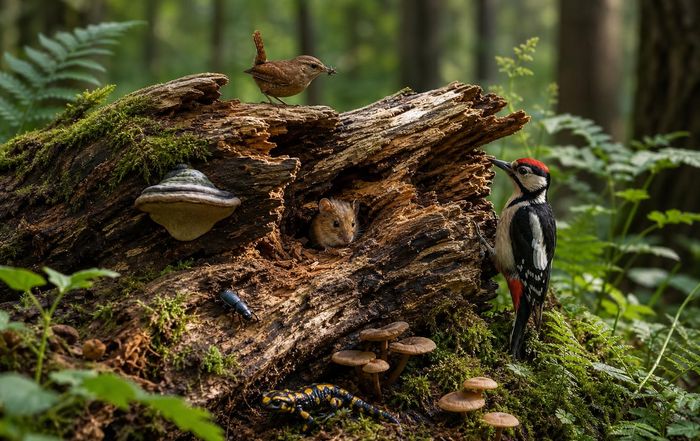
Within this matrix of standing dead trees (snags), fallen logs, stumps, and buried roots, a vast community of organisms finds food, shelter, and breeding sites. Fungi and bacteria initiate the decomposition process, breaking down lignin and cellulose that most animals cannot digest. Wood-boring beetles and other invertebrates follow, carving tunnels that increase oxygen penetration and create microhabitats. Birds, mammals, reptiles, and amphibians use these cavities and crevices to nest, roost, and hide from predators. Even mosses, lichens, and seedlings of future trees rely on the moist, nutrient-rich surfaces of rotting wood to gain a foothold.
For readers exploring biodiversity and ecosystem health at eco-natur, deadwood embodies the principle that life often depends on what appears, at first glance, to be waste. Rather than being a static endpoint, a fallen tree is the beginning of a decades-long cascade of ecological interactions.
A Global Lifeline for Species at Risk
Across continents, scientists have documented how specialized species depend so tightly on deadwood that their survival is jeopardized whenever it is removed. A growing body of research compiled by institutions such as the European Forest Institute and the U.S. Forest Service demonstrates that deadwood-dependent, or "saproxylic," species can represent a significant proportion of forest biodiversity, especially among insects and fungi.
In European forests of Germany, Sweden, and the Netherlands, saproxylic beetles and fungi are now among the most threatened groups of organisms, largely due to centuries of intensive forestry and the removal of old trees and fallen logs for fuel and timber. The European Environment Agency has highlighted that deadwood volume is still far below natural levels in many managed forests, although some countries, such as Sweden and Germany, have begun to increase retention of deadwood as part of their biodiversity strategies.
In North America, species such as the pileated woodpecker and many cavity-nesting ducks rely on standing dead trees for nesting and feeding, a relationship documented by the Cornell Lab of Ornithology and conservation groups like Audubon. In the Pacific Northwest of the United States and Canada, large fallen logs in old-growth forests create moist, cool microclimates that are critical for salamanders and other amphibians, as well as for the regeneration of conifer seedlings that often sprout from rotting nurse logs rather than from the forest floor.
In tropical regions, including parts of Brazil, Malaysia, and Indonesia, deadwood plays a similar role, although research is less complete. Studies published through platforms such as ScienceDirect and Nature suggest that deadwood in rainforests supports rich communities of insects, fungi, and small vertebrates, and its rapid decomposition in warm, humid climates makes it a vital component of nutrient cycling. Where logging or fuelwood collection removes this material, the consequences ripple through food webs, affecting everything from birds to soil microbes.
For Eco Natur loyal and happy readers interested in wildlife conservation, deadwood serves as a reminder that protecting animals requires protecting the full complexity of their habitats, including the less charismatic elements that rarely appear in tourism brochures.
Microclimates, Moisture, and the Forest's Living Sponge
Beyond serving as physical structures, deadwood pieces function as living sponges that store water, moderate temperature extremes, and buffer forests against drought and heatwaves. Research from organizations like Forest Research UK and universities across Europe and North America has shown that decaying logs can hold significant amounts of moisture, releasing it slowly into the surrounding soil and air.
This moisture-retention capacity creates localized microclimates that are cooler and more humid than the surrounding forest, conditions that are essential for many mosses, ferns, amphibians, and invertebrates. In regions experiencing more frequent heat extremes and irregular rainfall, such as parts of southern Europe, Australia, and western North America, these microhabitats may become increasingly important refuges for species that cannot tolerate prolonged dryness.
From a sustainable living perspective, as explored in Eco Natur's guide to sustainable living practices, understanding how natural systems buffer climate variability can inform how people design gardens, urban parks, and agroforestry systems. Leaving logs, branches, and brush piles in appropriate locations can help create similar microclimates on a smaller scale, supporting pollinators, reptiles, and beneficial insects in both rural and urban settings.
Nutrient Cycling and Soil Regeneration
Deadwood is also a crucial engine of nutrient cycling. As fungi, bacteria, and invertebrates break down wood, they release carbon, nitrogen, phosphorus, and a suite of micronutrients back into the soil. This process is slower but more gradual than the decomposition of leaves and fine litter, providing a long-term nutrient reservoir that supports tree growth and soil fertility over decades.
Organizations such as CIFOR-ICRAF and the United States Geological Survey have published research illustrating how coarse woody debris contributes to soil organic matter, improves soil structure, and enhances water infiltration. In some forest types, especially nutrient-poor boreal and temperate conifer forests, the contribution of deadwood to long-term soil fertility can be particularly significant.
For those following Eco Natur's work on recycling and circular resource use, deadwood offers a powerful natural analogue to human recycling systems. Instead of treating wood as a linear resource that ends in waste, forests continually reinvest dead material into new growth through biological decomposition. This closed-loop system exemplifies the circular economy principles that sustainable businesses and communities are now seeking to emulate.
Carbon Storage and Climate Regulation
Deadwood also plays a complex role in the global carbon cycle. While living trees capture carbon dioxide through photosynthesis, deadwood stores that carbon for years to centuries as it decomposes. Research collated by the Intergovernmental Panel on Climate Change (IPCC) and institutions such as NASA indicates that coarse woody debris can represent a substantial fraction of forest carbon stocks, especially in old-growth ecosystems.
There is ongoing scientific debate about the net climate impact of deadwood, since decomposing wood releases carbon dioxide and, under anaerobic conditions, methane. However, most studies agree that in intact, undisturbed forests, deadwood is part of a relatively stable carbon pool where the rate of carbon input from new dead trees roughly balances the rate of decomposition. When forests are logged or degraded and deadwood is removed or burned, this balance is disrupted, often resulting in net carbon emissions.
In regions such as Canada, Russia, and Scandinavia, where boreal forests store vast amounts of carbon in both living trees and deadwood, land-management policies that maintain natural levels of coarse woody debris are increasingly recognized as part of national climate strategies, a perspective reflected in reports from the UN Environment Programme and national environmental agencies. For Eco Natur's readers interested in the intersection of sustainability and the global economy, this underscores how forest management choices influence not only local biodiversity but also international climate commitments and carbon markets.
Deadwood as a Foundation for Food Webs
From the smallest microbes to top predators, many forest food webs depend on the steady flow of energy and nutrients that deadwood provides. Fungi and bacteria convert structurally complex wood into forms of organic matter that become accessible to invertebrates, which in turn feed birds, bats, small mammals, and reptiles. Woodpeckers, for example, rely heavily on beetle larvae and other insects living under bark and within decaying trunks, and their foraging creates cavities that are later used by secondary cavity nesters such as owls, bluebirds, and certain small mammals.
Scientific syntheses by organizations such as WWF and BirdLife International highlight that in many forests, the availability of deadwood strongly influences the abundance and diversity of cavity-nesting birds and mammals. Where deadwood is scarce, competition for nesting sites intensifies, and some species may decline or disappear. In contrast, forests that retain a variety of deadwood sizes and decay stages support more complex and resilient food webs.
For readers of eco-natur exploring healthy ecosystems and human well-being, this intricate web of dependency illustrates a broader truth: human health and food security are ultimately tied to the integrity of natural food webs, which in turn depend on seemingly inconspicuous elements like rotting logs and standing snags.
Regional Perspectives: From Managed Forests to Rewilding
The importance of deadwood is now recognized across a range of forest management contexts, from intensively managed production forests in Europe and North America to rewilding projects in parts of Europe, Africa, and South America. Yet the practical implementation of deadwood-friendly practices varies widely among regions and countries.
In Germany, Sweden, and Finland, national forest certification schemes and policies influenced by FSC and PEFC encourage the retention of a certain amount of deadwood in managed forests, though the exact volumes and methods differ. Some large forest owners and public agencies have begun to leave more snags and fallen logs during harvesting operations, while also designating set-aside areas where natural processes, including tree death and decay, are allowed to proceed with minimal intervention.
In the United States and Canada, federal and state agencies, as well as indigenous land stewards, are increasingly incorporating deadwood retention into forest planning, particularly in the Pacific Northwest and parts of the Rocky Mountains. However, in fire-prone landscapes in California, Australia, and Mediterranean regions, there is an ongoing and sometimes contentious debate about how to balance the ecological value of deadwood with the need to reduce fuel loads and protect communities from severe wildfires. Research from sources such as CSIRO and the U.S. National Park Service indicates that carefully designed fuel-reduction programs can remove fine, highly flammable materials while still retaining large logs and habitat structures, but implementation remains uneven and context-specific.
Rewilding initiatives in parts of Europe and Africa, documented by organizations such as Rewilding Europe, often emphasize the role of natural disturbances and deadwood in restoring self-regulating ecosystems. By allowing trees to age, die, and fall without intensive harvesting, these projects aim to recreate the structural complexity of primeval forests, providing habitat for species that have declined under conventional forestry.
For Eco Natur, which regularly explores global sustainability trends, these regional examples highlight that there is no one-size-fits-all approach; instead, the challenge is to integrate local ecological knowledge, cultural values, and risk considerations while still honoring the fundamental role of deadwood in supporting wildlife.
Deadwood, Sustainable Business, and the Green Economy
The growing recognition of deadwood's ecological importance is also influencing the business landscape, particularly in forestry, eco-tourism, and nature-based solutions. Certification systems such as Forest Stewardship Council (FSC) require forest managers to maintain or enhance biodiversity, including the retention of habitat trees and deadwood, as a condition for certifying timber as sustainably produced. This, in turn, shapes supply chains and consumer choices, as more companies and individuals prioritize certified wood products.
Eco-tourism ventures in countries like Costa Rica, South Africa, and New Zealand increasingly highlight intact forests, old trees, and wildlife-rich woodlands as key attractions, recognizing that the presence of deadwood is often correlated with higher biodiversity and more rewarding nature experiences. Organizations such as UNWTO have emphasized that nature-based tourism can contribute to local economies while incentivizing conservation, provided it is managed responsibly.
For businesses and entrepreneurs following Eco Natur's insights on sustainable business practices, deadwood offers a concrete example of how deeper ecological understanding can reshape value chains and market expectations. Companies that rely on forest resources, from construction to packaging, are increasingly expected to demonstrate not only that forests remain standing, but that they retain their ecological integrity, including the structural elements that support wildlife.
This shift is also relevant for investors and policymakers engaged in the emerging green economy. As natural capital accounting and biodiversity metrics gain prominence, the presence of deadwood and associated wildlife may become part of how forest assets are valued, encouraging longer rotation times, mixed-species stands, and conservation set-asides that maintain habitat complexity.
Bringing Deadwood Wisdom into Everyday Life
Although debates about deadwood often focus on large-scale forests, the underlying principles apply equally to gardens, city parks, community forests, and agroforestry systems. Individuals and communities across the United States, the United Kingdom, Germany, Canada, Australia, and many other countries are discovering that small shifts in how they manage trees and wood can significantly benefit local wildlife.
Urban ecology research from organizations such as Royal Horticultural Society and National Wildlife Federation has shown that leaving some logs, branches, and brush piles in gardens and parks can support hedgehogs, birds, amphibians, and beneficial insects, while also enriching soil and retaining moisture. In regions where safety and fire risk permit, deadwood features can be deliberately incorporated into landscape design, for example as insect hotels, log piles, and wildlife-friendly hedgerows.
For readers inspired by Eco Natur's guidance on plastic-free and zero-waste lifestyles and zero-waste principles, deadwood provides a natural parallel: instead of exporting organic "waste" out of ecosystems, it can be retained and transformed into habitat and fertility. Homeowners can chip pruned branches into mulch, create log borders for garden beds, or designate a quiet corner as a mini-woodland where decay is welcomed rather than suppressed.
In agricultural landscapes across Europe, Asia, Africa, and the Americas, integrating trees and woody debris into agroforestry systems can enhance biodiversity, soil health, and resilience. Organizations such as FAO and World Agroforestry document how scattered trees, hedgerows, and shelterbelts, including their eventual deadwood, provide habitat for pollinators and natural pest controllers, reduce wind erosion, and improve microclimates for crops and livestock.
Deadwood, Culture, and Changing Perceptions
One of the most significant barriers to embracing deadwood in forests and communities is cultural rather than technical. In many societies, dead trees and fallen branches have long been associated with neglect, danger, or disorder. Forestry traditions in parts of Europe and North America emphasized "clean" forests free of debris, reflecting both aesthetic preferences and practical concerns about fire and timber quality.
Yet cultural attitudes are evolving as ecological literacy spreads. Environmental education programs, nature documentaries, and citizen science initiatives led by organizations such as BBC Earth and Citizen Science Association increasingly present deadwood as a symbol of life and renewal. Children's nature programs often encourage young people to look under logs to discover beetles, millipedes, and fungi, fostering curiosity rather than fear.
For Eco Natur, which champions sustainability as a lifestyle rather than a mere technical adjustment, this cultural shift is central. When communities begin to see beauty in the full cycle of life, including decay, they are more likely to support policies and practices that leave space for natural processes. This, in turn, creates openings for more ambitious conservation measures, such as setting aside old-growth forest reserves or allowing certain urban park areas to follow a wilder, less manicured trajectory.
Deadwood as Inspiration for Regenerative Futures
In an era marked by environmental challenges, from biodiversity loss to climate change, deadwood offers a quietly radical lesson in regeneration. It demonstrates that systems can remain vibrant not by avoiding death and decay, but by integrating them into a continuous cycle of transformation. This perspective aligns closely with the regenerative approaches to agriculture, business, and community design that Eco Natur promotes across its daily curated coverage of sustainability, organic food systems, and renewable energy transitions.
Forests that retain their deadwood are more structurally complex, more species-rich, and often more resilient to disturbances. They host intricate communities that include not only charismatic mammals and birds, but also the fungi, insects, and microbes that quietly underpin life. As policymakers, businesses, and citizens look for models of resilience and circularity, these forests provide living examples of how to design systems that waste nothing and support diversity at every level.
For individuals and communities in the United States, Europe, Asia, Africa, and the Americas, this understanding can translate into practical action: supporting forest policies that protect old trees and deadwood, choosing certified wood products, designing gardens and parks that welcome natural processes, and participating in citizen science projects that monitor forest biodiversity. In doing so, they contribute not only to the survival of deadwood-dependent species, but also to a broader cultural reconnection with the living complexity of forests.
As eco-natur continues to explore the frontiers of sustainable living and ecological awareness, deadwood stands as a powerful symbol and practical tool. It reminds humanity that thriving ecosystems are not tidy, linear, or entirely under human control; they are dynamic tapestries woven from growth and decay, order and apparent chaos. Embracing that reality, in forests and in human systems, may be one of the most hopeful steps toward a more resilient and life-affirming future.
