
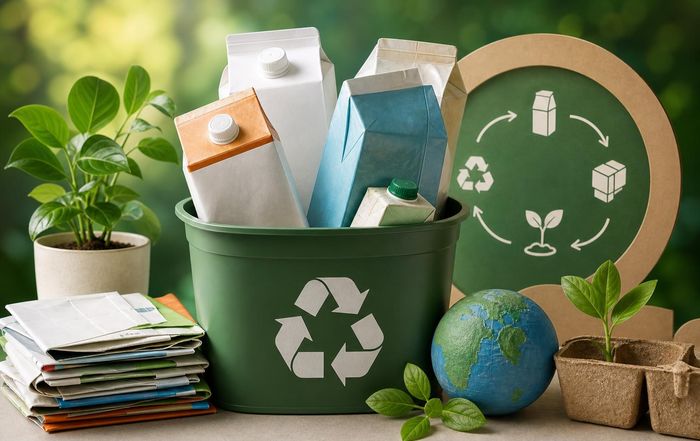
Better Ways to Recycle Food and Beverage Cartons
Why Carton Recycling Matters More Than Ever
Around the world, food and beverage cartons have become a familiar part of daily life. From plant-based milks and fruit juices to soups, broths, and on-the-go drinks, these lightweight containers promise convenience and extended shelf life with a relatively low packaging footprint. Yet as awareness of environmental impacts grows, many consumers still wonder whether cartons are truly recyclable, where they actually end up, and how to handle them responsibly at home and in business.
For kind and gentle eco warriors, these questions sit at the heart of a broader commitment to sustainable living. Carton recycling is not a niche technical issue; it is a practical test of how modern societies can design packaging systems that conserve resources, reduce waste, and protect ecosystems while still supporting safe food distribution. In recent years, technological innovation, policy reforms, and corporate commitments have begun to reshape the landscape of carton recycling, offering new opportunities and also revealing persistent challenges.
This article explores how food and beverage cartons are made, how they are recycled today, and which emerging solutions show the greatest promise. It highlights progress in key regions, explains how households and businesses can improve recycling outcomes, and reflects on the role organizations like Eco Natur can play in inspiring a more circular, nature-respecting economy.
What Food and Beverage Cartons Are Made Of
Most food and beverage cartons fall into two broad categories: so-called "gable-top" cartons, typically used for refrigerated milk and juice, and aseptic or shelf-stable cartons used for long-life products such as plant-based beverages, soups, and some wines. Although brands differ, these cartons generally share a similar layered structure.
The primary component is paperboard made from wood fiber, which usually represents between 70 and 80 percent of the carton's weight. This fiber is typically sourced from responsibly managed forests, and major producers such as Tetra Pak, SIG, and Elopak often emphasize certification from schemes like the Forest Stewardship Council (FSC) and the Programme for the Endorsement of Forest Certification (PEFC). Around this fiber core, thin layers of polyethylene plastic provide a moisture barrier, while aseptic cartons also contain a very thin layer of aluminum to protect against light and oxygen.
This multi-material structure gives cartons their functional advantages: they are lightweight, space-efficient, and able to keep food safe with fewer preservatives and without refrigeration in many cases, which can significantly reduce energy use and food waste. Studies from organizations such as the UN Environment Programme (UNEP) and life-cycle assessments commissioned by industry and independent researchers indicate that, when properly collected and recycled, cartons can compare favorably with many alternative packaging formats in terms of greenhouse gas emissions and resource use, particularly where they replace heavier glass or multilayer plastic pouches.
However, these same layered materials make recycling more complex than for single-material items like glass bottles or aluminum cans. The challenge is not that cartons cannot be recycled, but that they require specialized processes and adequate collection systems to separate and recover their components effectively.
How Carton Recycling Works Today
Carton recycling typically begins in the same way as other dry recyclables. Consumers place rinsed, empty cartons into their recycling bins or bring them to drop-off sites. From there, materials recovery facilities (MRFs) sort cartons from mixed recyclables using a combination of optical scanners, manual sorting, and in some cases, dedicated carton streams. Organizations such as the Carton Council of North America (Carton Council) and the Alliance for Beverage Cartons and the Environment (ACE) in Europe have worked over the past decade to ensure that cartons are recognized and separated efficiently in sorting facilities.
Once sorted, cartons are typically baled and transported to specialized recycling plants. The most common method is hydropulping, in which cartons are mixed with water in large pulpers, allowing the paper fibers to separate from the plastic and aluminum (known in the industry as "polyAl"). The recovered fibers, which are usually long and strong, can then be used to produce products such as tissue, paperboard, and packaging materials. Companies like Stora Enso and Lucart in Europe, and several mills in North America and Asia, have invested in equipment that can process carton fibers at scale.
The polyAl fraction has historically been more challenging to recycle, but this is changing. Some facilities use mechanical processes to convert polyAl into durable plastic-aluminum composite boards for construction or furniture. Others, such as the ACE UK partnership with Sonoco Stainland in the United Kingdom, have demonstrated that polyAl can be further processed into polymer-rich materials for new plastic products. Emerging technologies, including pyrolysis and advanced mechanical separation, are being explored to recover aluminum and high-quality polymers separately, with pilot projects in Europe, Japan, and other regions.
Despite these advances, the actual recycling rate for cartons varies significantly by country and region. In some European nations, carton recycling rates exceed 50 percent, supported by extended producer responsibility (EPR) schemes and strong public awareness. In North America, the Carton Council reports that access to carton recycling has expanded dramatically in the past decade, with millions more households able to place cartons in their curbside bins, though overall recycling rates still lag behind those of metals and some plastics. In parts of Asia, Latin America, and Africa, informal recycling networks play a vital role in collecting and processing cartons, but data can be sparse and systems uneven.
Better Household Practices for Carton Recycling
For individuals committed to a more sustainable lifestyle, improving household carton recycling starts with understanding local rules. Recycling systems differ widely, and the most effective step is to check municipal or regional guidelines, often available on city websites or through national recycling information platforms such as Recycle Now in the United Kingdom (recyclenow.com) or Earth911 in the United States (earth911.com).
In many areas, households are encouraged to empty and lightly rinse cartons to remove residual liquids, which helps prevent contamination and odors during collection and sorting. Caps and straws, often made from plastic, should be handled according to local instructions; in some systems they are accepted along with the carton and processed together, in others they must be removed. Flattening cartons can save space in bins, though this is not always required.
When curbside collection is unavailable, drop-off points at recycling centers or retail locations can provide alternatives. In several European countries, beverage carton collection is integrated into broader packaging schemes, sometimes alongside deposit-return systems for bottles and cans. Residents in multi-family buildings, such as those common in Germany, Sweden, and Singapore, may need to work with property managers to ensure that shared recycling facilities accept cartons and are clearly labeled.
For readers of Eco Natur, these practical steps connect directly with a broader commitment to zero-waste principles. Properly recycling cartons is not an isolated action but part of a holistic approach that considers packaging choices, consumption habits, and community engagement. By modeling best practices at home and sharing knowledge with neighbors and local organizations, individuals can help raise participation rates and support more efficient, higher-quality recycling streams.
Cartons, Plastic, and the Move Toward Plastic-Free Living
Many environmentally conscious consumers are seeking to reduce their reliance on single-use plastics. For those pursuing a more plastic-free lifestyle, the role of cartons can seem ambiguous. On the one hand, cartons contain plastic layers; on the other, they can replace fully plastic bottles or pouches and often use less overall plastic per unit of product.
Independent analyses by organizations such as the Ellen MacArthur Foundation (ellenmacarthurfoundation.org) and academic life-cycle studies suggest that cartons frequently have a lower plastic content and a smaller carbon footprint than many conventional plastic packaging options, especially when their fiber content is responsibly sourced and effectively recycled. However, these advantages depend heavily on actual recycling performance, transportation distances, and the specific alternative packaging considered.
For households prioritizing plastic reduction, a nuanced approach is emerging. Where refill systems or reusable glass containers are readily available and well-managed, they can offer strong environmental benefits. However, in many regions and for certain product categories, especially long-distance distribution of liquids, cartons can provide a pragmatic compromise between reduced plastic use, food safety, and overall climate impact. By supporting robust carton recycling and advocating for better collection infrastructure, consumers can help ensure that cartons play a constructive role in the transition away from excessive plastic dependence.
Eco Natur encourages readers to view cartons as part of a spectrum of choices rather than a perfect solution. Combining carton use with broader strategies-such as buying in bulk where sensible, choosing local products when possible, and favoring brands that invest in circular packaging design-can significantly amplify the positive impact of individual purchasing decisions.
Cartons, Organic Food, and Sustainable Diets
The rise of organic and plant-based foods has been closely intertwined with the growth of carton packaging, particularly for items like organic milk, oat drinks, and broth. Many consumers who prioritize organic food and sustainable diets also care deeply about packaging footprints, creating both an opportunity and a responsibility for producers.
Retailers and brands across Europe, North America, and Asia increasingly highlight carton packaging on their shelves as a lower-impact option, sometimes displaying certifications such as FSC alongside organic labels. Organizations like IFOAM - Organics International (ifoam.bio) have emphasized that truly sustainable food systems must consider not only how food is grown but also how it is processed, packaged, and distributed.
Several major organic brands have partnered with carton manufacturers to develop packages with higher shares of plant-based plastics derived from renewable sources like sugarcane, aiming to reduce reliance on fossil fuels. Tetra Pak, for example, has introduced cartons using bio-based polymers certified by the Roundtable on Sustainable Biomaterials (RSB), while other companies explore inks and adhesives with lower environmental profiles. Independent assessments caution that bio-based plastics are not automatically sustainable and must be evaluated in terms of land use, biodiversity impacts, and end-of-life options, yet they represent an important area of innovation.
For consumers, choosing organic or sustainably produced food in cartons can be a meaningful contribution to climate and biodiversity goals, particularly when combined with efforts to minimize food waste and recycle packaging correctly. By supporting brands that disclose their packaging strategies transparently and invest in circular solutions, Eco Natur readers can help push the market toward more responsible and regenerative practices.
Wildlife, Biodiversity, and Responsible Sourcing
Carton recycling is not only about waste management; it is also intimately linked to forests, wildlife, and ecosystems. Since the majority of carton material is paperboard, the sustainability of the fiber supply is crucial. Responsible forestry can support biodiversity, protect watersheds, and store carbon, while poorly managed logging can have the opposite effect.
Certification schemes like FSC and PEFC aim to ensure that forests are managed in ways that respect biodiversity, indigenous rights, and ecosystem health. Environmental organizations such as the World Wide Fund for Nature (WWF) and the Rainforest Alliance (rainforest-alliance.org) work with industry and governments to improve forestry standards and combat deforestation. Although debates continue about the robustness of different certification systems, independent reviews generally find that certified forests perform better on key ecological and social indicators than non-certified operations.
By choosing cartons made with certified fiber and supporting companies that publish clear sourcing policies, consumers can help protect the habitats of species ranging from boreal forest caribou in Canada to migratory birds in Scandinavia and tropical wildlife in parts of South America and Asia. At the same time, robust carton recycling reduces pressure to harvest virgin fiber by extending the life of existing material, aligning with the focus on biodiversity protection and wildlife conservation.
Community-level initiatives, such as school recycling programs or local campaigns to improve collection rates, can further link everyday behavior to global ecological outcomes. When children learn to rinse and recycle a juice carton, they are participating in a chain of actions that, if widely adopted, supports forests, reduces landfill use, and helps build a more circular economy.
Sustainable Business, Policy, and the Circular Economy
Behind every carton on a supermarket shelf lies a complex web of businesses, regulations, and infrastructure. Over the past decade, governments in Europe, North America, and parts of Asia have moved toward extended producer responsibility models, which require packaging producers to finance collection and recycling systems. In the European Union, the European Commission (ec.europa.eu) has introduced ambitious packaging and packaging waste regulations, pushing for higher recycling targets, better design, and reduced overall packaging volumes.
Industry coalitions such as ACE in Europe and the Carton Council in North America work with municipalities, recycling companies, and NGOs to expand access to carton recycling and improve technology. At the same time, global initiatives like the UN Global Compact (unglobalcompact.org) and the OECD's work on circular economy policies (oecd.org) encourage businesses to embed sustainability into their core strategies, including packaging choices.
For companies seeking to align with our vision of sustainable business practices, cartons can play a strategic role in reducing environmental footprints while maintaining product quality and safety. Life-cycle assessments, transparent reporting, and collaboration with recyclers and local authorities are essential tools. Businesses that design cartons with recycling in mind-avoiding unnecessary additives, choosing widely accepted formats, and clearly labeling disposal instructions-can significantly improve end-of-life outcomes.
From an economic perspective, the transition to a more circular carton system creates new opportunities in recycling technology, material innovation, and service design. Job creation in recycling facilities, investments in advanced sorting equipment, and the development of secondary markets for recovered fiber and polyAl all contribute to a greener economy. Reports from organizations like the International Resource Panel (resourcepanel.org) and the World Bank (worldbank.org) highlight that resource efficiency and circularity can support economic resilience while reducing environmental pressures.
Innovations and Future Directions in Carton Recycling
The coming years are likely to bring significant advances in carton recycling technologies and systems. Research institutions, startups, and established companies are exploring ways to improve fiber recovery, separate materials more efficiently, and create higher-value applications for recycled components.
One promising area involves enhanced hydropulping techniques that reduce energy and water use while increasing fiber yield. Another focuses on the polyAl fraction, where mechanical and chemical processes aim to recover aluminum and polymers as separate, high-quality streams. Pilot projects in Europe and Asia, some backed by major carton producers and recyclers, are testing pyrolysis and solvent-based technologies that could transform polyAl into feedstock for new materials, potentially integrating with broader plastic recycling innovations.
Digitalization is also starting to influence carton recycling. Smart sorting technologies using artificial intelligence, robotics, and advanced sensors can identify and separate cartons more precisely at MRFs, reducing contamination and improving efficiency. Digital watermarks and QR codes on packaging, championed by initiatives like HolyGrail 2.0 under the European Brands Association (AIM), are being investigated as tools to guide sorting and inform consumers about proper disposal.
Design for recyclability is another critical frontier. Carton manufacturers are experimenting with simplified structures, alternative barrier materials, and minimal ink usage to make recycling easier and more effective. Some brands are piloting refillable or returnable carton-like systems in local markets, blending the benefits of lightweight packaging with reuse models.
For us, these innovations illustrate how environmental responsibility can drive creativity and technical progress. By staying informed, supporting pioneering companies, and sharing stories of successful projects, the eco-natur community can help accelerate the shift toward truly circular carton systems that align with the principles of sustainability and renewable resource use.
Practical Guidance for Communities and Institutions
Beyond individual households and businesses, communities, schools, hospitals, and food service institutions play a crucial role in improving carton recycling outcomes. High-volume users of single-serve cartons, such as school lunch programs and airlines, can significantly influence recycling rates and material quality by implementing clear collection systems and staff training.
Educational campaigns that explain what cartons are made of, how they are recycled, and why it matters can build trust and participation. Partnerships between local governments, waste management companies, and civil society organizations often prove effective. For example, collaborations between municipalities and NGOs in countries like Brazil, South Africa, and Thailand have helped integrate informal waste pickers into more formal carton collection systems, providing social benefits alongside environmental gains.
Healthcare institutions, universities, and corporate campuses can conduct waste audits to identify opportunities to divert more cartons from landfill and incineration. By setting internal targets, providing convenient collection points, and sharing progress transparently, these organizations can demonstrate leadership and inspire others. Resources from entities such as the US Environmental Protection Agency (epa.gov) and the European Environment Agency (eea.europa.eu) offer guidance on designing effective recycling programs and measuring results.
For individuals that follow us, aligning carton recycling with broader initiatives-such as composting organic waste, promoting active transport, and improving air quality-can create a coherent vision of sustainable living. When residents see that their efforts contribute to cleaner neighborhoods, healthier ecosystems, and a more resilient local economy, participation tends to grow.
A Positive Path Forward with Eco Natur
The story of food and beverage cartons is, in many ways, a microcosm of the broader environmental transition unfolding around the world in 2026. It illustrates how everyday objects can embody complex trade-offs, how technology and policy can evolve to address environmental challenges, and how individual choices connect to global systems of production and consumption.
Better ways to recycle cartons are already emerging: expanded collection access, improved sorting, advanced recycling technologies, and more responsible packaging design are all moving forward, even if progress remains uneven across regions. Many countries, from the United States and Canada to Germany, Sweden, Brazil, and South Korea, are strengthening their recycling frameworks, while cities and communities in Africa and Asia are experimenting with innovative, locally adapted solutions.
For the happy nature nurturing community here, cartons offer a tangible opportunity to put values into practice. By choosing responsibly sourced carton-packaged products when they make environmental sense, recycling them correctly, and advocating for better infrastructure and policies, individuals can help build a more circular, nature-respecting packaging system. Businesses that collaborate with recyclers, invest in design improvements, and communicate transparently about their packaging choices can demonstrate genuine commitment to sustainability and earn the trust of increasingly informed consumers.
Ultimately, the goal is not merely to recycle more cartons but to embed their use within a holistic vision of sustainable living, responsible consumption, and circular economies. By connecting packaging decisions to the health of forests, wildlife, communities, and climate, eco-natur and its fans can help ensure that the humble food and beverage carton becomes a symbol not of waste, but of thoughtful design and shared environmental responsibility.
