
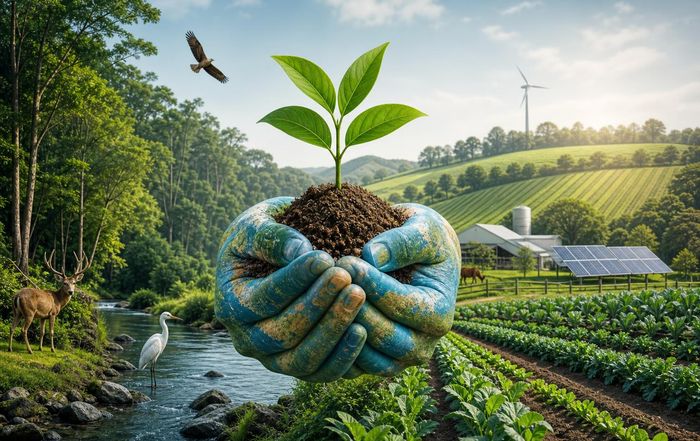
How Sustainable Land Use Protects Natural Resources
Rethinking the Ground Beneath Our Feet
Across continents and climates, from the vast agricultural plains of North America to the biodiverse forests of the Amazon and the carefully managed landscapes of Scandinavia, land has become one of the most contested and fragile resources on Earth. Urban expansion, industrial agriculture, infrastructure, mining, and mass tourism all compete for space, while climate change intensifies droughts, floods, and wildfires that further degrade soils and ecosystems. In this context, sustainable land use is emerging not as an abstract ideal but as a practical framework for protecting the natural resources that underpin human societies: fertile soil, clean water, stable climate, and thriving biodiversity.
For the growing number of nature lovers, and people who care about the environment, sustainable land use sits at the intersection of everyday choices and global systems. It influences how food is grown, how cities expand, how forests are managed, and how economies develop, while also shaping the possibilities for sustainable living that respects ecological limits. By examining the science, policies, and on-the-ground practices that define sustainable land use, it becomes clear that thoughtful management of landscapes is one of the most powerful tools available for safeguarding natural resources for present and future generations.
The Foundations of Sustainable Land Use
Sustainable land use refers to planning and managing land so that it meets human needs for food, housing, energy, and economic activity, while preserving the capacity of ecosystems to regenerate and continue providing essential services. This concept builds on principles articulated by organizations such as the Food and Agriculture Organization of the United Nations (FAO) and the United Nations Environment Programme (UNEP), which emphasize the need to balance productivity, environmental protection, and social equity over the long term. Readers can explore the broader context in reports from the FAO on land and water resources and analysis from UNEP on ecosystem management.
At its core, sustainable land use recognizes that soils, water, vegetation, and wildlife are not separate issues but parts of a single living system. Healthy soils store carbon and water, reduce the need for synthetic fertilizers, and support resilient crops. Intact wetlands filter pollutants and buffer floods. Forests regulate climate and host a large share of the world's terrestrial biodiversity. When land is degraded through deforestation, overgrazing, monoculture farming, or poorly planned urbanization, these functions are compromised, increasing vulnerability to climate shocks and undermining food and water security.
This systems view aligns closely with the integrated perspective promoted throughout Eco Natur, where sustainability is framed as a holistic approach that links environmental health, human well-being, and economic resilience. Sustainable land use, therefore, is not only about protecting nature; it is also about designing landscapes that can continue to support communities and economies in a warming, crowded world.
Protecting Soil: The Silent Ally of Sustainability
Soil is often described by the Intergovernmental Panel on Climate Change (IPCC) as both a victim of climate change and a vital part of the solution. According to assessments compiled by the Intergovernmental Science-Policy Platform on Biodiversity and Ecosystem Services (IPBES), land degradation affects the well-being of billions of people, with soil erosion and nutrient loss threatening agricultural productivity in regions as diverse as sub-Saharan Africa, South Asia, and parts of Europe. Readers can find detailed scientific assessments from IPBES on land degradation and restoration and IPCC reports on land and climate.
Sustainable land use practices respond to these challenges by prioritizing soil conservation and regeneration. Techniques such as conservation tillage, cover cropping, agroforestry, and rotational grazing reduce erosion, increase soil organic matter, and improve water retention. In the United States and Canada, conservation agriculture programs supported by agencies like the US Department of Agriculture (USDA) have demonstrated that reduced tillage combined with cover crops can significantly cut soil loss and enhance carbon sequestration, helping farmers adapt to extreme weather while reducing climate impacts. Similar initiatives in Germany, France, and the United Kingdom are promoted through the European Union's Common Agricultural Policy, which increasingly rewards farmers for adopting climate- and soil-friendly practices; background information can be explored via the European Commission's agriculture pages.
For the global audience of eco-natur.com, soil health is not an abstract scientific issue but a practical foundation for sustainable food systems. Aligning with the site's focus on organic food, sustainable land use often overlaps with organic and regenerative agriculture, which avoid or minimize synthetic inputs, rely on biological processes to maintain fertility, and prioritize long-term soil integrity. While there is ongoing debate in peer-reviewed literature about the exact magnitude of carbon sequestration achievable through regenerative practices, multiple studies referenced by institutions such as Rodale Institute and Soil Association in the UK show that well-managed diversified systems can improve soil structure and biodiversity, reduce runoff, and support more resilient yields under climate stress. Readers interested in the science and practice of soil stewardship can learn more through organizations like the Soil Health Institute and the Global Soil Partnership.
Conserving Water Through Smarter Land Management
Water scarcity and pollution are deeply intertwined with land use decisions. Deforestation in tropical regions such as Brazil, Indonesia, and parts of Central Africa alters rainfall patterns and reduces the capacity of watersheds to store and slowly release water. Rapid urbanization, often occurring without adequate green infrastructure, increases runoff, floods, and contamination of rivers and coastal areas. Intensive agriculture, especially when relying on heavy irrigation and chemical inputs, can deplete aquifers and pollute waterways with fertilizers and pesticides.
Sustainable land use seeks to align agricultural, urban, and conservation planning with the hydrological cycle. In agricultural landscapes, practices such as contour farming, terracing, and the restoration of riparian buffers help slow runoff and enhance groundwater recharge. The World Resources Institute (WRI) has documented how watershed restoration projects in countries like China, South Africa, and the United States can improve water security for cities while creating rural employment; interested readers can explore case studies through the WRI water program.
In urban and peri-urban areas across Europe, North America, and Asia, the adoption of nature-based solutions such as green roofs, rain gardens, and permeable pavements is demonstrating how cities can adapt to heavier rainfall and heatwaves while reducing pressure on drainage systems. Reports from organizations such as C40 Cities and ICLEI - Local Governments for Sustainability highlight examples from cities including Copenhagen, Singapore, Melbourne, and New York, where integrated land and water planning has delivered both environmental and economic benefits. More information on these approaches can be found via C40's urban climate solutions and ICLEI's resilient cities initiatives.
For Eco Natur, which often connects individual lifestyle choices to larger systemic shifts, water-conscious land use is closely linked to responsible consumption and recycling, reduced pollution, and support for policies that protect watersheds. When citizens choose products from farms and companies that prioritize water stewardship, they reinforce market signals that reward sustainable practices, creating a virtuous cycle between consumer behavior and landscape outcomes.
Sustaining Biodiversity and Wildlife Habitats
The protection of wildlife and biodiversity is one of the most visible and emotionally resonant dimensions of sustainable land use. Scientific assessments from IPBES and the Convention on Biological Diversity (CBD) indicate that habitat loss driven by agriculture, logging, infrastructure, and urban expansion remains the primary driver of biodiversity decline worldwide. This trend is evident in tropical forests, grasslands, wetlands, and coastal ecosystems from the Amazon to Southeast Asia and from southern Africa to the Mediterranean. Readers seeking authoritative overviews can consult IPBES global biodiversity assessments and resources from the CBD.
Sustainable land use responds through a combination of protected areas, ecological corridors, and wildlife-friendly production landscapes. National parks and nature reserves in countries such as South Africa, Costa Rica, and Sweden play a critical role in safeguarding intact ecosystems, while community-managed forests and indigenous territories in the Amazon, Canada, and parts of Southeast Asia have been shown by multiple studies to maintain lower deforestation rates than surrounding lands. At the same time, agricultural and forestry lands are increasingly being managed to support biodiversity through agroforestry, hedgerows, mixed cropping, and retention of natural habitats within farms.
The perspective of our hard-working, research and editorial news team places particular emphasis on connecting these global trends to personal engagement with wildlife and biodiversity. When land is managed to maintain native vegetation, wetlands, and pollinator habitats, it supports birds, insects, and mammals that are essential to ecological balance and food production. Initiatives such as the EU Biodiversity Strategy for 2030, the UK's Environment Act, and landscape-scale conservation projects in the United States, Canada, and Australia illustrate how policy frameworks can integrate biodiversity goals into land use planning. More detailed information on these policies is available from sources such as the European Environment Agency and the International Union for Conservation of Nature (IUCN).
Climate Change, Land Use, and the Carbon Balance
Land use and climate change are deeply interconnected. Deforestation, peatland drainage, and intensive agriculture contribute significantly to global greenhouse gas emissions, while healthy forests, grasslands, and soils act as carbon sinks. According to the IPCC, land use change and agriculture together account for a substantial share of global emissions, although exact percentages vary across studies and depend on methodological choices. These findings are summarized in the IPCC's Special Report on Climate Change and Land, accessible via the IPCC official website.
Sustainable land use aims to shift this balance by reducing emissions from land-based activities and enhancing the capacity of ecosystems to absorb carbon. This includes protecting and restoring forests in the Amazon, Congo Basin, and Southeast Asia; rewetting peatlands in countries such as Indonesia, Germany, and Finland; and promoting agroecology and agroforestry systems in regions ranging from Latin America to Africa and Asia. Programs such as REDD+ (Reducing Emissions from Deforestation and Forest Degradation), coordinated under the UN Framework Convention on Climate Change (UNFCCC), seek to create financial incentives for forest conservation, though their effectiveness and governance have been subjects of ongoing debate and careful evaluation. Readers can explore the evolving landscape of land-based climate solutions through the UNFCCC's land use resources and analyses from the Global Forest Watch platform.
For the lovely community coming online today, land-based climate action is closely tied to the broader energy transition and the shift toward renewable energy. While solar and wind power reduce dependence on fossil fuels, their deployment must be carefully planned to avoid unnecessary impacts on agricultural land and sensitive habitats. In Europe, the United States, and countries such as Japan and South Korea, planners and researchers are increasingly exploring dual-use approaches like agrivoltaics, where solar panels are integrated with crop or pasture land, and offshore wind, which minimizes land footprint while contributing to decarbonization. Organizations such as the International Renewable Energy Agency (IRENA) provide guidance on reconciling renewable energy expansion with sustainable land use, which can be explored through IRENA's publications.
Sustainable Land Use in Cities and Regions
The majority of the world's population now lives in urban areas, and this share continues to grow across Asia, Africa, and Latin America. Urban land use decisions have far-reaching implications for natural resource protection, as they shape patterns of energy use, transportation, water management, and waste. Compact, transit-oriented cities with abundant green spaces tend to consume less land and energy per capita than sprawling, car-dependent urban forms, as documented in research by organizations such as the OECD and the World Bank; readers can delve into these dynamics via the World Bank's urban development resources and the OECD's land use reviews.
Sustainable urban land use incorporates green belts, urban forests, protected waterways, and brownfield redevelopment, which together reduce pressure on surrounding agricultural and natural areas. Cities like Freiburg in Germany, Vancouver in Canada, and Curitiba in Brazil are frequently cited in planning literature for integrating land use and transport policies that prioritize public transit, cycling, and walkable neighborhoods, while preserving nearby farmland and natural habitats. Singapore, Tokyo, and Seoul demonstrate how high-density development can coexist with extensive parks, rooftop gardens, and nature reserves, contributing to urban cooling, air quality, and biodiversity.
From the quite frankly, very original perspective of eco-natur.com, this urban dimension is closely linked to lifestyle choices and the pursuit of sustainable living in apartments, houses, and workplaces. When cities adopt zoning and building codes that encourage green roofs, community gardens, and mixed-use development, they create opportunities for residents to grow food, reduce commuting distances, and live closer to nature. These local initiatives, in turn, support broader regional land use strategies that protect peri-urban farms and natural areas, reinforcing the connection between urban sustainability and rural resource protection.
Plastic-Free, Circular, and Zero-Waste Land Use
While land use is often discussed in terms of agriculture and forestry, waste management and material flows also play a crucial role in how landscapes are used and polluted. Landfills, open dumps, and plastic pollution in rivers and coastal zones are direct consequences of linear production and consumption models. Reports from the OECD and UNEP indicate that global plastic production and waste have continued to rise, contributing to soil and water contamination and impacting wildlife on land and at sea. Readers can explore global assessments through UNEP's plastics reports and the OECD's work on waste and materials.
Sustainable land use aligns naturally with a transition to circular economies, in which materials are reused, recycled, and kept in circulation for as long as possible. This shift reduces the need for new extraction sites, landfills, and incinerators, freeing land for more ecologically productive uses. For the Eco Natur community, moving toward a plastic-free and zero-waste lifestyle complements broader land stewardship, as reduced packaging and durable products limit the burden on municipal land and natural ecosystems. Initiatives such as extended producer responsibility policies in the European Union, container deposit schemes in countries like Germany, Norway, and parts of the United States and Canada, and bans on certain single-use plastics in regions from the European Union to India and parts of Africa, illustrate how policy can help align material use with environmental protection.
Recycling, when properly managed, is also a land use strategy. By recovering metals, paper, glass, and plastics, societies reduce the need for new mines, quarries, and forest clearing, while minimizing the expansion of landfills. The design of recycling systems, from collection to sorting and processing, influences the spatial footprint of waste infrastructure. Readers can learn more about recycling systems and explore best practices through sources such as the Ellen MacArthur Foundation and the US Environmental Protection Agency's materials management resources.
Sustainable Business, Economy, and Land Stewardship
The transformation of land use practices cannot occur without parallel shifts in business models and economic incentives. Around the world, companies in sectors such as agriculture, forestry, real estate, tourism, and finance are increasingly being evaluated on how they manage land-related risks and impacts. Frameworks developed by initiatives like the Taskforce on Nature-related Financial Disclosures (TNFD) and the Science Based Targets Network (SBTN) encourage businesses to assess and reduce their impacts on ecosystems, including land and water. Readers interested in these developments can explore the TNFD framework and the SBTN guidance.
In agriculture and food systems, major retailers and brands in Europe, North America, and parts of Asia are adopting deforestation-free sourcing policies for commodities such as soy, palm oil, beef, and cocoa. While implementation remains uneven and subject to scrutiny by civil society organizations, these commitments signal a growing recognition that sustainable land use is integral to long-term business viability. Certification schemes such as Rainforest Alliance, Forest Stewardship Council (FSC), and Roundtable on Sustainable Palm Oil (RSPO), though not without debate and criticism, provide tools for tracing products back to better-managed landscapes; more information is available at the Rainforest Alliance, FSC, and RSPO websites.
The perspective of Eco Natur emphasizes that a sustainable business model is not only about compliance or risk management but about actively contributing to regenerative landscapes and resilient communities. This includes supporting smallholder farmers, indigenous land rights, and community-based conservation, which research by organizations such as Rights and Resources Initiative and World Resources Institute has linked to lower deforestation and stronger ecosystem protection. At a macro level, aligning land use with sustainability objectives contributes to a more resilient economy, reducing exposure to climate-related shocks, resource scarcity, and social conflict.
Personal Choices and Collective Action
Although land use decisions may appear to be the domain of governments, developers, and large corporations, individual choices play a significant role in shaping demand for land-intensive products and influencing policy priorities. When people choose diets with a greater share of plant-based and organic food, support community-supported agriculture, or favor products with credible sustainability certifications, they send signals that can shift agricultural practices and supply chains. When citizens participate in local planning processes, advocate for green spaces and farmland protection, or support conservation organizations, they help shape land use policies in their cities and regions.
The editorial stance of Eco Natur encourages loyal individuals to see themselves as active participants in this transformation, integrating sustainable land use principles into sustainable living, health, and lifestyle. Simple steps such as reducing food waste, choosing products with minimal packaging, supporting restoration projects, and learning about local ecosystems can, when multiplied across communities and countries, contribute to a broader cultural shift that values land as a shared inheritance rather than an expendable commodity.
Globally, from Europe and North America to Asia, Africa, and South America, there is growing recognition that sustainable land use is central to achieving international goals such as the UN Sustainable Development Goals (SDGs) and the Paris Agreement. Reports from the UN Department of Economic and Social Affairs and UN Climate Change highlight how integrated land policies can support climate mitigation, adaptation, biodiversity conservation, and social inclusion simultaneously.
A Shared Landscape for the Future
As the world navigates the complex challenges of climate change, biodiversity loss, and resource scarcity in 2026, sustainable land use stands out as a unifying framework that connects local actions with global outcomes. It is a field where science, policy, business innovation, and citizen engagement intersect, and where positive examples already exist in every region, from regenerative farms in the United States and Europe to community forests in Africa and Asia, from nature-positive urban planning in Scandinavia and Singapore to restoration projects in Latin America and Oceania.
For Eco Natur and its email newsletter subscriber members, or visiting people online, the path forward involves combining knowledge with action: understanding how land use affects soil, water, climate, and wildlife; supporting policies and businesses that prioritize long-term ecological health; and embracing lifestyles that reduce unnecessary pressure on landscapes. By treating land as a living system rather than a static backdrop, societies can protect the natural resources that sustain life, nurture more equitable and resilient economies, and leave future generations a world where forests, fields, rivers, and cities coexist in a more harmonious and regenerative balance.
