
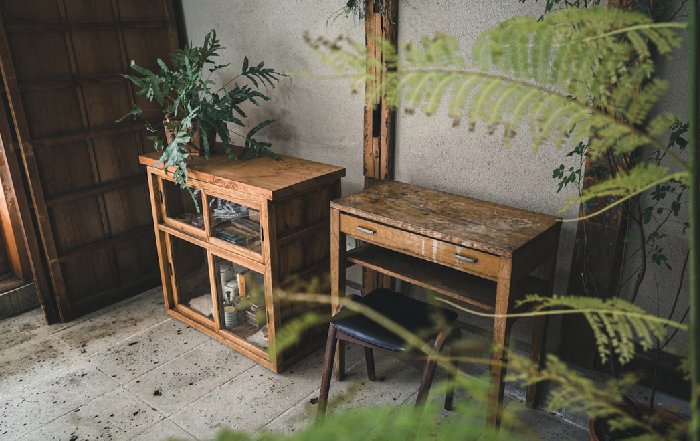
How to Repair and Upcycle Old Furniture in 2026: Strategic Value for Sustainable Living and Business
Repairing Furniture as a Core Pillar of Sustainable Living
By 2026, repairing and upcycling old furniture has become a defining practice for households and businesses that take sustainability seriously, and for the global community that relies on eco-natur.com as a trusted guide to sustainable living, the way furniture is sourced, maintained, and redesigned is now recognised as a powerful lever for reducing environmental impact while creating long-term economic value. Across the United States, the United Kingdom, Germany, Canada, Australia, France, Italy, Spain, the Netherlands, Switzerland, and far beyond, more people are questioning the logic of disposable interiors and are instead embracing a culture of repair, craftsmanship, and circular design that keeps valuable materials in use for as long as possible.
The global furniture sector is deeply intertwined with climate, resource use, and biodiversity. It drives demand for timber, metals, plastics, foams, textiles, and chemical finishes, and it is a major contributor to bulky waste in landfills. The United Nations Environment Programme at unep.org continues to underline how material extraction and processing are responsible for a large share of greenhouse gas emissions and habitat loss, much of which is linked to short-lived consumer products. When low-cost, low-quality furniture is discarded after only a few years in homes and offices in North America, Europe, Asia, Africa, and South America, it reinforces a linear "take-make-waste" model that is incompatible with the climate goals articulated under the Paris Agreement, which can be explored at unfccc.int.
Within this context, repairing and upcycling old furniture have shifted from being nostalgic or artisanal hobbies to becoming central strategies for climate-conscious households and forward-looking organisations. For readers who turn to eco-natur.com for informed perspectives on sustainability, the value proposition is clear: every repaired chair or reimagined table represents avoided emissions, reduced demand for virgin materials, and a tangible contribution to a more resilient and efficient circular economy.
Environmental and Economic Rationale in a Circular Economy
The environmental case for furniture repair and upcycling in 2026 rests on robust evidence that extending product life significantly reduces pressure on ecosystems and the climate. The Intergovernmental Panel on Climate Change (IPCC) at ipcc.ch has emphasised that material efficiency and longer lifespans for durable goods are essential components of credible net-zero pathways. Furniture is particularly well suited to these strategies because, structurally, many pieces can remain functional for decades if properly maintained, even when their surfaces are worn or their styles appear outdated.
From an economic perspective, the logic is equally compelling and increasingly visible in markets from the United States and Canada to Singapore, South Korea, Brazil, and South Africa. High-quality new furniture has become more expensive in many regions, reflecting rising material and transport costs, while the secondary market for used and vintage pieces continues to expand through online platforms and local resale networks. Analyses by McKinsey & Company, available at mckinsey.com, highlight the rapid growth of resale, refurbishment, and circular business models as consumers seek both affordability and authenticity. Businesses that incorporate repair and upcycling services into their offerings are not merely responding to a niche; they are positioning themselves at the forefront of a structural shift towards circularity.
At the macroeconomic level, this transition intersects with debates on green growth, decent work, and local value creation. The Ellen MacArthur Foundation at ellenmacarthurfoundation.org has documented how circular strategies generate new employment opportunities in repair, remanufacturing, and design, while reducing exposure to volatile global supply chains. For the audience of eco-natur.com interested in the economy of sustainability, furniture upcycling offers a concrete illustration of how value can be generated by regenerating and maintaining assets rather than extracting and discarding them.
Foundations of Sustainable Furniture Repair
Sustainable furniture repair begins with an informed assessment of materials, construction quality, and potential health risks. Many older pieces found in homes and offices across Europe, North America, and Asia are made from solid wood and robust joinery, which makes them excellent candidates for restoration. Before any intervention, it is prudent to evaluate structural integrity, checking for loose joints, cracks, woodworm, rusted fasteners, or compromised upholstery, and to identify any hazardous substances such as lead-based paints or certain historical finishes. Guidance from the U.S. Environmental Protection Agency (EPA) at epa.gov remains valuable for understanding safe handling and remediation of legacy materials, particularly in older buildings in the United States and other countries with similar construction histories.
Equally important is the choice of repair products and finishes, which directly affect indoor air quality and occupant health. Water-based varnishes, low-VOC paints, natural oils, and plant-based waxes are generally preferable to solvent-heavy alternatives that emit harmful volatile organic compounds. The World Health Organization at who.int continues to highlight the relationship between chemical exposure, indoor environments, and respiratory and neurological health. For readers who associate sustainability with health and wellbeing, prioritising low-emission finishes and adhesives is a decision that protects both the planet and the people who live or work with the furniture every day.
Technically, sustainable repair work balances authenticity, functionality, and durability. Traditional joinery methods such as mortise-and-tenon joints, dovetails, and dowelled connections can often be stabilised or replicated using modern adhesives that comply with current environmental standards. Metal elements can be cleaned, derusted, and sealed rather than discarded, while upholstery can be renewed with natural fibres such as organic cotton, linen, hemp, or wool, echoing the values that drive the organic food movement. Those who follow eco-natur.com for insights into organic and sustainable production will recognise similar themes of traceability, reduced chemical inputs, and ecosystem protection in these material choices.
Upcycling as Strategic Design and Brand Expression
Upcycling moves beyond repair by transforming furniture into pieces that serve new functions or embody a different aesthetic, while retaining much of the original material and embedded carbon. A damaged wardrobe can be converted into open shelving for a modern apartment in Berlin or Toronto; a redundant office desk can become a dining table in a London flat; a group of mismatched chairs can be unified through a carefully curated palette of finishes and textiles in a boutique hotel in Barcelona or Melbourne. This creative re-imagination aligns closely with the principles of sustainable design thinking, where constraints such as existing dimensions, materials, and structural conditions become sources of innovation.
Design institutions and professional bodies increasingly integrate circular design into their frameworks. The Royal Institute of British Architects (RIBA) at architecture.com and similar organisations across Europe and Asia highlight adaptability, disassembly, and reuse as core criteria in responsible architecture and interior design. In countries such as Denmark, Sweden, the Netherlands, and Finland, design schools encourage experimentation with reclaimed and upcycled furniture components, training a new generation of designers to see existing stock as a resource rather than waste. Businesses that collaborate with these designers can develop distinctive upcycled collections that appeal to environmentally aware clients in markets as diverse as Japan, Singapore, Brazil, and South Africa.
Upcycling also resonates strongly with the growing movement toward zero-waste living, where the priority is to prevent waste before it arises rather than relying solely on recycling systems. By transforming items that would otherwise be discarded, households and organisations reduce the volume of bulky waste entering municipal systems and avoid the energy-intensive processes associated with recycling complex composite materials. The European Environment Agency at eea.europa.eu continues to show that upstream waste prevention delivers the greatest environmental benefits, reinforcing the strategic importance of creative reuse and upcycling as part of integrated waste and climate policies.
Material Decisions: Wood, Metals, and a Move Away from Plastics
For the community that turns to eco-natur.com for guidance on plastic-free choices, furniture repair and upcycling are powerful tools for reducing dependence on virgin plastics and short-lived synthetic components. While some contemporary furniture relies heavily on plastic shells, foam-heavy composites, and bonded boards, many older pieces in homes and workplaces across North America, Europe, and Asia are primarily constructed from solid wood and metal, materials that can be repaired repeatedly and retain their structural integrity over decades.
Wood remains central to most repair and upcycling projects, and the way new wood is sourced has significant implications for forests and wildlife. Choosing replacement parts from certified sustainable sources, such as those endorsed by the Forest Stewardship Council (FSC) at fsc.org, helps ensure that environmental and social criteria are respected in forest management. In forest-rich countries such as Canada, Sweden, Norway, Germany, and Finland, supporting certified wood products contributes to better biodiversity outcomes and more resilient rural economies. Where possible, reclaimed timber from building deconstruction or industrial offcuts can be used for repairs, further reducing environmental impact and adding unique character to each piece.
Metals such as steel, iron, and aluminium are inherently recyclable and often perform well over long periods if protected from corrosion. Cleaning, derusting, and refinishing existing metal components is usually preferable to replacement, both in terms of embodied energy and cost. The International Resource Panel at resourcepanel.org continues to emphasise the importance of metal recycling and circularity in reducing global energy demand and emissions. When new metal parts are necessary, sourcing recycled content rather than virgin metal reinforces the circular approach that is increasingly important in rapidly urbanising regions of Asia, Africa, and South America.
Repair and Upcycling as Everyday Sustainable Practice
In practical terms, integrating furniture repair and upcycling into daily life is a natural extension of broader commitments to sustainable lifestyles and responsible consumption. For households in the United States, the United Kingdom, France, Italy, Spain, Germany, Canada, Australia, New Zealand, and many other countries, learning basic skills such as tightening joints, sanding and refinishing surfaces, and reattaching hardware empowers individuals to maintain their belongings rather than defaulting to replacement. Community repair cafés, maker spaces, and local workshops, increasingly visible in urban centres from Amsterdam to Tokyo and from Cape Town to São Paulo, provide access to tools, knowledge, and peer support, turning repair into a social activity as much as a technical one.
The psychological and cultural value of repair is gaining recognition among policy makers and researchers. The Organisation for Economic Co-operation and Development (OECD) at oecd.org has explored how behavioural insights can support more sustainable consumption patterns, noting that people tend to value and care for objects more when they have invested time and effort in maintaining or customising them. Restoring a family dining table in Zurich, refurbishing a traditional cabinet in Bangkok, or upcycling a vintage armchair in Vancouver can strengthen emotional attachment, preserve family stories, and reinforce a sense of continuity across generations.
For those who look to eco-natur.com for a holistic understanding of sustainability, furniture repair and upcycling demonstrate how environmental, economic, and social dimensions can be aligned. Skills development, intergenerational learning, and local craftsmanship support community resilience and cultural heritage, while reduced material throughput contributes to climate and biodiversity goals. In this way, each successful repair or imaginative upcycling project becomes a visible expression of values that extend far beyond a single household or office.
Strategic Opportunities for Business and Brand Leadership
In 2026, furniture repair and upcycling have become credible, scalable components of business strategy rather than peripheral activities. Interior designers, architects, and facility managers operating in North America, Europe, and Asia are increasingly tasked with delivering interiors that minimise embodied carbon, reduce waste, and support local economies. Companies that can demonstrate deep experience and expertise in specifying, sourcing, and integrating repaired and upcycled furniture into high-performance interiors differentiate themselves in competitive markets and enhance their reputation for environmental stewardship.
The hospitality sector provides some of the most visible examples of this shift. Hotels, eco-lodges, and resorts in regions as varied as New Zealand, Brazil, South Africa, Thailand, and Malaysia are adopting upcycled furniture as a core part of their design language and guest experience. By featuring locally restored or creatively reimagined pieces in rooms, lobbies, and restaurants, these businesses communicate authenticity and a tangible commitment to sustainability, while supporting local artisans and workshops. The Global Sustainable Tourism Council (GSTC) at gstcouncil.org offers frameworks and criteria that recognise such practices as part of comprehensive sustainability strategies, reinforcing the business case for investing in repair and upcycling.
Corporate offices and co-working spaces are also rethinking their approach to furniture procurement. Rather than specifying only new products, some organisations now adopt policies that prioritise refurbished and upcycled items, combined with robust repair and take-back services. The Global Reporting Initiative (GRI) at globalreporting.org encourages companies to disclose information on material use, waste, and circularity, and furniture choices can form a visible and measurable part of that narrative. For businesses that engage with eco-natur.com on sustainable business models, aligning interior fit-out strategies with broader climate and resource goals is an increasingly important dimension of corporate responsibility and brand positioning.
Linking Furniture Decisions to Climate, Biodiversity, and Waste
Although furniture might appear to be a relatively contained product category, its life cycle intersects with several of the most pressing environmental issues of the decade. Unsustainable logging for furniture production contributes to deforestation and the degradation of habitats that are vital for wildlife. The World Wildlife Fund (WWF) at worldwildlife.org continues to document how forest loss in regions such as the Amazon, Central Africa, and Southeast Asia affects species survival, water cycles, and local communities. By extending the life of existing wooden furniture and selecting certified or reclaimed wood when repairs are necessary, consumers and businesses help reduce demand for new timber, supporting broader biodiversity protection and wildlife conservation.
Waste management is another critical dimension. Landfills and incinerators across North America, Europe, Asia, and emerging urban centres in Africa and South America receive vast quantities of discarded furniture each year, much of which could have been repaired, resold, or repurposed. The World Bank at worldbank.org identifies solid waste management as a major challenge for sustainable cities, particularly in rapidly growing economies where infrastructure struggles to keep pace with consumption. Repair and upcycling directly reduce the volume of bulky waste, alleviate pressure on local authorities, and support more efficient recycling systems by ensuring that only truly end-of-life materials enter the waste stream.
Energy use and emissions are also closely linked to furniture choices. Manufacturing new furniture, especially when it involves energy-intensive materials or long-distance shipping, contributes to greenhouse gas emissions. In contrast, repair and upcycling are typically low-energy activities, especially when carried out in workshops and homes powered by renewable energy. As more countries, including China, the United States, Japan, members of the European Union, and nations across Asia-Pacific and Latin America, expand renewable capacity and accelerate grid decarbonisation, the climate benefits of local repair and refurbishment become even more pronounced.
Practical Pathways for Households and Organisations
For those who turn to eco-natur.com seeking actionable guidance, there are clear pathways to integrate furniture repair and upcycling into personal and organisational sustainability strategies. At home, a useful starting point is to conduct a simple inventory of existing furniture, identifying which items can be improved with minor repairs, which merit full restoration, and which could be creatively transformed to suit new needs or aesthetic preferences. Often, straightforward interventions such as tightening loose components, cleaning and refinishing surfaces, or replacing worn upholstery can dramatically extend the life of a piece and remove the perceived need to buy new. Reputable resources like The Spruce at thespruce.com provide accessible, step-by-step advice for those who wish to build confidence in basic repair techniques.
For organisations, from small enterprises to multinational corporations, integrating repair and upcycling into procurement and facility management policies can deliver both environmental and financial benefits. Instead of specifying only new furniture, companies can request that suppliers propose refurbished or upcycled options and include repair and take-back services as part of contracts. This approach aligns with the broader principles of sustainable living and operations that shape the editorial perspective of eco-natur.com, and it can be extended to other asset categories such as lighting, fixtures, and equipment. By tracking metrics such as cost savings, waste reduction, and employee satisfaction, organisations can build a compelling internal case for scaling these practices across offices, branches, and regions.
Collaboration with local artisans, social enterprises, and vocational training centres further enhances the impact of repair and upcycling. In the United Kingdom, Germany, France, Italy, Spain, South Korea, Japan, South Africa, Brazil, Malaysia, and New Zealand, partnerships with community-based workshops not only deliver high-quality results but also create skilled jobs, support social inclusion, and preserve traditional techniques. This community-centric model resonates strongly with the ethos of eco-natur.com, which emphasises the interdependence of environmental stewardship, social equity, and economic resilience at the global level.
Integrating Furniture Repair into a Holistic Sustainability Vision
By 2026, the repair and upcycling of old furniture have clearly evolved into integral components of a comprehensive sustainability strategy for individuals, businesses, and public institutions. For the international audience that looks to eco-natur.com as an authoritative and trustworthy resource, these practices offer a compelling example of how high-level concepts such as the circular economy, responsible consumption, and climate resilience can be translated into concrete, everyday decisions.
When a household in Chicago, Munich, Sydney, Paris, or Singapore chooses to restore a dining table rather than replace it, it reinforces a culture of care, resourcefulness, and continuity that extends beyond the immediate environmental savings. When a hotel in Lisbon, a co-working space in Seoul, or a retail brand in New York furnishes its interiors with upcycled pieces, it demonstrates that design excellence and environmental responsibility can be mutually reinforcing rather than mutually exclusive. When city governments across Europe, Asia, Africa, and the Americas support repair initiatives, reuse centres, and skills training, they create enabling conditions for systemic change that reaches far beyond the furniture sector.
Within this broader transformation, eco-natur.com continues to position furniture repair and upcycling as part of an integrated narrative that links sustainable living, plastic-free choices, recycling, wildlife and biodiversity protection, and the evolution of a more resilient, low-carbon global economy. By grounding its guidance in experience, expertise, authoritativeness, and trustworthiness, and by continually connecting practical decisions about furniture to the larger environmental and social systems they influence, the platform supports readers across North America, Europe, Asia, Africa, and South America as they turn old furniture into a strategic asset in the transition to a sustainable future.
