
Ways to Reduce Impact on Earth's Natural Resources and Carbon Footprint in 2026
A New Sustainability Mandate for a Resource-Constrained World
In 2026, the conversation about sustainability has shifted from whether societies and businesses should act to how fast they can transform and how deeply they can reduce their impact on Earth's natural systems, as accelerating climate change, biodiversity loss, and resource depletion are now material risks for economies across North America, Europe, Asia, Africa, and South America, making sustainability not only an ethical imperative but a strategic business and societal priority. Against this backdrop, eco-natur.com positions itself as a practical and trusted guide, translating global science, policy, and innovation into actionable pathways for individuals, companies, and communities seeking to reduce their carbon footprint and pressure on natural resources in a way that is realistic, measurable, and aligned with long-term value creation.
The global scientific consensus, reflected in assessments from the Intergovernmental Panel on Climate Change, underscores that keeping warming close to 1.5°C requires rapid reductions in greenhouse gas emissions across all sectors, coupled with better stewardship of land, oceans, and biodiversity. At the same time, analyses from organizations such as the United Nations Environment Programme show that resource extraction and processing already account for a large share of global emissions and ecosystem damage, which means that climate mitigation and resource conservation must be addressed together rather than in isolation. For readers of eco-natur.com in regions ranging from the United States and Canada to Germany, Sweden, China, Singapore, South Africa, Brazil, and beyond, this convergence of climate, nature, and resource concerns defines the new sustainability mandate and shapes the strategies that will be most effective in the decade ahead.
Understanding the Link Between Natural Resources and Carbon Footprint
Reducing impact on natural resources begins with understanding how modern economies convert materials and energy into goods and services, and how this process drives emissions and ecological degradation. According to the International Energy Agency, fossil fuels still account for the majority of global energy supply, meaning that every kilowatt-hour of electricity, every liter of fuel, and every cubic meter of gas consumed in homes, offices, factories, and transport systems is typically associated with carbon dioxide and other greenhouse gases. At the same time, data from the OECD highlight that materials use has more than tripled over the past decades, with metals, biomass, and construction minerals placing mounting pressure on land, water, and biodiversity, especially in rapidly urbanizing regions of Asia, Africa, and South America.
This interdependence of energy, materials, and emissions is central to the editorial and educational mission of eco-natur.com, which emphasizes that sustainable living is not a narrow lifestyle niche but a comprehensive rethinking of how societies produce, consume, and dispose of goods. Readers exploring the platform's guidance on sustainable living and sustainability encounter a consistent theme: the most effective strategies are those that address both the quantity of resources used and the carbon intensity of those resources. Whether considering the energy mix in the United Kingdom, building efficiency standards in Germany, transport choices in Australia, or food systems in France and Italy, the key is to align personal and corporate decisions with systemic shifts toward low-carbon, resource-efficient models.
Sustainable Living as a Strategic Lever for Change
The concept of sustainable living has matured significantly by 2026, moving beyond symbolic gestures to become a structured approach to resource and emissions management at the household and community level. In advanced economies such as the United States, Canada, and the Netherlands, and in fast-growing urban centers across Asia and Latin America, households are increasingly aware that daily decisions about housing, mobility, diet, and consumption collectively shape national carbon profiles and demand for natural resources. Guidance from the U.S. Environmental Protection Agency and the European Environment Agency reinforces that residential energy use, private vehicle travel, and food choices are among the largest contributors to individual carbon footprints, making them prime targets for meaningful change.
Within this context, eco-natur.com frames sustainable living not as an exercise in deprivation but as an opportunity to redesign lifestyles for resilience, health, and long-term affordability, particularly as energy prices, water scarcity, and climate-related disruptions become more pronounced. In regions such as Scandinavia, where Denmark, Sweden, Norway, and Finland have pioneered low-carbon lifestyles supported by public policy and urban planning, the combination of efficient buildings, district heating, cycling infrastructure, and renewable energy demonstrates that high quality of life can coexist with low per-capita emissions. For audiences in emerging economies, sustainable living strategies may emphasize passive cooling, shared mobility, and locally appropriate building materials, aligning with both cultural norms and resource constraints.
Moving Toward Plastic-Free and Circular Material Use
Plastic pollution has become one of the most visible symbols of unsustainable resource use, with rivers, coastlines, and oceans in Asia, Africa, and South America bearing much of the burden of global consumption patterns. Research from the UNESCO and the World Wildlife Fund documents the extensive harm that plastic waste inflicts on marine and terrestrial wildlife, as well as the emerging concerns about microplastics in water, soil, and food chains. At the same time, plastics are deeply intertwined with fossil fuel extraction and petrochemicals, meaning that reducing plastic dependency can also contribute to lowering upstream carbon emissions.
For eco-natur.com, the shift toward a plastic-free lifestyle is presented as both a personal and systemic endeavor, where individuals, businesses, and policymakers collaborate to design out waste and embrace circularity. In markets like the European Union, where regulatory measures such as bans on certain single-use plastics are already in force, businesses are under pressure to redesign packaging, invest in reusable systems, and support advanced recycling. In North America, Asia, and Oceania, momentum is building as retailers, hospitality providers, and logistics companies respond to consumer demand and emerging regulations. Learning from best practices documented by the Ellen MacArthur Foundation, organizations are increasingly exploring refill models, product-as-a-service offerings, and materials innovation as pathways to reduce both resource extraction and carbon intensity.
Recycling and the Transition to a Circular Economy
Recycling has long been perceived as an essential environmental action, yet by 2026 the narrative has evolved to situate recycling within a broader circular economy framework that prioritizes reduction and reuse before material recovery. Reports from the World Bank and the International Solid Waste Association highlight that many regions, particularly in rapidly urbanizing parts of Asia and Africa, still struggle with inadequate waste infrastructure, leading to open dumping and uncontrolled burning that release pollutants and greenhouse gases. Even in advanced economies, recycling rates for complex products such as electronics, textiles, and composites remain modest, indicating that design and business model innovation are required alongside improved collection systems.
On eco-natur.com, the focus on recycling is integrated into a holistic vision that includes zero waste strategies and product design for disassembly, durability, and repairability. Businesses in Germany, Japan, and South Korea, for example, are increasingly adopting extended producer responsibility frameworks, in which manufacturers remain accountable for the end-of-life phase of their products, incentivizing them to minimize material complexity and maximize recyclability. At the consumer level, readers are encouraged to recognize that effective recycling begins with informed purchasing decisions, such as choosing products with minimal packaging, clear labeling, and established take-back schemes, thereby influencing supply chains and signaling demand for circular solutions.
Protecting Wildlife and Biodiversity as Climate and Resource Strategy
The protection of wildlife and biodiversity is often perceived as a conservationist concern, yet in 2026 it is increasingly recognized as a core component of climate mitigation, adaptation, and resource stability. Analyses from the Intergovernmental Science-Policy Platform on Biodiversity and Ecosystem Services and the International Union for Conservation of Nature show that ecosystem degradation, driven by land-use change, pollution, overexploitation, and climate change, undermines the natural systems that regulate water cycles, sequester carbon, pollinate crops, and maintain soil fertility. In regions such as the Amazon in South America, the Congo Basin in Africa, and boreal forests across Canada and Russia, the loss of intact ecosystems has implications for global climate stability and local livelihoods alike.
For eco-natur.com, wildlife protection is not an isolated cause but an integral part of a coherent sustainability agenda that includes biodiversity conservation, climate resilience, and sustainable livelihoods. By guiding readers to explore topics such as wildlife stewardship and habitat-friendly land management, the platform emphasizes practical actions that individuals, landowners, and businesses can take, from supporting certified sustainable products and nature-positive investments to engaging with local conservation initiatives in countries as diverse as South Africa, Brazil, Malaysia, and New Zealand. In urban contexts, measures such as green roofs, native planting, and ecological corridors contribute to biodiversity while also mitigating heat islands and improving air quality, demonstrating that nature-positive design is compatible with dense, modern cities.
Sustainable Business and the Evolving Green Economy
By 2026, sustainability has become a defining feature of competitive strategy for organizations across sectors and geographies, with investors, regulators, and customers expecting credible action on climate, resources, and social impact. Frameworks such as the Task Force on Climate-related Financial Disclosures and emerging international sustainability reporting standards have pushed companies in the United States, United Kingdom, Europe, and Asia to quantify and disclose their environmental footprints, while financial institutions increasingly integrate climate and nature risks into lending and investment decisions. This shift is reshaping supply chains, capital flows, and innovation priorities, as businesses recognize that unmanaged environmental externalities can quickly translate into financial and reputational liabilities.
In this evolving landscape, eco-natur.com devotes significant attention to sustainable business models and the broader economy, offering insights tailored to entrepreneurs, executives, and sustainability professionals who seek to align profitability with planetary boundaries. Companies in Germany, Switzerland, and the Netherlands are among the leaders in integrating circular design, renewable energy, and science-based climate targets, while firms in Asia-Pacific markets such as Singapore, Japan, and South Korea rapidly expand their green finance and clean technology portfolios. Resources from organizations like the World Business Council for Sustainable Development and the World Economic Forum provide additional guidance on how to embed sustainability into corporate governance, innovation pipelines, and value-chain collaboration, reinforcing the message that environmental performance is now a core driver of long-term value creation.
Renewable Energy and Low-Carbon Infrastructure
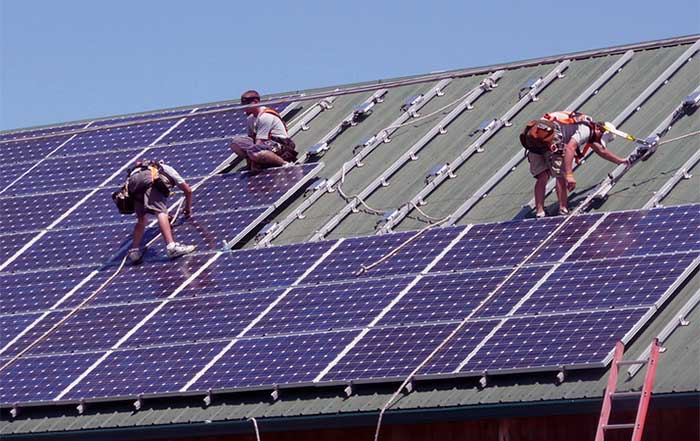
A central pillar of reducing both resource use and carbon footprints is the transition from fossil fuels to renewable energy sources such as solar, wind, hydro, and sustainably managed bioenergy, complemented by energy efficiency and smart infrastructure. The International Renewable Energy Agency reports that the costs of solar and onshore wind have continued to decline, making them increasingly competitive with or cheaper than fossil-based generation in many regions, from the United States and Canada to China, India, Brazil, and the Middle East. Simultaneously, improvements in battery storage, grid management, and digital technologies enable higher shares of variable renewables while maintaining reliability, which is critical for industrial economies such as Germany, Japan, and South Korea.
For individuals and organizations engaging with eco-natur.com, the emphasis on renewable energy is tied to practical decision-making about building upgrades, transport choices, and investment portfolios. Households in the United Kingdom, Australia, and New Zealand, for instance, increasingly consider rooftop solar, heat pumps, and electric vehicles as standard components of modern living, while businesses assess power purchase agreements, on-site generation, and energy management systems as strategic levers for cost control and emissions reduction. Infrastructure planners and policymakers can draw on guidance from the International Energy Agency and the World Resources Institute to design integrated solutions that combine clean power, public transit, and efficient buildings, thereby reducing resource intensity while enhancing resilience to climate-related disruptions.
Food Systems, Organic Agriculture, and Resource Efficiency
Food systems are both a driver and a victim of environmental change, with agriculture, land use, and food waste collectively responsible for a substantial share of global greenhouse gas emissions and biodiversity loss. Reports from the Food and Agriculture Organization of the United Nations and the EAT Foundation highlight that current patterns of production and consumption often exceed planetary boundaries, particularly in relation to land conversion, freshwater use, and nitrogen and phosphorus cycles. At the same time, climate change threatens yields and food security in vulnerable regions across Africa, Asia, and Latin America, underscoring the need for resilient, regenerative, and equitable food systems.
Within this context, eco-natur.com provides detailed guidance on organic food and sustainable diets, emphasizing that choices made by consumers in Europe, North America, and other affluent regions can significantly influence global supply chains and land-use patterns. Organic and regenerative agricultural practices, when well-designed and context-appropriate, can improve soil health, enhance biodiversity, and reduce reliance on synthetic inputs, thereby contributing to both climate mitigation and adaptation. For readers seeking further expertise, institutions such as the Rodale Institute and the Soil Association offer evidence on how organic and regenerative approaches can be scaled while maintaining productivity and profitability. Reducing food waste, shifting toward more plant-rich diets, and supporting local and seasonal produce are additional levers that simultaneously lower resource use, emissions, and pressure on ecosystems.
Health, Wellbeing, and the Human Dimension of Sustainability
The transition to a lower-impact, low-carbon society is not only an environmental or economic endeavor; it is also a public health and wellbeing imperative, especially as climate-related hazards, air pollution, and ecosystem degradation increasingly affect populations worldwide. The World Health Organization has documented how air pollution from fossil fuels contributes to millions of premature deaths annually, while heatwaves, vector-borne diseases, and extreme weather events disproportionately impact vulnerable communities in regions such as South Asia, sub-Saharan Africa, and parts of North America and Europe. In this sense, reducing reliance on fossil fuels, improving urban design, and protecting natural ecosystems are simultaneously climate actions and health interventions.
eco-natur.com integrates this human dimension through content that links health, environment, and lifestyle, demonstrating that sustainable choices often deliver co-benefits such as improved air quality, increased physical activity, and better nutrition. For example, compact, walkable cities with robust public transport and green spaces, as seen in parts of the Netherlands, Denmark, and Singapore, tend to foster healthier populations while also reducing per-capita emissions and resource consumption. Similarly, diets rich in whole, minimally processed, plant-based foods not only lower the environmental footprint but also align with guidance from leading health organizations, illustrating how environmental and health objectives can reinforce rather than compete with each other.
Designing Systems, Products, and Cities for a Low-Impact Future
Reducing humanity's impact on natural resources and the climate ultimately requires rethinking how products, buildings, and cities are designed, built, and operated, so that resource efficiency, durability, adaptability, and low emissions are embedded from the outset rather than treated as afterthoughts. Thought leadership from institutions such as the Rocky Mountain Institute and the Urban Land Institute underscores that integrated design approaches can dramatically reduce energy and material use while lowering lifecycle costs, especially when applied at the scale of neighborhoods, campuses, and industrial parks. High-performance building codes, transit-oriented development, and nature-based infrastructure are increasingly recognized as essential tools in regions ranging from Europe and North America to rapidly growing megacities in Asia and Africa.
Within the editorial framework of eco-natur.com, topics such as sustainable design, sustainable living, and global sustainability trends are woven together to help readers understand how individual decisions intersect with systemic design choices. A consumer choosing durable, repairable products; a business investing in modular, adaptable facilities; or a city planning mixed-use, transit-rich districts are all participating in the same overarching shift toward systems that use fewer resources, generate fewer emissions, and provide greater resilience. By highlighting examples from diverse contexts - from energy-positive buildings in Switzerland to circular industrial clusters in the Netherlands and regenerative tourism models in New Zealand and Thailand - the platform illustrates that design innovation is a universal lever for reducing impact, regardless of geography or sector.
From Insight to Action: eco-natur.com as a Partner in the Transition
In 2026, the urgency of reducing humanity's impact on Earth's natural resources and carbon budget is no longer in doubt, but the pathways to action can still appear complex and fragmented, especially for individuals and organizations navigating different regulatory, cultural, and economic contexts across continents. This is where eco-natur.com positions itself as a practical, trustworthy companion, synthesizing global expertise into context-aware guidance that empowers readers to move from awareness to implementation. By connecting themes such as sustainability, recycling, organic food, renewable energy, and sustainable business within a coherent narrative, the platform helps users in the United States, United Kingdom, Germany, Canada, Australia, France, Italy, Spain, the Netherlands, Switzerland, China, and beyond to see how their choices align with global trends and scientific imperatives.
For business leaders, policymakers, and citizens alike, the central message is that meaningful reductions in resource use and carbon emissions are achievable when decisions are informed by robust evidence, guided by long-term thinking, and grounded in a commitment to fairness and resilience. As international institutions, national governments, and local communities continue to refine their strategies, resources such as the United Nations Sustainable Development Agenda and specialized guidance from organizations like the World Resources Institute or the International Energy Agency will remain important reference points. Yet it is through accessible, actionable platforms like eco-natur.com, which translate these high-level frameworks into concrete steps for daily life and business practice, that the global sustainability transition becomes tangible and achievable.
Ultimately, reducing the impact on Earth's natural resources and carbon footprint is not a single project with a fixed endpoint but an ongoing process of learning, innovation, and collaboration that spans generations and geographies. As the world moves deeper into the 2020s, and as climate and ecological thresholds become ever more visible, the combination of individual responsibility, corporate leadership, and systemic design will determine whether societies can decouple prosperity from environmental harm. In this evolving story, eco-natur.com aims to serve as both a repository of knowledge and a catalyst for action, helping readers worldwide to align their choices with a future in which economic vitality, social wellbeing, and ecological integrity reinforce one another rather than stand in conflict.
