
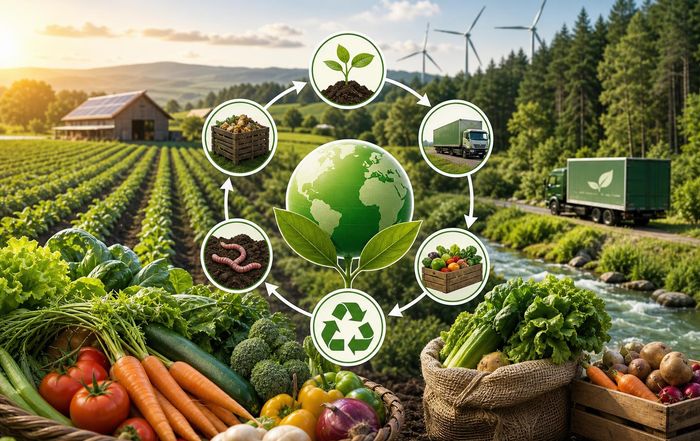
How Organic Food Supply Chains Reduce Environmental Risk
Organic Food as a Strategic Climate and Health Solution
Across global food systems, organic supply chains are moving from niche alternative to strategic pillar in environmental and public health policy. Governments, businesses and civil society are increasingly aligned around the idea that how food is produced, transported and consumed will largely determine whether the world can remain within planetary boundaries while supporting human wellbeing. For readers of Eco Natur, who already follow developments in sustainable living and climate-conscious lifestyles, the maturing of organic food supply chains represents one of the most promising and practical levers for reducing environmental risk.
Organic agriculture is defined somewhat differently across regions, yet standards from bodies such as USDA Organic, EU Organic, Soil Association in the United Kingdom, Bio Suisse in Switzerland and JAS Organic in Japan converge on core principles: avoidance of synthetic pesticides and fertilizers, prohibition of genetically modified organisms, restrictions on prophylactic antibiotics in livestock, and an emphasis on soil health, biodiversity and animal welfare. When these production principles are embedded in well-designed supply chains-from farm to processing, distribution, retail and consumption-the result is a system that can significantly lower a range of environmental risks, including pollution, biodiversity loss, climate instability and resource depletion.
The global organic market has expanded steadily over the past decade according to data from organizations such as FiBL (Research Institute of Organic Agriculture) and IFOAM - Organics International, and many countries in Europe, North America and parts of Asia now integrate organic farming targets into national climate and biodiversity strategies. This expansion is not merely a consumer trend; it is a structural shift that is reshaping how land is managed, how businesses operate and how communities think about long-term resilience.
For eco-natur, which focuses on the intersection of environment, health and responsible business, understanding how organic food supply chains tangibly reduce environmental risk helps readers align their everyday choices with broader planetary goals.
Soil Health, Carbon Storage and Climate Stability
One of the most thoroughly researched contributions of organic agriculture is its impact on soil health and carbon storage. Numerous peer-reviewed studies, including long-term field trials by FiBL and research published through platforms such as ScienceDirect, indicate that organically managed soils tend to have higher soil organic matter, improved structure and greater biological activity than conventionally managed soils under comparable conditions. These characteristics are central to climate resilience and risk reduction.
Healthy soils function as carbon sinks, drawing atmospheric carbon dioxide into stable organic matter. While scientific debate continues regarding the precise magnitude of sequestration potential and how it varies by climate, soil type and management practices, there is broad agreement that practices common in organic systems-such as diverse crop rotations, cover cropping, reduced reliance on synthetic nitrogen fertilizers and the use of compost and manure-can enhance soil carbon levels over time. Reports from agencies like the Food and Agriculture Organization (FAO) and the Intergovernmental Panel on Climate Change (IPCC) emphasize soil management as a critical mitigation and adaptation strategy, and organic systems align closely with these recommendations.
In addition to carbon storage, improved soil structure and organic matter increase water infiltration and retention, reducing erosion, flood risk and vulnerability to drought. This is particularly important in regions facing climate-driven extremes, from heatwaves in Europe and North America to intense rainfall events in Asia and Africa. When organic practices are embedded in supply chains through certification, procurement standards and long-term contracts, they create economic incentives for farmers to maintain and improve soil health, thereby lowering systemic risk for insurers, governments and communities.
Readers seeking a deeper understanding of how soil practices connect to broader sustainability goals can explore Eco Natur's resources on sustainability and renewable energy, which together paint a picture of integrated climate solutions spanning land use and energy systems.
Reducing Chemical Pollution and Protecting Water Resources
Another central way organic food supply chains reduce environmental risk is through the strict limitation or prohibition of synthetic pesticides and readily soluble mineral fertilizers. Regulatory frameworks in the United States, European Union, United Kingdom, Canada, Australia and many other countries set clear boundaries on which substances can be used in certified organic production, and independent audits help ensure compliance.
Conventional pesticide use is associated with multiple environmental risks, including contamination of surface and groundwater, harm to non-target organisms such as pollinators and aquatic life, and the development of pest resistance. Comprehensive reviews by agencies such as the European Food Safety Authority (EFSA), the U.S. Environmental Protection Agency (EPA) and international initiatives like the UN Environment Programme (UNEP) have documented these risks and called for more sustainable pest management approaches. By design, organic systems rely on integrated pest management, crop diversity, biological control and mechanical methods rather than routine synthetic pesticide applications.
Similarly, the overuse of synthetic nitrogen fertilizers contributes to nitrate leaching into groundwater and the formation of dead zones in coastal waters due to nutrient-driven algal blooms. Reports from the World Resources Institute (WRI) and OECD have detailed the economic and ecological costs of such eutrophication. Organic standards require more closed nutrient cycles, often emphasizing composting, manure management and legume-based nitrogen fixation, which can reduce the risk of nutrient runoff when properly managed.
From the perspective of supply chain design, companies that prioritize organic sourcing reduce their exposure to regulatory, reputational and liability risks associated with chemical contamination. Retailers and food manufacturers in Europe, North America and Asia are increasingly setting internal pesticide reduction targets and using organic certification as a straightforward mechanism to meet those commitments. Consumers who follow Eco Natur's guidance on plastic-free living and recycling often extend the same precautionary approach to chemical exposure in food, reinforcing market demand for cleaner supply chains.
Biodiversity Conservation from Farm to Landscape Scale
Biodiversity loss is recognized by the IPBES (Intergovernmental Science-Policy Platform on Biodiversity and Ecosystem Services) as a risk on par with climate change, with profound implications for food security, health and economic stability. Organic farming, when implemented thoughtfully, can function as a biodiversity buffer within intensively used landscapes.
Meta-analyses published in journals accessible via SpringerLink and Wiley Online Library have generally found higher levels of species richness and abundance in organic fields compared with conventional fields, especially for plants, insects and birds. This is attributed to the absence of many synthetic pesticides and herbicides, as well as structural features such as hedgerows, flower strips, mixed cropping and more diverse rotations that are encouraged or required by many organic standards and agroecology programs.
At the supply chain level, companies and cooperatives that support organic producers often invest in landscape-level initiatives, such as pollinator corridors, agroforestry systems and wetland restoration. These efforts not only enhance ecosystem services-pollination, natural pest control, water filtration-but also reduce long-term business risk by stabilizing yields and reducing dependency on external inputs. Organizations like WWF, BirdLife International and The Nature Conservancy have partnered with organic producer groups and retailers in various regions to pilot and scale such approaches.
Eco Natur's own focus on wildlife protection and biodiversity aligns closely with these initiatives, highlighting how consumer choices in organic food can support broader conservation outcomes across continents, from European farmlands to tropical agroforestry systems in Latin America, Africa and Asia.
Climate Footprints, Energy Use and Transport
Assessing climate impacts of organic versus conventional supply chains is complex, and reputable sources such as the IPCC, FAO and independent academic groups note that results depend on metrics, crops, regions and system boundaries. Some life-cycle assessments have found that, per kilogram of certain products, organic systems can have similar or higher greenhouse gas emissions if yields are significantly lower, while others have shown that improved soil carbon storage and reduced synthetic fertilizer use can offset these differences.
However, several consistent patterns emerge that are relevant for environmental risk reduction. Organic systems typically use less fossil fuel-derived synthetic nitrogen fertilizer, whose production is energy-intensive and reliant on natural gas. They often incorporate more on-farm renewable energy and circular resource flows, especially when integrated into broader sustainability strategies. Moreover, many organic supply chains emphasize regional and seasonal sourcing, shorter distribution routes and reduced packaging, which can collectively lower emissions associated with transport and processing.
In Europe and North America, for example, a number of major retailers and food brands have committed to science-based climate targets through initiatives like the Science Based Targets initiative (SBTi), and are leveraging organic sourcing as part of their Scope 3 emissions reduction strategies. Similarly, in countries such as Germany, Sweden and Denmark, public procurement policies increasingly include organic and climate criteria for schools and hospitals, aligning institutional demand with national decarbonization pathways.
Eco Natur's coverage of the green economy and sustainable business models frequently highlights how integrated climate strategies in food companies can create competitive advantages, reduce exposure to carbon pricing and supply disruptions, and meet evolving expectations from investors and consumers.
Plastic Reduction and Packaging Innovation
While production practices receive most of the attention, packaging and logistics are equally important parts of organic food supply chains. Plastic pollution has become a central environmental concern, documented extensively by organizations such as UNEP, Ellen MacArthur Foundation and OECD, and the food sector is a major source of single-use plastics.
Many organic brands and retailers are at the forefront of efforts to reduce plastic use, introduce reusable or compostable packaging, and design closed-loop systems. This is not inherently required by organic certification, but it aligns with the values and expectations of consumers who choose organic for environmental reasons. For example, organic bulk sections in supermarkets, refill stations, and packaging made from certified compostable materials or recycled paper are increasingly common in markets from the United States and Canada to Germany, France, the Netherlands and beyond.
Such initiatives reduce environmental risk by lowering plastic leakage into oceans and landscapes, decreasing dependence on fossil fuels used in plastic production, and mitigating regulatory and reputational risks as governments implement stricter rules on single-use items. Reports from European Environment Agency (EEA) and national environmental ministries show a clear policy trend toward extended producer responsibility and higher recycling and reuse targets, which reward companies that proactively redesign packaging.
Readers interested in aligning their household habits with these supply chain changes will find practical guidance in Eco Natur's sections on plastic-free solutions and zero-waste lifestyles, where packaging reduction is treated as a central pillar of everyday environmental action.
Organic Food, Human Health and Social Resilience
While the primary focus here is environmental risk, human health outcomes are deeply intertwined with ecological conditions. Major public health bodies, including the World Health Organization (WHO) and national agencies such as Public Health England (now part of the UK Health Security Agency) and Health Canada, have documented links between environmental degradation, chemical exposure and non-communicable diseases. Organic food supply chains can contribute to risk reduction by limiting exposure to certain synthetic pesticides and by encouraging dietary patterns richer in plant-based, minimally processed foods, although the extent of health benefits continues to be studied and debated in the scientific literature.
Large cohort studies published via platforms like The BMJ and JAMA Network have explored associations between higher organic food consumption and reduced incidence of certain health conditions, though researchers caution about confounding factors such as overall lifestyle and socioeconomic status. Nonetheless, the precautionary principle and the desire for cleaner production methods drive many consumers to favor organic options, particularly for vulnerable groups such as children.
From a broader societal perspective, organic supply chains often support smaller and medium-scale farms, cooperative models and community-supported agriculture schemes, which can strengthen rural economies and social cohesion. These social dimensions contribute to resilience in the face of climate shocks, market volatility and public health crises, as communities with diversified, locally rooted food systems are often better able to adapt.
Eco Natur's focus on health and wellbeing and sustainable lifestyle choices reflects the understanding that environmental and human health are inseparable, and that organic supply chains can serve as a bridge between the two.
Organic, Regenerative and Agroecological Approaches: Convergence and Debate
In recent years, terms such as "regenerative agriculture" and "agroecology" have gained prominence alongside organic farming. Leading organizations like FAO, Rodale Institute, and networks of scientists and farmers worldwide describe regenerative and agroecological approaches as frameworks that go beyond input substitution to redesign whole systems for resilience, equity and ecological integrity. In some regions, regenerative agriculture is practiced within organic certification; in others, it is used more flexibly, sometimes even by conventional operations that maintain synthetic inputs while adopting certain soil-building practices.
There is active debate among researchers, policymakers and practitioners about how these movements intersect and how best to measure their impacts. Some life-cycle assessments suggest that regenerative and organic systems can deliver substantial climate and biodiversity benefits when well implemented, while critics argue that yield gaps and land use implications must be carefully considered to avoid unintended consequences such as agricultural expansion into natural habitats. Institutions like Chatham House, Stockholm Environment Institute and World Resources Institute have published nuanced analyses acknowledging both the potential and the challenges.
For Eco Natur's audience, the key insight is that organic supply chains are part of a broader transition toward more holistic, science-informed and socially just food systems. Rather than viewing organic as a static label, many innovators treat it as a foundation upon which additional regenerative and agroecological practices can be layered, including agroforestry, mixed livestock-crop systems and community-driven governance. Readers can learn more about sustainable business practices and how companies integrate these frameworks into their sourcing and investment strategies.
Regional Trends and Policy Momentum
Across continents, policy and market signals are converging in ways that favor the expansion and deepening of organic supply chains. In the European Union, the Farm to Fork Strategy and Biodiversity Strategy have set ambitious targets for increasing the share of agricultural land under organic management, supported by national plans and funding instruments. Countries such as Germany, France, Denmark and Sweden have developed detailed roadmaps to expand organic agriculture and organic food in public procurement, aiming to reduce environmental and health risks while supporting rural economies.
In North America, organic certification overseen by USDA and Canadian Food Inspection Agency (CFIA) has matured into a robust regulatory framework, and demand continues to grow in the United States and Canada, with increasing attention to equity and access issues. In the United Kingdom, post-Brexit agricultural policy reforms are reshaping incentives, with schemes that reward environmental outcomes complementing private organic certification offered by organizations such as Soil Association.
Asia and the Pacific region show diverse trajectories. Countries like Japan and South Korea have long-standing organic sectors, while China, Thailand and India have seen rapid growth in organic production for both domestic and export markets, supported by evolving national standards and consumer awareness. In Australia and New Zealand, organic and regenerative practices are gaining traction among farmers seeking to adapt to climate extremes and market differentiation. In Africa and Latin America, where smallholder farmers already practice many low-input or agroecological methods, formal organic certification is expanding slowly, often supported by development agencies, NGOs and fair-trade initiatives.
These regional dynamics underscore that organic supply chains are not a one-size-fits-all solution but rather a set of principles adapted to local contexts. Eco Natur's global perspective emphasizes that worldwide progress depends on knowledge exchange, fair trade relationships and policies that recognize the diverse realities of farmers and consumers across continents.
Organic Food, Circularity and the Green Economy
The shift toward organic food supply chains is closely linked to the emergence of a circular and regenerative economy. Reports from organizations such as the Ellen MacArthur Foundation, OECD and UN Environment Programme highlight that linear models of "take-make-waste" are incompatible with planetary limits, and that food systems must be redesigned to circulate nutrients, minimize waste and regenerate natural capital.
Organic agriculture, with its emphasis on closed nutrient cycles, composting and soil regeneration, naturally aligns with circular economy principles. When combined with robust recycling systems, food waste reduction, biogas generation from organic residues and renewable energy, organic supply chains can significantly reduce environmental risk while creating green jobs and innovation opportunities. Financial institutions, including development banks and private investors, increasingly recognize organic and regenerative agriculture as part of sustainable finance portfolios, guided by frameworks such as the EU Taxonomy for Sustainable Activities and voluntary ESG standards.
Eco Natur's focus on the sustainable economy underscores that organic food is not merely an ethical consumer choice; it is a strategic component of a broader economic transformation that seeks to align profitability with planetary health. Businesses that integrate organic sourcing with circular design, fair labor practices and transparent reporting are better positioned to navigate regulatory changes, investor expectations and shifting consumer values.
Empowering Consumers and Communities through Informed Choices
Ultimately, the power of organic food supply chains to reduce environmental risk depends on the choices of millions of individuals and thousands of organizations. Governments can set standards and incentives, companies can innovate and invest, but it is the daily decisions of households, schools, hospitals, restaurants and retailers that determine the pace and depth of change.
For readers of eco-natur, this means recognizing that every organic purchase is part of a larger signal to farmers, businesses and policymakers that environmental stewardship matters. Choosing organic fruits and vegetables, supporting local organic farmers' markets, favoring organic options in restaurants or workplace canteens, and advocating for organic procurement in public institutions all contribute to a cumulative shift. Coupling these choices with other actions-such as reducing food waste, following sustainable living practices, and embracing organic food habits-amplifies their impact.
At the same time, equity and accessibility must remain central considerations. Not everyone has equal access to organic options or can afford price premiums where they exist. Many organizations, including community groups and social enterprises, are working to expand access through sliding-scale community-supported agriculture, urban gardens, school programs and policy advocacy. By highlighting these initiatives, Eco Natur aims to inspire models that are both environmentally sound and socially inclusive, ensuring that the benefits of reduced environmental risk are shared broadly.
A Pathway to Resilient, Regenerative Food Systems
As the world navigates the intertwined challenges of climate change, biodiversity loss, pollution and social inequality, organic food supply chains stand out as a practical, evidence-informed and inspiring pathway toward more resilient food systems. They are not a panacea, and ongoing research, innovation and policy refinement are necessary to address yield gaps, affordability and regional disparities. However, the accumulated experience of farmers, scientists, businesses and communities across continents demonstrates that organic principles, when embedded in coherent supply chains, can significantly lower environmental risk while enhancing health, livelihoods and ecological integrity.
For Eco Natur, the story of organic food is ultimately a story of possibility: the possibility that fields can be managed as living ecosystems rather than extractive factories; that businesses can thrive by aligning with nature rather than depleting it; and that consumers, by making informed and values-driven choices, can help steer the global economy toward a more sustainable and just future. Those who wish to deepen their engagement can explore Eco Natur's resources on sustainability, organic food and global environmental trends, and in doing so, become active participants in shaping food systems that protect the planet for generations to come.
