
Sustainable Business Risks Hidden in Supply Networks
Rethinking Sustainability Beyond the First Tier
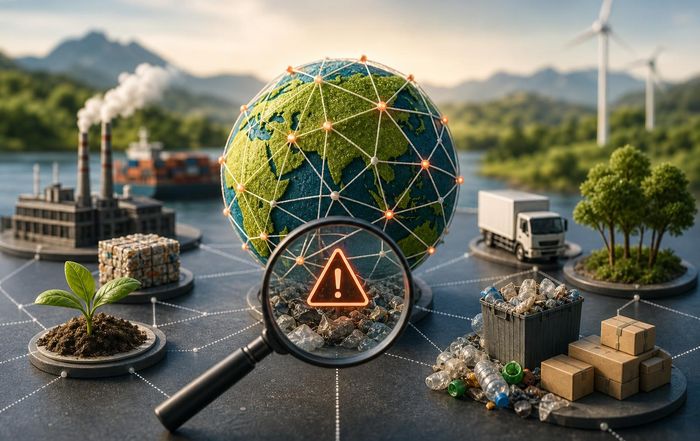
Across industries, sustainability has moved from the margins of corporate strategy to the center of boardroom discussions. Climate targets, human rights commitments, and circular economy goals are now standard features of annual reports, and many leading firms publish detailed sustainability roadmaps. Yet a growing body of evidence shows that some of the most serious environmental and social risks are not found in the operations companies know best, but rather in the complex, opaque supply networks that sit several tiers beyond their direct suppliers.
As Eco Natur continues to highlight on its platform eco-natur.com, meaningful progress in sustainable business requires looking far upstream and downstream, where raw materials are extracted, components are manufactured, and products are disposed of or reused. While many organizations have improved their direct environmental performance, the hidden risks embedded in global supply networks still threaten climate goals, biodiversity, human rights, and long-term economic resilience. Understanding and addressing these risks is increasingly central to credible sustainable business practice.
Why Supply Networks Are So Difficult to See
Modern supply chains are rarely linear. They are complex networks involving thousands of suppliers, subcontractors, logistics providers, and recyclers spread across continents. Research from institutions such as the World Economic Forum and McKinsey & Company indicates that for many consumer and industrial products, more than 80 percent of total greenhouse gas emissions and a significant share of social risks occur in the value chain rather than in a company's own facilities. Publicly available analyses from organizations like the CDP and the Greenhouse Gas Protocol similarly emphasize that Scope 3 emissions, which include value chain impacts, typically dwarf Scope 1 and 2 emissions for sectors such as retail, technology, apparel, and food.
Despite this, many companies still have only partial visibility beyond their first-tier suppliers. Subcontracting, frequent supplier turnover, and the use of intermediaries make it difficult to map networks in detail. Studies from the International Labour Organization and OECD show that informal work, weak regulation, and complex ownership structures further complicate transparency, especially in regions where environmental and labor enforcement is limited. Even organizations with sophisticated procurement systems often lack reliable, standardized data on the environmental performance or labor practices of their lower-tier suppliers.
For readers of Eco Natur who are exploring sustainability across sectors, this lack of visibility is one of the most important structural challenges facing sustainable business. Without clear insight into who is involved in producing a product or service, it becomes difficult to manage risk, set accurate climate targets, or credibly communicate progress to customers and regulators.
Environmental Risks Embedded in Supply Networks
Climate and Energy Risks
A central environmental risk lies in the carbon intensity of upstream production. According to analyses published by the Intergovernmental Panel on Climate Change (IPCC) and organizations such as the International Energy Agency (IEA), energy-intensive processes like steelmaking, cement production, and petrochemical manufacturing remain heavily dependent on fossil fuels in many regions. Companies that rely on these materials, even if they operate low-carbon facilities themselves, are indirectly exposed to transition risks if carbon pricing, emissions regulations, or clean technology mandates tighten.
Initiatives such as the Science Based Targets initiative (SBTi) have encouraged firms to set value chain emission reduction targets, but progress has been uneven. Many businesses still rely on average emission factors rather than supplier-specific data, which can mask hotspots and slow improvement. As more jurisdictions strengthen climate disclosure rules, including mandatory Scope 3 reporting in some cases, firms that have not invested in mapping and engaging their supply networks may face rising regulatory, financial, and reputational pressures.
For stakeholders interested in renewable energy, there is also a growing recognition that the clean energy transition itself carries supply-chain risks. Reports from the International Renewable Energy Agency (IRENA) and the World Bank highlight concerns about the environmental and social impacts of mining critical minerals such as lithium, cobalt, and rare earth elements, which are essential for batteries, wind turbines, and other low-carbon technologies. Companies promoting climate solutions must therefore ensure that their upstream sourcing aligns with responsible mining and community engagement standards.
Biodiversity, Land Use, and Deforestation
Another major category of hidden risk is the impact of supply networks on biodiversity and ecosystems. Agricultural commodities such as soy, palm oil, cattle, and cocoa have long been associated with deforestation and habitat loss, particularly in tropical regions. Organizations like WWF, the Rainforest Alliance, and the UN Environment Programme (UNEP) have documented how land-use change for agriculture contributes to both climate change and the erosion of biodiversity.
New regulations, including the European Union's deforestation-related import rules, are pushing companies to trace commodities back to farms and plantations and to verify that production is not linked to illegal deforestation. However, traceability remains challenging, especially where supply chains are highly fragmented and involve many smallholders. The risk is not limited to food companies; manufacturers of leather goods, cosmetics, and bio-based materials can also be exposed if they lack robust sourcing systems.
The connection between supply networks and biodiversity is increasingly recognized as a material business issue. The Taskforce on Nature-related Financial Disclosures (TNFD) has developed frameworks to help organizations assess and report nature-related risks, emphasizing that dependencies on healthy ecosystems underpin everything from water security to crop yields. Businesses that fail to understand these dependencies may face supply disruptions, regulatory penalties, or loss of market access as nature-related policies evolve.
Pollution, Plastic, and Waste
Pollution and waste generation are also deeply intertwined with supply networks. Many companies have made public commitments to reduce single-use plastics, improve packaging, or move toward plastic-free alternatives, yet the production and disposal of packaging materials often occur far from the point of sale. Investigations by groups such as Greenpeace, the Ellen MacArthur Foundation, and the OECD show that plastic leakage into oceans and rivers is heavily concentrated in regions lacking effective waste management infrastructure, even when the products are sold globally.
As extended producer responsibility schemes and plastic treaty negotiations advance, firms may become more accountable for the full life cycle of their products, including post-consumer waste. This places greater emphasis on designing packaging and products for recyclability and on supporting recycling systems that can handle the materials placed on the market. It also highlights the importance of collaboration across entire value chains, from raw material suppliers to retailers and waste operators.
Beyond plastics, hazardous chemicals used in manufacturing and agriculture can create long-term liabilities if they contaminate soil, water, or food supplies. Regulatory initiatives in the European Union, North America, and parts of Asia are increasingly targeting harmful substances, and companies that do not monitor chemical use in their supply networks may face unexpected compliance costs or product recalls.
Social and Human Rights Risks in the Value Chain
Labor Conditions and Modern Slavery
While environmental risks often dominate climate discussions, social and human rights issues remain central to sustainable business. Reports from the International Labour Organization, Human Rights Watch, and the Walk Free Foundation have highlighted the persistence of forced labor, child labor, and unsafe working conditions in global supply chains, particularly in sectors such as agriculture, mining, construction, and textiles.
Legislation in countries including the United Kingdom, Australia, Germany, and France now requires large companies to report on, or actively prevent, human rights violations in their supply networks. The European Union has advanced corporate sustainability due diligence rules that go further, obliging firms to identify, prevent, and mitigate adverse human rights and environmental impacts throughout their operations and value chains. Businesses that fail to meet these expectations may face legal challenges, financial penalties, or exclusion from public procurement.
For a platform like Eco Natur, which frequently addresses sustainable living and ethical consumption, these developments underline the importance of understanding how everyday products are made. Consumers and investors are increasingly attentive to whether companies can demonstrate robust due diligence, grievance mechanisms, and remediation processes for affected workers and communities.
Community Impacts and Land Rights
Supply networks can also affect local communities through land acquisition, water use, and infrastructural development. International standards such as those promoted by the UN Guiding Principles on Business and Human Rights and the IFC Performance Standards emphasize the need for free, prior, and informed consent when projects affect Indigenous peoples or local landholders. However, civil society organizations and academic studies continue to document cases where communities are displaced or lose access to critical resources without adequate consultation or compensation.
These issues are particularly acute in sectors like mining, large-scale agriculture, and infrastructure construction, where supply chains often begin in remote or politically sensitive regions. Companies that source from such areas without robust due diligence can become associated with conflicts, protests, and long-term social instability, even if they are several tiers removed from on-the-ground operations.
Health, Safety, and Well-being
Worker health and safety remain fundamental aspects of responsible supply chain management. Industrial accidents, exposure to toxic substances, and inadequate protective equipment can create both human tragedies and significant operational disruptions. International standards from organizations such as ISO and the Occupational Safety and Health Administration (OSHA) provide guidance, but enforcement varies widely across jurisdictions.
The broader concept of health and well-being in supply networks also extends to fair wages, reasonable working hours, and access to social protection. These factors influence worker productivity, turnover, and community stability, and they are integral to the holistic perspective on health and sustainability that Eco Natur promotes.
Economic and Strategic Risks for Businesses
Operational Disruption and Supply Security
Environmental and social issues in supply networks can quickly become economic risks for companies. Climate-related events such as floods, droughts, and wildfires can disrupt production, damage infrastructure, or reduce crop yields, leading to supply shortages and price volatility. Analyses from the World Bank, UNFCCC, and leading reinsurers suggest that climate-related physical risks are expected to intensify over the coming decades, affecting both developed and emerging economies.
At the same time, regulatory changes, trade tensions, and geopolitical instability can alter the availability and cost of key materials. Firms that rely on single-source suppliers or geographically concentrated production are particularly vulnerable. The COVID-19 pandemic exposed the fragility of many just-in-time supply models, and subsequent disruptions have pushed businesses and policymakers to reconsider resilience, diversification, and strategic reserves.
For readers focused on the economy, these dynamics illustrate how sustainability and economic security are increasingly intertwined. Companies that integrate climate and social risk assessments into their procurement and logistics decisions are better positioned to anticipate disruptions and maintain continuity.
Reputation, Trust, and Market Access
Reputational risk is another powerful driver of supply chain sustainability. Investigative journalism, social media, and civil society campaigns have brought hidden supply chain abuses to public attention in sectors ranging from apparel to electronics and food. When serious violations are revealed, consumer trust and investor confidence can erode rapidly, sometimes resulting in long-term brand damage.
Certification schemes and voluntary initiatives, such as those supported by Fairtrade International, the Roundtable on Sustainable Palm Oil (RSPO), and the Forest Stewardship Council (FSC), aim to provide assurance that certain standards are met. However, these systems vary in rigor and scope, and they are most effective when combined with internal due diligence and transparent reporting. Firms that rely solely on external labels without building their own oversight capacity may still be exposed to hidden risks.
In parallel, public procurement rules and trade policies are increasingly linked to environmental and social performance. Companies that cannot demonstrate responsible sourcing may find themselves excluded from government contracts or facing tariffs and other trade barriers. For businesses that aspire to leadership in sustainable business practices, proactive engagement with these expectations is becoming a strategic necessity rather than a voluntary option.
Tools and Approaches for Uncovering Hidden Risks
Supply Chain Mapping and Data Transparency
The first step in managing hidden risks is to understand where they are likely to occur. Supply chain mapping tools, including digital platforms that integrate procurement, logistics, and sustainability data, are becoming more widely used. Organizations such as BSR, Sedex, and the Responsible Business Alliance offer frameworks and collaborative platforms to help companies share information and assess supplier performance.
Satellite imagery, geospatial analysis, and blockchain-based traceability solutions are also being applied to track commodities and verify claims about deforestation-free sourcing, ethical mining, or organic production. For instance, initiatives supported by the Global Forest Watch platform provide near-real-time data on forest cover change, enabling companies and civil society organizations to monitor land-use impacts in supply regions.
While these tools are not a complete solution, they enable a more granular understanding of risk hotspots and facilitate targeted engagement. They also support more accurate accounting of environmental impacts, which is essential for credible climate and nature-related reporting.
Collaboration and Sector-Wide Initiatives
Because supply networks are shared across industries, collaboration is often more effective than isolated action. Multi-stakeholder initiatives that bring together companies, NGOs, governments, and local communities can set common standards, pool resources, and address systemic issues that no single actor can resolve alone. Examples include sector-specific coalitions in textiles, electronics, and agriculture, as well as broader platforms supported by the UN Global Compact and the World Business Council for Sustainable Development (WBCSD).
Collaboration also extends to innovation in product and business model design. Shifting toward zero-waste models, circular materials, and service-based offerings can reduce dependence on virgin resource extraction and minimize end-of-life impacts. By designing products for repair, reuse, and recycling, companies can reduce both environmental footprints and exposure to resource price volatility.
Integrating Sustainability into Core Business Decisions
For supply chain sustainability to be effective, it must be integrated into core business decisions rather than treated as a peripheral initiative. This includes embedding environmental and social criteria into supplier selection, contract terms, performance reviews, and executive incentives. It also involves aligning sustainability goals with corporate strategy, investment planning, and risk management processes.
Guidance from organizations such as the Sustainability Accounting Standards Board (SASB) and the Task Force on Climate-related Financial Disclosures (TCFD) has helped companies link sustainability metrics to financial materiality. As reporting frameworks evolve, particularly around climate and nature-related risks, investors are increasingly able to compare companies based on the robustness of their supply chain management. Those that demonstrate clear governance, measurable targets, and transparent progress are better positioned to attract long-term capital and build trust.
The Role of Consumers and Communities
Although businesses and policymakers play central roles in addressing supply network risks, consumers and communities also influence the pace and direction of change. Growing interest in organic food, ethically sourced products, and low-impact lifestyles has encouraged companies to offer more sustainable options. Platforms like Eco Natur, which provide information on lifestyle choices, sustainable living, and global environmental trends, help people understand how everyday decisions connect to distant supply chains.
Consumer demand alone cannot resolve systemic issues such as weak labor enforcement or inadequate waste infrastructure, but it can create incentives for companies to invest in transparency, certification, and innovation. Community organizations and local initiatives also play a vital role in monitoring environmental and social impacts, advocating for fair treatment, and partnering with businesses on sustainable development projects.
For readers in regions across North America, Europe, Asia, Africa, and South America, the message is similar: the products and services used daily are part of complex global networks, and informed choices, combined with constructive engagement, can support better outcomes for people and the planet.
How Eco Natur Supports a More Transparent and Sustainable Future
Eco Natur has positioned itself as a resource for individuals, businesses, and communities seeking to navigate these complexities and move toward a more sustainable, resilient future. Through its coverage of sustainable living, recycling, sustainability, and global environmental trends, the platform emphasizes the interconnected nature of ecological, social, and economic systems.
By exploring topics such as plastic reduction, ethical sourcing, nature conservation, and responsible economy, Eco Natur encourages readers to think beyond immediate consumption and consider the entire life cycle of products and services. The platform highlights examples of businesses that are redesigning their supply networks, collaborating across sectors, and investing in innovation to reduce hidden risks and create positive impacts.
Eco Natur's commitment to accessible, trustworthy information aligns with broader efforts by organizations like the UN Environment Programme, the World Resources Institute, and the Ellen MacArthur Foundation to make sustainability knowledge widely available. By connecting global insights with practical guidance for households and enterprises, Eco Natur helps bridge the gap between high-level policy discussions and everyday decisions.
Moving on - Turning Hidden Risks into Opportunities
As the world continues to grapple with climate change, biodiversity loss, and social inequality, the importance of addressing hidden risks in supply networks will only grow. Regulatory frameworks are becoming more stringent, investor expectations are rising, and technological tools for transparency are advancing rapidly. Companies that act early to understand and manage their value chain impacts are likely to find new opportunities for innovation, efficiency, and resilience.
For top business leaders, this means viewing supply chain sustainability not as a compliance exercise but as a core element of strategy and competitive advantage. For policymakers, it involves creating enabling conditions that reward responsible sourcing, support fair labor practices, and foster investment in low-carbon, nature-positive infrastructure. For individuals and communities, it calls for continued engagement, learning, and collaboration.
In this evolving landscape, super platforms like Eco Natur will remain important partners, helping audiences around the world explore the links between products, people, and the planet, and offering inspiration for a future in which sustainable business is not only possible but essential. As more organizations illuminate the hidden corners of their supply networks and commit to genuine transformation, the path toward a healthier, more equitable global economy becomes clearer, and the potential for lasting positive change grows stronger.
