
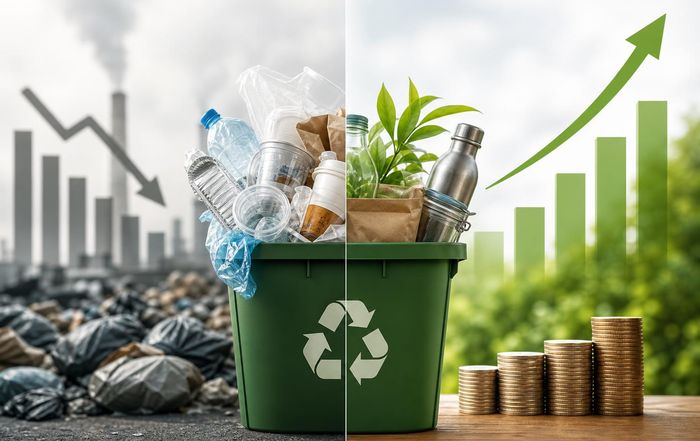
Why Waste Reduction Improves Business Efficiency
A New Lens on Efficiency in a Resource-Constrained World
Across industries and continents, leaders are discovering that waste reduction is no longer a peripheral environmental initiative but a core driver of business efficiency, resilience, and long-term value creation. As resource constraints, climate risks, and stakeholder expectations intensify, companies that systematically eliminate waste from their operations are finding that they not only shrink their environmental footprint but also unlock powerful gains in productivity, cost savings, innovation, and reputation.
For Eco Natur, whose eco readers are already deeply engaged with sustainable living and responsible consumption, the connection between waste and environmental impact is familiar. What is now becoming equally clear is that the same principles that guide individuals toward sustainable living and zero-waste lifestyles also apply at scale to businesses, supply chains, and entire economies. Waste is not simply a by-product to be managed; it is a signal of inefficiency, misallocated capital, and unrealized opportunity.
This article explores how waste reduction improves business efficiency, how leading organizations are integrating circular and low-waste strategies into their core models, and how these shifts are reshaping competitiveness in markets from North America and Europe to Asia, Africa, and South America.
Understanding Waste as a Strategic Efficiency Problem
Traditional business models have often treated waste as an unavoidable cost of doing business: something to be minimized at the margins but accepted as part of the production process. Over the past decade, however, research by organizations such as the Ellen MacArthur Foundation and McKinsey & Company has reframed waste as a systemic design flaw rather than an operational inevitability. In this view, every kilogram of scrap material, every unsold product, every unused hour of labor, and every kilowatt-hour of wasted energy represents value that could have been retained, reused, or transformed into revenue.
The concept of the circular economy, widely promoted by the Ellen MacArthur Foundation and supported by institutions like the World Economic Forum, demonstrates that keeping materials and products in use for longer, designing out waste from the outset, and regenerating natural systems can generate significant economic benefits. Studies from bodies such as the International Resource Panel and OECD suggest that more efficient use of materials and energy could add trillions of dollars to global GDP over coming decades while reducing environmental pressures.
For eco-natur.com, this systemic perspective is closely aligned with its broader focus on sustainability, encouraging readers to see both household and business waste not as an isolated issue but as part of a wider pattern of resource use, economic design, and lifestyle choices. When businesses recognize waste as a strategic concern rather than a narrow compliance issue, they unlock new pathways to efficiency and innovation.
Direct Cost Savings and Operational Streamlining
The most immediate way that waste reduction improves business efficiency is through direct cost savings. Whether a company operates in manufacturing, retail, services, or digital industries, every unit of material, energy, or labor that is paid for but not converted into value is a drag on margins.
In manufacturing, lean production methodologies, originally developed by Toyota and now widely adopted across global supply chains, show how systematically identifying and removing sources of waste-such as overproduction, excess inventory, unnecessary motion, defects, and waiting time-can dramatically improve throughput and reduce costs. Organizations like Lean Enterprise Institute and MIT Sloan School of Management have documented how lean and continuous improvement approaches not only cut waste but also enhance quality and responsiveness.
Similarly, energy waste translates directly into unnecessary expense. Companies that implement energy efficiency measures-such as optimizing heating and cooling systems, upgrading to high-efficiency motors and lighting, and using smart building management technologies-often see payback periods of just a few years or less, according to analyses by the International Energy Agency (IEA) and U.S. Department of Energy. For many businesses, energy savings from efficiency can rival or exceed the financial returns of investing in new capacity.
Waste reduction in logistics and supply chains also leads to efficiency gains. Efforts to optimize routes, improve load factors, and reduce packaging can lower fuel consumption, shrink transportation costs, and minimize damage or spoilage. Organizations such as GS1 and the World Business Council for Sustainable Development (WBCSD) have highlighted case studies where better data and collaboration across supply chains have significantly reduced waste while improving on-time delivery and customer satisfaction.
For readers of Eco Natur, these operational improvements mirror the logic of household frugality and resourcefulness that underpins sustainable living. Just as individuals can save money and reduce environmental impact by cutting food waste, conserving energy, and reusing materials, businesses that embed similar discipline at scale see tangible financial benefits and leaner, more resilient operations.
Waste Reduction as a Catalyst for Process Innovation
Beyond immediate cost savings, waste reduction acts as a powerful catalyst for process innovation. When companies commit to minimizing waste throughout their operations, they are often compelled to rethink how products are designed, how services are delivered, and how value is created and captured.
In sectors ranging from automotive and electronics to fashion and food, design for disassembly, repair, and recycling is becoming a critical strategy. Companies inspired by principles of eco-design and cradle-to-cradle thinking, popularized by innovators such as William McDonough and supported by organizations like Cradle to Cradle Products Innovation Institute, are reimagining materials, components, and product architectures to facilitate reuse and circularity. This not only reduces waste but can lower material costs, simplify maintenance, and extend product lifespans.
Digital technologies are further amplifying these possibilities. The rise of the Internet of Things (IoT), advanced analytics, and cloud computing enables real-time monitoring of resource use, predictive maintenance, and dynamic optimization of production lines. Reports from World Economic Forum and Accenture have shown how data-driven insights can uncover hidden inefficiencies and waste hotspots that would otherwise remain invisible, allowing companies to fine-tune operations and prevent problems before they occur.
In agriculture and food systems, where waste and loss remain significant challenges, precision farming technologies, better cold-chain logistics, and improved demand forecasting are helping to reduce post-harvest losses and food waste. Organizations such as the Food and Agriculture Organization (FAO) and World Resources Institute (WRI) provide guidance on how businesses can reduce waste across the food value chain, from farm to fork. These innovations align closely with Eco Natur's focus on organic food and responsible consumption, demonstrating how sustainable practices can improve both environmental outcomes and operational performance.
For service-based and digital businesses, waste reduction often takes the form of optimizing workflows, automating repetitive tasks, and eliminating redundant processes. By streamlining internal procedures and using digital tools more effectively, companies can reduce wasted time, minimize errors, and improve employee satisfaction, all of which contribute to higher productivity and better customer experiences.
Cutting Plastic and Packaging Waste to Boost Brand and Efficiency
Plastic and packaging waste has become a defining environmental concern for consumers, regulators, and investors alike, and it is an area where waste reduction and business efficiency intersect in particularly visible ways. From single-use plastics in retail and hospitality to complex packaging in e-commerce and manufacturing, companies are under growing pressure to rethink how they use materials and how products reach customers.
Regulatory developments in the European Union, United Kingdom, Canada, and several states in the United States, among others, have introduced extended producer responsibility schemes, plastic taxes, and bans on certain single-use plastics. Organizations such as the European Commission, Environment and Climate Change Canada, and the U.S. Environmental Protection Agency (EPA) provide detailed overviews of these evolving frameworks. Compliance with such regulations can be costly if companies rely on wasteful packaging models, but those that proactively reduce plastic use and adopt more efficient designs often find they can lower material costs and simplify logistics.
Businesses participating in initiatives like the New Plastics Economy Global Commitment, led by the Ellen MacArthur Foundation in collaboration with the UN Environment Programme, are demonstrating that ambitious plastic reduction targets can go hand in hand with innovation in materials, product formats, and delivery systems. Refill and reuse models, concentrated products, and packaging-free retail concepts are gaining traction not only as sustainability strategies but also as ways to reduce shipping volumes, storage requirements, and packaging expenses.
For Eco Natur, whose readers are particularly interested in plastic-free living and zero-waste approaches, these business innovations are an extension of personal choices already being made in homes and communities around the world. When companies align their packaging strategies with consumer expectations for reduced plastic and environmental responsibility, they not only cut waste and costs but also strengthen brand loyalty and open up new market segments.
Recycling, Resource Recovery, and Circular Business Models
While upstream waste prevention is the most efficient strategy, recycling and resource recovery play a critical role in capturing value from materials that would otherwise be lost. For businesses, effective recycling systems can reduce disposal costs, generate revenue from secondary materials, and support resilience against volatile raw material prices.
Across regions such as Europe, North America, and parts of Asia, extended producer responsibility and deposit return schemes are driving higher collection and recycling rates for materials like aluminum, glass, and certain plastics. Organizations like Zero Waste Europe, Recycling Partnership, and OECD provide analysis of how policy frameworks and industry collaboration can improve recycling outcomes and support circular value chains. Companies that design products and packaging with recyclability in mind, and that participate in or help build robust collection and sorting infrastructures, are better positioned to benefit from these trends.
In industrial contexts, closed-loop systems, where production scrap is recovered and reintroduced into manufacturing processes, can significantly reduce demand for virgin materials. Sectors such as metals, paper, and some plastics have long histories of recycling, but advances in sorting technologies, chemical recycling, and digital tracking are expanding what is possible. Research published by institutions such as Chalmers University of Technology and Fraunhofer Institute highlights how improved material recovery can lower overall production costs and reduce environmental impacts.
For Eco Natur, the business case for recycling echoes the site's emphasis on practical guidance for recycling at home and in communities. When readers understand how corporate recycling and resource recovery systems complement individual actions, they can better evaluate brands and support those that take responsibility for their material footprints. As more companies adopt circular business models-such as product-as-a-service, repair and refurbishment services, and take-back programs-they not only reduce waste but also create new revenue streams and deepen customer relationships.
Sustainable Supply Chains and Risk Management
Waste reduction is not confined to a company's own facilities; it extends across global supply chains that span continents and industries. From raw material extraction in Africa and South America to manufacturing hubs in Asia and consumer markets in Europe and North America, inefficiencies and waste in supply chains can erode margins, increase risk, and undermine resilience.
Organizations such as CDP, Sustainalytics, and the Global Reporting Initiative (GRI) have documented how companies that map and manage environmental impacts across their supply chains, including waste generation and resource use, are better equipped to anticipate disruptions, comply with regulations, and respond to stakeholder expectations. Reducing waste in supply chains often involves collaborating with suppliers to improve process efficiency, standardize materials, and optimize packaging and logistics.
Food and agriculture supply chains, for example, face significant challenges related to post-harvest losses, spoilage, and inefficient storage. Efforts supported by FAO, World Bank, and regional development banks have shown that investments in better storage, transportation, and processing infrastructure can dramatically reduce waste while increasing farmer incomes and stabilizing prices. For companies sourcing organic and sustainably produced ingredients, waste reduction in supply chains is closely linked to the integrity and resilience of organic food systems.
From the perspective of risk management, wasteful processes often correlate with higher exposure to regulatory changes, commodity price volatility, and reputational risks. By contrast, companies that build lean, transparent, and low-waste supply chains are better positioned to adapt to shifts in policy, technology, and consumer preferences. This is increasingly important as governments in regions such as the European Union, the United States, and parts of Asia tighten requirements on waste, emissions, and product stewardship.
People, Culture, and the Productivity Dividend
Waste reduction is not solely a technical or logistical challenge; it is also a cultural and organizational one. Businesses that successfully minimize waste tend to cultivate a culture of continuous improvement, employee empowerment, and cross-functional collaboration. These cultural attributes, in turn, support higher productivity, innovation, and employee engagement.
Lean and Kaizen methodologies, widely studied by institutions like Harvard Business School and INSEAD, emphasize the role of frontline employees in identifying and solving problems, including sources of waste in daily operations. When workers are encouraged to contribute ideas and are given the tools to implement improvements, they often find creative ways to streamline processes, reduce errors, and eliminate unnecessary steps. This not only cuts waste but also fosters a sense of ownership and pride.
In offices and service environments, initiatives to reduce paper use, energy consumption, and unnecessary travel often involve behavior change as much as technology. Awareness campaigns, incentives, and transparent reporting can motivate teams to adopt more efficient practices. Organizations such as Carbon Trust and Natural Resources Defense Council (NRDC) provide guidance on how workplace sustainability programs can translate into measurable cost savings and performance improvements.
The focus on employee well-being, health, and purpose is also increasingly recognized as a factor in business efficiency. Companies that align their sustainability and waste reduction efforts with broader initiatives to support health and well-being often see benefits in reduced absenteeism, higher retention, and stronger employer branding. For readers of Eco Natur, who value holistic approaches to sustainable living, this alignment between environmental responsibility and human-centered workplaces is a natural extension of personal values into professional environments.
Aligning Waste Reduction with Climate and Biodiversity Goals
Waste reduction is deeply intertwined with broader environmental objectives, particularly climate mitigation and the protection of biodiversity and wildlife. Every unit of material or energy that is wasted has an associated carbon footprint and ecological impact, from extraction and processing to transportation and disposal.
Reports from the Intergovernmental Panel on Climate Change (IPCC) and International Energy Agency emphasize that improving resource and energy efficiency is one of the most cost-effective strategies for reducing greenhouse gas emissions. By cutting waste in production and consumption systems, businesses can significantly lower their emissions profiles, often at lower cost than many other mitigation options. This is especially relevant as more companies adopt science-based emissions targets through initiatives such as the Science Based Targets initiative (SBTi).
Waste reduction also contributes to the protection of ecosystems and wildlife. Minimizing pollution, reducing the extraction of raw materials, and preventing plastic and chemical leakage into rivers and oceans all help safeguard habitats and species. Organizations such as World Wildlife Fund (WWF) and IUCN have documented how circular and low-waste approaches can ease pressure on biodiversity hotspots and support more sustainable land and water use. For Eco Natur, whose audience is passionate about wildlife and biodiversity, these connections are central to understanding the full value of corporate waste reduction initiatives.
By integrating waste reduction into climate and biodiversity strategies, businesses create synergies that enhance both environmental and economic performance. This integrated approach is becoming a hallmark of leading sustainability strategies in regions such as Europe, North America, and parts of Asia-Pacific, where investors, regulators, and civil society increasingly expect companies to demonstrate comprehensive environmental stewardship.
Competitive Advantage, Market Differentiation, and Sustainable Growth
As awareness of environmental issues grows among consumers, investors, and regulators, businesses that take waste reduction seriously are finding that it can become a powerful source of competitive advantage. Brands that transparently communicate their efforts to reduce waste, improve recyclability, and embrace circular models often enjoy stronger customer loyalty, particularly in markets such as the United States, United Kingdom, Germany, and the Nordic countries, where sustainable consumption is increasingly mainstream.
Sustainability-oriented investors and financial institutions, including those aligned with the UN Principles for Responsible Investment (UN PRI), are integrating resource efficiency and waste management into their assessments of corporate performance and risk. Companies that demonstrate progress in these areas may benefit from improved access to capital, lower financing costs, and more favorable valuations, as suggested by research from organizations such as MSCI and BloombergNEF.
In emerging markets across Asia, Africa, and Latin America, waste reduction and circular economy strategies are also being recognized as engines of inclusive growth and job creation. The World Bank and regional development banks highlight how waste management, recycling, and circular business models can support local economies, create employment, and reduce health and environmental burdens in rapidly urbanizing regions. For global companies operating across these geographies, responsible waste practices are not only a matter of compliance but also of social license and long-term market development.
For Eco Natur, this convergence of environmental responsibility and economic opportunity is central to its exploration of sustainable business and green economy trends. As businesses in countries from Canada and Australia to Japan, South Korea, and Singapore integrate waste reduction into their strategies, they contribute to a global shift toward more sustainable, efficient, and resilient economic systems.
Our Role in Supporting a Low-Waste Business Future?
In a world where resource constraints, climate risks, and social expectations are reshaping the business landscape, waste reduction has emerged as a key lever for improving efficiency, competitiveness, and long-term resilience. By cutting unnecessary costs, driving process innovation, strengthening supply chains, and aligning with climate and biodiversity goals, companies that embrace low-waste strategies are better positioned to thrive in the years ahead.
Eco Natur plays a distinctive role in this transition by connecting individual choices and values with corporate and systemic change. Through its super focus on sustainable living, recycling, plastic-free lifestyles, organic food, wildlife protection, and sustainable business, eco-natur.com encourages readers to see themselves as active participants in shaping markets and influencing corporate behavior.
When consumers choose products with minimal packaging, support brands that design for durability and repair, and advocate for better recycling and waste policies, they send powerful signals to businesses and policymakers. At the same time, when companies listen to these signals and integrate waste reduction into their strategies, they create new options and opportunities for individuals and communities striving to live more sustainably.
As organizations, cities, and citizens around the world continue to explore pathways to a more circular and efficient economy, waste reduction stands out as a practical, measurable, and deeply impactful starting point. The journey from a linear, take-make-dispose model to a circular, regenerative one is complex, but it is also rich with innovation, collaboration, and hope. By highlighting positive examples, sharing knowledge, and fostering dialogue, Eco Natur supports a future in which businesses, ecosystems, and communities can flourish together, with waste minimized and efficiency maximized for the benefit of all.
