
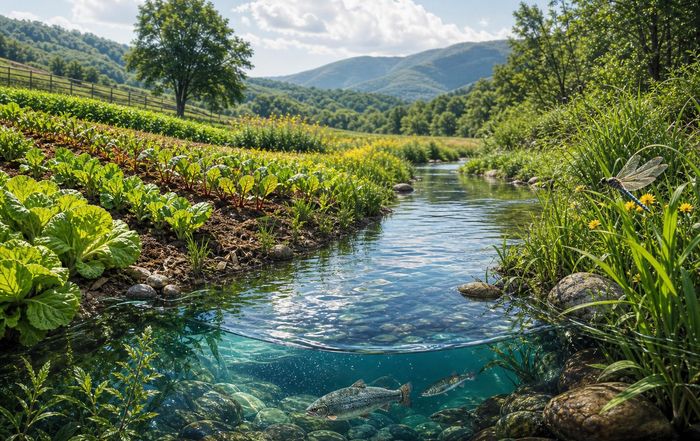
How Organic Farming Supports Healthy Watersheds
Organic farming has often been discussed in terms of soil health, biodiversity, and human nutrition, yet one of its most profound contributions lies in the protection and restoration of watersheds. As communities, policymakers, and businesses seek resilient responses to climate stress, drought, and water pollution, the relationship between organic agriculture and watershed health is emerging as a central theme in sustainable development. For readers of Eco Natur and visitors to eco-natur.com, understanding this connection provides both practical guidance for daily choices and strategic insight for shaping a more regenerative economy.
Understanding Watersheds and Why They Matter
A watershed is the area of land where all the water that falls or flows across it drains into a common outlet such as a river, lake, estuary, or coastal zone. Every farm, city, forest, and neighborhood sits within a watershed, and the health of that watershed fundamentally shapes drinking water quality, flood risk, aquatic ecosystems, and even local climate patterns. Organizations such as the United States Geological Survey explain that watersheds integrate everything that happens on the land surface, from agricultural practices and urban stormwater to forestry and mining, into a single hydrological system that delivers water downstream. Those interested can learn more about watershed basics from USGS resources.
Across North America, Europe, Asia, and other regions, degraded watersheds are linked to nutrient pollution, algal blooms, dead zones, and sedimentation that damages fisheries, drinking water supplies, and recreational opportunities. The European Environment Agency notes that diffuse pollution from agriculture remains one of the main pressures on European rivers and lakes, particularly from nitrogen and phosphorus fertilizers and pesticides that leach or run off fields after rainstorms. Similar patterns are documented by the UN Environment Programme, which reports that agricultural runoff is a leading cause of freshwater and coastal pollution in many parts of the world; readers can explore these global trends in more depth through UNEP's discussion of nutrient pollution and water quality.
Within this context, organic farming offers a different way of managing land and water, one that emphasizes ecological processes, soil stewardship, and reduced chemical inputs, thereby helping to protect entire watersheds rather than only individual fields.
The Principles of Organic Farming Relevant to Watersheds
Organic farming is defined and regulated differently across countries, but there is broad convergence on key principles. Certification standards from bodies such as USDA Organic in the United States, EU organic regulations in Europe, and programs overseen by IFOAM - Organics International share a commitment to avoiding synthetic pesticides and fertilizers, minimizing external inputs, and enhancing soil and ecosystem health. The Food and Agriculture Organization of the United Nations (FAO) highlights that organic agriculture is based on four core principles: health, ecology, fairness, and care, which together guide farming systems toward long-term environmental resilience; more detail is available from FAO's overview of organic agriculture.
From a watershed perspective, several practices commonly associated with organic farming are particularly important. These include diversified crop rotations that break pest and disease cycles, extensive use of cover crops and green manures to protect and enrich the soil, integration of compost and organic amendments instead of highly soluble synthetic fertilizers, maintenance of hedgerows and buffer strips along waterways, and avoidance of many persistent or highly toxic pesticides. While specific techniques vary from region to region, the overarching pattern is that organic farms tend to manage soil as a living system and treat water as a shared resource rather than a mere input.
The Rodale Institute, a research organization that has studied organic systems for decades, has documented that regenerative organic practices can improve soil structure and water infiltration, reducing runoff and erosion. Long-term field trials comparing organic and conventional systems, such as those conducted in Pennsylvania, suggest that organically managed soils often have higher levels of soil organic matter and better aggregate stability, which are crucial for watershed protection. Readers can explore the science of regenerative organic agriculture to understand these mechanisms in more depth.
Soil Health, Infiltration, and Reduced Runoff
Healthy watersheds begin with healthy soils. When soils contain abundant organic matter and a rich network of roots and soil organisms, they act like a sponge, absorbing rainfall and slowly releasing it to groundwater and streams. Conversely, when soils are compacted, eroded, or depleted of organic matter, more rainfall runs off the surface, carrying sediment, nutrients, and contaminants into waterways.
Organic farming systems often excel at building soil organic matter through practices such as compost application, cover cropping, reduced or selective tillage, and diverse rotations. Studies referenced by the Intergovernmental Panel on Climate Change (IPCC) and the Intergovernmental Science-Policy Platform on Biodiversity and Ecosystem Services (IPBES) indicate that agroecological and organic practices can enhance soil carbon storage and water-holding capacity, although results vary with climate, soil type, and management. For those wishing to delve into the broader science of soil and climate, the IPCC provides accessible summaries of land and climate interactions.
In practical terms, improved soil structure means that rainwater is more likely to infiltrate rather than run off, especially during intense storms that are becoming more frequent in many regions. This reduces peak flows that can cause downstream flooding and erosion, while also recharging aquifers and maintaining stream baseflows during dry periods. The World Resources Institute has emphasized that nature-based solutions in agriculture, including soil health practices widely adopted by organic farmers, are critical tools for climate adaptation and watershed resilience; readers can learn more about agricultural water management through WRI's analyses.
By reducing erosion, organic farms also reduce sedimentation in rivers and reservoirs. Sediment not only fills in water storage infrastructure but also smothers aquatic habitats and transports attached pollutants. Long-term research from institutions such as Cornell University and Washington State University has shown that cover crops and organic matter additions can significantly decrease soil loss compared with bare or intensively tilled fields, which translates into cleaner waterways and more stable stream channels across entire catchments.
Nutrient Management and Eutrophication Prevention
One of the most visible symptoms of watershed degradation is eutrophication, where excess nutrients-primarily nitrogen and phosphorus-stimulate explosive growth of algae and aquatic plants. This can lead to harmful algal blooms, oxygen depletion, fish kills, and the formation of "dead zones" in lakes and coastal waters. The National Oceanic and Atmospheric Administration (NOAA) documents recurring dead zones in places such as the Gulf of Mexico and the Baltic Sea, largely driven by nutrient runoff from agricultural and urban sources; their resources on harmful algal blooms provide further detail.
Organic farming approaches nutrient management differently from many conventional systems. Instead of relying on synthetic nitrogen fertilizers that are highly soluble and prone to leaching, organic farms typically use compost, animal manures, green manures, and nitrogen-fixing cover crops such as clover or vetch. These organic sources release nutrients more slowly, in synchrony with plant uptake, when managed carefully. Certification rules in most countries also require that organic producers implement nutrient management plans to prevent over-application.
Research synthesized by FiBL (the Research Institute of Organic Agriculture) and other independent bodies suggests that nutrient surpluses on organic farms are often lower than on conventional farms, particularly for nitrogen, due to tighter nutrient cycles and lower input intensity. However, experts caution that organic systems are not automatically immune to nutrient losses; mismanagement of manure or excessive application of compost can still lead to leaching or runoff. The key difference is that organic farming tends to integrate nutrient cycling within the farm and its immediate surroundings, whereas high-input systems often import large quantities of synthetic fertilizers that exceed local ecological capacity. Those interested in comparative data can explore FiBL's international research on organic agriculture impacts.
By moderating nutrient loads and promoting soil biology that retains and transforms nitrogen, organic farms can play a constructive role in preventing eutrophication at the watershed scale. When combined with riparian buffer strips, wetlands, and other landscape features, these systems help capture and process nutrients before they reach rivers and lakes, creating a more balanced aquatic environment.
Pesticides, Water Quality, and Aquatic Life
Pesticide contamination of surface and groundwater remains a major concern in many agricultural regions. Herbicides, insecticides, and fungicides applied to fields can be transported by runoff, wind drift, or leaching, affecting drinking water sources and aquatic ecosystems far downstream. Monitoring by agencies such as the U.S. Environmental Protection Agency (EPA) and the European Food Safety Authority (EFSA) has repeatedly detected pesticide residues in rivers, lakes, and groundwater, sometimes at levels that raise ecological or health concerns. Detailed assessments of pesticide impacts on water can be found through resources from the World Health Organization on drinking-water contaminants.
Organic farming standards generally prohibit or severely restrict the use of synthetic pesticides, especially those that are persistent, bioaccumulative, or highly toxic to non-target organisms. While some natural or low-toxicity products are permitted, and copper-based fungicides remain a debated issue in certain regions, overall pesticide use intensity on organic farms tends to be significantly lower than on comparable conventional farms. This reduction in chemical loading translates directly into lower risks of pesticide contamination in watersheds.
Meta-analyses published in peer-reviewed journals and summarized by organizations such as IFOAM and PAN Europe indicate that organic agriculture supports higher levels of aquatic and riparian biodiversity, partly because of reduced pesticide exposure and partly due to more diverse habitats. Sensitive species such as amphibians, aquatic invertebrates, and pollinators benefit from cleaner water and less chemically stressed environments. For deeper insight into pesticide policy and alternatives, readers can consult PAN International's work on pesticides and water.
It is important to acknowledge that water quality outcomes depend on local context and implementation; not every organic farm achieves ideal performance, and not every conventional farm is a heavy pesticide user. However, the structural incentives embedded in organic certification-prioritizing prevention, ecological balance, and non-chemical methods-create a framework that is inherently more aligned with watershed protection.
Organic Farming, Biodiversity, and Watershed Resilience
Biodiversity and watershed health are deeply interconnected. Riparian forests, wetlands, grasslands, and upland habitats all influence how water moves through the landscape, how nutrients are cycled, and how resilient ecosystems are to floods, droughts, and pollution. Organic farming, by encouraging habitat diversity and reducing chemical pressures, can enhance this ecological fabric.
Multiple studies reviewed by the UK's Royal Society for the Protection of Birds (RSPB) and the German Federal Agency for Nature Conservation (BfN) have found that organic farms often support higher species richness of plants, insects, birds, and soil organisms than comparable conventional farms, particularly in intensively farmed regions. These organisms contribute to natural pest control, pollination, and nutrient cycling, but they also form the foundation of healthy aquatic food webs when their habitats extend to streams and wetlands. To explore the broader relationship between agriculture and biodiversity, readers may refer to IPBES assessments on biodiversity and ecosystem services.
For Eco Natur and its community, this connection between biodiversity and water is especially relevant to those interested in wildlife conservation and biodiversity protection. Organic farms that maintain hedgerows, field margins, ponds, and woodlots create corridors that link terrestrial and aquatic habitats, allowing species to move and adapt as climate and land use change. These landscape features slow down water, filter sediments, and provide shade that regulates stream temperatures, all of which contribute to watershed resilience.
Moreover, organic livestock systems that integrate rotational grazing and well-managed pasture can protect riparian zones by limiting direct access of animals to streams, reducing bank erosion and pathogen contamination. When combined with careful stocking rates and manure management, these systems can transform livestock from a source of watershed stress into a component of regenerative land stewardship.
Organic Food, Consumer Choices, and Watershed Stewardship
The choices that consumers make at markets, supermarkets, and restaurants reverberate through entire watersheds. Purchasing certified organic food sends a signal through supply chains that there is demand for farming systems that prioritize ecological integrity, including water protection. This is particularly relevant for readers of Eco Natur who are already exploring organic food and sustainable diets, plastic-free lifestyles, and zero-waste practices.
Organizations such as WWF, Greenpeace, and the Ellen MacArthur Foundation have all emphasized that shifting consumption patterns is essential to transforming food systems and reducing environmental pressures. WWF's reports on sustainable agriculture and water highlight how consumer demand for products grown with fewer agrochemicals and better soil practices can drive changes that benefit rivers and wetlands. At the same time, the Ellen MacArthur Foundation links circular economy principles to food system redesign, emphasizing reduced waste, improved nutrient cycling, and regenerative production-all of which align closely with organic farming philosophies.
Consumers can also look for additional labels and initiatives that complement organic certification, such as watershed-based conservation programs, regional "source water protection" schemes, or landscape-level sustainability certifications where available. In some countries, water utilities and conservation organizations partner directly with farmers to encourage organic or agroecological practices in critical drinking water catchments, recognizing that prevention is often more cost-effective than downstream treatment.
For individuals seeking practical guidance on integrating these ideas into daily life, Eco Natur offers resources on sustainable living, recycling and waste reduction, and holistic lifestyle choices, all of which intersect with the broader goal of protecting water resources.
Sustainable Business, Policy, and the Watershed Economy
Beyond individual farms and households, the transition toward organic and regenerative practices has significant implications for the wider economy. Businesses across the food value chain-from input suppliers and processors to retailers and hospitality-are increasingly recognizing water risk as a material issue. The CDP (formerly Carbon Disclosure Project) reports that billions of dollars in assets are potentially at risk from water scarcity, pollution, and regulatory changes, prompting companies to reassess sourcing strategies and supplier standards. Those interested can explore CDP's analyses on water security and corporate disclosure.
Many companies are beginning to integrate organic ingredients, support regenerative agriculture projects, or develop watershed-specific stewardship programs in their supply chains. Certification schemes, corporate sustainability targets, and investor expectations are converging to reward practices that protect water resources. For example, the Alliance for Water Stewardship (AWS) has developed a standard that encourages organizations to understand their watershed context, engage stakeholders, and implement site- and catchment-level improvements; more information is available through AWS's water stewardship framework.
For Eco Natur, which engages readers and partners interested in sustainable business models and a more resilient green economy, organic farming represents both a responsibility and an opportunity. Companies that prioritize organic sourcing, support farmer training, and invest in landscape restoration can differentiate themselves in the market while contributing to long-term watershed security. Financial institutions, too, are beginning to incorporate water and biodiversity criteria into lending and investment decisions, creating new incentives for organic and agroecological transitions.
Policy frameworks play a crucial role in shaping these developments. In the European Union, the Farm to Fork Strategy and Biodiversity Strategy include targets for expanding organic farming and reducing nutrient pollution, while in countries such as the United States, Canada, and Australia, various regional programs offer incentives for conservation practices, including those commonly used in organic systems. Internationally, the UN Sustainable Development Goals, particularly SDG 6 (Clean Water and Sanitation), SDG 12 (Responsible Consumption and Production), and SDG 15 (Life on Land), provide a shared agenda that links agricultural transformation with watershed protection. The UN SDG platform offers a comprehensive overview of global water and sustainability goals.
Global Perspectives and Regional Experiences
Organic farming and watershed protection manifest differently across regions, reflecting diverse climates, cultures, and policy contexts. In parts of Europe such as Germany, Switzerland, and the Nordic countries, organic agriculture has achieved relatively high market shares and enjoys strong policy support, contributing to efforts to reduce nitrate pollution and restore rivers and lakes. Reports from national environment agencies in these countries indicate that while challenges remain, organic and conservation-oriented farming have become central tools in meeting water quality directives.
In North America, a growing number of watersheds in the United States and Canada are exploring partnerships between municipalities, NGOs, and farmers to safeguard drinking water sources. Some utilities have found that supporting organic and regenerative land management upstream can be more cost-effective than building new treatment infrastructure, a concept sometimes referred to as "source water protection through green infrastructure." The Nature Conservancy has documented several such projects, and interested readers can learn more about natural infrastructure for water.
In Asia, Latin America, and Africa, organic and agroecological movements are often closely tied to smallholder livelihoods, traditional knowledge, and community-based watershed management. In regions such as the Andes, East Africa, and Southeast Asia, farmers' organizations and NGOs are integrating organic practices with reforestation, terracing, and community water governance to address erosion, landslides, and water scarcity. The International Water Management Institute (IWMI) provides case studies on water-smart agriculture that highlight how low-input, ecologically grounded farming can support both livelihoods and watershed resilience.
These diverse experiences underscore that organic farming is not a one-size-fits-all solution, but rather a set of principles and practices that can be adapted to local socio-ecological realities. The unifying theme is that when agriculture is designed to work with, rather than against, natural hydrological and ecological processes, watersheds become more resilient, communities more secure, and economies more robust.
Eco Natur's Role in Inspiring Watershed-Friendly Futures
As an online platform dedicated to sustainability, Eco Natur occupies a unique position at the intersection of information, inspiration, and practical guidance. By highlighting the ways in which organic farming supports healthy watersheds, eco-natur can help readers connect everyday choices-what they eat, how they shop, how they dispose of waste-to the broader health of rivers, lakes, and aquifers around the world.
Through its coverage of sustainability principles, renewable energy transitions, and global environmental perspectives, Eco Natur can show how water protection is woven into nearly every aspect of a sustainable future. By featuring stories of farmers who have transitioned to organic methods and seen improvements in soil structure, reduced runoff, and revived local streams, or by showcasing communities that have rallied around watershed restoration, the platform can translate abstract concepts into tangible, human narratives.
Moreover, Eco Natur can support readers in different regions-from the United States and United Kingdom to Germany, Canada, Australia, and beyond-by sharing regionally relevant examples, policy developments, and practical tips. Whether it is guidance on supporting local organic producers, reducing plastic pollution that ultimately reaches waterways, or participating in community watershed groups, the site can empower individuals and organizations to become active stewards of their local hydrological systems.
In a world where climate extremes, water scarcity, and ecological degradation are increasingly visible, the shift toward organic and regenerative farming represents a hopeful and evidence-based pathway forward. By aligning food systems with the needs of healthy watersheds, societies can secure clean water, protect biodiversity, and build more resilient economies. Through continued coverage, resources, and storytelling, Eco Natur can help ensure that this transformation is not only understood but embraced, inspiring its global audience to see every meal, every field, and every stream as part of a shared, living watershed.
