
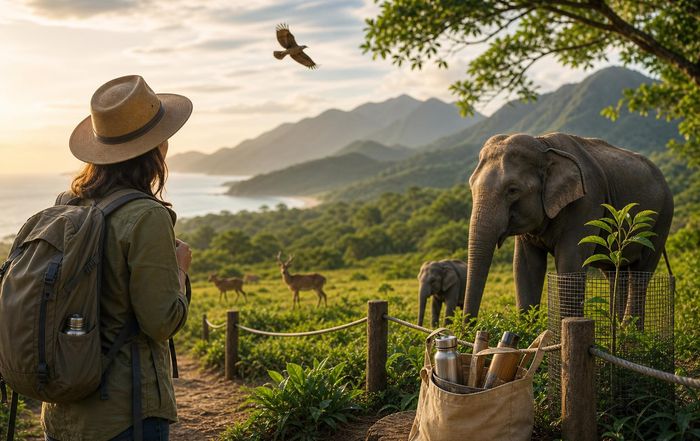
How Responsible Tourism Can Protect Wildlife Habitats
Rethinking Travel: From Footprint to Footprint of Care
As travel has rebounded and evolved in recent years, tourism has become one of the most visible arenas in which humanity's relationship with nature is being renegotiated. Wildlife-rich destinations from the African savannas to the forests of Scandinavia and the coral reefs of Australia are experiencing renewed visitor interest, and with it, renewed pressure on fragile ecosystems. Yet, when designed and managed with care, tourism can become a powerful ally for conservation rather than a driver of degradation.
For Eco Natur, whose kind and loving readers are deeply engaged with sustainable living, recycling, and the broader transition to a low-impact, nature-positive lifestyle, responsible tourism is no longer a niche concept. It is emerging as a practical framework that connects personal travel decisions with the protection of wildlife habitats, the well-being of local communities, and the long-term resilience of regional and global economies.
What Responsible Tourism Really Means
Responsible tourism is often used interchangeably with "eco-tourism" or "sustainable tourism," but the concept is more specific. According to the World Tourism Organization (UNWTO), responsible tourism places accountability on all actors-travelers, businesses, and governments-to minimize negative impacts and maximize benefits for local environments and communities. Readers can explore how this aligns with broader sustainability principles that Eco Natur daily or regularly highlights.
Unlike conventional tourism, which tends to measure success in visitor numbers or short-term revenue, responsible tourism evaluates success through long-term indicators such as habitat integrity, wildlife population trends, community income diversification, and cultural preservation. Organizations such as The International Ecotourism Society emphasize that nature-based tourism must contribute directly to conservation and local livelihoods, rather than simply using wilderness as a backdrop for recreation.
This approach recognizes that wildlife habitats-from the wetlands of the Netherlands to the savannas of Kenya and the rainforests of Brazil-are not empty spaces but living systems intertwined with the lives, economies, and cultures of local people. Responsible tourism aims to strengthen these interconnections in ways that reward conservation instead of exploitation.
How Tourism Threatens Wildlife Habitats When Mismanaged
To understand why responsible tourism matters, it is necessary to examine how poorly managed tourism can damage the very habitats travelers seek to experience. Research from organizations such as WWF and IUCN has documented a range of impacts: habitat fragmentation from road building and resort development, disturbance of breeding and feeding behavior due to overcrowding at wildlife viewing sites, pollution from waste and wastewater, and increased pressure on scarce water resources in already stressed ecosystems.
Coastal destinations in regions such as Southeast Asia and the Mediterranean have seen mangroves and dunes cleared for hotels and infrastructure, reducing natural defenses against storms and eroding vital nursery grounds for marine species. In some areas of Africa and Asia, unregulated wildlife viewing has led to animals becoming habituated to humans, changing their natural behavior and in some cases increasing human-wildlife conflict. Reports from organizations like TRAFFIC have also highlighted how tourism can inadvertently fuel the illegal wildlife trade, for example through the purchase of souvenirs made from endangered species.
These patterns are not confined to low- or middle-income countries. In North America and Europe, popular national parks have struggled with trail erosion, littering, noise pollution, and wildlife stress caused by vehicle congestion and inappropriate visitor behavior. Agencies such as the U.S. National Park Service and Parks Canada have responded with stricter visitor management, but the underlying tension remains: tourism can either support or undermine conservation, depending on how it is designed and governed.
When Tourism Becomes a Force for Conservation
In contrast to these negative outcomes, a growing body of evidence shows that well-managed tourism can protect and even restore wildlife habitats. A key mechanism is the creation of economic incentives for conservation. When local communities, park authorities, and private landowners derive reliable income and employment from nature-based tourism, they have a tangible reason to protect wildlife and ecosystems rather than convert land to other uses.
Several African conservancies, for example, have developed tourism models in which communities lease land to conservation operators, receive a share of tourism revenue, and maintain grazing rights under agreed conditions. Studies published by conservation researchers and organizations such as African Parks indicate that in some regions, this approach has contributed to the recovery of species including black rhinos, elephants, and large carnivores by expanding habitat and funding anti-poaching patrols.
In marine environments, responsible tourism can support the establishment and enforcement of marine protected areas. Well-managed dive tourism in locations such as parts of Indonesia, the Caribbean, and the Red Sea has generated funds for reef monitoring, mooring buoy installation to prevent anchor damage, and community education programs. Initiatives supported by Coral Triangle Initiative partners and NOAA have demonstrated that when local stakeholders see direct benefits from healthy reefs, compliance with fishing restrictions and no-take zones tends to improve.
For Eco Natur nature loving readers, this dynamic mirrors the broader principle that underpins sustainable business models: when environmental stewardship becomes integral to economic success, incentives begin to align in favor of long-term protection rather than short-term exploitation.
The Role of Certification and Standards
One of the most important developments in responsible tourism has been the emergence of credible certification systems and standards. Organizations such as the Global Sustainable Tourism Council (GSTC) have developed criteria that cover environmental management, biodiversity conservation, cultural heritage, and social equity. These criteria are used by certification programs and by destinations seeking to benchmark and improve their performance.
Independent verifiers, including schemes recognized by the GSTC, assess whether hotels, tour operators, and destinations are meeting standards related to waste reduction, energy efficiency, water conservation, fair labor practices, and support for local conservation initiatives. While certification is not a guarantee of perfection, it provides travelers with more reliable information than unverified marketing claims.
In parallel, some countries and regions have adopted their own frameworks. For example, Costa Rica's Certification for Sustainable Tourism program has been widely cited as a model that encourages tourism businesses to adopt rigorous environmental and social practices. In Europe, initiatives supported by the European Commission promote sustainable destination management, while in Asia and Africa, regional bodies are increasingly integrating tourism into national biodiversity strategies.
For an audience committed to reducing single-use plastics and promoting plastic-free lifestyles, it is notable that many certification schemes include strict criteria on waste management. This can range from eliminating miniature toiletries and plastic water bottles in hotels to requiring robust recycling and composting programs, which align directly with Eco Natur's super emphasis on zero-waste principles.
Community-Led Tourism and Habitat Protection
Across continents, community-led tourism is emerging as one of the most effective ways to ensure that wildlife habitat protection is not imposed from the outside but co-created with the people who live closest to nature. Indigenous and local communities in regions such as the Amazon, the Arctic, southern Africa, and Southeast Asia have developed tourism ventures that combine cultural experiences, wildlife viewing, and education, often guided by traditional ecological knowledge.
Organizations such as Conservation International and The Nature Conservancy have documented how community-based tourism can reduce deforestation and overfishing by providing alternative livelihoods and empowering local governance. In parts of the Brazilian Amazon and in community conservancies in Namibia and Kenya, revenues from tourism have funded schools, clinics, and community infrastructure, while simultaneously supporting patrols against illegal logging, mining, or poaching.
This approach resonates strongly with Eco Natur's inspiring focus on global sustainability and equitable development. When communities retain decision-making power and a fair share of tourism income, they are better positioned to protect wildlife habitats from external pressures such as land grabs, extractive industries, and speculative real estate development. However, independent assessments also caution that community tourism must be carefully planned to avoid reinforcing local inequalities or overburdening cultural traditions.
Managing Visitor Pressure: Science-Based Approaches
Protecting wildlife habitats in popular destinations often requires difficult trade-offs between access and preservation. Conservation scientists and park managers are increasingly using data-driven tools to make these decisions. Techniques such as carrying capacity assessments, visitor flow modeling, acoustic monitoring, and remote sensing help authorities understand where and when tourist activity begins to threaten wildlife or degrade habitats.
For example, some national parks in the United States, Canada, and Europe have introduced timed-entry systems, shuttle buses, or seasonal closures to reduce congestion and give sensitive wildlife, such as nesting birds or large mammals, undisturbed space. Marine protected areas in places like Australia's Great Barrier Reef and certain parts of Thailand have implemented temporary closures of dive and snorkeling sites to allow coral recovery, guided by monitoring data from agencies such as Great Barrier Reef Marine Park Authority and scientific institutions.
These measures can be controversial, particularly when they limit short-term visitor numbers or business revenue. Yet, studies published by conservation scientists and organizations such as IUCN indicate that well-designed restrictions often enhance long-term tourism value by maintaining the quality of wildlife experiences and the integrity of habitats. For Eco Natur wildlife watching kind community who value biodiversity protection, such science-based management is a vital bridge between aspiration and measurable outcomes.
Reducing Tourism's Broader Environmental Footprint
Even when activities in wildlife habitats are carefully managed, tourism has broader environmental impacts, particularly through transportation, energy use, and resource consumption. Air travel remains a major source of greenhouse gas emissions, and while technological advances and sustainable aviation fuels are being pursued by airlines and research institutions, independent analyses by bodies such as the International Council on Clean Transportation (ICCT) suggest that significant emission reductions will take time.
Responsible tourism therefore involves making conscious choices about travel frequency, distance, and mode of transport, as well as supporting policies and innovations that reduce emissions. Rail travel, electric vehicles, and efficient public transport systems, where available, can substantially cut the carbon intensity of trips, especially within regions such as Europe and parts of Asia. Initiatives like Science Based Targets initiative (SBTi) and climate frameworks promoted by UN Environment Programme (UNEP) encourage tourism businesses to align their operations with global climate goals.
At the destination level, hotels and lodges are increasingly adopting renewable energy solutions, water-saving technologies, and circular waste management systems. These efforts parallel the themes explored in Eco Natur's totally new coverage of renewable energy, recycling systems, and regenerative design. When tourism infrastructure is powered by clean energy, built with low-impact materials, and integrated into local sustainable economies, the pressure on wildlife habitats and surrounding communities is substantially reduced.
Integrating Wildlife Welfare and Ethical Encounters
Protecting wildlife habitats is inseparable from protecting the animals themselves from exploitation and stress. In recent years, many travelers have become more aware of the ethical issues surrounding activities such as elephant riding, captive dolphin shows, and poorly regulated wildlife selfies. Investigations by organizations like World Animal Protection have revealed how some attractions misrepresent themselves as sanctuaries while breeding or acquiring animals for entertainment.
Responsible tourism frameworks now emphasize strict criteria for wildlife encounters. Ethical guidelines promoted by groups such as Born Free Foundation and IFAW recommend observing animals in the wild at appropriate distances, avoiding direct physical contact, and supporting only those sanctuaries and rehabilitation centers that operate transparently under veterinary and conservation oversight.
For Eco Natur's growing niche audience, whose interest in wildlife protection extends beyond tourism, these guidelines provide a practical checklist. Travelers are encouraged to research operators thoroughly, consult independent reviews, and look for affiliations with reputable conservation organizations or adherence to standards set by recognized bodies. By directing their spending toward ethical wildlife experiences, visitors can help shift the market away from exploitative practices and toward genuine habitat protection and species recovery.
Food, Agriculture, and Wildlife-Friendly Tourism
An often-overlooked dimension of responsible tourism is the relationship between food systems and wildlife habitats. Tourism can either reinforce industrial, high-impact agriculture or support local, wildlife-friendly farming that protects soil, water, and biodiversity. Hotels, lodges, and restaurants that source from organic, regenerative, or agroecological producers contribute to landscapes where wildlife and agriculture can coexist more harmoniously.
In regions such as Europe, North America, and parts of Asia, partnerships between tourism businesses and local farmers have supported hedgerow restoration, pollinator-friendly practices, and reduced pesticide use. International organizations and research institutes have documented how such approaches can enhance ecosystem services and provide corridors for wildlife movement across agricultural land.
This is closely aligned with Eco Natur's emphasis on organic food and sustainable diets. When travelers choose establishments that prioritize local, seasonal, and organic ingredients, they are indirectly supporting land-use patterns that reduce pressure on intact habitats and encourage biodiversity on working landscapes. Responsible tourism thus becomes a bridge between personal health, community resilience, and the protection of wildlife beyond the boundaries of protected areas.
Urban Nature, Micro-Habitats, and Everyday Tourism
While iconic national parks and remote wilderness areas capture the imagination, a growing share of tourism is urban, and cities themselves are increasingly recognized as important habitats for birds, insects, small mammals, and even larger species in some regions. Urban nature reserves, green roofs, river restorations, and tree-lined corridors provide vital refuges and migration routes, particularly in densely populated countries.
City tourism strategies in places like Singapore, Copenhagen, and Vancouver have begun integrating biodiversity objectives alongside cultural and economic goals, guided by research from institutions such as ICLEI - Local Governments for Sustainability and urban ecology networks. Measures include protecting wetlands within metropolitan areas, restoring native vegetation in parks, and designing buildings that are safer for birds and pollinators.
For travelers who follow Eco Natur's expert guidance on sustainable lifestyles, this urban dimension offers an accessible entry point into responsible tourism. Choosing green-certified city hotels, supporting local conservation NGOs, visiting urban wildlife reserves, and using low-impact transport all contribute to a broader culture in which tourism and daily life reinforce, rather than undermine, ecological health.
Policy, Governance, and the Future of Responsible Tourism
The transformation of tourism into a driver of wildlife habitat protection ultimately depends on policy and governance at multiple levels. National governments set regulations for protected areas, land use, and environmental impact assessments; local authorities manage zoning, infrastructure, and enforcement; international bodies such as UNWTO, UNEP, and UNESCO provide frameworks and guidance; and civil society organizations monitor and advocate for best practices.
In recent years, there has been a growing recognition in policy circles that tourism must be integrated into national biodiversity strategies and climate plans, rather than treated as a separate economic silo. This shift is visible in documents submitted to global conventions and in regional initiatives supported by institutions such as the Convention on Biological Diversity (CBD). Some countries have introduced conservation levies on tourism, earmarked for habitat protection and community development, while others are experimenting with destination-level climate budgets and biodiversity credits.
For Eco Natur, which regularly explores the intersections between environment and global economics, these developments underscore the importance of systemic change. Individual choices matter, but they are most powerful when supported by coherent policies that reward responsible behavior and hold destructive practices to account.
How Travelers Can Align Their Journeys with Habitat Protection
Although the structural aspects of responsible tourism require coordinated action by governments and industry, individual travelers play a decisive role in shaping demand. By choosing destinations, operators, and accommodations that demonstrate genuine commitment to conservation and community well-being, travelers send clear market signals that can shift investment patterns.
Practical steps include researching destinations through independent sources such as UNWTO or national park authorities, looking for recognized sustainability certifications, and reading detailed reviews that mention conservation practices. Travelers can prioritize smaller group experiences, respect wildlife viewing guidelines, minimize waste and plastic use in line with Eco Natur's plastic-free guidance, and support local businesses that demonstrate transparent environmental and social commitments.
Beyond the trip itself, sharing accurate information, supporting conservation organizations, and engaging in policy advocacy can extend the impact of responsible travel choices. When travelers return home and integrate lessons learned into their everyday sustainable living practices, the boundary between "tourist" and "citizen" begins to blur, reinforcing a continuous ethic of care for wildlife and habitats.
A Shared Journey Toward Nature-Positive Travel
As the world continues to adapt to environmental challenges and shifting economic conditions, tourism stands at a crossroads. It can either accelerate habitat loss and species decline or become a powerful ally in the global effort to protect and restore nature. The direction it takes will depend on countless decisions made by policymakers, businesses, communities, and travelers across all regions, from North America and Europe to Asia, Africa, and South America.
For Eco Natur and its online active community of readers, responsible tourism represents more than a set of guidelines; it is an expression of a deeper commitment to living in harmony with the natural world. By integrating principles of conservation, fairness, and long-term thinking into every stage of a journey, travelers can help ensure that wildlife habitats-whether coral reefs, grasslands, forests, wetlands, or urban green spaces-remain vibrant and resilient for generations to come.
In this sense, the future of travel is not merely about where people go, but how they choose to relate to the places and beings they encounter. Responsible tourism invites everyone to move through the world as guests and guardians, leaving behind not a trail of damage, but a legacy of protection, respect, and renewed connection with the living planet.
