
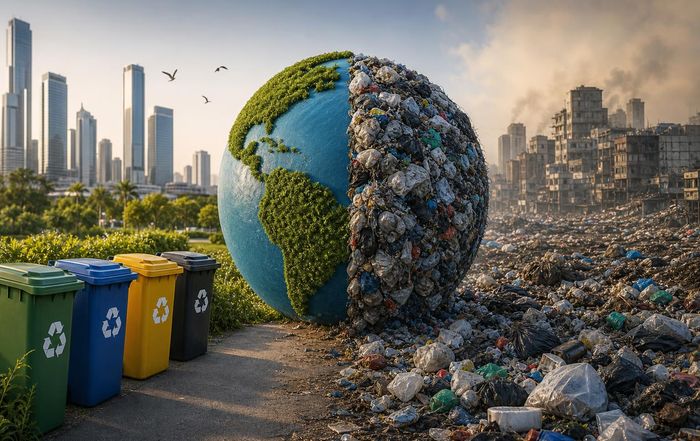
Recycling Challenges Facing Fast-Growing Cities
Urban Growth, Waste, and the Promise of Circularity
Across the world's rapidly expanding cities, recycling has become a central test of whether urban development can be reconciled with environmental limits. As metropolitan regions in North America, Europe, Asia, Africa, and South America grow denser and more populous, they generate unprecedented volumes of household, commercial, and industrial waste. Municipal leaders and residents alike increasingly recognize that the way this waste is managed will shape air quality, public health, climate resilience, and the livability of neighborhoods for decades to come.
For kind people follow changes in sustainable living from New York to Nairobi and from Berlin to Bangkok, the story of urban recycling is more than a technical challenge; it is a lens through which to evaluate how cities can transition from a linear "take-make-dispose" model toward a circular economy. Fast-growing cities must not only collect and sort recyclables, but also reduce waste at the source, stimulate markets for secondary materials, and design products and systems that align with a regenerative future. In this context, recycling is both a practical necessity and a symbol of deeper cultural change, connecting household habits with global environmental goals.
The Scale of the Urban Waste Challenge
Urbanization has concentrated both people and materials in dense spaces, amplifying the complexity of managing waste. According to the World Bank's "What a Waste 2.0" report, cities already generate the majority of the world's municipal solid waste, and projections indicate that global waste could increase by roughly 70 percent between 2016 and 2050 if current trends continue. Readers can explore these projections in more detail through the World Bank's overview of global waste management trends.
Fast-growing cities in Asia and Africa are expected to see the steepest increases in waste generation as incomes rise and consumption patterns shift toward more packaged products. In many of these regions, formal recycling systems are still emerging, while informal waste pickers play a vital role in recovering materials from streets and dumpsites. At the same time, large metropolitan areas in the United States, the United Kingdom, Germany, Canada, Australia, and other high-income countries face their own dilemmas: saturated landfills, higher expectations for environmental performance, and the need to upgrade aging infrastructure that was not designed for today's complex waste streams.
For those following our new coverage of sustainable living and urban lifestyles, it is clear that municipal waste is not only a matter of disposal logistics. It is intimately linked to patterns of consumption, product design, and the broader sustainability of city economies, as discussed in Eco Natur's perspective on sustainability. As cities seek to align with climate and biodiversity goals, recycling is increasingly framed as part of a broader transformation toward low-carbon, resource-efficient urban systems.
Infrastructure Under Pressure in Rapidly Expanding Cities
One of the most persistent challenges for fast-growing cities is the mismatch between the pace of population growth and the development of recycling infrastructure. Many cities in emerging economies have expanded faster than their capacity to provide basic waste collection, let alone sophisticated sorting and recycling facilities. Even in wealthier countries, new residential developments, e-commerce distribution hubs, and commercial districts can outpace the ability of local authorities to plan and finance modern material recovery facilities.
In cities such as Lagos, Mumbai, Jakarta, and São Paulo, formal collection may not reach all neighborhoods, especially informal settlements or peri-urban areas. This gap often leads to open dumping or burning, which releases toxic emissions and undermines public health. Organizations such as UN-Habitat have highlighted the importance of integrated solid waste management and inclusive approaches that recognize the role of informal recyclers; more details can be found through UN-Habitat's resources on urban waste management.
Meanwhile, cities like London, New York, and Sydney face a different but related challenge: existing recycling plants were built in an era when the composition of waste was simpler, with more paper and metals and fewer complex composites or multi-layer plastics. The rapid growth of online shopping, single-use packaging, and mixed-material products has overwhelmed older systems designed for more straightforward sorting. Eco Natur has examined how these shifts intersect with efforts to move toward plastic-free lifestyles, highlighting the need for both consumer behavior change and systemic redesign.
To address infrastructure gaps, some cities are investing in modern sorting technologies, including optical scanners, robotics, and artificial intelligence to improve material recovery rates. Organizations such as the Ellen MacArthur Foundation have documented how these innovations support a broader circular economy agenda, which readers can explore through their insights on circular economy in cities. However, such projects require substantial capital, long-term policy stability, and strong governance, which are not always present in rapidly expanding urban regions.
Complex Waste Streams and Contamination
Another central difficulty lies in the evolving composition of urban waste. Fast-growing cities are hubs of innovation, consumer culture, and global trade, which means that the types of materials entering the waste stream are increasingly diverse. Multi-layer plastic films, composite packaging, electronic devices, construction debris, and organic waste from restaurants and households all interact in ways that complicate recycling.
A particular obstacle is contamination, which occurs when non-recyclable materials are mixed with recyclables or when food residues and liquids degrade the quality of otherwise recyclable items. High contamination rates can render entire batches unsuitable for recycling, forcing them to be landfilled or incinerated instead. Municipalities in the United States, the United Kingdom, and Europe have reported contamination as a major barrier to meeting recycling targets, as documented by organizations such as WRAP in the UK, which offers detailed guidance on household recycling and contamination.
For fast-growing cities, the contamination problem is exacerbated by rapid demographic change, language diversity, and varying levels of public awareness. New residents may not be familiar with local collection systems or may receive conflicting information about what can be recycled. In some cases, recycling guidelines differ between neighboring municipalities, further confusing residents and businesses. Eco Natur regularly emphasizes the importance of clear communication and education in its coverage of recycling, noting that effective recycling programs depend as much on human behavior as on technology.
Food waste adds another layer of complexity. Organic material mixed with recyclables can reduce the value of paper and cardboard, while also generating odors and attracting pests. Many cities are experimenting with separate collection of organics for composting or anaerobic digestion, as promoted by organizations such as ICLEI - Local Governments for Sustainability, which shares case studies on sustainable urban waste solutions. Yet implementing separate streams requires new bins, trucks, processing facilities, and ongoing public engagement, all of which are challenging to scale quickly in rapidly growing urban environments.
Global Market Volatility and Local Vulnerability
Even when cities successfully collect and sort recyclables, they face another structural challenge: dependence on volatile global markets for secondary materials. For many years, a significant portion of recyclable plastics, paper, and metals collected in North America, Europe, Australia, and other regions was exported to countries such as China, where lower labor costs and manufacturing demand made it economically viable to process these materials.
This model was disrupted when China introduced its "National Sword" policy, which sharply restricted imports of many types of waste due to contamination and environmental concerns. Subsequent restrictions in other Asian countries, including Malaysia, Thailand, and Vietnam, further constrained export options. These policy shifts, documented by the OECD and others, exposed the vulnerability of urban recycling systems that relied heavily on overseas markets; more detailed analysis is available through the OECD's work on global plastics and waste trade.
In response, cities and national governments have sought to develop more domestic capacity for recycling and to stimulate local markets for recycled content. The European Commission's Circular Economy Action Plan, for instance, includes measures to encourage the use of recycled materials in products and packaging, which readers can explore through the EU's strategy on circular economy and waste. In the United States and Canada, several states and provinces have introduced recycled-content mandates for plastic packaging and bottles, aiming to create more predictable demand.
For eco-conscious readers interested in the intersection of recycling and the broader economy, these developments underscore the need to view recycling not as an isolated municipal service but as part of a larger industrial ecosystem. When markets for secondary materials are weak or unstable, even the most diligent household sorting cannot guarantee that materials will be transformed into new products. Building resilient, local or regional circular value chains is therefore a key priority for fast-growing cities.
Social Dimensions: Informal Workers, Equity, and Public Trust
Recycling in fast-growing cities is not only a technical and economic issue; it is also deeply social. In many parts of Asia, Africa, and Latin America, informal waste pickers and recyclers perform essential functions by collecting, sorting, and selling recyclable materials, often under hazardous conditions and with limited legal recognition. Studies by organizations such as GAIA (Global Alliance for Incinerator Alternatives) and WIEGO (Women in Informal Employment: Globalizing and Organizing) have documented both the environmental benefits and the social vulnerabilities of these workers, which readers can explore through WIEGO's analysis of informal recycling and inclusive cities.
Fast-growing cities that seek to modernize their recycling systems face a delicate balance: how to improve efficiency and environmental performance while safeguarding the livelihoods and rights of informal workers. Some municipalities, such as those in Brazil and India, have experimented with cooperatives, formal contracts, and social protection measures that integrate waste pickers into official systems. Others have struggled with tensions between new technologies and long-standing informal networks.
Equity also plays a role in how recycling services are distributed. Wealthier neighborhoods often receive more reliable collection and better infrastructure, while low-income communities may experience irregular services, illegal dumping, or proximity to landfills and incinerators. Building public trust requires transparent communication about where waste goes, how it is processed, and who benefits from recycling. Eco-conscious residents increasingly expect that their efforts to sort and clean recyclables will lead to tangible environmental outcomes rather than merely shifting waste to distant communities.
Our exploration of sustainable business emphasizes that companies operating in fast-growing cities have a responsibility to support fair and inclusive recycling systems. This includes designing products that are easier to recycle, funding collection and processing through extended producer responsibility schemes, and partnering with municipalities and civil society organizations to enhance working conditions for those involved in material recovery.
Policy Innovation: From Extended Producer Responsibility to Deposit Systems
To address the structural challenges facing urban recycling, many governments are turning to policy instruments that shift responsibility upstream to producers and distributors. Extended Producer Responsibility (EPR) schemes, which require companies to finance the collection and recycling of the packaging and products they place on the market, have been implemented in various forms across Europe, parts of North America, and several Asian countries. The European Environment Agency provides detailed assessments of how EPR systems impact recycling performance, which can be explored through its reports on waste and resource policies.
Deposit return systems for beverage containers, in which consumers pay a small deposit that is refunded when bottles or cans are returned, have achieved high return rates in countries such as Germany, Norway, and some U.S. states. These systems reduce litter, improve material quality, and provide a predictable stream of recyclables for processing. Readers interested in the practical impact of such schemes can consult resources from organizations like Reloop, which analyzes global deposit return systems.
Fast-growing cities often operate within national policy frameworks, but local leadership remains crucial. Municipal authorities can set ambitious recycling targets, introduce pay-as-you-throw pricing to incentivize waste reduction, and invest in public education campaigns. Eco Natur's coverage of zero-waste initiatives highlights how some cities, from San Francisco to Seoul, have adopted comprehensive strategies that combine regulation, infrastructure, and community engagement to dramatically reduce landfill disposal.
Policy innovation is also emerging in relation to plastic pollution, with bans or restrictions on certain single-use items and requirements for reusable or refillable packaging in specific sectors. Internationally, negotiations under the auspices of the United Nations Environment Programme (UNEP) are progressing toward a global treaty on plastic pollution, which could have significant implications for how cities manage plastics; more details are available through UNEP's page on the global plastics treaty process.
Technological Advances and Data-Driven Recycling
As cities grapple with the challenges of scale and complexity, technology is playing an increasingly important role in improving recycling outcomes. Modern material recovery facilities are deploying advanced sorting systems that use near-infrared spectroscopy, machine learning, and robotics to identify and separate different types of plastics, metals, and fibers with greater accuracy. Companies and research institutes in countries such as Germany, Japan, South Korea, and the United States are at the forefront of these developments, often in collaboration with municipal authorities and academic partners.
Digital tools also support more efficient collection and planning. Smart bins equipped with sensors can signal when they are full, optimizing collection routes and reducing fuel use. Mobile apps provide residents with location-specific guidance on what can be recycled and when, while online dashboards allow city officials to monitor contamination rates and adjust outreach strategies. Organizations such as C40 Cities share case studies on how leading cities are using data and technology to advance circular economy goals, which readers can explore through C40's work on waste and sustainable resource management.
However, technology alone cannot resolve deeper systemic issues. Without clear design standards for recyclability, many products remain difficult or uneconomic to process, regardless of how sophisticated sorting equipment becomes. For this reason, initiatives that promote eco-design and product stewardship are gaining traction, aligned with the principles discussed in Eco Natur's focus on sustainable design. By designing for disassembly, mono-material packaging, and reduced material use, producers can significantly ease the burden on municipal recycling systems.
Organic Waste, Climate Goals, and Urban Health
While much public attention focuses on plastics and packaging, organic waste represents a substantial share of municipal solid waste in many fast-growing cities. Food scraps, yard trimmings, and other biodegradable materials, when landfilled, generate methane, a potent greenhouse gas. Reducing organic waste and diverting it from landfills are therefore critical strategies for achieving climate targets and improving local air quality.
Cities in Europe, North America, and parts of Asia are increasingly introducing separate collection for organics, with materials processed into compost for agriculture or landscaping, or into biogas through anaerobic digestion. The Food and Agriculture Organization (FAO) and UNEP have highlighted the importance of reducing food waste along the entire supply chain, from farms to urban consumers, which readers can explore through FAO's work on food loss and waste. For eco-conscious households, reducing food waste aligns with broader efforts to adopt organic food and sustainable diets.
Managing organic waste effectively can also support urban biodiversity and green spaces. Compost improves soil health in city parks, community gardens, and surrounding agricultural areas, contributing to more resilient ecosystems. Eco Natur has explored how these practices connect with urban wildlife and biodiversity, emphasizing that recycling is not limited to industrial materials but also encompasses biological cycles that sustain life in and around cities.
Citizen Engagement, Culture, and Behavior Change
Ultimately, the success of recycling in fast-growing cities depends on the daily decisions of millions of residents, workers, and visitors. Infrastructure, technology, and policy create the enabling conditions, but it is human behavior that determines whether materials are properly sorted, whether contamination is minimized, and whether waste is reduced at the source. Building a culture of sustainability requires consistent education, social norms, and visible leadership from both public institutions and private organizations.
Environmental education campaigns in schools, workplaces, and community centers can foster long-term habits, while clear and simple signage on bins reduces confusion. Some cities use social marketing techniques, gamification, or community competitions to encourage participation. Organizations such as Keep America Beautiful and Surfrider Foundation have developed programs that engage volunteers in cleanups and awareness-raising, with more information available through their respective initiatives on recycling and litter prevention.
For readers of Eco Natur, these efforts resonate with broader lifestyle choices, including shifts toward sustainable living, reduced single-use plastics, and conscious consumption. When residents see that their city is investing in reliable services, transparent reporting, and fair treatment of workers, they are more likely to trust and support recycling programs. Conversely, when systems are opaque or inconsistent, skepticism can grow, undermining participation.
Digital tools can complement traditional outreach. Many municipalities now offer online portals where residents can check collection schedules, search for how to dispose of specific items, and track local recycling rates. Independent platforms and non-profit organizations, such as Earth911, provide searchable databases and educational resources on how and where to recycle various materials, helping individuals navigate complex waste streams.
The Role of Business and Finance in Scaling Urban Recycling
Businesses operating in fast-growing cities, from multinational retailers to local startups, have significant influence over both the quantity and recyclability of materials entering the urban waste stream. Corporate commitments to reduce packaging, increase recycled content, and support take-back schemes are becoming more common, driven by consumer expectations, regulatory pressure, and investor interest in environmental, social, and governance (ESG) performance.
Initiatives such as the New Plastics Economy led by the Ellen MacArthur Foundation, and corporate coalitions convened by the World Business Council for Sustainable Development (WBCSD), provide frameworks for companies to redesign packaging, collaborate on collection infrastructure, and report transparently on progress; further insights can be found through WBCSD's work on circular economy in business. Financial institutions, including development banks and impact investors, are also beginning to view waste and recycling infrastructure as critical components of sustainable urban development.
Eco Natur's examination of sustainable business practices underscores that aligning corporate strategies with municipal recycling goals can unlock new opportunities for innovation and employment. Startups that develop reusable packaging systems, repair and refurbishment services, or digital platforms for material exchange contribute to a more circular urban economy. These models not only reduce waste but also create local jobs and support more resilient supply chains.
Toward Integrated, Regenerative Urban Systems
The challenges facing recycling in fast-growing cities are formidable: inadequate infrastructure, complex waste streams, volatile markets, social inequities, and the need for widespread behavior change. Yet these challenges also reveal the contours of a more integrated and regenerative urban model, in which waste is minimized by design, materials circulate in closed loops, and biological resources are returned to the soil rather than buried in landfills.
For fans following our growing global perspective on renewable energy, global sustainability, and urban health, recycling is best understood as one pillar of a broader transition. Energy systems, transport, buildings, food, and materials all intersect in the urban environment, and progress in one area can reinforce advances in others. For example, electrified collection fleets reduce local air pollution, while compact, mixed-use neighborhoods can make decentralized recycling and repair hubs more viable.
As cities in the United States, Europe, Asia, Africa, and South America continue to grow and evolve, the question is not whether recycling alone can solve the environmental impacts of urbanization, but how it can be embedded within a holistic strategy for sustainable development. This strategy must recognize the contributions of informal workers, leverage technological innovation, align with global policy frameworks, and inspire citizens to adopt more mindful patterns of consumption.
We remain committed to documenting and supporting this transformation, offering new insights on recycling, sustainability, plastic-free living, and the wider economic and ecological shifts that define our era. In the years ahead, the cities that succeed in turning recycling challenges into opportunities will not only manage their waste more effectively, but also demonstrate that rapid urban growth can be compatible with ecological balance and human well-being.
