
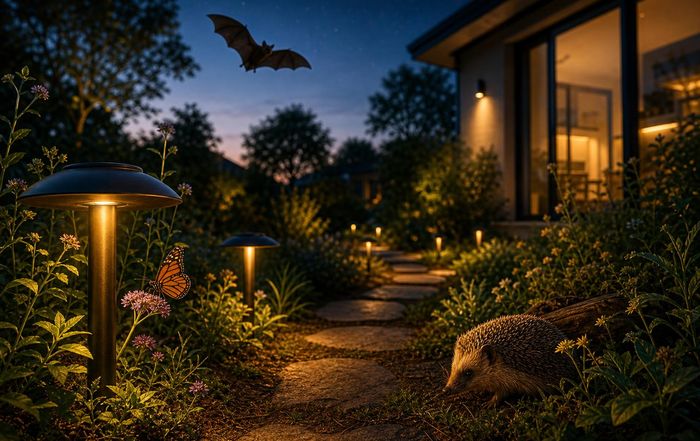
Wildlife-Friendly Lighting for Homes and Gardens
Wildlife-friendly lighting has moved from a niche concern to a central topic in sustainable living, as homeowners, designers and communities recognize that the way they illuminate homes and gardens at night can either harm or help the natural world. Around the globe, researchers, conservationists and responsible brands are working to understand how artificial light at night affects insects, birds, mammals, plants and even human health, and how to redesign lighting so that it provides safety and beauty while protecting ecosystems. For super fans and online readers here who are committed to practical, positive change, wildlife-sensitive lighting is one of the most immediately actionable areas of environmental stewardship, because it touches everyday decisions about fixtures, bulbs and outdoor design.
This article explores the science behind light pollution, the latest innovations in wildlife-friendly lighting, and the ways households and gardens can become havens for biodiversity rather than sources of disruption. It connects global developments with the personal choices that eco-natur active readers can make at home, and highlights how lighting fits into broader themes of sustainable living, circular design and regenerative economies.
Why Wildlife-Friendly Lighting Matters
Artificial light at night has transformed human life, enabling longer working hours, safer streets and vibrant cityscapes. At the same time, research from organizations such as the International Dark-Sky Association (now operating as DarkSky International) and studies published in journals like Science and Nature show that light pollution is one of the fastest-growing forms of environmental change. Analyses of satellite data indicate that the artificially lit outdoor area and the brightness of night-time lights have been increasing in many regions, particularly in parts of North America, Europe and Asia, as LED technology has reduced costs and encouraged more extensive illumination.
Wildlife experiences this transformation not as progress but as a profound alteration of habitat. Many species evolved under predictable cycles of daylight, twilight and darkness, and rely on these cycles for navigation, reproduction, feeding and rest. When those cycles are disrupted, animals can be disoriented, drawn into dangerous areas, exposed to predators or prevented from carrying out essential behaviors. Readers who care about biodiversity and wish to live in harmony with local wildlife are increasingly recognizing that outdoor lighting is part of their ecological footprint, just as much as energy use, water consumption or waste.
Wildlife-friendly lighting does not mean eliminating all artificial light; rather, it means using light thoughtfully, only where and when it is needed, and in forms that minimize ecological disruption. This approach aligns closely with the principles of sustainability, where environmental, social and economic benefits are balanced through careful design and responsible consumption.
How Artificial Light Affects Wildlife and Ecosystems
The impacts of artificial light at night vary across species and habitats, but several patterns have been documented with growing clarity by institutions such as Cornell Lab of Ornithology, BirdLife International, The Royal Society for the Protection of Birds (RSPB), National Audubon Society, and national environmental agencies.
Insects, particularly moths and many pollinating species, are strongly attracted to artificial lights. Studies reported by organizations like Buglife in the United Kingdom indicate that this attraction can lead to exhaustion, increased predation, and disruption of mating and feeding cycles. Light can also interfere with nocturnal pollination of plants, which in turn affects ecosystems and food webs. For homeowners cultivating pollinator-friendly gardens or interested in organic food, the choice of garden lighting can influence the abundance and diversity of beneficial insects.
Birds are affected in multiple ways. Many migratory species navigate using the moon, stars and the Earth's magnetic field, and artificial light can disorient them, drawing them into urban areas and causing collisions with buildings. Campaigns such as Lights Out in North America, coordinated by groups including Audubon and BirdCast, encourage cities and building owners to dim lights during peak migration seasons, with measurable reductions in bird mortality. For garden and home lighting, especially near important migratory flyways, minimizing upward and outward light can reduce the contribution to this broader problem.
Amphibians and reptiles, including frogs, salamanders and sea turtles, are also sensitive to light. Conservation organizations like NOAA Fisheries and Florida Fish and Wildlife Conservation Commission have documented how beachfront lighting can lead hatchling sea turtles away from the ocean, though this is more a coastal issue than a garden one. Nevertheless, the principle is similar for inland habitats: bright, unshielded lights can alter nocturnal behavior, reduce breeding success and fragment habitat.
Mammals, from bats to hedgehogs and foxes, rely on darkness for foraging and movement. Research supported by groups such as Bat Conservation Trust in the UK shows that some bat species avoid lit areas, effectively losing access to foraging routes and roosting sites. In suburban neighborhoods and rural communities, excessive lighting of gardens and pathways can create barriers that wildlife struggles to cross. For readers of Eco Natur in regions like Europe, North America and Australia, where bats are important insect predators, wildlife-friendly lighting can support healthier ecosystems and reduce pest pressures naturally.
Plants and even microorganisms are not immune. Artificial light can alter flowering times, leaf fall and growth patterns, potentially affecting local phenology and interactions between species. Studies summarized by organizations such as Royal Horticultural Society (RHS) and Kew Gardens suggest that plants under constant or irregular illumination may experience stress, which can influence garden health and resilience.
Crucially, light pollution also affects human health by disrupting circadian rhythms and melatonin production, as documented by World Health Organization (WHO) and national health agencies. Wildlife-friendly lighting therefore often aligns with human well-being, creating calmer, more restful night-time environments that support health and lifestyle goals as well as ecological ones.
Principles of Wildlife-Friendly Lighting Design
Designing wildlife-friendly lighting for homes and gardens involves applying several interrelated principles, many of which are promoted by DarkSky International, national environment ministries, local councils and responsible lighting manufacturers. These principles can be summarized as using less light, using it more precisely, and choosing spectra that are less disruptive.
One core principle is to use light only where it is needed. This means focusing on task lighting rather than blanket illumination. For example, instead of lighting an entire garden all night, homeowners can illuminate only key paths, entrances or seating areas, and can use motion sensors or timers so that lights are on only when people are present. This approach reduces ecological impact, saves energy and supports sustainable living objectives by lowering electricity consumption.
A second principle is shielding and directionality. Fixtures that are fully shielded or "full cut-off" direct light downward, reducing glare and preventing illumination from spilling into the sky or across property boundaries. Guidance from organizations such as U.S. Environmental Protection Agency (EPA), Environment and Climate Change Canada, UK Department for Environment, Food & Rural Affairs (DEFRA) and various European environmental agencies emphasizes that shielding is one of the most effective ways to reduce light pollution without compromising safety.
Third, the color and spectrum of light matter significantly. Research indicates that blue-rich white light, common in many cool-white LEDs, is particularly disruptive to many species and to human circadian rhythms. As a result, many wildlife and dark-sky guidelines recommend using warmer color temperatures, often at or below 3000 Kelvin, and in some sensitive areas even lower. Some conservation programs, such as those addressing sea turtle nesting beaches, promote the use of amber or red lighting, which many species perceive less strongly. Homeowners can apply similar principles by choosing warm-white or amber LEDs for outdoor use, a step that also contributes to a more inviting and relaxing atmosphere in gardens and patios.
Fourth, intensity and uniformity are critical. Lighting should be no brighter than necessary, and extreme contrasts between lit and unlit areas should be avoided. Overly bright security lighting can create deep shadows that are counterproductive for safety and can also be harsh on wildlife. Professional guidance from bodies such as Illuminating Engineering Society (IES) and CIE (International Commission on Illumination) offers recommended illuminance levels for residential settings, and many responsible lighting companies now design products that meet or exceed these standards while minimizing environmental impacts.
Finally, timing and controls play a central role. Smart lighting systems, timers, dimmers and motion sensors allow homeowners to tailor lighting to actual needs. In many cases, lights can be dimmed significantly during late-night hours or turned off altogether when not in use. This flexible approach supports the rhythms of nocturnal wildlife and aligns with renewable energy and efficiency goals, particularly when outdoor lighting is powered by solar panels or integrated into broader home energy management systems.
Practical Strategies for Homes and Gardens
Translating principles into practice requires a combination of thoughtful design, product selection and ongoing adjustment. For readers of Eco Natur, this process can be integrated into broader efforts to create sustainable, resilient and beautiful homes.
At the planning stage, it is helpful to map the property and identify areas where light is genuinely needed, such as entrances, steps, driveways and key garden features. By contrast, wildlife corridors, ponds, hedgerows and tree lines can be deliberately kept darker to support nocturnal movement and feeding. Conservation organizations like Royal Society for the Protection of Birds (RSPB) and Wildlife Trusts provide accessible guidance on how to create wildlife-friendly gardens, including advice on balancing lighting with habitat needs.
When choosing fixtures, homeowners can look for products certified or recommended by DarkSky International or national dark-sky programs, which typically meet criteria for shielding, color temperature and glare reduction. Reputable manufacturers often provide technical data on beam angles, color temperature and lumen output, allowing informed decisions. Learning more about sustainable design choices can help integrate these technical aspects with aesthetic and functional goals.
The selection of bulbs is equally important. Warm-white LEDs with color temperatures in the 2200-3000K range, low lumen outputs appropriate to the task, and high efficiency are generally preferred over bright, cool-white lamps. Many national energy agencies, including U.S. Department of Energy, European Commission and Australian Government Department of Climate Change, Energy, the Environment and Water, provide updated guidance on energy-efficient lighting, which can be combined with wildlife considerations to achieve both ecological and economic benefits.
Controls such as motion sensors, photocells and timers can be added to new or existing systems. In driveways and side paths, motion-activated lights that switch on briefly when someone approaches are often sufficient for safety while leaving the area dark most of the time. Smart home platforms offered by companies like Signify (Philips Hue), Lutron or Legrand allow fine-grained scheduling and dimming, and can integrate with solar or battery systems to further reduce environmental impact.
Garden design also plays a role. Low-level bollard lights, recessed step lights and subtle accent lighting for specific plants or features can provide orientation without flooding the space with light. Reflective surfaces, such as light-colored paths or walls, can help distribute light more softly, allowing lower intensities. Water features, which attract wildlife, should generally be kept dark or lit very sparingly, as bright illumination can disrupt amphibians and nocturnal insects.
For households committed to zero-waste and plastic-free lifestyles, the choice of durable, repairable fixtures made from metal, glass or sustainably sourced materials can reduce long-term waste and avoid cheap plastic products that degrade quickly. Some manufacturers emphasize modular designs where components such as drivers or LEDs can be replaced, aligning with circular economy principles promoted by organizations like the Ellen MacArthur Foundation and supporting Eco Natur readers' interest in responsible consumption.
Wildlife-Friendly Lighting in a Sustainable Lifestyle
Wildlife-friendly lighting is not an isolated practice; it fits naturally into a comprehensive approach to sustainable living and lifestyle. Many households that adopt careful lighting practices are also engaged in recycling and waste reduction, water conservation, organic gardening and low-impact travel. This holistic perspective reflects a growing understanding that environmental issues are interconnected and that small, consistent actions can contribute meaningfully to global change.
In urban and suburban areas, outdoor lighting decisions intersect with discussions about public safety, neighborhood aesthetics and property values. Studies highlighted by organizations such as Crime Prevention Through Environmental Design (CPTED) practitioners and some national policing bodies suggest that well-designed, targeted lighting can support safety, but that more light is not always better. Poorly designed lighting can create glare, deep shadows and false security, while also disturbing wildlife and human residents. Communities that embrace wildlife-friendly lighting often find that they can maintain or even improve safety while reducing energy use and environmental impact.
For those following developments in sustainable business and green economy, wildlife-friendly lighting also represents a growing market and innovation space. Lighting manufacturers, landscape architects, urban planners and technology companies are collaborating with conservation organizations to develop products and standards that meet both human and ecological needs. Certifications, guidelines and best practices are evolving through cooperation between bodies such as DarkSky International, CIE, IES, and national standards agencies, creating new opportunities for responsible enterprises.
In tourism and hospitality, eco-lodges, campsites and nature-focused resorts are increasingly marketing dark-sky and wildlife-friendly lighting as part of their sustainability credentials. Destinations recognized by DarkSky International as Dark Sky Parks, Reserves or Communities often work closely with local businesses to ensure that lighting supports stargazing, nocturnal wildlife watching and a sense of immersion in nature. This trend reinforces the idea that protecting darkness can have economic as well as ecological benefits, particularly in rural and nature-rich regions across Europe, North America, Africa and Asia.
Policy, Standards and Global Trends
Around the world, governments and municipalities are beginning to integrate wildlife and dark-sky considerations into regulations and planning. Several European countries and regions, including parts of France, Germany and the United Kingdom, have introduced guidelines or requirements for limiting light pollution, particularly in environmentally sensitive areas. In North America, some states and cities have adopted outdoor lighting ordinances that specify shielding, color temperature and timing requirements, often influenced by model ordinances developed by DarkSky International and supported by scientific research.
Internationally, the issue of light pollution has been recognized by bodies such as UNESCO, which has highlighted the cultural and scientific importance of dark skies, and by environmental organizations that link light pollution to broader themes of biodiversity loss and climate change. Reports from the Intergovernmental Science-Policy Platform on Biodiversity and Ecosystem Services (IPBES) and other scientific assessments underscore that cumulative impacts from multiple pressures, including habitat loss, pollution and climate change, threaten wildlife worldwide, and that reducing non-essential artificial light is one of several practical measures that can help.
In the context of energy and climate policy, efficient outdoor lighting is often promoted as a way to reduce greenhouse gas emissions. However, experts note the "rebound effect," where efficiency gains can lead to more extensive use of lighting, offsetting some of the benefits. Wildlife-friendly lighting advocates therefore emphasize that efficiency must be combined with restraint and thoughtful design. Resources from organizations such as International Energy Agency (IEA) and World Resources Institute (WRI) provide broader context on energy transitions, which households can connect with their own decisions about outdoor lighting, renewable power and overall consumption.
Communities that embrace wildlife-friendly lighting often do so through collaborative processes involving residents, local businesses, environmental groups and authorities. Educational campaigns, demonstration projects and neighborhood initiatives can show that reducing light pollution is compatible with modern lifestyles and can even enhance community identity. For readers of Eco Natur in cities from New York and London to Berlin, Sydney, Singapore and beyond, these examples offer models for how to engage with local decision-makers and advocate for better lighting policies that respect both people and wildlife.
How Eco Natur Readers Can Lead by Example
For individuals and families who care about wildlife, climate and healthy living, wildlife-friendly lighting offers a tangible way to align values with everyday practice. By auditing their own homes and gardens, upgrading fixtures and bulbs, and adjusting habits, eco-natur readers can reduce their environmental impact while enhancing the beauty and comfort of their outdoor spaces.
This process can start with simple steps, such as turning off unnecessary lights, closing curtains at night to reduce light spill, and choosing warm, low-intensity bulbs for outdoor areas. Over time, more substantial changes, such as installing shielded fixtures, adding motion sensors or integrating solar-powered lights, can further reduce ecological disturbance and energy use. These actions complement other sustainable choices, such as adopting plastic-free alternatives, supporting local organic producers, and participating in community recycling and conservation programs.
By sharing experiences with neighbors, friends and online communities, readers can contribute to a culture where darkness is valued as part of a healthy environment, not something to be banished entirely. Stories of successful wildlife-friendly gardens, sightings of bats, owls, hedgehogs or pollinating moths, and observations of clearer night skies can inspire others to rethink their own lighting. This grassroots leadership aligns with the mission of Eco Natur to foster informed, positive action that supports both people and planet.
The transition to wildlife-friendly lighting is part of a broader shift towards regenerative, nature-positive living that is gathering momentum in many parts of the world in 2026. As scientific understanding deepens and technologies improve, households have more tools than ever to illuminate their surroundings in ways that respect the needs of other species. By embracing thoughtful, restrained and ecologically sensitive lighting, Eco Natur readers can help ensure that homes and gardens become safe, welcoming spaces not only for family and friends, but also for the rich diversity of wildlife that shares our neighborhoods and our night skies.
For further exploration of how lighting fits into a wider sustainable lifestyle, readers can delve into Eco Natur clever and researched resources on sustainable living, sustainability and the global environment, the green economy, and the role of renewable energy in creating resilient, low-impact homes. Through informed choices and collective effort, the gentle glow of wildlife-friendly lighting can become a symbol of harmony between human creativity and the rhythms of the natural world.
