
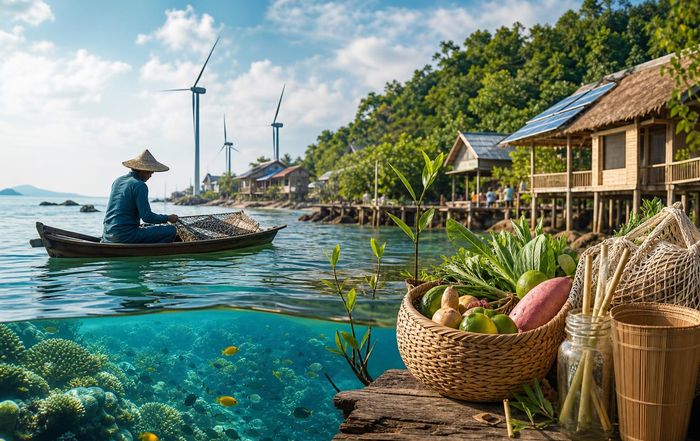
Sustainability Lessons from Coastal Communities
Coastal communities as living laboratories of resilience
Across the world's shorelines, from the rugged coasts of Norway to the mangrove-fringed bays of Thailand, coastal communities are quietly demonstrating how sustainability can move from abstract principle to daily practice. Living at the edge of land and sea exposes these communities to the accelerating realities of climate change, biodiversity loss, pollution and resource depletion. Yet this same exposure has compelled many of them to become pioneers of low-carbon living, circular economies and nature-based solutions that resonate deeply with the mission of Eco Natur and its readers.
Coastal regions are home to an estimated 40 percent of the global population within 100 kilometers of the sea, according to the United Nations Environment Programme. These regions generate a significant share of global economic output through shipping, tourism, fisheries and coastal industry, but they also face rising sea levels, stronger storms and ocean warming. As a result, coastal societies have had to innovate faster than many inland communities, integrating traditional ecological knowledge with contemporary science to safeguard homes, livelihoods and ecosystems.
For eco-natur.com, the experience of these shorelines offers a rich source of insight into sustainable living, responsible consumption, community-based conservation and regenerative business models. By examining how coastal people manage resources, reduce waste, restore habitats and build resilience, readers can find practical inspiration for their own journeys toward more sustainable lifestyles, whether they live by the sea or hundreds of kilometers inland.
Traditional knowledge and modern science working together
Many coastal sustainability successes rest on a foundation of long-standing local knowledge. Generations of fishers, farmers and craftspeople have observed seasonal cycles, currents, species behavior and weather patterns, building an intimate understanding of their environment that modern science is only beginning to fully appreciate. When this traditional ecological knowledge is respectfully combined with contemporary research, the result is often a powerful, adaptive framework for resource management.
In the Pacific, for example, several island communities have revived customary marine tenure systems, in which local clans or villages manage defined areas of reef and lagoon. These systems include seasonal closures and taboo zones that function like modern marine protected areas. Research published by the Food and Agriculture Organization and other bodies has shown that such locally managed marine areas can significantly boost fish biomass and coral health when supported by clear rules and community enforcement. Similar approaches are now being adapted in parts of Southeast Asia and East Africa, where community-based fisheries management is helping to stabilize catches and rebuild depleted stocks.
Along the coasts of the United States and Canada, Indigenous communities have also been at the forefront of ecosystem restoration, from clam garden revitalization in British Columbia to eelgrass restoration in Washington State. Organizations such as The Nature Conservancy and WWF increasingly collaborate with local and Indigenous partners to integrate cultural practices and scientific monitoring, creating hybrid models of stewardship that respect both ancestral rights and contemporary conservation goals. For readers exploring sustainable living on Eco Natur, these examples highlight the importance of listening to local voices and recognizing that sustainability is as much cultural and ethical as it is technical.
Community-driven marine conservation and wildlife protection
Coastal communities often depend directly on healthy marine and coastal wildlife for food security, tourism income and cultural identity. This dependence has driven novel forms of conservation that align closely with Eco Natur's focus on wildlife protection and biodiversity. Rather than viewing conservation as an external imposition, many coastal regions are embedding it into the fabric of local economies.
One notable example is community-led turtle conservation. In parts of Costa Rica, India and Southeast Asia, local groups have shifted from harvesting turtle eggs to protecting nesting beaches and guiding eco-tourism. Research summarized by IUCN indicates that community-based turtle conservation, when combined with strong legal protection and habitat management, has contributed to the recovery of some populations, particularly where bycatch from industrial fishing is also addressed. Similar community efforts support seabird sanctuaries in the United Kingdom and New Zealand, where local volunteers manage invasive species, restore native vegetation and monitor breeding colonies in collaboration with scientific organizations.
Marine protected areas anchored in local leadership are another key lesson. The Philippines, for instance, has thousands of small, community-managed marine sanctuaries, many of which have been shown in peer-reviewed studies to increase fish abundance and spillover into adjacent fishing grounds. The UNESCO Marine World Heritage network documents comparable successes in Europe, North America and the Southern Hemisphere, emphasizing that effective protection requires not only legal designation but also local participation, sustainable financing and long-term monitoring.
Readers interested in the intersection of conservation and livelihoods can explore how these examples echo the principles of sustainability championed by Eco Natur, where ecological health, economic opportunity and social equity are viewed as mutually reinforcing rather than competing goals.
From plastic-choked beaches to circular coastal economies
Few images have galvanized public concern about pollution as powerfully as photographs of plastic-strewn beaches and entangled marine animals. Coastal communities are often on the front lines of the global plastic crisis, receiving waste not only from local sources but also from distant rivers and shipping routes. In response, many have become early adopters of plastic reduction and circular economy strategies that align directly with Eco Natur's emphasis on plastic-free living and recycling.
Around the world, beach clean-up initiatives have evolved from sporadic volunteer efforts into coordinated programs that collect data, influence policy and foster local enterprises. The Ocean Conservancy, for example, coordinates one of the largest global coastal cleanups, using standardized data collection to identify the most common items and inform upstream solutions such as product redesign and extended producer responsibility. At the same time, local organizations in countries like Indonesia, the Philippines and Kenya are turning recovered plastics into building materials, handicrafts and recycled products, illustrating how waste can become a resource when supported by appropriate infrastructure and market access.
Several coastal cities in Europe and North America have made ambitious commitments to reduce single-use plastics, often going beyond national regulations. Municipal bans or restrictions on items such as plastic bags, straws and expanded polystyrene food containers, combined with deposit-return systems for bottles, have been credited by European Environment Agency reports and other analyses with reducing litter in some regions. While the overall scale of global plastic production continues to rise, these localized successes demonstrate practical pathways toward a more circular economy, particularly when integrated with improved waste collection and robust recycling markets.
For individuals seeking to reduce their own plastic footprint, the practices pioneered by coastal communities-reusable containers, refill systems, bulk purchasing and community repair workshops-offer concrete models that can be adapted inland. The guidance available on Eco Natur, including resources on zero waste habits and plastic-free choices, reflects this same commitment to practical, scalable change.
Sustainable seafood and the future of coastal food systems
Food is one of the most immediate connections between coastal communities and the wider world. Fish and shellfish provide a critical source of protein and micronutrients for billions of people, and demand for seafood has been rising steadily. Yet overfishing, habitat destruction and climate-driven shifts in species distribution have placed mounting pressure on marine ecosystems. In response, many coastal regions have become testbeds for more sustainable seafood production and consumption, offering insights that resonate with Eco Natur's focus on organic and responsible food.
Certification schemes such as the Marine Stewardship Council and Aquaculture Stewardship Council have helped consumers in the United States, Europe and beyond identify products from fisheries and farms that meet defined sustainability criteria, including stock health, ecosystem impacts and traceability. While these schemes are not without criticism-some scientists and civil society groups argue that standards should be stricter or more inclusive-they have nonetheless encouraged improvements in management and transparency across numerous fisheries.
Coastal communities themselves are experimenting with low-impact aquaculture and integrated food systems. Shellfish and seaweed farming, for instance, can have relatively low environmental footprints and, in some cases, deliver ecosystem benefits by filtering water or sequestering carbon. Initiatives highlighted by organizations such as The Nature Conservancy and FAO showcase examples from countries including Norway, Canada, China and the United States where seaweed and bivalve farms are being integrated into broader coastal planning to support both livelihoods and ecosystem health.
In parallel, small-scale fishers from the Mediterranean to West Africa are forming cooperatives and direct marketing schemes that shorten supply chains, improve incomes and reward sustainable practices. Community-supported fisheries in North America and Europe, modeled on community-supported agriculture, allow consumers to purchase shares of local catch, thereby supporting low-impact gear types and seasonal harvests. For readers interested in how personal dietary choices connect to marine health, learning about sustainable seafood and local sourcing complements the broader guidance on healthy, sustainable lifestyles provided by Eco Natur.
Coastal cities as catalysts of sustainable living
Many of the world's largest and most dynamic cities are located on or near coastlines, from New York and Los Angeles to London, Tokyo, Sydney and Cape Town. These urban centers concentrate innovation, investment and policymaking power, which can be harnessed to drive transformative change in energy, transport, housing and consumption patterns. As climate risks mount, coastal cities are increasingly embracing integrated sustainability strategies that mirror and amplify the lessons of smaller coastal communities.
Urban coastal regions are major players in the transition to renewable energy. Offshore wind has expanded rapidly in Europe and is now growing in Asia and North America, supported by governments and companies seeking to decarbonize electricity systems. Reports from the International Renewable Energy Agency document how nations such as the United Kingdom, Germany, China and Denmark have become leaders in deploying offshore wind farms, experimenting with floating turbines and hybrid platforms that may eventually integrate energy storage or hydrogen production. These developments have implications far beyond the coast, as they contribute to cleaner grids that power inland communities as well.
At the same time, coastal cities are rethinking urban design to reduce car dependence, improve public transport and expand cycling and walking infrastructure. Initiatives in places like Amsterdam, Copenhagen and Singapore, highlighted by the C40 Cities Climate Leadership Group, demonstrate how compact, transit-oriented development can cut emissions while enhancing quality of life. Green and blue infrastructure-parks, restored wetlands, permeable surfaces and daylighted streams-are being integrated into flood management strategies, providing both climate resilience and recreational spaces.
For Eco Natur, which emphasizes sustainable lifestyle choices and renewable energy, the experience of coastal cities underscores the importance of systemic change alongside individual action. While personal habits matter, the design of neighborhoods, transport networks and energy systems profoundly shapes what choices are feasible and attractive. Coastal urban experiments in low-carbon living can therefore serve as models for cities and towns worldwide.
Resilient economies and sustainable coastal businesses
Economic resilience is a recurring theme in coastal sustainability. Communities that depend heavily on a single sector, such as tourism or industrial fishing, are particularly vulnerable to shocks from climate events, market fluctuations or policy changes. In recent years, many coastal regions have sought to diversify their economies and promote business models that align with environmental stewardship, providing valuable lessons for readers exploring sustainable business practices and the broader green economy on eco-natur.com.
Eco-tourism and nature-based tourism, when carefully managed, can provide incentives to conserve ecosystems while generating income for local communities. Examples include whale-watching operations in the United States, Canada and Iceland that follow strict guidelines to minimize disturbance; community-owned lodges in East Africa and Southeast Asia that channel profits into conservation and social services; and coastal hiking routes in Europe that support small businesses while promoting environmental awareness. Organizations such as UNWTO and Global Sustainable Tourism Council provide frameworks and case studies illustrating how tourism can be aligned with sustainability goals, while also warning against overdevelopment and cultural disruption.
Circular economy ventures are also emerging along coasts, from upcycled fishing gear transformed into fashion accessories to enterprises that repurpose derelict boats and maritime infrastructure. In some European ports, collaborative initiatives between municipalities, startups and research institutions are turning harbor areas into innovation districts focused on clean technologies, marine biotechnology and sustainable logistics. Reports by the OECD on the "ocean economy" emphasize the potential for blue innovation to contribute to climate mitigation, food security and job creation, provided that environmental safeguards and social inclusion are prioritized.
These developments reinforce a core message that Eco Natur shares with its audience: sustainability is not only about constraint and sacrifice but also about creativity, opportunity and long-term value creation. Businesses that align with ecological limits and community needs are better positioned to thrive in a world where environmental risks and consumer expectations are both rising.
Coastal design, architecture and nature-based protection
The physical form of coastal settlements profoundly influences their vulnerability and environmental footprint. Historically, many coastal communities built with local materials and adapted to natural topography, but rapid urbanization and real estate pressures have often led to hard infrastructure that disrupts sediment flows, damages habitats and transfers flood risks elsewhere. In response, architects, planners and engineers are increasingly turning to nature-based and hybrid solutions that draw on both traditional wisdom and contemporary science.
Living shorelines, which use elements such as salt marshes, mangroves, oyster reefs and dunes to absorb wave energy and stabilize coasts, are gaining traction as alternatives or complements to seawalls in parts of the United States, Europe and Asia. Studies summarized by the U.S. National Oceanic and Atmospheric Administration and other scientific bodies suggest that, when properly designed and maintained, such systems can reduce erosion, enhance biodiversity and provide recreational and aesthetic benefits. In tropical regions, the restoration of mangrove forests is recognized by the IPCC and others as a highly effective form of climate adaptation and mitigation due to their capacity to sequester "blue carbon" and buffer storm surges.
Coastal architecture is also evolving toward low-impact, energy-efficient designs that integrate passive cooling, rainwater harvesting and renewable energy. Projects in countries such as Australia, Spain and South Africa showcase buildings that respond to sea breezes, solar orientation and flood risks while using materials with lower embodied carbon. For readers interested in sustainable design principles, the ideas emerging from coastal architecture align closely with the themes explored on Eco Natur's pages about ecological design and sustainable living, emphasizing that the built environment can harmonize with, rather than fight against, natural processes.
Social cohesion, equity and the human dimension of resilience
Behind every successful coastal sustainability initiative lies a story of human collaboration, governance and social learning. Communities that have managed to adapt effectively to environmental change often share certain characteristics: strong local institutions, inclusive decision-making, transparent communication and a culture of mutual support. These social foundations are as important as technical solutions, particularly as climate impacts intensify in the years leading up to and beyond 2026.
Research by organizations such as the World Bank and UNDP highlights that marginalized groups-low-income households, Indigenous peoples, small-scale fishers and informal workers-are frequently the most exposed to coastal hazards yet the least equipped with resources to adapt. Inclusive planning processes that give these groups a meaningful voice can improve both fairness and effectiveness, as local knowledge and diverse perspectives help identify practical, culturally appropriate solutions.
Education and youth engagement are also central. Coastal schools and community centers in countries from Japan to Brazil have integrated ocean literacy, climate science and local history into curricula and extracurricular programs. Initiatives such as the UNESCO Ocean Literacy platform encourage experiential learning through beach monitoring, citizen science and art projects, fostering a sense of stewardship among younger generations. These efforts mirror Eco Natur's emphasis on awareness, empowerment and everyday action as essential components of a sustainable future.
Applying coastal lessons inland and online
The sustainability lessons emerging from coastal communities are not confined to shorelines. Inland towns, cities and rural areas can adapt many of the same principles-community-based resource management, circular economy practices, nature-based infrastructure and inclusive governance-to their own contexts. The particular challenges may differ, but the underlying approach of aligning human activity with ecological limits and local knowledge is widely transferable.
For readers of eco-natur.com, one practical way to engage with these lessons is to view personal choices and community initiatives through a coastal lens: considering how consumption patterns affect oceans, how waste streams might be redesigned, how local food systems can be diversified and how nature-based solutions can be integrated into neighborhoods and workplaces. Exploring Eco Natur resources on sustainable lifestyles, recycling and circularity, renewable energy and global sustainability trends can help translate coastal insights into concrete steps in everyday life.
Coastal communities remind the wider world that sustainability is not a distant ideal but an ongoing practice shaped by place, culture and collective effort. Their experiences underscore that resilience is built incrementally, through choices about how to fish and farm, how to build and travel, how to govern and share, and how to value the more-than-human world. As environmental pressures continue to mount in the middle of this decade, the example set by these communities offers both a warning and an invitation: a warning about the consequences of ignoring ecological limits, and an invitation to co-create a future in which human prosperity and thriving oceans are not in conflict but in balance.
For Eco Natur and its global audience, the shorelines of the world are thus more than scenic backdrops; they are living classrooms, demonstrating that a sustainable, regenerative relationship with the planet is not only necessary, but possible.
