
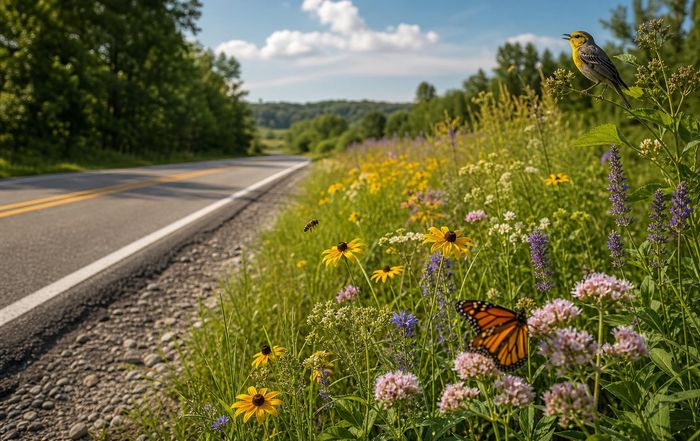
How Roadside Habitats Can Support Native Species
Road verges and roadside corridors, once seen mainly as marginal strips of land between carriageways and fields, are increasingly recognised as vital refuges for native species and as living laboratories for a more harmonious relationship between infrastructure and nature. Around the world, governments, scientists, and community groups are re-imagining these linear landscapes as green lifelines that connect fragmented habitats, support pollinators, store carbon, and bring everyday encounters with wildlife closer to millions of people. For outdoor type readers of Eco Natur who care deeply about sustainable living, biodiversity, and positive environmental innovation, roadside habitats offer a compelling example of how ecological thinking can be woven into the fabric of modern transport systems.
From Wasted Space to Green Infrastructure
For much of the twentieth century, roadside land was treated primarily as a safety buffer and maintenance zone, often managed through intensive mowing, herbicide use, and planting of non-native ornamentals. This approach, while intended to maintain visibility and reduce fire risk, inadvertently simplified complex ecosystems into short grass and bare soil. Over time, however, mounting evidence from institutions such as IUCN and the Convention on Biological Diversity has shown that habitat loss and fragmentation are among the leading drivers of biodiversity decline, especially for species that depend on open grasslands, hedgerows, and early successional habitats.
As natural landscapes have been converted to agriculture, urban development, and intensive forestry, the remaining semi-natural strips along roads have taken on disproportionate ecological importance. Studies summarised by the European Environment Agency indicate that in heavily modified regions of Europe and North America, roadside verges can harbour a surprisingly high proportion of remaining native plant species, including many wildflowers that have disappeared from surrounding farmland. Similar patterns have been observed in parts of Australia, South Africa, and Brazil, where road verges sometimes preserve remnant vegetation types that are otherwise rare in the wider landscape.
For eco-natur, which promotes sustainable living and nature-positive design, roadside habitats exemplify how infrastructure can be re-envisioned as green infrastructure, delivering multiple ecosystem services while still fulfilling transport functions. Rather than being treated as wasted space, these corridors can be managed as networks of micro-reserves that contribute to regional conservation goals.
Ecological Corridors in a Fragmented World
One of the most significant contributions of roadside habitats is their role as ecological corridors. Linear features such as hedgerows, rail lines, canals, and road verges can facilitate the movement of species across fragmented landscapes, enabling pollinators, small mammals, reptiles, and even some birds to disperse, find mates, and track shifting climate zones.
Research synthesised by the Intergovernmental Science-Policy Platform on Biodiversity and Ecosystem Services (IPBES) has highlighted connectivity as a key factor in maintaining resilient ecosystems under climate change. Roadside vegetation, when managed thoughtfully, can function as part of that connectivity network. For example, flowering verges in the United Kingdom and Germany have been shown to support bumblebee and butterfly movements between larger habitat patches, with studies published through platforms such as ScienceDirect and SpringerLink documenting increased pollinator abundance and diversity in areas where mowing is reduced and native wildflowers are encouraged.
In North America, state departments of transportation in the United States and provincial agencies in Canada have collaborated with conservation organisations like The Xerces Society for Invertebrate Conservation to design pollinator-friendly roadsides that help sustain monarch butterflies and native bees. These efforts align with broader initiatives to create pollinator pathways through urban and agricultural regions, supporting food security and ecosystem health. Readers interested in the link between pollinators and the food system can explore Eco Natur's focus on organic food and biodiversity, where similar principles of habitat provision and pesticide reduction are central.
In the Global South, where rapid infrastructure expansion is underway, integrating ecological connectivity into road planning is particularly important. Guidance from the World Bank and UN Environment Programme encourages governments in Asia, Africa, and South America to adopt "green road" standards that incorporate wildlife corridors, roadside habitat buffers, and nature-based solutions to erosion and flooding. When these measures are implemented early in project design, they can substantially reduce long-term ecological costs and contribute to sustainable development goals.
Supporting Pollinators and Plant Diversity
Perhaps the most visible contribution of roadside habitats is the support they provide to pollinators and native plants. Wildflower-rich verges can be important refuges for bees, butterflies, moths, and hoverflies, especially in intensively farmed or urbanised landscapes where floral resources are scarce.
Long-term monitoring in several European countries, including the Netherlands and Sweden, has found that road verges managed with reduced mowing and native seeding can maintain high plant species richness and support diverse insect communities. Reports from the Dutch Butterfly Conservation organisation and research summarised by the Royal Society indicate that when mowing is timed to allow flowering and seed set, verges can function as seasonal nectar corridors, benefiting both common and declining species.
In the United States, the U.S. Department of Transportation Federal Highway Administration has issued guidance on integrated roadside vegetation management, encouraging agencies to reduce unnecessary mowing and herbicide use, and to prioritise native species that provide habitat and erosion control. Similar policies exist in parts of Australia, where state road authorities collaborate with ecological experts to protect endemic flora along transport routes, and in Canada, where some provinces have adopted "no-spray" zones and wildflower seeding programmes.
For Eco Natur, these developments resonate strongly with the platform's emphasis on biodiversity and wildlife. Roadside habitats can host a mosaic of grasses, forbs, shrubs, and small trees, creating microhabitats for ground-nesting bees, overwintering insects, and seed-eating birds. By favouring native species and limiting disturbance, road managers can transform verges into living showcases of regional flora, inspiring citizens to adopt similar practices in gardens, community spaces, and sustainable landscapes.
Refuges for Small Mammals, Birds, and Reptiles
Beyond pollinators and plants, roadside habitats can provide shelter and resources for a wide range of vertebrate species. In agricultural regions of Europe and North America, hedgerows and grassy verges along rural roads often function as key nesting and foraging areas for songbirds, small mammals such as voles and shrews, and reptiles that depend on sunny, open habitats. Studies collated by the British Trust for Ornithology and BirdLife International have documented breeding territories of species like yellowhammers, linnets, and whitethroats along road margins, particularly where vegetation structure is varied and pesticide use is low.
In Mediterranean regions and parts of Australia, lizards and snakes use roadside embankments and stone structures as basking and refuge sites, while amphibians may utilise roadside ditches and wetlands for breeding. In some cases, these habitats partially compensate for the loss of traditional field margins and small water bodies, although they also introduce risks of road mortality, which must be addressed through mitigation measures.
The dual role of roadsides as both habitat and hazard underscores the need for integrated management. Conservation organisations and transport agencies are increasingly collaborating to identify hotspots where wildlife use is high and to implement measures such as reduced speed zones, fencing, and wildlife crossing structures. Readers interested in the broader context of wildlife and infrastructure can find that roadside habitats form just one component of a larger strategy to reconcile mobility with ecological integrity.
Managing Risks: Invasives, Pollution, and Roadkill
While roadside habitats offer significant opportunities, they also present challenges that must be managed carefully to avoid unintended harm. One concern is the spread of invasive plant species along transport corridors. Roads can act as conduits for seeds carried by vehicles, wind, and maintenance equipment, allowing aggressive non-native species to colonise verges and then spread into adjacent natural areas. Research reported by the Global Invasive Species Database and analyses published in journals such as Biological Invasions highlight the importance of early detection, targeted removal, and the use of competitive native plantings to limit invasive expansion.
Another challenge is pollution from vehicle emissions, road salt, heavy metals, and microplastics derived from tyre and brake wear. Studies summarised by the European Chemicals Agency and the United States Environmental Protection Agency indicate that roadside soils and vegetation can accumulate pollutants, which may affect sensitive species and enter nearby waterways. However, well-designed roadside vegetation can also act as a partial buffer, capturing particulates and reducing the spread of contaminants into residential areas, as noted by research compiled by the World Health Organization on urban air quality.
Roadkill remains one of the most visible and emotionally charged issues associated with wildlife and roads. Larger mammals such as deer, foxes, kangaroos, and badgers are particularly at risk, but many smaller species also suffer high mortality. Addressing this problem requires a combination of habitat design, driver awareness, and structural solutions such as underpasses, overpasses, and culverts that are tailored to the movement patterns of local species. The International Union for Conservation of Nature and organisations like Wildlife Conservation Society have developed guidelines for wildlife-friendly infrastructure that integrate these considerations into road planning and retrofitting.
For Eco Natur, which advocates for sustainability across sectors, the key message is that roadside habitats must be managed as part of a holistic system. Positive contributions to biodiversity can be maximised when invasive species are controlled, pollution is minimised through cleaner transport technologies, and wildlife mortality is reduced through thoughtful engineering and speed management.
Roadside Habitats and Climate Resilience
As climate change intensifies heatwaves, floods, and storms across continents, the resilience of both human and natural systems is under scrutiny. Roadside habitats, when designed as green infrastructure, can contribute to climate adaptation and mitigation in several ways. Vegetated verges and embankments stabilise soil, reducing erosion and landslide risk during heavy rainfall, a benefit emphasised in guidance from the International Transport Forum. Trees and shrubs along roads can moderate microclimates, providing shade that reduces heat stress for nearby communities and road users, while also sequestering carbon over time.
In urban areas, roadside green spaces help counter the heat island effect by increasing evapotranspiration and reflecting less solar radiation than bare asphalt and concrete. Research collated by C40 Cities and ICLEI - Local Governments for Sustainability has highlighted the role of street trees and vegetated corridors in improving thermal comfort and public health. Roadside habitats that incorporate native, drought-tolerant species can thus serve both ecological and social functions, aligning with Eco Natur's interest in health and sustainable lifestyles.
From a mitigation perspective, the carbon sequestration potential of roadside vegetation is modest compared with large forests, but every opportunity to store carbon and reduce emissions counts. Integrating renewable energy solutions, such as solar panels along highways or in rest areas, with biodiverse groundcover plantings can create multifunctional corridors that contribute to decarbonisation while supporting native species. Initiatives in countries like the Netherlands, Denmark, and South Korea demonstrate how solar infrastructure and ecological design can coexist when carefully planned.
Integrating Roadside Ecology into Sustainable Business and Policy
The transformation of roadside habitats into biodiversity assets is not only an ecological endeavour; it is also a question of governance, finance, and business practice. Transport authorities, engineering firms, landscape contractors, and maintenance companies all play roles in shaping how verges are designed and managed. When sustainability is embedded into procurement standards and performance metrics, roadside ecology becomes an integral part of infrastructure delivery rather than an optional add-on.
In Europe, the European Commission has encouraged member states to incorporate green infrastructure and biodiversity considerations into transport funding mechanisms, while several national road agencies have adopted biodiversity action plans that include targets for native planting, reduced mowing, and habitat connectivity. In the United States, some state departments of transportation partner with conservation NGOs and academic institutions to develop science-based management guidelines, often supported by federal grants.
For businesses, the shift towards nature-positive infrastructure presents opportunities to innovate in areas such as native seed production, ecological design, and low-impact maintenance technologies. Companies that specialise in ecological restoration, environmental monitoring, and green engineering can provide expertise that aligns with sustainable business practices and emerging regulatory frameworks. Investors and insurers are also beginning to recognise that nature-based solutions can enhance the resilience and long-term value of infrastructure assets, reducing risks from climate impacts and public opposition.
Eco Natur highlights that the broader economy is gradually internalising environmental externalities, and roadside habitats illustrate how environmental stewardship can be integrated into everyday operations. When contracts reward biodiversity outcomes, when maintenance schedules are adjusted to ecological cycles, and when performance reporting includes indicators for habitat quality and connectivity, roadside land becomes a stage on which sustainability commitments are enacted in visible, measurable ways.
Community Engagement and Citizen Science
One of the most inspiring aspects of roadside habitat initiatives is the way they can engage local communities and foster a sense of shared stewardship. In many countries, volunteer groups, schools, and local NGOs collaborate with authorities to monitor biodiversity, plant native wildflowers, and advocate for more nature-friendly verge management. Citizen science platforms such as iNaturalist and eBird enable residents to document species observed along roadsides, generating valuable data that can inform management decisions and conservation planning.
In the United Kingdom, campaigns such as "No Mow May," promoted by organisations like Plantlife, have encouraged councils and highway authorities to reduce mowing during peak flowering periods, while community advocacy has led to the designation of "roadside nature reserves" in several counties. Similar movements exist in parts of Germany, France, and the Nordic countries, where public appreciation of wildflower verges has grown as awareness of pollinator declines has spread.
For eco-conscious individuals following Eco Natur's independent guidance on sustainable lifestyles, roadside habitats offer everyday opportunities to observe nature, participate in monitoring, and support policy changes. Residents can engage with local authorities to request more wildlife-friendly verge management, volunteer in planting and clean-up efforts, and help track the presence of rare or declining species. These actions not only benefit biodiversity but also strengthen social connections and a sense of place.
Reducing Plastic and Litter in Roadside Ecosystems
Litter, particularly plastic waste, is a persistent problem along roads worldwide, with ecological consequences that extend far beyond visual blight. Plastics can entangle wildlife, be ingested by birds and mammals, and fragment into microplastics that contaminate soils and waterways. Reports from organisations such as Ocean Conservancy and UNESCO emphasise that land-based plastic leakage, including from roadsides, is a major contributor to marine pollution.
Transforming roadside habitats into healthy ecosystems therefore requires integrating plastic-free and zero-waste principles into road management and public behaviour. This includes regular litter collection, the provision of adequate waste facilities at rest areas, educational campaigns to discourage littering, and policies that reduce single-use plastics in transport-related services. Some jurisdictions have experimented with deposit-return schemes and targeted enforcement to reduce roadside litter, while community groups often organise clean-up events that double as opportunities for environmental education.
For Eco Natur, which passionately champions zero-waste approaches, roadside habitats underscore the interconnectedness of consumption patterns, waste management, and ecosystem health. A verge that is rich in wildflowers and wildlife but strewn with plastic cannot fully deliver its ecological or aesthetic potential. Conversely, clean, well-managed roadsides can become visible symbols of a community's commitment to environmental responsibility.
A Vision for Nature-Positive Roads
Looking ahead, the challenge and opportunity for societies on every continent is to embed nature-positive principles into the planning, design, and operation of transport networks. As countries in Europe, Asia, Africa, and the Americas expand and upgrade their road systems, there is a window to ensure that roadside land is treated not as an afterthought but as a strategic asset for biodiversity, climate resilience, and human well-being.
This vision aligns closely with the mission of Eco Natur, which seeks to inspire practical, hopeful pathways toward a more sustainable and life-supporting world. By highlighting successful examples, sharing best practices, and connecting daily returning loyal readers with resources on recycling and circular approaches, global sustainability trends, and place-based conservation, eco-natur can help mainstream the idea that even the most ordinary spaces, like the strips of land beside a highway, can be reimagined as havens for native species.
Realising this potential requires collaboration among engineers, ecologists, policymakers, businesses, and citizens, grounded in robust science and adaptive management. It involves acknowledging and addressing the risks associated with roads, from habitat fragmentation to pollution and wildlife mortality, while also seizing the opportunities to create connected, resilient, and beautiful landscapes that support both people and nature.
As communities in the United States, the United Kingdom, Germany, Canada, Australia, France, Italy, Spain, the Netherlands, Switzerland, China, Sweden, Norway, Singapore, South Korea, Japan, Thailand, Finland, South Africa, Brazil, Malaysia, New Zealand and many other regions continue to rethink their relationship with nature in and around infrastructure, roadside habitats stand as a powerful reminder that positive environmental change does not always require untouched wilderness or grand reserves. Sometimes, it begins in the narrow spaces at the edge of the road, where wildflowers bloom between the rumble of tyres and the whisper of the wind, offering a resilient, hopeful thread that links human journeys with the enduring rhythms of the natural world.
