
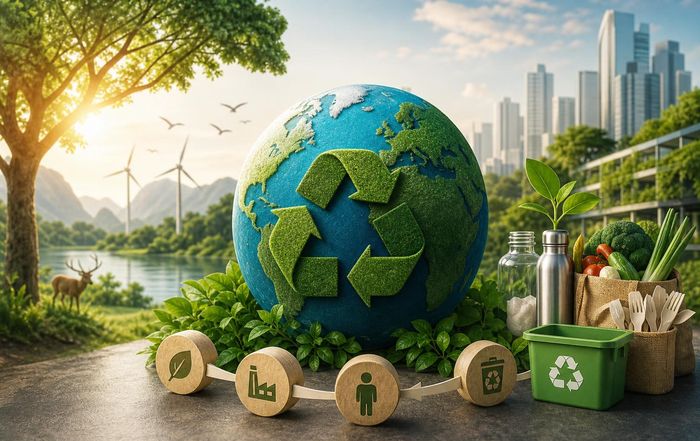
Why Resource Efficiency Matters for Global Sustainability
A new foundation for a livable future
Resource efficiency has moved from the margins of environmental debate to the center of global economic strategy. As governments, businesses, and communities confront climate change, biodiversity loss, and mounting waste, the question is no longer whether societies must use resources more wisely, but how quickly they can redesign systems to do so. For Eco Natur, whose readers are already engaged in sustainable living and responsible consumption, resource efficiency is not an abstract policy term; it is the practical bridge between everyday choices and large-scale planetary change, connecting what happens in homes, farms, factories, and cities to the stability of the global climate and the resilience of ecosystems.
At its core, resource efficiency means delivering the same or better services, wellbeing, and economic value while using fewer natural resources and generating less pollution and waste. It touches energy, water, land, minerals, forests, and the materials embedded in everything from smartphones to buildings. In an era of rising global population, expanding middle classes, and finite planetary boundaries, the capacity to do more with less has become a defining measure of progress, and a key ingredient of the just and sustainable future that eco-natur champions across its guides on sustainable living, recycling, and sustainability.
Understanding resource efficiency in a world of limits
Resource efficiency is often confused with austerity or deprivation, but leading scientific and economic institutions describe it differently. The United Nations Environment Programme (UNEP) frames resource efficiency as the process of reducing the environmental impact of the production and consumption of goods and services over their life cycle, while still meeting human needs and improving quality of life. Readers can explore this perspective in more depth through UNEP's work on the International Resource Panel.
This life-cycle perspective is crucial. It recognizes that the environmental footprint of a product or service is not limited to what is visible at the point of purchase or use. It includes the extraction of raw materials, the energy used in manufacturing, the logistics of global transport, the patterns of use and maintenance, and ultimately the disposal, recycling, or reuse of the item. For example, a reusable stainless-steel bottle may require more resources to produce than a single plastic bottle, but when used hundreds of times, especially in a system that supports plastic-free living and effective recycling, its overall impact can be much lower.
Resource efficiency also differs from simple cost-cutting. While efficient systems often save money, the primary goal is to reduce pressure on ecosystems and the climate while maintaining or enhancing human wellbeing. The Organisation for Economic Co-operation and Development (OECD) has highlighted in its Green Growth studies that resource efficiency can decouple economic growth from environmental degradation, allowing economies to prosper without proportionally increasing pollution and resource use. This decoupling is central to the concept of a green economy that Eco Natur frequently explores in its coverage of the sustainable economy.
The planetary context: climate, biodiversity, and material use
The urgency of resource efficiency becomes clear when viewed against current global trends. According to the International Resource Panel and related analyses, global material extraction has more than tripled since the 1970s, driven by construction materials, fossil fuels, biomass, and metals. The World Resources Institute (WRI) provides accessible overviews of these trends and their implications for climate and ecosystems in its work on resource use and climate.
This surge in material use is intimately linked with greenhouse gas emissions and biodiversity loss. The production and use of materials such as steel, cement, plastics, and fertilizers account for a significant share of global emissions. The Intergovernmental Panel on Climate Change (IPCC) notes in its assessment reports that demand-side measures, including material efficiency in buildings and industry, could substantially reduce emissions while supporting development, and readers can delve into these findings through the IPCC's official site.
At the same time, land-use change for agriculture, forestry, and urban expansion is a leading driver of habitat loss and species decline. The Intergovernmental Science-Policy Platform on Biodiversity and Ecosystem Services (IPBES) has documented how unsustainable consumption and resource extraction undermine biodiversity and ecosystem services, which are essential for food security, water regulation, and climate resilience. More information on these assessments is available at IPBES. For Eco Natur, which regularly highlights wildlife protection and biodiversity and biodiversity, resource efficiency is therefore not a secondary concern but a central strategy to ease pressure on natural systems.
Linking resource efficiency to everyday sustainable living
While international reports may sound abstract, resource efficiency is lived in kitchens, offices, farms, and neighborhoods. Readers of eco-natur often seek concrete steps that align personal values with global sustainability goals, and resource-efficient living offers a unifying framework for these efforts. It connects energy conservation, waste reduction, responsible consumption, and healthier lifestyles into a coherent approach.
In homes, resource efficiency appears in better insulation, efficient heating and cooling, LED lighting, and smart appliances that reduce electricity use. The International Energy Agency (IEA) has repeatedly emphasized that energy efficiency is one of the most cost-effective ways to cut emissions and improve energy security, and its Energy Efficiency hub provides data and case studies from many countries, including the United States, Germany, and China. At the household level, this means lower utility bills, improved comfort, and a smaller carbon footprint.
Water-efficient fixtures, rainwater harvesting systems, and drought-tolerant landscaping help conserve freshwater, which is under growing pressure in many regions. The World Health Organization (WHO) and UN-Water track global water stress and highlight how efficient use and reuse of water are critical to resilience; further information can be found through UN-Water's resources. For readers in arid regions of Australia, parts of the United States, South Africa, and Southern Europe, such practices are already essential adaptations.
Resource efficiency also extends to food. Choosing seasonal, local, and organic food can reduce the environmental impact associated with synthetic fertilizers, pesticides, and long-distance transport. Organizations such as IFOAM - Organics International explain how organic farming can enhance soil health, biodiversity, and water retention, and their work is accessible at ifoam.bio. Reducing food waste through better planning, storage, and creative cooking is another powerful lever, with the Food and Agriculture Organization (FAO) estimating that roughly one-third of food produced globally is lost or wasted; readers can explore solutions via FAO's food loss and waste initiatives.
For Eco Natur, these everyday choices are part of a broader narrative of sustainable lifestyle transformation, where individuals and families participate actively in building a more resource-efficient society, rather than waiting for top-down change alone.
The role of recycling, circularity, and plastic-free innovation
Recycling is often the first concept that comes to mind when thinking about resource efficiency, and for good reason. By recovering materials from products at the end of their life, societies can reduce the need for virgin resource extraction, lower energy use, and limit landfill and incineration. However, recycling works best as part of a wider circular economy, where products are designed for longevity, repair, reuse, and eventual material recovery.
The Ellen MacArthur Foundation has been a leading voice in articulating the circular economy framework, which it defines as an industrial system that is restorative or regenerative by intention and design. Its reports and case studies, available at ellenmacarthurfoundation.org, show how companies in Europe, Asia, and North America are redesigning packaging, electronics, and textiles to minimize waste. For readers of eco-natur, the principles of circularity align closely with the site's focus on zero-waste living and practical recycling strategies.
Plastic is a particularly visible example of the need for more efficient and circular resource use. Single-use plastics have become emblematic of wasteful design, with large quantities ending up in oceans and ecosystems. The UN Environment Assembly has launched a process to develop a legally binding global agreement on plastic pollution, reflecting broad recognition that better product design, reuse systems, and improved waste management are essential. Readers can follow developments through UNEP's plastics initiative at unep.org/plastic-pollution.
At the same time, innovators are creating refillable packaging systems, compostable materials where appropriate, and business models that prioritize durability and repair. These efforts mirror the values promoted by Eco Natur in its guidance on plastic-free choices, demonstrating how consumer demand and design innovation can converge to drastically reduce unnecessary material throughput.
Resource efficiency in energy and the low-carbon transition
Energy is a critical dimension of resource efficiency because it underpins every sector of the economy. As countries expand renewable energy capacity in the form of solar, wind, hydro, and other low-carbon sources, the efficient use of energy determines how quickly fossil fuels can be phased down and how affordable the transition will be.
The International Renewable Energy Agency (IRENA) has documented how combining renewable deployment with energy efficiency measures can deliver deep emissions cuts while supporting energy access and economic development; its analyses are available at irena.org. In buildings, better insulation, passive design, and efficient appliances can significantly reduce heating and cooling demand, particularly in colder climates such as Scandinavia and Canada or hotter regions like the Middle East, Australia, and Southern Europe. In industry, optimizing processes, recovering waste heat, and upgrading to more efficient motors and equipment can cut both costs and emissions.
Transport is another area where resource efficiency is rapidly evolving. The rise of electric vehicles, improved public transport systems, cycling infrastructure, and urban planning that reduces the need for long commutes all contribute to more efficient use of energy and materials. The International Transport Forum and organizations like C40 Cities provide examples of how cities from London and Paris to Seoul and Bogotá are redesigning mobility systems to be cleaner and less resource-intensive; these initiatives can be explored at itf-oecd.org and c40.org.
For Eco Natur, the energy transition is not only a technological shift but also a design and lifestyle question. Articles on sustainable design and global sustainability trends highlight how architecture, urban planning, and behavioral changes can combine to create spaces that require less energy while enhancing health, comfort, and community.
Sustainable business, competitiveness, and the green economy
Resource efficiency is increasingly recognized as a driver of competitiveness and innovation in the business world. Companies that reduce material and energy intensity often lower operating costs, hedge against resource price volatility, and meet growing customer expectations for sustainability. For readers interested in sustainable business practices, this is a crucial development that aligns environmental responsibility with long-term economic resilience.
The World Business Council for Sustainable Development (WBCSD) has worked with corporations across sectors to implement resource efficiency and circular economy strategies, illustrating how rethinking products and value chains can unlock new revenue streams and reduce risks; its case studies can be found at wbcsd.org. Similarly, the World Economic Forum (WEF) regularly highlights how digital technologies, such as the Internet of Things, artificial intelligence, and advanced materials, can optimize resource use in manufacturing, logistics, and agriculture, and these insights are accessible at weforum.org.
Policies are also evolving to reward efficient and low-impact business models. The European Union's Green Deal and its Circular Economy Action Plan, detailed on europa.eu, aim to make sustainable products the norm in the EU market, with implications for companies in Europe and trading partners in Asia, North America, and beyond. Extended producer responsibility schemes, eco-design requirements, and green public procurement are all mechanisms that encourage resource efficiency throughout product life cycles.
For Eco Natur, which covers the intersection of sustainability and the economy, these developments underscore that a resource-efficient global economy is not about shrinking opportunity but about redefining it. Businesses that anticipate this shift and invest in cleaner technologies, circular models, and transparent supply chains are better positioned to thrive in a world where environmental constraints are increasingly visible and regulated.
Social equity, health, and the human dimension
Resource efficiency is sometimes portrayed as a technical challenge, but it is deeply intertwined with social equity and human wellbeing. Efficient systems can free up resources for essential services, reduce pollution burdens, and support healthier lives, particularly in communities that have historically borne the brunt of environmental harm.
Air pollution from inefficient energy systems, industry, and transport is a major health risk, contributing to respiratory and cardiovascular diseases. The World Health Organization provides extensive data and guidance on the health impacts of air pollution and the benefits of cleaner energy and transport, accessible at who.int. By improving energy efficiency and shifting to cleaner fuels, cities and countries can reduce healthcare costs and improve quality of life, especially in rapidly urbanizing regions of Asia and Africa.
Access to efficient technologies and infrastructure is also an equity issue. For example, efficient cookstoves and clean cooking solutions can drastically reduce indoor air pollution and the time spent collecting fuel in many rural communities. Initiatives supported by organizations like the Clean Cooking Alliance illustrate how targeted interventions can improve health, empower women, and reduce deforestation; more information is available at cleancooking.org.
From a broader wellbeing perspective, resource-efficient, low-pollution environments support mental health, physical activity, and social cohesion. Green spaces, walkable neighborhoods, and access to safe, healthy food are all part of the sustainability and health nexus that Eco Natur emphasizes. Resource efficiency thus becomes a pathway not only to environmental stability but also to more livable, just, and resilient communities.
Global cooperation and regional pathways
Because resource flows cross borders, no single country can achieve global sustainability alone. International cooperation on standards, technology transfer, finance, and knowledge sharing is essential. The United Nations' 2030 Agenda for Sustainable Development, particularly Sustainable Development Goal 12 on responsible consumption and production, provides a shared framework for these efforts; readers can explore the goals at the UN's SDG portal sdgs.un.org.
Different regions, however, face distinct challenges and opportunities. In Europe, policies under the Green Deal push for high resource productivity and circularity, while countries like Germany, Sweden, and the Netherlands are piloting ambitious strategies for industrial decarbonization and circular business models. In North America, a mix of federal, state, and provincial initiatives in the United States and Canada is driving improvements in energy efficiency, renewable deployment, and waste reduction. The Natural Resources Defense Council (NRDC) and Environmental Defense Fund (EDF) provide analysis of such policy developments at nrdc.org and edf.org.
Across Asia, rapidly growing economies such as China, India, and Southeast Asian nations are experimenting with resource-efficient urban development, green finance, and industrial upgrading, recognizing that long-term prosperity depends on managing environmental limits. China's policies on circular economy and ecological civilization, for instance, are reshaping industrial practices and infrastructure planning, and can be followed through sources like the China Council for International Cooperation on Environment and Development at cciced.net. In Africa and South America, countries are exploring how to add value to natural resources domestically, improve energy access through renewables, and protect critical ecosystems such as the Congo Basin and the Amazon, emphasizing that resource efficiency must go hand in hand with development and poverty reduction.
Throughout these diverse pathways, platforms like Eco Natur play a vital role in connecting global trends to local action, helping readers from the United States, the United Kingdom, Germany, Canada, Australia, and beyond to understand how their choices and advocacy fit into a larger mosaic of change.
How Eco Natur supports a resource-efficient future
As the world moves deeper into the 2020s, the importance of resource efficiency for global sustainability becomes ever more apparent. For eco-natur, this reality is reflected in the breadth of topics it curates for its community. Guides on sustainable living translate complex concepts into practical steps, from energy-saving habits and water conservation to conscious consumption and minimal waste. Features on recycling and zero waste offer pathways to reduce material footprints at home and in workplaces, while insights on organic food and wildlife protection highlight how resource use in agriculture and land management shapes ecosystems and health.
By covering sustainable business and the green economy, Eco Natur also speaks to entrepreneurs, professionals, and policymakers who are seeking to align profitability with ecological responsibility. The site's global perspective, reflected in its international sustainability focus, ensures that readers from Europe, Asia, Africa, the Americas, and Oceania can find relevant examples and inspiration tailored to their contexts.
Crucially, eco-natur emphasizes that resource efficiency is not a sacrifice of comfort or prosperity, but a reimagining of how value is created and shared. Through in-depth articles, curated resources, and links to leading organizations, it supports a culture of informed, optimistic engagement with the challenges of climate change, biodiversity loss, and social inequality.
Looking ahead: from efficiency to regeneration
Resource efficiency is an essential stepping stone toward global sustainability, but many experts argue that societies must eventually go further, moving from minimizing harm to actively regenerating ecosystems and restoring natural capital. Initiatives in regenerative agriculture, nature-based solutions, and ecosystem restoration, championed by organizations such as the UN Decade on Ecosystem Restoration at decadeonrestoration.org, point toward a future in which human activities enhance rather than deplete the living systems on which they depend.
In that emerging vision, resource efficiency remains a foundation: using less energy, water, and materials reduces the pressure on ecosystems and frees up space for nature to recover. It also buys time for deeper structural changes in energy systems, food systems, and urban design. For readers of Eco Natur, the journey toward a sustainable, regenerative world is made up of countless decisions and innovations, from the design of a single product to the policies of entire regions.
By engaging with reliable information, supporting responsible businesses, advocating for ambitious policies, and adopting resource-efficient habits at home and in communities, individuals and organizations can contribute meaningfully to this transformation. The work of building a resource-efficient and sustainable global society is complex and ongoing, but it is also a source of creativity, collaboration, and hope. As eco-natur continues to document and support this evolution, it affirms that a future in which people and planet thrive together is not only necessary, but possible, and increasingly within reach.
