
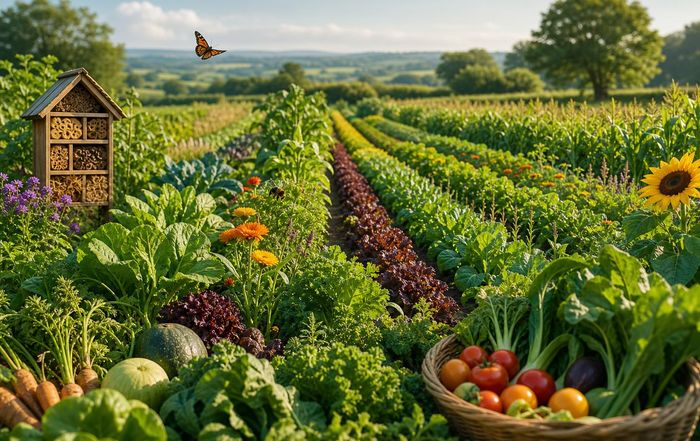
Why Crop Diversity Matters in Organic Agriculture
A living foundation for resilient food systems
Crop diversity sits at the heart of organic agriculture, shaping how farms function, how landscapes respond to climate shocks, and how communities nourish themselves. While modern industrial farming has often focused on a narrow range of high-yield varieties, organic producers increasingly recognize that the long-term health of soil, ecosystems, and people depends on cultivating a broader spectrum of species and cultivars. For readers of Eco Natur, this is not a theoretical debate but a practical question that touches daily choices about food, land use, and sustainable living.
Across continents, from smallholder plots in Africa and Asia to larger organic operations in Europe and North America, farmers are rediscovering that diverse fields are more productive over time, more resilient to disease, and more aligned with ecological processes. Organizations such as FAO and IFOAM - Organics International emphasize that crop diversity is not simply an aesthetic preference; it is a cornerstone of food security, climate adaptation, and sustainable economies. As organic agriculture expands, the question is no longer whether diversity matters, but how societies can protect and expand it in ways that are fair, scientifically grounded, and economically viable.
Readers who explore sustainable living perspectives on eco-natur will find that crop diversity intersects with many of the themes that define an environmentally conscious lifestyle, from soil stewardship and biodiversity to healthy diets and responsible business practices.
From monoculture to multifunctional landscapes
Over the past century, global agriculture has become increasingly homogenized. According to analyses by FAO, a relatively small number of crop species now provide the majority of the world's calories, with staples such as wheat, rice, and maize dominating large swaths of farmland. This trend toward monoculture has delivered short-term gains in yield and logistical efficiency, but it has also created systemic vulnerabilities, including heightened susceptibility to pests and diseases, degradation of soils, and reduced habitat for wildlife.
By contrast, organic agriculture is guided by principles that favour ecological balance and long-term soil fertility. In practice, this often means moving away from single-crop systems toward more complex rotations, intercropping, agroforestry, and the integration of cover crops and green manures. Resources from IFOAM and the Rodale Institute describe how diversified organic systems can enhance natural pest control, improve nutrient cycling, and reduce the need for external inputs. Learn more about how organic systems function by exploring sustainability insights on Eco Natur.
In many regions, farmers are experimenting with polycultures that pair cereals with legumes, fruit trees with vegetables, or perennial shrubs with annual crops, creating multilayered landscapes that mimic natural ecosystems. These approaches are not new; they draw on Indigenous and traditional knowledge from Latin America, Africa, Asia, and Europe, now being revisited through the lens of contemporary agroecology and organic certification standards.
Soil health: diversity as the engine of fertility
Healthy soil is the foundation of organic agriculture, and crop diversity is one of the most powerful tools for building and maintaining that fertility. Scientific studies published in journals such as Nature and Agriculture, Ecosystems & Environment have repeatedly shown that diverse crop rotations and mixtures tend to support richer soil microbial communities, higher organic matter content, and better soil structure than continuous monocultures.
Different plant species interact with the soil in distinct ways. Deep-rooted crops can break up compacted layers and draw nutrients from deeper horizons, while shallow-rooted species protect the surface and reduce erosion. Legumes such as clover, peas, and beans fix atmospheric nitrogen through symbiosis with rhizobia bacteria, providing a natural source of fertility that is especially important for organic systems that limit or prohibit synthetic nitrogen fertilizers. Cover crops like rye, vetch, or mustard can scavenge residual nutrients, protect the soil from erosion, and suppress weeds, later being incorporated as green manure to feed soil life.
Research summarized by FAO and the European Commission's Joint Research Centre indicates that diversified rotations can reduce the buildup of soil-borne pathogens and break pest cycles, lowering the need for interventions even within organic frameworks. This aligns with the broader concept of zero-waste thinking in agriculture, where organic residues and root exudates feed a complex web of organisms that, in turn, sustain crop productivity.
For farmers and consumers interested in regenerative practices, crop diversity is not an optional add-on but an essential strategy for creating soils that are resilient to drought, floods, and other climate extremes. Resources from the Rodale Institute and Soil Association in the United Kingdom provide practical examples of diversified organic rotations that improve soil carbon levels and water-holding capacity, demonstrating that ecological health and long-term productivity can go hand in hand.
Biodiversity and wildlife: farms as living habitats
Organic agriculture is often evaluated not only by yield but by its contribution to broader ecological health. Crop diversity plays a central role in transforming farms from simplified production units into vibrant habitats that support insects, birds, and other wildlife. Studies supported by Biodiversity International, BirdLife International, and various European research programs suggest that diversified organic farms tend to host more pollinators, beneficial insects, and farmland birds than comparable conventional monocultures, especially when combined with hedgerows, wildflower strips, and uncultivated patches.
Diverse plantings create a mosaic of flowering times, canopy structures, and microclimates that sustain different species across the seasons. Flowering cover crops and mixed vegetable beds provide nectar and pollen for bees and other pollinators, while grain and seed crops support granivorous birds. Complex rotations can also reduce the need for broad-spectrum pesticides, which benefits non-target organisms and improves overall ecosystem health.
Readers interested in the relationship between agriculture and nature conservation can explore wildlife-focused content on eco-natur, where the interplay between farming, habitat, and species protection is examined in greater depth. Organizations such as WWF, The Royal Society for the Protection of Birds (RSPB), and The Nature Conservancy have highlighted diversified organic systems as promising models for reconciling food production with biodiversity goals, although they also stress that outcomes depend heavily on local management practices and landscape context.
While some studies debate the magnitude of biodiversity benefits associated with organic farming compared to well-managed conventional systems, there is broad agreement that structural diversity in crops and non-crop habitats is a key driver of positive outcomes. In this sense, crop diversity is part of a larger design approach, where farms are planned to function as integrated ecological networks rather than isolated fields.
Resilience to climate change and extreme events
As climate change intensifies heatwaves, droughts, floods, and unpredictable weather, the resilience of agricultural systems has become a central concern for policymakers, farmers, and citizens. Reports from the Intergovernmental Panel on Climate Change (IPCC) and UNEP emphasize that diversified cropping systems, including those used in organic agriculture, can buffer against climate risks by spreading production across different species, varieties, and planting times.
Different crops respond differently to stress. A drought that severely affects shallow-rooted grains might be partially offset by deeper-rooted perennials or drought-tolerant legumes in the same rotation or field. Similarly, a disease outbreak targeting a particular variety is less likely to cause catastrophic losses if a farm grows multiple cultivars with varying resistance traits. This portfolio effect, well-documented in ecological and agronomic literature, is a central argument for maintaining genetic diversity both in farmers' fields and in global seed banks.
Institutions such as the CGIAR network and the Crop Trust, which supports the Svalbard Global Seed Vault, work to conserve a vast range of crop genetic resources that can be drawn upon to breed new varieties adapted to changing conditions. Organic breeders and seed cooperatives in regions like Europe and North America are increasingly selecting varieties specifically suited to low-input, diverse systems, focusing on traits such as root depth, nutrient-use efficiency, and disease resistance under organic management.
For readers of Eco Natur, this connection between crop diversity and climate adaptation intersects with broader discussions on renewable energy and climate solutions. Just as energy systems benefit from a mix of renewable sources, agricultural systems become more stable when they rely on a diversified portfolio of crops and management strategies rather than a narrow set of high-input monocultures.
Nutrition, organic food, and cultural heritage
Crop diversity is not only an ecological and agronomic asset; it is also a foundation for nutritious, culturally rich diets. Nutrition research published by organizations such as WHO, Harvard T.H. Chan School of Public Health, and EAT-Lancet highlights that diverse plant-based diets, rich in whole grains, legumes, fruits, vegetables, nuts, and seeds, are associated with better health outcomes compared to diets dominated by refined grains and ultra-processed foods. Organic agriculture, with its emphasis on varied rotations and mixed cropping, is well-placed to supply such diversity.
Organic markets in regions like the United States, Germany, and France increasingly showcase heritage grains, colorful vegetables, and lesser-known legumes that had been marginalized by industrial supply chains. This resurgence supports small and medium-sized farms that specialize in unique varieties, and it connects consumers with the stories and traditions behind their food. Readers can explore organic food perspectives on eco-natur to understand how crop diversity contributes to both health and culinary experiences.
At the same time, global reports from FAO and UNESCO warn that many traditional crop varieties and wild relatives are at risk due to land-use change, market consolidation, and the spread of uniform commercial seeds. Organic farmers, community seed banks, and participatory breeding initiatives are working to reverse this trend by maintaining and adapting local varieties, often in collaboration with Indigenous communities and smallholder networks in Africa, Asia, and Latin America. These efforts help preserve not only genetic resources but also languages, recipes, and cultural practices that are intimately tied to specific crops.
While scientific debate continues regarding whether organic foods consistently contain higher levels of specific nutrients than conventionally grown counterparts, there is broad consensus that diets rich in varied plant foods are beneficial. In this context, the contribution of organic crop diversity to diet quality, culinary creativity, and cultural continuity is widely recognized, even where precise nutritional advantages remain a subject of ongoing research.
Reducing plastic and waste in diversified organic systems
A commitment to crop diversity in organic agriculture often goes hand in hand with broader efforts to minimize waste and reduce reliance on plastics. Diversified farms that sell locally through farmers' markets, community-supported agriculture schemes, or short supply chains can more easily experiment with reusable packaging, compostable materials, and direct-to-consumer models that avoid the heavy plastic use common in long-distance retail logistics.
Organizations such as Zero Waste Europe and Plastic Pollution Coalition highlight cases where small and medium-sized organic producers have successfully reduced plastic mulches, packaging, and single-use items by adopting biodegradable alternatives, mechanical weed control, and innovative marketing approaches. These changes are not always straightforward; biodegradable materials can vary in performance, and regulations differ between regions. However, the flexibility inherent in diversified organic systems, where crops and markets are more varied, often makes it easier to adapt and innovate.
Readers seeking practical ideas on reducing packaging and waste in their own lives can explore plastic-free guidance and recycling strategies on Eco Natur, which connect household choices with broader shifts in agricultural and food systems. When consumers support diverse, locally oriented organic farms that prioritize sustainable packaging, they reinforce market signals that reward environmental responsibility across the supply chain.
Sustainable business models and local economies
Crop diversity has important implications for farm economics and the broader food system. In the short term, monocultures can appear more efficient, benefiting from economies of scale, standardized machinery, and streamlined logistics. However, research from institutions such as IFOAM, FiBL (Research Institute of Organic Agriculture), and various national agricultural agencies suggests that diversified organic systems can be economically competitive when evaluated over the long term, taking into account reduced dependence on external inputs, enhanced resilience to shocks, and access to premium markets.
Diversified organic farms often pursue multiple income streams: fresh produce, value-added products, agritourism, seed production, and educational services. This multifunctional approach can stabilize income and create employment in rural areas, supporting local economies in Europe, North America, Asia, and beyond. Readers interested in these dynamics can learn more about sustainable business practices in agriculture and their links to the broader green economy on eco-natur.
Organizations like Slow Food, Fairtrade International, and various regional cooperatives promote market structures that reward crop diversity, such as labels for heritage varieties, biodiversity-friendly farming, or region-specific specialties. At the same time, international bodies including the OECD and World Bank acknowledge that supportive policies, infrastructure, and research are needed to ensure that smallholders and family farmers can benefit from these opportunities rather than being sidelined by large-scale players.
There is ongoing debate about the scalability of highly diversified organic systems and the best pathways to feed a growing global population while respecting planetary boundaries. Some analyses emphasize yield gaps between organic and conventional systems for certain crops, while others highlight the potential of diversified agroecological systems to close those gaps through innovation and supportive policy. What is widely accepted is that crop diversity contributes to risk reduction, market differentiation, and long-term sustainability, making it a strategic asset for forward-looking agricultural businesses.
Policy, research, and global cooperation
The importance of crop diversity in organic agriculture is increasingly reflected in international agreements, national policies, and research agendas. The Convention on Biological Diversity (CBD), the International Treaty on Plant Genetic Resources for Food and Agriculture, and regional frameworks like the European Green Deal all emphasize the need to conserve and use agricultural biodiversity sustainably. These agreements encourage countries to support seed conservation, participatory breeding, and diversified farming practices that align with organic principles.
National and regional research institutions, from USDA programs in the United States to INRAE in France and FiBL in Switzerland and Germany, are investing in long-term trials that compare diversified organic systems with conventional benchmarks. These studies look not only at yields but also at soil health, biodiversity, greenhouse gas emissions, and socio-economic outcomes, providing a more holistic understanding of performance. While results vary by crop, climate, and management, many trials suggest that well-designed diversified systems can maintain competitive yields while delivering significant environmental benefits.
International cooperation is crucial because crop diversity is a global commons. Genetic resources conserved in one region may hold the key to disease resistance or climate adaptation in another. Platforms such as CGIAR's global research programs and networks of community seed banks in Africa, Asia, and Latin America facilitate the exchange of knowledge and material, albeit within frameworks that seek to respect farmers' rights and national sovereignty. For readers interested in the broader global context, eco-natur's global perspectives provide additional insights into how local farming practices are connected to international policy and research efforts.
What crop diversity means for everyday sustainable living
For individuals committed to sustainable lifestyles, the concept of crop diversity can sometimes feel abstract, yet it is deeply connected to daily choices about food, consumption, and advocacy. Choosing seasonal, locally produced organic foods, experimenting with lesser-known grains and vegetables, and supporting farmers who cultivate a range of crops all help create demand for diversified systems. Exploring sustainable lifestyle ideas and health-focused content on Eco Natur can provide inspiration for aligning personal habits with broader ecological goals.
In urban settings, community gardens, rooftop farms, and school gardens offer opportunities for citizens to experience crop diversity firsthand, learning how different species interact and discovering the flavours and textures of varieties rarely seen in supermarkets. Educational initiatives supported by organizations such as Slow Food, Organic Trade Associations, and local NGOs demonstrate that exposure to diverse crops can shape children's preferences, nutritional awareness, and sense of connection to nature.
At the same time, digital platforms and open-source seed initiatives allow gardeners, smallholders, and professionals to share experiences, exchange seeds, and collaborate on participatory breeding projects. These grassroots networks complement the work of formal institutions, ensuring that crop diversity is not only preserved in gene banks but actively used and adapted in fields, gardens, and kitchens around the world.
A shared responsibility for the future of food
Crop diversity in organic agriculture is more than a technical issue; it is a reflection of how societies value resilience, fairness, and connection to the natural world. In a time of accelerating environmental change and social uncertainty, diverse organic systems offer a tangible pathway toward food systems that are robust, nourishing, and respectful of the planet's limits. They embody many of the principles that guide Eco Natur: care for ecosystems, attention to human health, commitment to sustainable business, and respect for cultural and biological richness.
The work is far from complete. Safeguarding and expanding crop diversity requires coordinated action by farmers, researchers, policymakers, businesses, and consumers across all regions, from Europe and North America to Asia, Africa, and South America. It involves thoughtful regulation of seed markets, sustained investment in public research, fair trade relationships, and everyday choices in homes and communities.
Yet the progress already visible-from thriving organic seed cooperatives in Europe and North America to community seed banks in Africa and Asia, from diversified market gardens near major cities to agroforestry systems that blend crops and trees-shows that a different model of agriculture is not only possible but already emerging. By understanding why crop diversity matters and supporting those who cultivate it, readers of eco-natur can play a meaningful role in shaping a food system that honours both people and planet, now and for generations to come.
