
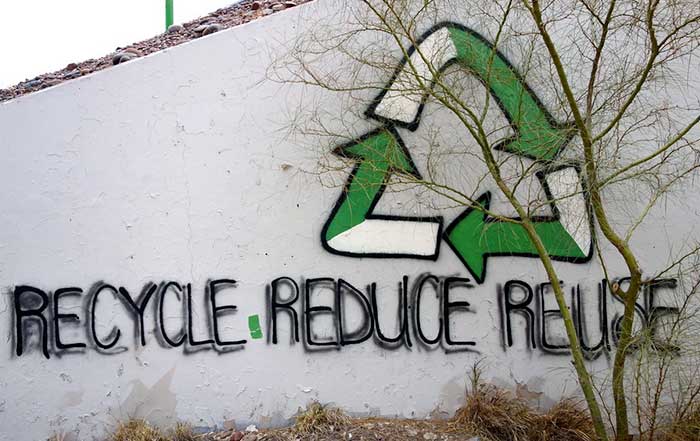
Recycling, Reuse, and the Rise of Sustainable Living in 2026
Sustainable living has moved from a niche concern to a defining priority for households, communities, and businesses across the world, and by 2026 the conversation is no longer about whether change is needed, but about how quickly it can be implemented at scale. Within this global transformation, recycling and reuse have emerged as practical, measurable pillars that translate environmental ambition into everyday action. For eco-natur.com, whose mission is to connect sustainable living, responsible business, and a healthier planet, the evolution of recycling and reuse is not an abstract policy debate; it is a lived reality that shapes how people consume, design, invest, and plan for the future across regions from North America and Europe to Asia, Africa, and South America.
Recycling and Reuse in the Context of Sustainable Living
In 2026, sustainable living is increasingly understood as a holistic framework that integrates resource efficiency, climate resilience, human health, biodiversity protection, and social equity. Recycling, which converts used materials into new products, and reuse, which extends the life of products through repair, redistribution, or repurposing, are central mechanisms for operationalizing this framework in homes, cities, and supply chains. While only a fraction of recyclable materials were being captured a few years ago, the rising urgency of climate change, the visible impacts of plastic pollution, and the economic logic of resource efficiency have pushed governments, businesses, and citizens to accelerate change.
Readers who engage with eco-natur.com on topics such as sustainable living, sustainability, and zero-waste lifestyles increasingly view recycling and reuse not as stand-alone activities, but as part of a broader shift from a linear "take-make-waste" model to a circular economy in which materials retain value for as long as possible. This perspective is particularly relevant in regions like the United States, the United Kingdom, Germany, Canada, Australia, and the European Union, where regulatory frameworks and consumer expectations are rapidly converging around circularity, but it is equally critical in emerging economies across Asia, Africa, and South America, where urbanization and consumption are growing quickly and infrastructure decisions made today will lock in environmental outcomes for decades.
Environmental Imperatives: Resources, Climate, and Nature
From an environmental standpoint, recycling and reuse directly address three interlinked crises: resource depletion, climate change, and biodiversity loss. Recycling reduces the need for virgin raw materials, which in turn lowers the pressure on forests, soils, water systems, and mineral reserves. When paper, metals, glass, and certain plastics are recycled at scale, fewer forests need to be logged, fewer mines need to be opened, and fewer habitats are fragmented or polluted. This is particularly important for biodiversity protection, a theme explored in depth in the biodiversity insights that resonate strongly with readers concerned about wildlife loss in Europe, North America, and regions such as the Amazon, Southeast Asia, and sub-Saharan Africa.
The climate dimension is equally significant. Manufacturing products from recycled materials generally requires far less energy than producing them from virgin feedstocks, which translates into lower greenhouse gas emissions. As countries strive to align with the goals of the Paris Agreement, and as organizations track national progress through platforms such as the UNFCCC, the energy savings and emissions reductions associated with high-quality recycling systems are increasingly recognized as essential components of national climate strategies. Independent research institutions such as the International Energy Agency and the World Resources Institute have emphasized that resource efficiency and circular economy measures can significantly reduce emissions while also lowering costs, especially in energy-intensive sectors like metals, chemicals, and construction.
Recycling and reuse also mitigate pollution and environmental health risks by diverting waste from landfills and incinerators. Landfills are major sources of methane, a potent greenhouse gas, and they can contaminate air, soil, and water, particularly in rapidly urbanizing regions where waste management systems are under strain. Incineration, while sometimes used for energy recovery, can emit harmful pollutants if not properly controlled. By contrast, well-designed recycling and reuse systems reduce the need for disposal and align with the broader agenda of sustainable health and environments, which is increasingly important to communities in countries such as France, Italy, Spain, South Africa, Brazil, and Malaysia.
Economic Value: Jobs, Competitiveness, and Resilient Growth
The economic case for recycling and reuse has strengthened considerably by 2026, as businesses and policymakers recognize that resource efficiency is not only environmentally sound but also financially compelling. Recycling industries create employment across collection, sorting, processing, manufacturing, logistics, and innovation. Studies from organizations like the Organisation for Economic Co-operation and Development and the World Bank indicate that circular economy strategies, including recycling and reuse, can generate significant net job growth, particularly in local and regional economies where material recovery and remanufacturing are labor-intensive.
Cost savings are another powerful driver. When manufacturers can secure recycled inputs that meet quality standards at competitive prices, they can reduce dependence on volatile commodity markets and geopolitical supply risks, an issue that has become more prominent in the wake of supply chain disruptions and resource constraints. Businesses that integrate recycled materials and reuse strategies into their operations often find that they can lower production costs, enhance supply security, and meet the expectations of investors who increasingly evaluate companies through environmental, social, and governance (ESG) criteria, as reflected in analyses from institutions such as the World Economic Forum and MSCI.
For municipalities and local governments, recycling programs can reduce the costs associated with landfill expansion, long-distance waste transport, and environmental remediation. Where markets for recyclables are robust and well-regulated, the sale of recovered materials can help offset program costs. This dynamic is especially relevant for city leaders and planners who follow global best practice through resources such as C40 Cities and the Ellen MacArthur Foundation, both of which highlight circular economy solutions as key tools for urban resilience and economic renewal.
On eco-natur.com, readers exploring the economy and sustainability interface increasingly look for examples of how recycling and reuse can strengthen competitiveness in sectors ranging from manufacturing and retail to construction and hospitality. In markets such as Germany, the Netherlands, Sweden, and Denmark, circular business models are now seen as strategic differentiators rather than niche experiments, while in fast-growing economies like China, India, and Thailand, resource efficiency is becoming a central component of long-term economic planning.
Social and Health Dimensions: Communities, Equity, and Well-Being
Beyond environmental and economic metrics, recycling and reuse have important social implications. They provide tangible ways for individuals and communities to participate in climate and environmental action, reinforcing a sense of shared responsibility and civic engagement. Local programs that encourage residents to sort waste correctly, repair household items, or participate in community reuse events can strengthen social ties and foster a culture of sustainability that extends into other domains, from energy use and mobility to food choices and consumer behavior.
Education plays a pivotal role in this transformation. Schools, universities, and community organizations increasingly integrate circular economy concepts into curricula and outreach programs, often drawing on resources from institutions such as the United Nations Environment Programme and the UNESCO Education for Sustainable Development initiative. By teaching younger generations the value of resources, the impacts of waste, and the possibilities of design for reuse, societies are building a foundation for long-term behavioral change that aligns closely with the lifestyle guidance offered in the sustainable lifestyle resources of eco-natur.com.
Health outcomes are another critical aspect. Poorly managed waste can contaminate air and water, contributing to respiratory diseases, infections, and chronic conditions. Recycling and reuse, when implemented with proper safeguards and worker protections, can reduce these risks and support healthier living environments, particularly in densely populated urban areas. Public health organizations and agencies, including the World Health Organization, increasingly highlight the links between waste management, air quality, and non-communicable diseases, underscoring that sustainable living is not only about the planet's health but also about human well-being.
Social equity is also at stake. Reuse initiatives such as repair cafés, sharing platforms, and donation networks can provide affordable access to goods and services, supporting low-income households while reducing resource consumption. At the same time, formalizing and improving working conditions in recycling sectors, especially in parts of Asia, Africa, and Latin America where informal waste picking remains prevalent, is essential to ensure that the transition to a circular economy is just and inclusive.
The Strategic Role of Reuse: From Households to Industrial Symbiosis
While recycling has long been a familiar concept, reuse has gained particular prominence over the past few years as organizations and households recognize that the most sustainable product is often the one that already exists. Reuse strategies range from simple practices such as refilling containers and repairing appliances to more complex systems like product-as-a-service models and industrial symbiosis.
In households across the United States, Canada, the United Kingdom, Australia, and New Zealand, the growth of second-hand marketplaces, rental services, and sharing platforms has normalized the idea that ownership is not always necessary and that products can circulate among multiple users. These platforms, supported by digital technologies and secure payment systems, extend product lifetimes and reduce demand for new production, aligning closely with the plastic-free and zero-waste guidance that many eco-natur.com readers seek out.
In the business sector, industrial symbiosis exemplifies a more advanced form of reuse. Companies collaborate to use one another's by-products, waste heat, or surplus materials as inputs, thereby reducing waste and optimizing resource use. High-profile examples in Europe and Asia demonstrate that such collaborations can lower costs, reduce emissions, and create new revenue streams. Organizations such as the International Institute for Sustainable Development and national innovation agencies in countries like Norway, Singapore, South Korea, and Japan have documented how industrial symbiosis can support regional development, particularly in industrial clusters and ports.
Creative reuse, or upcycling, has also become a significant economic and cultural phenomenon. Designers, architects, and entrepreneurs are transforming discarded materials into higher-value products, from fashion and furniture to building materials and art installations. This trend not only diverts materials from landfills but also changes consumer perceptions of waste, reinforcing the design-driven sustainability perspectives highlighted in the design and innovation section of eco-natur.com.
Business Transformation: Circular Strategies and Brand Trust
For companies, recycling and reuse are no longer peripheral corporate social responsibility initiatives; they are becoming core elements of strategy, risk management, and brand positioning. Leading organizations across sectors-ranging from fast-moving consumer goods to technology, automotive, and real estate-are embedding circular principles into product design, supply chain management, and customer engagement.
Corporate commitments to use higher percentages of recycled content, phase out problematic plastics, and design for disassembly and repair are increasingly tracked by investors and civil society organizations such as CDP, Greenpeace, and the Ellen MacArthur Foundation. Businesses that demonstrate credible progress build trust with consumers who are more informed and more skeptical than in the past, often relying on independent information from outlets like the U.S. Environmental Protection Agency or the European Environment Agency to verify environmental claims.
On eco-natur.com, the sustainable business insights highlight how circular strategies can support long-term value creation by reducing exposure to resource price volatility, regulatory risks, and reputational damage. In markets such as Germany, the Netherlands, Sweden, and Switzerland, where environmental regulations are stringent and consumers are highly engaged, companies that lag in recycling and reuse may face competitive disadvantages. In contrast, firms that innovate in packaging, logistics, and product-service systems can open new markets, particularly among younger demographics in Europe, Asia, and North America who prioritize sustainability in purchasing decisions.
Technology and Innovation: From AI Sorting to Advanced Recycling
Technological innovation has become a decisive enabler of advanced recycling and reuse systems. Automated sorting facilities equipped with optical sensors, robotics, and artificial intelligence can now separate materials with a level of speed and precision that manual systems cannot match, reducing contamination and improving the quality of recycled outputs. As reported by technology and industry platforms such as the World Economic Forum and McKinsey & Company, these innovations are being deployed in regions as diverse as North America, Europe, and East Asia, where investment in smart infrastructure is a policy priority.
Chemical recycling and advanced material recovery technologies are also evolving, particularly for complex and mixed plastics that have historically been difficult to recycle. While these technologies must be evaluated carefully to ensure real environmental benefits, they offer potential pathways to close loops in sectors such as packaging, textiles, and electronics. Research institutions and consortia in the United States, Japan, South Korea, and the European Union are actively exploring these solutions, often in partnership with large manufacturers and retailers.
Digital platforms further support reuse by enabling peer-to-peer exchange, rental, repair coordination, and product tracking. Blockchain and other traceability tools are beginning to be applied to recycling supply chains, offering greater transparency about material origins, processing conditions, and end uses. This transparency can strengthen trust among consumers, regulators, and investors, and it aligns with the growing demand for verifiable sustainability claims across global markets.
Policy, Regulation, and Global Frameworks
Public policy remains a critical driver of progress in recycling and reuse. Extended producer responsibility (EPR) schemes, which require manufacturers to take financial or operational responsibility for the end-of-life management of their products, are being expanded and refined in jurisdictions across Europe, North America, and parts of Asia. Deposit return systems for beverage containers, now common in countries such as Germany, Norway, Sweden, Canada, and parts of the United States and Australia, have proven highly effective in achieving high collection rates and reducing litter.
At the multilateral level, negotiations under the auspices of the United Nations Environment Assembly on a global agreement to end plastic pollution, together with climate and biodiversity frameworks under the UNFCCC and the Convention on Biological Diversity, are pushing governments to adopt more ambitious circular economy policies. Knowledge hubs such as the OECD circular economy initiative and the UNEP circularity platform provide guidance on best practices, which national and local policymakers adapt to their own contexts.
For readers of eco-natur.com who follow global sustainability developments, these policy shifts are crucial, as they shape the regulatory landscape for businesses, influence investment flows, and determine the pace at which recycling and reuse can scale in regions from the European Union and North America to Southeast Asia, Africa, and Latin America.
Challenges, Risks, and the Need for Systemic Change
Despite the substantial progress by 2026, recycling and reuse still face structural and operational challenges that must be addressed to achieve their full potential. Contamination of recyclable streams remains a persistent problem; when non-recyclable or dirty materials enter recycling systems, they can degrade the quality of outputs and increase processing costs. Public confusion about what can be recycled, inconsistent labeling, and fragmented local rules compound this issue. Addressing it requires clearer standards, harmonized labeling, and sustained public education, supported by transparent information from trusted organizations and platforms.
Economic volatility in secondary material markets also poses risks. When prices for virgin materials fall or demand for recyclates weakens, recycling operations can become financially strained. Developing stable domestic markets for recycled materials, integrating recycled content requirements into regulations, and supporting innovation in product design can help buffer these fluctuations. International trade policies and quality standards must also evolve to prevent the export of poorly sorted or contaminated waste to countries with weaker environmental protections.
There are also concerns about the environmental and social impacts of certain recycling technologies if they are deployed without adequate safeguards. Ensuring that new facilities meet high standards for emissions, worker safety, and community engagement is essential to maintaining public trust and aligning with the broader health and environmental objectives that underpin sustainable living.
The Future of Recycling, Reuse, and Sustainable Living
Looking ahead, the trajectory of recycling and reuse is closely intertwined with broader shifts in energy, food systems, urban design, and consumption patterns. As renewable energy becomes more prevalent, as explored in the renewable energy perspective, the carbon footprint of recycling infrastructure will decrease, making material recovery even more climate-efficient. In parallel, sustainable food systems that emphasize organic and regenerative practices will need complementary packaging and logistics solutions that prioritize recyclability, compostability, and reuse.
For sustainable living advocates, businesses, and policymakers who rely on eco-natur.com as a reference point, the path forward is clear but demanding. Recycling and reuse must be embedded within a comprehensive sustainability strategy that includes waste prevention, responsible product design, sustainable consumption, and protection of ecosystems and wildlife, themes that are elaborated in the platform's focus on recycling and wildlife conservation. Achieving this integration requires collaboration across sectors and borders, drawing on the expertise of scientists, engineers, designers, entrepreneurs, community leaders, and policymakers.
In 2026, the experience accumulated over the past decade demonstrates that recycling and reuse are not marginal add-ons but central components of resilient, low-carbon, and inclusive economies. They embody a practical expression of Experience, Expertise, Authoritativeness, and Trustworthiness: grounded in scientific evidence, shaped by real-world practice, backed by credible institutions, and increasingly demanded by citizens who understand that their choices matter. As eco-natur.com continues to document and support this transition, its audience across the United States, Europe, Asia, Africa, and the Americas is positioned not only to observe change but to participate actively in building a circular, sustainable future in which materials, ecosystems, and communities are valued and protected.
