
Waste, Climate Change, and the Circular Economy: How a Warming World Forces a Rethink in 2026
Waste as a Strategic Climate Issue for a Warming Planet
By 2026, the climate conversation has moved decisively beyond smokestacks and tailpipes. For decision-makers in boardrooms, city halls, and households from North America and Europe to Asia, Africa, and South America, waste is no longer seen as a narrow question of cleanliness or local nuisance; it is understood as a structural climate issue that shapes emissions, resource security, public health, and economic resilience. For the global community of eco-natur.com, which spans regions as diverse as the United States, the United Kingdom, Germany, Canada, Australia, France, Italy, Spain, the Netherlands, Switzerland, China, Sweden, Norway, Singapore, Denmark, South Korea, Japan, Thailand, Finland, South Africa, Brazil, Malaysia, and New Zealand, this shift has profound implications for how sustainable living, business strategy, and policy are framed and implemented.
Every item that enters the waste stream embodies a long history of extraction, processing, manufacturing, logistics, and consumption, each step powered largely by fossil fuels and associated with greenhouse gas emissions. When products are discarded, this history is often forgotten, yet from the perspective of climate science and life-cycle analysis, the disposal stage is only one part of a broader carbon story. Institutions such as the Intergovernmental Panel on Climate Change (IPCC) have repeatedly emphasized that material production and waste management are significant contributors to global emissions, particularly through methane from organic waste and carbon dioxide from incineration and industrial processes. Readers who wish to understand how waste is integrated into global mitigation pathways can review the IPCC's assessments on the official IPCC website.
For eco-natur.com, whose purpose is to transform complex environmental science into actionable, trustworthy guidance, the recognition of waste as a climate lever is central to its editorial and educational mission. The platform's focus on sustainable living, circular design, and responsible consumption is grounded in the conviction that well-informed individuals and organizations can drive measurable reductions in emissions while also improving quality of life, business performance, and ecosystem health.
Life-Cycle Emissions: From Resource Extraction to the Bin
In a warming world, viewing waste only at the point of disposal is no longer acceptable for any organization that aspires to climate leadership. Modern waste represents the endpoint of a complex, energy-intensive life cycle that begins with the extraction of raw materials, passes through energy-heavy industrial processes, and concludes with distribution, use, and eventual discard. Each stage has distinct and often underestimated climate implications.
The production of metals, plastics, cement, textiles, and other materials consumes vast quantities of energy, much of it derived from coal, oil, and gas. The International Energy Agency (IEA) estimates that heavy industry and material production remain among the largest sources of global energy-related COâ emissions, particularly in major economies such as the United States, China, India, and the European Union. Executives and policymakers can explore detailed sectoral data and decarbonization pathways through the IEA's industry and materials analysis. When a product is thrown away, the embedded emissions from mining, refining, manufacturing, and transport are effectively locked in, and any additional emissions from disposal are added on top of this already substantial footprint.
For the audience of eco-natur.com, which includes sustainability professionals, entrepreneurs, and informed consumers, this life-cycle perspective underscores why upstream waste prevention is more powerful than end-of-pipe solutions alone. Reducing material use, extending product lifetimes, and choosing lower-impact alternatives prevent emissions at every stage, not only in landfills or incinerators. The site's broader exploration of sustainability as systems thinking reflects this holistic approach, encouraging readers to see each purchase, design choice, and business model as a node in an interconnected climate and resource network.
Landfills, Methane, and the Continuing Cost of Disposal
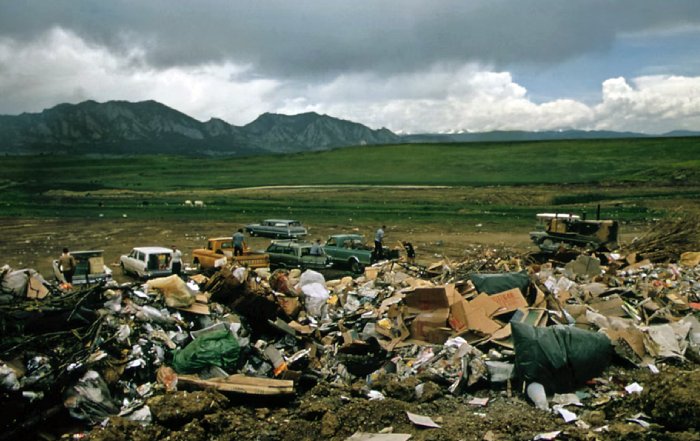
Despite rising interest in circular economy strategies, landfilling remains the dominant waste management method in many parts of the world, including large segments of North America, Europe, Asia, and emerging urban centers across Africa and South America. Even where modern engineering standards are applied, landfills are significant sources of methane, a greenhouse gas far more potent than carbon dioxide over the short term. In jurisdictions with limited infrastructure, open dumps and unmanaged sites often exacerbate the problem by combining methane emissions with leachate, air pollution, and direct harm to local communities.
Analyses by the World Bank project that global municipal solid waste generation will continue to grow as urbanization, rising incomes, and changing consumption patterns reshape economies from Southeast Asia to Sub-Saharan Africa and Latin America. The World Bank's "What a Waste" series, available through its environment and waste management resources, highlights that without structural shifts toward prevention, reuse, and high-quality recycling, landfill-related emissions will rise, placing additional pressure on national climate targets and municipal budgets.
Some regions have invested in landfill gas capture and utilization systems that convert methane into electricity or heat, which can partially mitigate climate impacts. However, these technologies do not address the upstream emissions embedded in discarded products, nor do they eliminate all methane leakage. For the community around eco-natur.com, which increasingly views waste through the lens of circularity and climate resilience, landfills represent a transitional infrastructure that must be progressively phased out in favor of models that minimize waste generation and valorize materials. This perspective is closely aligned with the platform's emphasis on recycling and resource recovery as part of a broader transformation rather than an isolated operational fix.
Incineration and Waste-to-Energy: A Carbon Accounting Dilemma
Waste-to-energy incineration has become a prominent feature of waste strategies in countries where land is scarce and district heating networks are well developed, including Sweden, Denmark, the Netherlands, Japan, and parts of Germany and the United Kingdom. Proponents argue that generating electricity and heat from residual waste displaces fossil fuels and reduces landfill volumes, thereby contributing to climate goals. On paper, this appears to align with low-carbon transitions, particularly in densely populated urban regions.
Yet a more rigorous, life-cycle-based analysis reveals a more complex reality. A large fraction of modern municipal waste consists of plastics and composite materials derived from fossil fuels. When burned, these materials release carbon that was previously stored in products, effectively functioning as an additional fossil fuel source. Moreover, long-term contracts and capital investments in incineration infrastructure can create an economic dependence on a steady flow of waste, which may undermine efforts to reduce waste generation, improve reuse, and increase recycling rates.
The European Environment Agency (EEA) has examined the role of incineration within the EU's waste hierarchy and climate strategies, offering nuanced guidance on when energy recovery may be compatible with circular economy objectives and when it risks locking in high-carbon pathways. Interested readers can consult the EEA's waste and climate change resources for a deeper understanding of these trade-offs. For eco-natur.com, which promotes plastic-free living and design choices, incineration is framed as a last-resort option for truly unrecyclable materials, not as a cornerstone climate solution. The strategic priority remains to design products, services, and systems that avoid the creation of non-recyclable waste in the first place.
Recycling as Climate Mitigation: Potential and Limitations
Recycling enjoys strong public support and is often the most visible environmental action taken by households and businesses in regions such as the United States, Canada, the United Kingdom, Germany, France, Australia, and increasingly in urban centers across Asia, Latin America, and Africa. From a climate perspective, the benefits are clear: reprocessing metals, paper, glass, and certain plastics generally requires far less energy than producing them from virgin resources, thereby reducing associated emissions and preserving ecosystems.
The United Nations Environment Programme (UNEP) has highlighted how well-designed recycling systems can make a substantial contribution to emissions reduction, particularly in sectors where material production is highly energy-intensive. UNEP's work on circular economy and resource efficiency illustrates how recycling, when integrated into broader circular strategies, can ease pressure on forests, water resources, and biodiversity while supporting climate goals. For example, recycling aluminum can save up to 95 percent of the energy required for primary production, while high-quality paper recycling reduces both energy use and the need for virgin timber.
However, recycling is not a panacea. Contamination, inadequate sorting, limited markets for secondary materials, and the proliferation of complex, multi-layered products all undermine the potential climate benefits. In many emerging economies, informal waste pickers play a vital but often unrecognized role in material recovery, operating without adequate social protections or access to modern infrastructure. For the readership of eco-natur.com, the key message is that recycling delivers maximum climate value when it is part of an integrated strategy that also prioritizes reduction and reuse. The platform's dedicated content on recycling and resource management emphasizes designing for recyclability, supporting robust collection systems, and avoiding the misconception that high recycling rates alone can justify continued material-intensive growth.
Plastics, Fossil Fuels, and the Climate-Ocean Nexus
Among all waste streams, plastics have become the most potent symbol of the global waste crisis, with images of polluted rivers, oceans, and landscapes resonating from Southeast Asia and the Mediterranean to the Arctic. Yet the climate dimension of plastics is sometimes less visible than their litter impacts, even though it is equally significant. Most conventional plastics are derived from petrochemicals, and the International Energy Agency has identified petrochemicals as one of the fastest-growing drivers of oil demand. Business leaders and policymakers can explore this trend through the IEA's analysis of the future of petrochemicals.
The climate burden of plastics spans production, transport, use, and end-of-life management. Manufacturing plastic products consumes energy and emits greenhouse gases; mismanaged plastic waste can emit methane and ethylene as it degrades; and incineration of plastic waste releases stored carbon. Beyond direct emissions, plastic pollution undermines the health of marine and terrestrial ecosystems that serve as natural carbon sinks, weakening their capacity to absorb and store COâ. The Ellen MacArthur Foundation has been a leading voice in demonstrating how a circular plastics economy could reduce emissions, cut pollution, and create new economic opportunities; its work on rethinking plastics within a circular economy is widely used by governments and corporations.
In this context, the eco-natur.com commitment to a plastic-free lifestyle and business approach is not merely an aesthetic or ethical stance; it is a climate strategy. For households, this means shifting to reusable packaging, bulk purchasing, refill systems, and durable products. For businesses, it involves redesigning packaging, rethinking logistics, and collaborating across supply chains to eliminate unnecessary plastics and invest in truly circular materials. Across markets from the United States and Canada to Germany, China, Brazil, and South Africa, these shifts are increasingly becoming a marker of climate credibility and brand trust.
Food Waste, Agriculture, and Methane in a Hungry, Hotter World
Food systems sit at the intersection of climate, biodiversity, health, and social equity, and food waste is now recognized as one of the most consequential yet solvable climate challenges. A substantial share of all food produced globally is lost or wasted along the value chain, from farms and storage facilities to wholesalers, retailers, restaurants, and households. The Food and Agriculture Organization of the United Nations (FAO) has shown that if food loss and waste were considered a country, it would rank among the world's largest emitters. Detailed analyses of regional patterns and mitigation options are available through FAO's resources on food loss, waste, and climate.
The climate impact of wasted food is twofold. First, the emissions associated with land use, fertilizers, irrigation, processing, refrigeration, and transport are incurred without delivering nutritional value. Second, when food waste is landfilled, it decomposes anaerobically and generates methane. In high-income regions such as North America, Western Europe, and parts of Asia-Pacific, consumer-level waste in households, restaurants, and retail outlets is particularly significant. In many low- and middle-income countries across Africa, South Asia, and Latin America, losses closer to the farm, in storage and transport, are more prevalent due to infrastructure constraints.
For the readership of eco-natur.com, which is deeply engaged with organic food, sustainable diets, and health, reducing food waste is both a climate imperative and a natural extension of responsible consumption. Meal planning, accurate portioning, better storage practices, creative use of leftovers, and support for food rescue initiatives can dramatically cut waste in homes and food service operations. At the same time, shifting toward agroecological and organic production systems can enhance soil carbon sequestration, protect biodiversity, and reduce dependence on synthetic fertilizers, thereby addressing climate challenges at both ends of the food chain.
Waste, Wildlife, and the Erosion of Natural Climate Solutions
The climate implications of waste extend beyond direct emissions to the degradation of ecosystems that act as natural climate regulators. Plastic debris in oceans and rivers entangles and poisons marine life; microplastics infiltrate food webs; and chemical leachate from landfills and dumpsites contaminates soils, wetlands, and aquifers. As habitats are degraded and species decline, ecosystems lose resilience and their capacity to sequester and store carbon diminishes, weakening one of the most cost-effective climate solutions available.
Organizations such as the World Wildlife Fund (WWF) have documented how pollution and waste exacerbate habitat loss and biodiversity decline, undermining the integrity of forests, grasslands, coral reefs, and other ecosystems that stabilize local and global climates. WWF's work on plastic pollution, biodiversity, and climate illustrates these linkages with compelling case studies from regions as varied as the Amazon, the Mediterranean, and Southeast Asian coastlines. In biodiversity-rich countries such as Brazil, South Africa, Indonesia, and many others, waste mismanagement compounds the pressures of deforestation, overfishing, and climate change.
For eco-natur.com, which devotes dedicated coverage to wildlife and biodiversity protection, waste reduction is positioned not only as a technical or economic issue but as a moral and ecological responsibility. By minimizing waste, especially plastics and hazardous materials, communities help safeguard the natural systems that buffer climate extremes, regulate water cycles, and support livelihoods from rural Africa and Asia to urban Europe and North America.
Sustainable Business, Circular Economy, and Competitive Advantage
In 2026, leading companies in sectors ranging from consumer goods and technology to construction and finance increasingly recognize that waste and resource use sit at the heart of their climate risk and opportunity profile. Investors, regulators, and customers in markets such as the United States, the United Kingdom, Germany, China, Singapore, and the wider European and Asia-Pacific regions demand credible net-zero strategies that explicitly address material flows and waste.
The World Economic Forum (WEF) has played a prominent role in articulating how circular economy models can cut emissions, reduce dependency on volatile resource markets, and unlock new value streams. Its work on circular economy and climate action highlights case studies where companies have successfully implemented product-as-a-service models, remanufacturing, and closed-loop supply chains. In parallel, frameworks such as the Task Force on Climate-related Financial Disclosures (TCFD) have pushed companies to disclose climate-related risks and opportunities, including those linked to resource use and waste, thereby increasing transparency and investor scrutiny.
Within this evolving landscape, eco-natur.com has positioned its resources on sustainable business and sustainable economic models as practical guides for organizations seeking to align profitability with planetary boundaries. By integrating waste prevention into product design, procurement policies, logistics, and customer engagement, businesses can reduce emissions, cut operating costs, and differentiate their brands. In markets as diverse as North America, Europe, and Asia, companies that embrace circularity are increasingly seen as lower-risk, innovation-oriented partners by investors, regulators, and consumers.
Policy, Regulation, and International Cooperation on Waste and Climate
As the science linking waste and climate change has solidified, policy frameworks at national, regional, and global levels have begun to integrate waste management into broader decarbonization strategies. In the European Union, the European Commission has embedded circular economy principles within the European Green Deal, setting binding targets for recycling, landfill reduction, and plastic use, and driving innovation in product design, extended producer responsibility, and eco-labelling. Businesses and policymakers can examine these measures through the Commission's environment and circular economy pages.
At the global level, negotiations under the United Nations Environment Assembly (UNEA) are advancing toward a legally binding international agreement on plastic pollution, reflecting a shared recognition that unmanaged plastics threaten both ecosystems and climate stability. Updates on these negotiations, which affect producers and consumers across Europe, Asia, Africa, and the Americas, are available via UNEP's UNEA information portal. Simultaneously, under the UN Framework Convention on Climate Change (UNFCCC), countries are increasingly incorporating waste sector mitigation-particularly methane reductions from landfills and improved resource efficiency-into their national climate commitments.
For the global readership of eco-natur.com, these developments underscore that local and corporate actions on waste are part of a converging international agenda. Aligning internal policies, product strategies, and community initiatives with emerging regulations not only reduces climate impacts but also positions organizations and municipalities ahead of regulatory curves in key markets across North America, Europe, and Asia.
From Linear to Circular Lifestyles: Zero-Waste and Everyday Climate Action
Transforming waste systems is not solely a matter of infrastructure and regulation; it is also a profound cultural shift that redefines how societies conceive of value, convenience, and sufficiency. The traditional linear model of "take, make, use, dispose" that fueled industrial growth in the twentieth century is increasingly incompatible with twenty-first-century climate realities and resource constraints. Moving toward circular lifestyles requires new habits, expectations, and social norms in households and communities from New York and Toronto to London, Berlin, Stockholm, Tokyo, Seoul, Singapore, Sydney, Cape Town, and São Paulo.
For individuals, adopting a low-waste or zero-waste lifestyle can significantly reduce personal carbon footprints by cutting demand for energy-intensive products and packaging. Refusing unnecessary items, choosing repairable and durable goods, sharing or renting rather than owning infrequently used products, and composting organic waste are all practical steps that reduce both direct and embedded emissions. Guidance on making this transition is central to eco-natur.com's exploration of zero-waste living and sustainable lifestyles, where real-world examples from cities and communities across continents illustrate how small, consistent changes can aggregate into significant climate benefits.
The health dimension of low-waste living is also gaining prominence. Choosing minimally processed, locally sourced, and organically produced foods typically involves less packaging, shorter supply chains, and fewer synthetic inputs, aligning personal well-being with climate and biodiversity objectives. The intersection of health, nutrition, and sustainability has become a core theme for eco-natur.com, resonating strongly in markets where consumers are increasingly attentive to both environmental and personal impacts of their choices.
Renewable Energy, Design, and the Future of Low-Carbon Materials
While waste prevention and circularity are indispensable, they must be combined with an accelerated transition to renewable energy if the world is to meet its climate goals. As countries including the United States, Canada, Germany, Spain, China, India, Brazil, South Africa, and others expand wind, solar, and other renewable capacities, the emissions intensity of material production and waste management can decline. The International Renewable Energy Agency (IRENA) provides detailed analysis of how renewables support economy-wide decarbonization, accessible through its knowledge hub.
However, clean energy alone cannot offset the climate impacts of ever-growing material throughput. Sustainable design principles-such as modularity, reparability, standardized components, and transparent material composition-determine whether products can be easily maintained, upgraded, and ultimately disassembled for high-value recycling or remanufacturing. For architects, industrial designers, engineers, and urban planners, eco-natur.com offers perspectives on sustainable design and circular innovation, emphasizing that climate-responsive design must consider the full life cycle of materials, from extraction to end-of-life, rather than focusing solely on operational energy efficiency.
Regions renowned for design and technology leadership, including Scandinavia, Japan, South Korea, the Netherlands, and parts of Germany and Italy, are demonstrating how product-as-a-service models, sharing platforms, and remanufacturing enterprises can keep materials in circulation longer while reducing emissions. When combined with robust recycling systems, renewable energy, and supportive policy frameworks, these innovations offer a template that can be adapted across different cultural and economic contexts worldwide.
A Global, Local, and Personal Agenda for 2026 and Beyond
By 2026, the connection between waste and climate change is no longer a niche concern; it is an essential component of credible climate strategy for governments, businesses, and citizens on every continent. For the international audience of eco-natur.com, this reality presents both a challenge and an opportunity. The challenge lies in the fact that waste is deeply embedded in everyday habits, supply chains, and economic models. The opportunity lies in the relative speed and cost-effectiveness with which many waste-related emissions can be reduced through targeted interventions and cultural shifts.
Local governments can prioritize waste prevention, separate collection of organics, and high-quality recycling, integrating these measures into climate action plans and aligning them with international commitments. Businesses can embed circular economy principles into product design, sourcing, logistics, and customer engagement, leveraging waste reduction as a source of innovation, resilience, and brand differentiation. Individuals and communities, guided by resources from eco-natur.com and other trusted platforms, can adopt sustainable living practices that reduce waste, support biodiversity, and lower emissions, thereby reinforcing a culture of responsibility and care.
The emerging consensus across science, policy, and business is clear: stabilizing the climate requires transforming the way societies produce, use, and value materials. By integrating insights from climate science, economics, ecology, and design, and by drawing on global best practices adapted to local realities, the community around eco-natur.com is well positioned to lead this transition. In doing so, it contributes to a future in which prosperity is decoupled from pollution, materials circulate within safe planetary boundaries, and the warming world is met not with resignation but with informed, coordinated, and effective action.
