
Everyday Water-Saving Habits for Sustainable Living
Why Everyday Water Habits Matter More Than Ever
Across homes, workplaces, and communities, water is often treated as an invisible convenience rather than the finite, fragile resource it truly is. Yet from the drought-prone regions of the United States and Australia to the increasingly water-stressed cities of South Africa, India, and parts of Europe, the global picture is clear: everyday choices about water use have become central to sustainable living and to a resilient future.
According to the United Nations and its UN-Water coordination mechanism, billions of people already experience water scarcity at least one month per year, and climate change is intensifying droughts, floods, and irregular rainfall patterns. The World Health Organization notes that safe water, sanitation, and hygiene are fundamental not only for environmental protection but also for public health, economic productivity, and social stability. When households, businesses, and cities adopt practical water-saving habits, they reduce pressure on rivers, lakes, aquifers, and ecosystems, and they help shield communities from the shocks of climate extremes.
For Eco Natur, which has long focused on practical guidance for sustainable living, water conservation is not a niche concern but a core pillar of a healthier, fairer, and more resilient society. Everyday water-saving habits are powerful precisely because they are accessible: they can be adopted in apartments and detached homes, rural farms and urban high-rises, and they can be scaled from individual routines to neighborhood campaigns and national policy.
This article explores how individuals, families, and organizations can integrate water-saving habits into daily life, how those changes connect with broader themes such as sustainability, plastic reduction, recycling, and organic food, and how a culture of careful water use can support wildlife, local economies, and long-term wellbeing.
Understanding Water Footprints and Hidden Consumption
When people think about saving water, they often picture turning off the tap while brushing their teeth or taking shorter showers. These visible actions are important, but they represent only a fraction of a person's total water footprint. The Water Footprint Network explains that a water footprint includes direct use at home and indirect use embedded in products, food, and energy. Learning more about water footprints and sustainable consumption reveals that diet, shopping habits, and energy choices can have a far greater impact on water resources than tap use alone.
For example, research compiled by Our World in Data suggests that animal-based foods, particularly beef, tend to require substantially more water per kilogram than most plant-based foods, while processed goods and fast fashion also carry significant embedded water costs. These figures vary by region, production method, and farming practices, but the overall pattern is consistent: what people buy and eat matters at least as much as how long they spend in the shower.
This holistic perspective aligns closely with the integrated approach promoted by eco-natur, where water conservation is seen as part of a broader lifestyle transformation. Adopting sustainable lifestyle practices that reduce waste, favor durable goods, and prioritize local, seasonal, and organic food naturally lowers the hidden water footprint and supports more responsible supply chains.
Everyday Water-Saving in the Home
While the indirect water footprint is large, household water use still represents a significant share of demand in many countries, particularly in urban and suburban areas. The U.S. Environmental Protection Agency estimates that simple changes in fixtures and behavior can cut domestic water use by thousands of liters per household each year. Similar assessments by the European Environment Agency and water authorities in Australia, Canada, and the United Kingdom reinforce this conclusion.
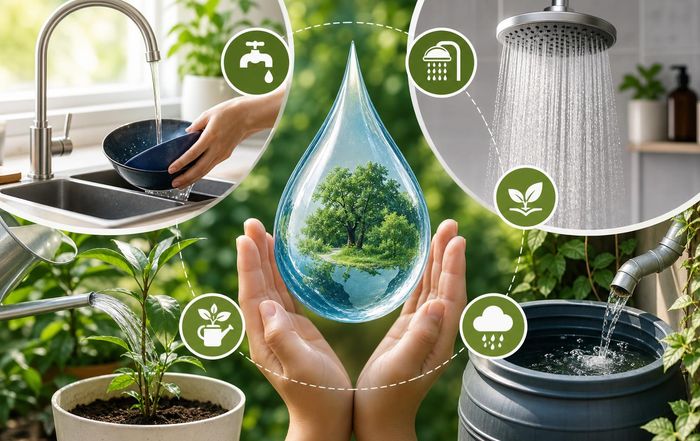
In bathrooms, shorter showers, efficient showerheads, and fixing leaks are among the most effective measures. Modern water-saving fixtures, certified in schemes such as WaterSense in the United States or equivalent labels in Europe and Asia, can dramatically reduce flow rates without sacrificing comfort. Turning off the tap while shaving or brushing teeth, using dual-flush or low-flush toilets, and promptly repairing dripping taps all contribute meaningfully to conservation.
In kitchens and laundry rooms, full loads in dishwashers and washing machines, energy- and water-efficient appliances, and thoughtful hand-washing techniques can minimize unnecessary use. Many national consumer guides, including those from Energy Star and independent testing organizations such as Consumer Reports, provide up-to-date information on efficient appliances and fixtures that help households align their purchases with long-term water and energy savings.
Eco Natur emphasizes that these habits are not about deprivation but about intentional design: choosing equipment, routines, and layouts that support sustainable living and make the water-saving choice the easiest and most natural option. Over time, these changes become automatic, and the cumulative impact on local water demand can be substantial.
Outdoor Water Use, Gardens, and Urban Green Spaces
Outdoor water use is often the largest component of household consumption in dry and warm climates. Lawns, ornamental gardens, and car washing can consume vast quantities of potable water, especially during heatwaves and droughts. Water agencies in regions such as California, southern Europe, Australia, and parts of South Africa have repeatedly highlighted outdoor use as a key leverage point for conservation.
A shift toward climate-appropriate landscaping, sometimes called xeriscaping or water-wise gardening, can dramatically reduce irrigation needs while enhancing biodiversity. Native plants, drought-tolerant species, mulching, and soil health practices help gardens retain moisture and support local pollinators and wildlife. The Royal Horticultural Society in the United Kingdom and organizations such as Plantlife and Audubon provide detailed guidance on wildlife-friendly, low-water gardens that support birds, insects, and small mammals.
For readers of eco-natur who care deeply about wildlife and biodiversity, this approach offers a compelling dual benefit: it saves water and creates richer habitats. Collecting rainwater in barrels, directing roof runoff into garden beds, and using drip irrigation or soaker hoses instead of sprinklers further increases efficiency and reduces evaporation losses. In many cities across Europe, North America, and Asia, municipal programs now support rain gardens, green roofs, and permeable surfaces to reduce stormwater runoff and improve urban resilience, and these initiatives often provide practical templates for homeowners and community groups.
Water, Recycling, and the Circular Economy
Water conservation is deeply connected with recycling and circular economy principles. Every product that is reused, repaired, or recycled rather than discarded represents avoided water use in the production of new materials. Manufacturing metals, plastics, paper, and textiles is water-intensive, and the International Resource Panel and OECD have repeatedly shown that resource efficiency and recycling can significantly reduce environmental pressures, including water demand.
For example, producing recycled aluminum typically uses far less energy and water than mining and refining bauxite for new metal, and recycled paper reduces the water and chemical inputs required compared with virgin pulp. When households and businesses participate in robust recycling systems, they contribute indirectly to water conservation across supply chains. Learning more about circular economy strategies through organizations such as the Ellen MacArthur Foundation can help individuals understand how waste reduction, reuse, and high-quality recycling are integral to water-smart living.
Eco Natur often highlights that recycling is most effective when combined with waste prevention and thoughtful product design. Choosing durable goods, avoiding unnecessary packaging, and supporting companies committed to closed-loop production reduces the total material throughput of the economy and thus the water required to sustain it. This perspective connects personal habits at home with wider economic and policy shifts that prioritize long-term resource security.
Plastic-Free Choices and Water Protection
Plastic waste is widely recognized as a major threat to oceans, rivers, and lakes. Microplastics and chemical additives from plastic products are increasingly detected in drinking water sources, marine ecosystems, and even human bodies. Organizations such as UNEP and WWF have documented how plastic pollution harms wildlife, degrades habitats, and complicates water treatment processes.
Moving toward a plastic-free lifestyle is therefore not only about reducing visible litter but also about protecting water quality and aquatic ecosystems. Refillable bottles, stainless steel or glass containers, solid shampoos and soaps, and bulk purchasing all reduce the flow of plastic into waterways. In addition, avoiding synthetic clothing made from polyester or acrylic and opting for natural fibers where appropriate can lower the release of microfibers during washing, which are otherwise carried into rivers and oceans.
Many municipalities and national governments have introduced bans or restrictions on single-use plastics, and international negotiations toward a global plastics treaty have advanced in recent years. While the precise scope and enforcement mechanisms of such agreements are still being debated, the direction is clear: societies are moving toward materials and systems that are less harmful to water bodies and wildlife. By aligning household choices with this trend, readers of eco-natur help accelerate the transition and signal demand for safer, more sustainable products.
Organic Food, Agriculture, and Water Stewardship
Agriculture is the largest user of freshwater globally, and farming practices profoundly shape the health of rivers, aquifers, wetlands, and coastal zones. Conventional agriculture, particularly when reliant on monocultures, heavy irrigation, and synthetic fertilizers and pesticides, can contribute to water depletion, pollution, and habitat loss. In contrast, many forms of organic, regenerative, and agroecological farming emphasize soil health, biodiversity, and integrated water management.
Organizations such as IFOAM - Organics International and research institutes including Rodale Institute and FiBL have documented how organic and regenerative practices can improve soil structure and organic matter content, which in turn enhances water infiltration and retention, reduces erosion, and supports more stable yields under variable rainfall conditions. While the water efficiency of organic versus conventional systems can vary by crop and region, a growing body of evidence suggests that healthy soils and diversified cropping systems are central to long-term water resilience.
Choosing organic food, supporting farmers who implement water-smart practices, and reducing food waste all contribute to a more sustainable relationship between agriculture and water. Consumer guides from organizations such as Soil Association in the United Kingdom, USDA Organic in the United States, and similar certification bodies in Europe, Asia, and Latin America help shoppers identify products that align with higher environmental standards, including better water stewardship.
For Eco Natur, the connection between diet, water, and climate is a recurring theme: plant-rich diets, local and seasonal sourcing, and support for small-scale farmers can lower water footprints, reduce pollution, and strengthen rural economies, while also providing health benefits that align with holistic wellbeing.
Water, Wildlife, and Healthy Ecosystems
Freshwater ecosystems are among the most biodiverse and yet most threatened habitats on Earth. Rivers, lakes, wetlands, and estuaries support countless species of fish, amphibians, birds, insects, and plants, many of which are now at risk due to over-extraction of water, pollution, damming, and habitat fragmentation. The International Union for Conservation of Nature (IUCN) and conservation groups such as The Nature Conservancy and Wetlands International have repeatedly warned that freshwater biodiversity is declining faster than terrestrial or marine biodiversity in many regions.
Everyday water-saving habits contribute to wildlife protection by reducing pressure on these ecosystems. When households and businesses use less water, especially in water-scarce regions, more water can remain in rivers and wetlands to sustain ecological processes and species. Avoiding chemical pesticides and fertilizers in gardens, properly disposing of medicines and hazardous substances, and choosing eco-friendly cleaning products also reduce the contamination of waterways.
For readers passionate about biodiversity and wildlife, supporting river restoration projects, wetland conservation, and community-based water stewardship initiatives offers a way to connect personal habits with broader ecological outcomes. Organizations such as Ramsar Convention on Wetlands and local conservation trusts provide opportunities for engagement, from citizen science to habitat restoration, that complement household water-saving efforts.
Sustainable Business, Water, and the Global Economy
Water is not only a household concern; it is a strategic resource for businesses and entire economies. Industries from food and beverage to technology, textiles, mining, and energy depend on reliable water supplies and clean water for processing, cooling, and transport. The World Economic Forum has consistently ranked water crises among the top global risks in terms of impact, and the CDP (formerly Carbon Disclosure Project) reports that companies face growing financial exposure from water-related disruptions.
Forward-thinking companies are therefore integrating water stewardship into their core strategies, setting reduction targets, investing in efficiency technologies, and collaborating with local communities and governments to protect shared water resources. Frameworks such as the Alliance for Water Stewardship (AWS) Standard guide businesses in assessing their water use, engaging stakeholders, and contributing to basin-level resilience. Learn more about sustainable business practices and how they intersect with water management to understand how corporate decisions influence local ecosystems and livelihoods.
From the perspective of eco-natur, sustainable water management is also an economic opportunity. Investments in water-efficient infrastructure, leak detection, smart metering, and nature-based solutions create jobs and foster innovation. Analysts at institutions such as the World Bank and International Monetary Fund have highlighted that water security underpins economic stability, trade, and development. A water-smart economy is therefore not only greener but also more resilient to shocks, from droughts and floods to supply chain disruptions.
Water, Energy, and Climate: The Nexus of Sustainable Living
Water use is closely linked with energy consumption and climate change. Pumping, treating, heating, and distributing water require significant amounts of energy, and in many regions this energy is still generated from fossil fuels. Conversely, many forms of energy production, such as thermal power plants and some biofuels, consume large volumes of water for cooling and processing. This interdependence, often referred to as the water-energy nexus, means that saving water can also reduce greenhouse gas emissions, while decarbonizing energy systems can ease pressure on water resources.
Households that adopt efficient water heaters, insulate hot water pipes, and install low-flow fixtures not only reduce water use but also cut energy bills and emissions. At a larger scale, the expansion of renewable energy sources such as wind and solar, which generally have lower water footprints than conventional thermal power, contributes to a more sustainable balance between water and energy. Reports from the International Energy Agency and IRENA detail how clean energy transitions can reduce water use in the power sector, particularly in arid regions.
For Eco Natur, recognizing these interconnections reinforces the value of integrated solutions. A home that conserves water, uses renewable energy, and minimizes waste embodies the principles of sustainable living in a way that supports both local watersheds and the global climate system.
Zero-Waste, Design, and Everyday Systems That Save Water
Design plays a crucial role in making water-saving habits intuitive and enjoyable. Thoughtfully designed homes, products, and neighborhoods can embed conservation into everyday routines without requiring constant effort or sacrifice. Concepts such as zero-waste living, circular design, and regenerative architecture encourage systems that minimize resource use and pollution across their life cycles.
In practice, this might include greywater systems that safely reuse water from showers and sinks for irrigation, rainwater harvesting integrated into building design, and community laundries that use highly efficient equipment. Urban planners and architects, guided by organizations such as LEED and BREEAM, increasingly incorporate water efficiency into green building standards, while industrial designers create fixtures and appliances that provide comfort and performance with far less water.
Readers interested in sustainable design and innovation can explore case studies from green building councils, design schools, and eco-villages around the world. These examples demonstrate that water-saving systems can be beautiful, functional, and aspirational, helping to shift cultural norms toward conservation and care.
Building a Culture of Water Respect with Eco Natur
Ultimately, everyday water-saving habits are about more than liters and statistics; they are about cultivating a culture of respect for life's most essential resource. This culture spans continents and communities, from households in Germany carefully sorting waste and installing efficient fixtures, to farmers in Brazil experimenting with agroecology, to urban residents in Singapore embracing water reuse and desalination as part of a comprehensive national strategy.
In this shared journey, Eco Natur serves as a guide and companion, offering practical resources on sustainable living, sustainability, recycling, organic food, and the broader global context of environmental change. By connecting readers with trustworthy information from organizations such as UNEP, WHO, IUCN, and leading research institutes, eco-natur helps individuals make informed choices that reflect both personal values and planetary needs.
In year 2026, as climate challenges intensify and water stress spreads to new regions, the importance of these habits cannot be overstated. Yet the story is not one of inevitable scarcity; it is a story of possibility. With thoughtful design, responsible consumption, supportive policies, and a shared commitment to stewardship, societies can ensure that rivers flow, wetlands thrive, communities flourish, and future generations inherit a world where water remains a source of life, health, and beauty.
Every tap turned thoughtfully, every garden planted with care, every product chosen for its lower water footprint is a quiet but powerful act of hope. Through its focus on practical guidance and positive change, Eco Natur invites each reader to see themselves as a guardian of water, weaving everyday habits into a collective movement for a more sustainable, resilient, and compassionate world.
