
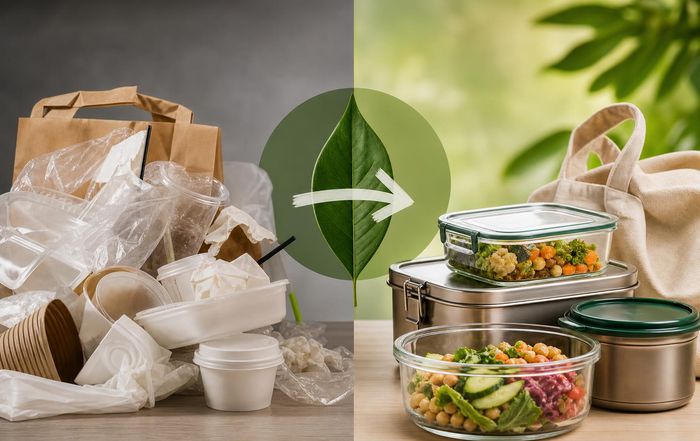
How Reusable Containers Reduce Takeaway Waste
A New Chapter in Takeaway Culture
Across major cities and small towns alike, takeaway food has become an integral part of modern life, yet the convenience it offers has long been tied to a heavy environmental cost. Single-use packaging, particularly plastic containers, cutlery, and cups, has contributed to rising levels of waste in landfills, waterways, and oceans, creating a global challenge that affects ecosystems, public health, and local economies. As policymakers, businesses, and communities search for solutions, reusable container systems are emerging as one of the most promising and practical ways to reduce takeaway waste without sacrificing the flexibility that consumers value.
For readers of Eco Natur, this shift represents not only a technological and logistical innovation, but also a cultural transformation that aligns closely with the platform's commitment to sustainable living, circular design, and responsible consumption. From Europe and North America to Asia, Africa, and South America, reusable takeaway models are evolving rapidly, supported by new regulations, digital tools, and changing consumer expectations. Understanding how these systems work, what benefits they deliver, and how they can be scaled responsibly is essential for anyone interested in building a more sustainable food economy.
The Scale and Impact of Takeaway Packaging Waste
The environmental footprint of single-use takeaway packaging is now well documented by organizations such as the United Nations Environment Programme and the Organisation for Economic Co-operation and Development. According to UNEP's reports on single-use plastics, food and beverage packaging is one of the largest contributors to plastic waste leakage into the environment, particularly in urban areas where takeaway and delivery services are concentrated. The OECD has estimated that only a small fraction of plastic waste is effectively recycled globally, with a significant share being landfilled, incinerated, or mismanaged, leading to pollution in rivers and oceans. Readers interested in the broader policy context can explore how international frameworks address these issues through resources such as the UNEP plastics portal.
Single-use takeaway containers are often made from mixed materials, such as plastic lined with paper or coated with films that are difficult to separate, which complicates recycling. Even where local recycling infrastructure is strong, contamination from food residues can reduce the quality of recovered materials and increase processing costs. As a result, many containers that are technically recyclable do not enter effective recycling streams in practice. This reality underscores why Eco Natur has repeatedly emphasized the importance of both recycling systems and upstream waste prevention strategies that reduce the volume of material entering the waste stream in the first place.
The environmental impacts extend beyond visible litter. Life-cycle assessments by research institutions and bodies such as the European Environment Agency indicate that single-use plastic packaging is associated with greenhouse gas emissions across the entire value chain, from fossil fuel extraction and manufacturing to transportation and end-of-life treatment. Microplastics created through degradation and fragmentation can enter food chains, with potential implications for wildlife and human health that are still being actively studied by organizations such as the World Health Organization and the Food and Agriculture Organization. For readers seeking a scientific overview of these impacts, it is useful to consult sources like the European Environment Agency's plastics assessments.
Why Reuse Beats Single Use for Takeaway
In response to these challenges, researchers and policymakers are increasingly focusing on reuse as a cornerstone of a circular economy. The Ellen MacArthur Foundation, a leading authority on circular design, has highlighted reusable packaging models as key levers to reduce waste and emissions, especially in high-volume sectors such as food service. Their analyses suggest that replacing a portion of single-use packaging with well-designed reusable systems can significantly cut material use and pollution while enabling new service-based business models. Interested readers can learn more about circular economy approaches and how they apply to packaging.
Multiple independent life-cycle assessments, including those commissioned by European and North American research institutions, generally find that durable reusable containers outperform single-use packaging on metrics such as greenhouse gas emissions and resource use when they are reused enough times and supported by efficient logistics and cleaning. While the exact "break-even" point varies by material, design, and local conditions, studies often indicate that sturdy reusable containers need to be used several dozen times to clearly surpass their single-use counterparts in environmental performance. Some analyses, however, caution that if return rates are low or washing processes are inefficient, the benefits can be reduced, underscoring the need for robust system design and user engagement.
For Eco Natur, which consistently promotes sustainability grounded in evidence, the message is clear: reusable takeaway containers are not a universal quick fix, but when carefully implemented, they represent one of the most tangible and scalable strategies to cut packaging waste at its source. Their success depends on factors such as container durability, user behavior, infrastructure for collection and washing, and supportive regulatory frameworks.
How Reusable Takeaway Systems Work in Practice
Reusable container systems for takeaway food and drink can take several forms, each tailored to local habits and business models. One of the most visible models is the deposit-return scheme, where customers receive their food or beverage in a reusable container after paying a small deposit, which is refunded when the container is returned to a participating location. This approach has been adopted by various companies and city programs in countries like Germany, Switzerland, and the Netherlands, building on long-standing cultural familiarity with deposit systems for bottles. Some of these schemes are run by specialized providers that supply standardized containers and manage cleaning and redistribution for multiple restaurants and cafés, while others are run by individual chains.
Another model involves membership or subscription-based services, where users sign up through a mobile application and borrow containers without paying a cash deposit, with penalties or fees applied only if items are not returned within a certain period. Digital platforms, including apps used in cities across Europe, North America, and Asia, allow customers to locate participating venues, track borrowed containers, and sometimes even monitor their personal environmental impact in terms of avoided single-use items. Readers interested in the digital infrastructure behind such systems can explore how innovators in the broader sustainable tech space are approaching these challenges through resources like the World Economic Forum's circular economy innovation insights.
In some regions, especially in parts of Asia, returnable container systems are being integrated into large-scale food delivery platforms, enabling users to opt for reusable packaging when ordering via apps. Pilot programs in cities such as Singapore, Seoul, and parts of China have tested logistics for collecting used containers from customers' homes or designated return points. While these models are still evolving, they demonstrate how digital networks and delivery infrastructure can be harnessed to support reuse, particularly in dense urban environments where return routes can be optimized.
The role of standardized design is particularly important in all these systems. Containers that can be stacked efficiently, washed reliably, and used across multiple vendors reduce costs and complexity. Food safety regulations require that materials be suitable for repeated use and resistant to wear. Organizations like the U.S. Food and Drug Administration and the European Food Safety Authority provide guidance on food-contact materials, and many reusable system providers work closely with these standards to ensure compliance, hygiene, and consumer confidence. Those wishing to delve deeper into regulatory aspects can consult resources such as the EFSA guidance on food contact materials.
Environmental Gains: From Plastic-Free Aspirations to Real Reductions
For environmentally conscious readers and the community around eco-natur, one of the most compelling aspects of reusable takeaway containers is their ability to translate plastic-free aspirations into measurable waste reduction. By replacing dozens or even hundreds of single-use containers over the lifespan of a single reusable item, these systems can significantly reduce the volume of plastic and composite materials entering waste streams and the environment. This aligns closely with the platform's focus on plastic-free lifestyles, where practical alternatives are essential for moving beyond symbolic gestures.
Life-cycle assessments conducted by universities and environmental consultancies have generally found that high-quality reusable containers, when used extensively and managed efficiently, can reduce overall greenhouse gas emissions compared to single-use options, especially when the latter are fossil-based plastics or mixed-material composites. Some studies highlight that the energy and water used in washing can be a non-trivial component of the environmental profile, yet modern industrial dishwashing systems, particularly those powered by renewable energy, can significantly mitigate this impact. For readers interested in how energy sources influence the footprint of reuse systems, learning more about renewable energy integration provides valuable context.
Waste prevention also has cascading benefits for wildlife and biodiversity. Fewer discarded containers mean less risk of entanglement, ingestion, and habitat contamination for marine and terrestrial species. Organizations such as Ocean Conservancy and the Marine Conservation Society have documented how food packaging is among the most frequently found items in coastal clean-up efforts, underscoring the link between everyday consumption habits and ecosystem health. Their public reports, available through platforms like Ocean Conservancy's Trash Free Seas program, provide additional evidence that reducing single-use takeaway packaging can contribute meaningfully to cleaner coastlines and healthier oceans.
Health, Safety, and Hygiene Considerations
Any transition to reusable takeaway containers must prioritize health and safety, and this is an area where careful design, clear guidelines, and transparent communication are essential. Food safety authorities in North America, Europe, and Asia have generally recognized that reusable containers can be safe when appropriately cleaned and handled, yet they also emphasize the importance of standardized procedures and accountability. The World Health Organization and national bodies such as the U.S. Centers for Disease Control and Prevention have published general guidance on safe food handling, which can be adapted to the context of reusable packaging. Readers can consult the WHO's food safety resources for broader background.
Professional washing facilities that support reusable systems are typically designed to meet or exceed existing hygiene standards, using controlled water temperatures, detergents, and drying processes verified through microbiological testing. Some operators provide certifications or audits to demonstrate compliance, which helps build trust among both food businesses and consumers. For home-based reuse, such as customers bringing their own containers, regulations vary by country and even by municipality, with some jurisdictions allowing it under specific conditions and others imposing stricter rules. This diversity reflects differing risk assessments and legal frameworks, and it is important for businesses to stay informed about local requirements.
From a health perspective, reusable systems can also support broader well-being goals when they are integrated with organic and sustainable food choices. Many restaurants and cafés that adopt reusables are simultaneously committed to offering healthier menus, sourcing ingredients from local or organic producers, and reducing additives and contaminants associated with certain types of packaging. While these trends are distinct, they often reinforce one another, creating dining experiences that are better for both people and the planet. For readers interested in the intersection of environmental and health benefits, organizations such as Harvard T.H. Chan School of Public Health provide accessible overviews of how diet, environment, and health are interlinked; their Nutrition Source is a useful entry point.
Economic and Business Opportunities in Reuse
Beyond environmental and health considerations, reusable takeaway containers are reshaping how businesses think about costs, revenue streams, and customer relationships. While there are upfront investments in containers, washing infrastructure, and digital systems, many operators report that, over time, reuse can lower expenditures on single-use packaging and waste management, particularly as regulations and disposal fees become more stringent. This shift aligns with Eco Natur's broader exploration of a sustainable economy, where resource efficiency and innovation create long-term value.
Reusable systems can also open new avenues for branding and customer engagement. Containers designed with distinctive aesthetics or co-branded across multiple venues can become recognizable symbols of a city's or region's commitment to sustainability. Some companies and municipalities offer loyalty rewards, discounts, or recognition programs for customers who consistently choose reusables, thereby strengthening community ties and encouraging repeat business. For enterprises seeking to learn more about sustainable business practices, these models illustrate how environmental responsibility can be integrated into core customer experience strategies.
Globally, investors and policymakers are increasingly attentive to the economic potential of circular business models. Reports from organizations such as the International Finance Corporation and McKinsey & Company have highlighted how circularity, including reuse and repair, can generate new jobs, stimulate innovation in materials and logistics, and enhance resilience in supply chains. While estimates of the total market size for reusable packaging vary, the overall direction is clear: as regulations tighten and consumer expectations evolve, businesses that proactively adopt reuse are better positioned to thrive in a low-waste future. For a broader economic perspective, readers may find the World Bank's resources on circular economy and waste management informative.
Policy Momentum and Global Case Studies
In many regions, public policy is accelerating the shift toward reusable takeaway containers. The European Union's directives on single-use plastics, for example, have prompted member states to introduce measures that limit certain disposable items and encourage reuse and high-quality recycling. Countries such as France and Germany have implemented or proposed regulations requiring food service outlets to offer reusable options for on-site consumption and, in some cases, for takeaway. Local governments in cities across the United States, Canada, and Australia have also introduced ordinances that restrict single-use plastics, promote reusable cup programs, or support pilot projects for returnable containers. Readers can explore the evolving regulatory landscape through resources like the European Commission's Single-Use Plastics initiative and the U.S. Environmental Protection Agency's sustainable materials management pages.
Asia is witnessing a variety of innovative approaches, from municipal partnerships with startups in Singapore and South Korea to large-scale corporate initiatives in Japan. In Thailand and Malaysia, civil society organizations and universities are collaborating with local food vendors to test reusable systems in markets and campuses, often supported by international NGOs. In South Africa and Brazil, community-led initiatives are exploring how reuse can be integrated into informal food economies and street food cultures, with attention to affordability and accessibility. These diverse experiments illustrate that there is no single blueprint; instead, reuse systems must be adapted to local cultural norms, infrastructure, and regulatory environments.
The global nature of these efforts resonates strongly with Eco Natur's worldwide perspective, which emphasizes that solutions must be inclusive and context-sensitive. In some European cities, for example, high levels of public transit use and dense urban form make centralized washing and distribution efficient, whereas in parts of North America and Australia, more dispersed urban layouts may require hybrid models that combine centralized and decentralized approaches. In all cases, collaboration between public authorities, businesses, and communities is crucial to ensure that reusable systems are convenient, trustworthy, and financially viable.
Integrating Reuse into Sustainable Lifestyles
For individuals seeking to reduce their environmental footprint, reusable takeaway containers offer a concrete way to align everyday choices with broader sustainability values. Alongside actions such as choosing plant-forward or organic meals, minimizing food waste, and supporting local producers, opting for reusables can become part of a holistic sustainable lifestyle. Many people already carry reusable water bottles, coffee cups, and shopping bags; extending this habit to takeaway food containers is a natural next step, especially where businesses and cities provide supportive infrastructure.
Education and communication play a vital role in making reuse feel intuitive and attractive rather than burdensome. Clear signage in restaurants, transparent information on how containers are cleaned, and simple digital tools that track personal impact can all help normalize new behaviors. Environmental organizations, schools, and community groups can amplify these efforts by incorporating reuse into campaigns, workshops, and events, thereby fostering a culture where choosing reusables is seen as aspirational and modern rather than inconvenient. For those exploring broader frameworks for zero-waste living, reusable takeaway systems are a practical anchor that connects high-level principles to daily practice.
Importantly, reusable containers can also support social inclusion when designed and implemented thoughtfully. Programs that offer reduced deposits or free membership for low-income users, partnerships with community kitchens and social enterprises, and attention to accessibility for people with disabilities all help ensure that the benefits of reuse are shared widely. This approach reflects a growing recognition that sustainability, equity, and public health are interconnected, and that successful environmental initiatives must work for all segments of society.
The Role of Eco Natur in a Reusable Future
As reusable takeaway containers move from niche experiments to mainstream solutions, platforms like eco-natur have a unique role to play in connecting information, inspiration, and practical guidance. By curating evidence-based resources on sustainable living, recycling and circular systems, plastic-free innovation, and sustainable business and economic models, Eco Natur helps individuals, entrepreneurs, and policymakers understand not only why reusable containers matter, but also how to implement them effectively.
In the current decade, the urgency of addressing plastic pollution, climate change, and biodiversity loss has never been clearer, yet so too is the potential for positive transformation. Reusable takeaway containers illustrate how design, technology, policy, and community action can converge to create systems that are both convenient and low-impact. They embody the core principles that Eco Natur champions: respect for nature, responsible resource use, and a commitment to solutions that are grounded in science yet infused with optimism.
By supporting businesses that offer reusable options, participating in local initiatives, and sharing knowledge about successful models from around the world, readers of eco-natur can contribute directly to a future where takeaway food no longer leaves a trail of waste behind it. Instead, it can become part of a regenerative, circular culture that values durability, care, and connection-qualities that will be essential not only for the health of the planet, but also for the resilience and well-being of communities everywhere.
