
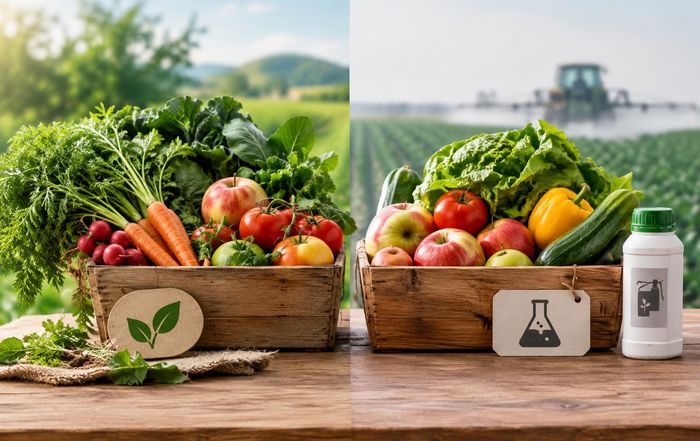
Organic Versus Conventional Produce: What Really Separates Them
The difference between organic and conventional produce is often discussed as if it were a simple choice between "better" and "worse," but the reality is more practical than that. The two systems are governed by different production rules, rely on different pest and soil-management methods, and can lead to differences in environmental impact, residue patterns, price, and sometimes nutrient composition. For shoppers trying to make more informed decisions, the useful question is usually not whether one category is universally superior, but what each approach does well, where it falls short, and which trade-offs matter most for a given household. That is especially true now, when food prices, climate pressures, and agricultural resilience are all shaping how produce is grown and sold.
At the most basic level, organic produce is grown under standards that restrict or prohibit most synthetic pesticides, synthetic fertilizers, genetically modified ingredients, and certain processing aids, depending on the country's rules. In the United States, those standards are set by the U.S. Department of Agriculture, while in the European Union they are governed through the European Commission framework and related organic regulations. Conventional produce, by contrast, is grown without those specific restrictions, though it is still subject to food-safety, pesticide-residue, and environmental regulations. For healthy food loving readers interested in broader food-system context, Eco Natur's coverage of organic food, sustainable living, and sustainability helps connect these choices to everyday consumption patterns.
How the growing methods differ
Organic farming is built around soil health, crop rotation, biological pest control, compost, and other practices intended to reduce reliance on synthetic inputs. That does not mean organic farms are chemical-free; they may still use approved pesticides, but the list is narrower and the rules are more prescriptive. Organic certification also tends to emphasize recordkeeping, inspection, and traceability, which is one reason certified organic products often cost more. Conventional farming is much broader and includes everything from small family farms using limited inputs to high-yield industrial operations that rely heavily on synthetic fertilizers and crop-protection products. The result is not a single "conventional" model, but a wide spectrum of practices.
This distinction matters because it affects both the farm ecosystem and the economics of production. Organic systems often try to build long-term soil fertility and biodiversity, while conventional systems can be more flexible in responding quickly to pests, weather stress, and yield pressures. Some conventional farms also use regenerative or reduced-input techniques that overlap with organic goals without meeting organic certification rules. That is why a produce label alone never tells the whole story about how a crop was grown. Readers who want to explore the environmental side of food production may also find Eco Natur's pages on recycling, zero waste, and biodiversity useful companions to this topic.
Pesticides, residues, and what the evidence actually shows
One of the main reasons shoppers choose organic produce is to reduce exposure to synthetic pesticide residues. That goal is understandable, and residue differences do exist. In many market systems, organic produce tends to show fewer and lower pesticide residues than conventional produce, although "fewer residues" does not automatically mean "zero risk" or "healthier in every way." Regulators such as the U.S. Environmental Protection Agency and the European Food Safety Authority set residue limits and review pesticide safety data, and those limits are designed to account for typical dietary exposure. In other words, conventional produce is not simply unregulated food with unknown contamination; it is monitored under a risk-assessment framework.
At the same time, the scientific discussion is more nuanced than a residue-versus-no-residue comparison. Organic agriculture often uses fewer synthetic pesticides, but it may rely more on mechanical weed control, biological interventions, or approved natural substances, some of which still have environmental or toxicity considerations. Conventional agriculture can use targeted pest-management tools that may reduce crop losses and food waste, though critics argue that heavy dependence on chemical inputs can create ecological costs over time. For consumers, the most practical takeaway is that washing produce, varying the types of fruits and vegetables eaten, and paying attention to local food-safety guidance are still sensible habits regardless of whether the produce is organic or conventional.
Nutrition: smaller differences than many people expect
Nutrition is where public debate often becomes more confident than the evidence deserves. Some studies have found modest differences in certain nutrients or antioxidant compounds between organic and conventional produce, but the size and consistency of those differences are usually limited. Factors such as variety, freshness, soil condition, storage, ripeness, and transport time can matter as much as, or more than, the farming label. A just-picked conventional tomato may be more nutritious in practice than an organic one that spent longer in transit, and the reverse can also be true. For most people, the biggest nutritional advantage remains eating more fruits and vegetables overall, not obsessing over the label on a single item.
That said, there are sensible reasons some shoppers prefer organic produce beyond nutrition alone. They may value lower synthetic pesticide use, different soil-management practices, or the environmental philosophy behind organic certification. Others may simply prefer the taste or texture of certain organic items, especially when they are in season and locally grown. If the goal is to build a healthier food pattern, the more important decision is often whether produce is replacing ultra-processed foods, not whether it carries an organic seal. Eco Natur's health and lifestyle sections explore that broader relationship between food choices and daily habits.
Environmental trade-offs are real on both sides
Environmental comparisons are where the debate becomes most complicated. Organic farming is often associated with better soil stewardship, greater on-farm biodiversity, and lower synthetic chemical use. Those are meaningful benefits, and they help explain why organic methods are popular in sustainability discussions. But organic farming can also produce lower yields for some crops and in some regions, which means more land may be needed to produce the same amount of food. That land-use issue can offset some environmental gains if it leads to additional habitat conversion or greater pressure on natural ecosystems.
Conventional farming, meanwhile, can be more productive per hectare and therefore sometimes more land-efficient, which is not a trivial environmental advantage. It also supports a food system that can be highly efficient for large populations, especially where water, labor, or arable land are constrained. Yet conventional systems may depend more heavily on synthetic fertilizers and pesticides, which can contribute to runoff, soil degradation, or resistance problems if mismanaged. The best environmental outcomes often come not from treating one label as inherently virtuous, but from adopting the most effective practices within each system. That may include precision agriculture, integrated pest management, cover crops, improved irrigation, and soil-building methods that are increasingly discussed by institutions such as the Food and Agriculture Organization and the World Health Organization.
Price, access, and the limits of consumer choice
For many households, the deciding factor is not philosophy but budget. Organic produce usually costs more because certification, labor, yield variability, and supply-chain separation add expense. That premium can be manageable for some shoppers and unrealistic for others, especially when produce is a large share of the grocery bill. It is worth saying plainly that eating more vegetables and fruit in any form is often better than buying only organic produce while reducing overall consumption because of cost. In practical terms, the best diet is usually the one people can sustain consistently.
Access also varies. In some places, organic produce is widely available through supermarkets, farmers' markets, and box schemes. In others, the selection is limited or seasonal, and conventional produce remains the most reliable option for freshness and affordability. The global picture matters here: food systems differ across regions, and what is feasible in one market may not be realistic in another. For readers interested in how food choices fit into broader resource and market questions, Eco Natur's economy and sustainable business pages provide a useful wider lens.
When organic may be worth prioritizing
There is no universal rule, but organic produce can make particular sense in a few situations. Some shoppers prioritize it for crops that are more likely to carry residues under conventional production, especially if they are eaten frequently or with minimal peeling. Others choose organic for environmental reasons, for support of farming systems they believe are better aligned with soil health, or because they want to avoid genetically engineered ingredients in products where that distinction matters to them. For families with strong preferences around farm practices, certification can also offer a clearer standard than informal marketing claims.
Even so, organic is not automatically the best choice every time. Seasonal conventional produce from a trustworthy source may be fresher, cheaper, and less resource-intensive than imported organic produce that traveled a long distance. The most sensible approach is often selective rather than absolute: buy organic where the reasons are strongest and conventional where it makes more sense financially or environmentally. That kind of flexible decision-making fits well with broader efforts toward plastic-free and lower-waste consumption, where the goal is not purity but better everyday choices.
What matters more than the label
The organic-versus-conventional debate can obscure a more useful question: how was the produce grown, transported, stored, and sold? A local farm using careful soil management and minimal inputs may outperform a certified organic supply chain that is energy-intensive or wasteful. A conventional farm using efficient irrigation, integrated pest management, and responsible residue controls may be a better environmental choice than a poorly managed organic operation with weak yields. Labels are helpful shorthand, but they are not a complete environmental or nutritional scorecard.
For most consumers, the most balanced strategy is straightforward. Buy plenty of fruits and vegetables, choose organic when the price and purpose justify it, and do not assume that conventional produce is unsafe or inferior by default. Pay attention to seasonality, freshness, and local sourcing when possible. Wash produce appropriately, store it well, and focus on dietary variety rather than perfection. In the end, the difference between organic and conventional produce is real, but the more important difference is often between a food system that works thoughtfully and one that does not.
