
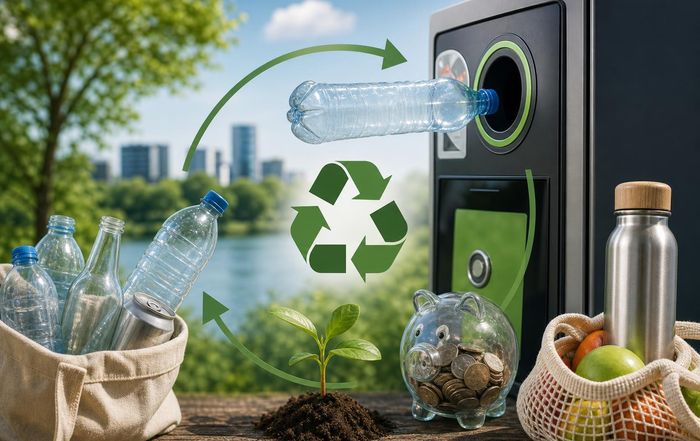
How Deposit Return Systems Improve Recycling Rates
Climate Caring Introduction: A Proven Tool in a Changing World
As governments, businesses and communities search for effective ways to curb waste and protect ecosystems, deposit return systems for beverage containers have emerged as one of the most consistently successful policy tools. By placing a small, refundable deposit on bottles and cans, these systems create a direct financial incentive for consumers to return packaging for recycling, dramatically increasing collection rates and reducing litter. For climate caring visitors, deposit return systems sit at the intersection of sustainable living, responsible business, circular economy thinking and wildlife protection, offering a practical example of how well-designed policies can align environmental goals with everyday behavior.
Deposit return systems, often referred to as deposit return schemes (DRS) or container deposit schemes (CDS), are now operating in more than 40 jurisdictions worldwide, including parts of the United States, Canada, Europe, Australia and Asia. Experiences from these regions show that, when properly implemented, such systems can raise beverage container recycling rates to above 80 percent, significantly reduce plastic pollution and glass and metal waste, and support high-quality recycling that feeds into a more circular economy. At the same time, questions remain about design choices, costs and integration with broader waste management strategies, and these debates are shaping the next generation of systems now being rolled out and modernized across the globe.
For our team, which focuses on sustainable living, recycling and sustainability, deposit return systems provide a rich case study in how policy, technology and consumer engagement can reinforce each other to deliver measurable environmental gains while also supporting innovation and green jobs.
How Deposit Return Systems Work
In a deposit return system, consumers pay a small, visible deposit when purchasing a beverage in a container such as plastic, glass or metal. When they return the empty container to a designated collection point, they receive the deposit back in full, either as cash, store credit or digital reimbursement. The containers are then sorted and transported to recyclers who process them into new raw materials suitable for manufacturing new packaging or other products.
The basic mechanism is simple, but implementation involves a carefully structured chain of responsibilities and financial flows. Typically, beverage producers and retailers are required by law to participate in the system, and they fund the operational costs through producer responsibility fees, unredeemed deposits and revenue from the sale of collected materials. In many countries, a non-profit or industry-operated producer responsibility organization manages the system, ensuring transparency and accountability while coordinating logistics across the supply chain.
The core idea is to attach a clear value to packaging that might otherwise be discarded. This value motivates consumers to return containers, and it also encourages informal collectors, such as people who gather containers from public spaces, to participate. Over time, the deposit helps normalize a culture of return and reuse, reinforcing the broader principles of sustainable living and lifestyle change that eco-natur promotes.
Evidence from Leading Deposit Return Systems
Countries that have operated deposit return systems for several decades provide robust evidence of their effectiveness. In the Nordic region, for example, Norway and Sweden have some of the highest beverage container return rates in the world. According to data reported by the Norwegian system operator Infinitum, return rates for eligible plastic bottles have reached around 92 percent in recent years, with aluminum can returns at similar levels. Publicly available reporting from Infinitum and the Norwegian Environment Agency confirms that the system has contributed to a significant reduction in litter and high-quality material recovery that supports closed-loop recycling, where bottles are turned back into bottles rather than lower-value products.
In Germany, the national deposit return scheme for single-use beverage containers, introduced in the early 2000s, has achieved return rates above 95 percent for many container types, according to figures released by the German Federal Environment Agency (Umweltbundesamt) and corroborated by independent analyses from organizations such as Eunomia Research & Consulting. This system covers a wide range of beverages and uses a dense network of reverse vending machines in supermarkets, making returns convenient for consumers and integrating recycling directly into everyday shopping habits.
In Canada, several provinces operate successful deposit return systems. Alberta and British Columbia report container return rates above 75-80 percent, with the non-profit organization Return-It in British Columbia publishing detailed annual statistics on collection volumes, material recovery and greenhouse gas savings. These figures are broadly consistent with data compiled by the Container Recycling Institute, a U.S.-based non-profit that tracks deposit legislation and outcomes in North America.
In Australia, state-level container deposit schemes such as Return and Earn in New South Wales and Containers for Change in Queensland and Western Australia have rapidly increased recycling rates and reduced litter since their introduction. Government reports and independent evaluations from entities like Keep Australia Beautiful show substantial declines in beverage container litter on land and at sea, supporting wildlife protection efforts that align closely with the wildlife conservation focus of Eco Natur.
Although specific figures vary by jurisdiction and container type, a consistent pattern emerges across multiple reliable sources: deposit return systems, when well-designed and properly enforced, reliably deliver higher collection and recycling rates than systems based solely on curbside collection or voluntary take-back. This evidence base has played a major role in the surge of interest in deposit systems across Europe, North America and parts of Asia.
Why Deposit Return Systems Improve Recycling Rates
The success of deposit return systems can be traced to several reinforcing factors that together create a powerful incentive structure and operational framework for high recycling performance.
First, the financial incentive is direct and tangible. Unlike general environmental messages or abstract appeals to civic duty, a deposit offers a clear, immediate reward for returning containers. Behavioral research and real-world experience both suggest that even modest financial incentives can significantly influence consumer behavior, especially when the process is convenient and well-understood. In many systems, the deposit is set at a level that is noticeable but not burdensome, striking a balance that encourages returns without discouraging purchases.
Second, deposit systems typically deliver a cleaner, more homogeneous stream of recyclables compared to mixed curbside collection. Because containers are returned through dedicated channels, often sorted by material type at reverse vending machines or depots, contamination rates are low and materials are easier to process into high-quality recyclate. Organizations such as the Ellen MacArthur Foundation and the European Environment Agency have highlighted this advantage in their analyses of circular economy strategies, noting that deposit systems can help close the loop for plastics and metals more effectively than mixed collection alone. This directly supports the circular economy perspectives explored on Eco Natur's economy and circularity pages.
Third, deposit return systems create a stable supply of secondary materials for industry, which can encourage investment in recycling infrastructure and markets. When beverage producers know they will have access to consistent volumes of high-quality recycled PET, aluminum or glass, they are more likely to commit to recycled content targets and long-term procurement contracts. This, in turn, supports the development of domestic recycling capacity, reduces reliance on virgin materials and can lower the overall environmental footprint of beverage packaging, complementing broader sustainability and climate goals.
Fourth, these systems often operate under extended producer responsibility (EPR) principles, which assign producers financial and organizational responsibility for the end-of-life management of their products. EPR frameworks, promoted by organizations such as the OECD and UN Environment Programme, encourage producers to design packaging that is more recyclable and to minimize environmental impacts throughout the product life cycle. Deposit systems can therefore catalyze design improvements, including lighter-weight packaging, clearer labeling and greater use of mono-materials that are easier to recycle.
Finally, deposit return systems have a strong educational and cultural dimension. By making the act of returning containers visible and routine, they help embed recycling into daily life. Children learn from an early age that bottles and cans have value and should be returned, reinforcing the principles of sustainable lifestyles and responsible consumption that eco-natur advocates. In many communities, deposit redemption also supports charitable activities, with containers collected to raise funds for schools, sports clubs or environmental organizations.
Global Momentum and Recent Developments
In recent years, there has been a marked acceleration in the adoption and modernization of deposit return systems across multiple regions. In the European Union, the Single-Use Plastics Directive requires member states to achieve a 90 percent separate collection rate for plastic beverage bottles by 2029, and many countries have concluded that deposit systems are the most reliable way to reach this target. Lithuania, for example, introduced a national DRS in 2016 and rapidly raised its collection rate for beverage containers from below 40 percent to above 90 percent within a few years, according to data published by the system operator and validated by the European Commission.
Several other EU member states, including Ireland, Slovakia and Latvia, have launched or are in the process of rolling out nationwide deposit return schemes, while France, Spain and parts of Italy continue to debate the design and scope of potential systems. Reports from the European Commission and independent policy institutes such as the Reloop Platform provide detailed overviews of these developments and highlight the importance of harmonization to facilitate cross-border trade and ensure that deposit logos and barcodes function seamlessly in a unified market.
In the United Kingdom, Scotland has been working toward implementing its own deposit return scheme, although timelines and design details have been the subject of political discussion and adjustment. Meanwhile, the UK government has consulted on a deposit system for England, Wales and Northern Ireland, with industry groups, environmental organizations and local authorities debating issues such as deposit levels, scope of containers and integration with existing kerbside recycling. Organizations like WRAP UK and Keep Britain Tidy have contributed research and pilot project results that inform these debates, underscoring the potential of deposit systems to complement broader waste reduction and plastic-free initiatives.
In the United States, ten states operate container deposit laws, often referred to as "bottle bills," including California, Oregon, Michigan and New York. While these systems vary in effectiveness, with some struggling due to outdated deposit values or underfunded infrastructure, others have achieved high return rates and are undergoing modernization. Oregon's system, managed by the Oregon Beverage Recycling Cooperative, has increased its deposit from 5 to 10 cents and expanded redemption options, resulting in return rates above 80 percent for many container types, according to state reports and independent analyses by the Container Recycling Institute. Several additional states have considered new or updated deposit legislation, reflecting growing public concern about plastic pollution and landfill capacity.
In the Asia-Pacific region, South Korea has long experience with deposit-like systems and recycling incentives, while Singapore has legislated a national deposit return scheme scheduled for implementation in the middle of this decade, overseen by the National Environment Agency. Japan operates highly efficient beverage container recycling through a combination of voluntary industry schemes, municipal collection and strong cultural norms, achieving high PET bottle recycling rates that rival those of leading deposit system countries, as documented by the Japan Containers and Packaging Recycling Association and corroborated by the Asia-Pacific Economic Cooperation (APEC) forums.
These developments indicate a broad international recognition that deposit return systems can play a central role in achieving high recycling rates, reducing litter and supporting circular economy objectives. For Eco Natur, which addresses global sustainability issues from a worldwide perspective, the rise of deposit schemes demonstrates how policy diffusion can spread successful models across continents while still allowing for local adaptation.
Environmental Benefits: Beyond Recycling Numbers
While improved recycling rates are the most visible outcome of deposit return systems, the environmental benefits extend far beyond simple tonnage figures. One of the most immediate impacts is the reduction of litter in urban, rural and marine environments. Studies conducted in countries such as Australia, Germany and the United States show that beverage containers make up a substantial share of visible litter, and that introducing or strengthening deposit systems can significantly reduce this fraction. Evaluations by organizations like Ocean Conservancy and the International Coastal Cleanup project have documented declines in beverage container litter in regions where deposit systems are in place, although the exact magnitude varies by location and methodology.
Reducing litter has direct benefits for wildlife. Birds, marine mammals, fish and other animals can become entangled in discarded plastic rings or ingest small fragments of plastic, glass or metal, leading to injury or death. By capturing containers before they enter the environment, deposit systems help limit these risks. This aligns closely with Eco Natur's dedication to biodiversity and habitat protection, demonstrating how a seemingly simple policy for beverage containers can contribute to broader conservation outcomes.
Deposit return systems also help decrease greenhouse gas emissions by facilitating the use of recycled materials instead of virgin resources. Producing aluminum from recycled cans, for instance, requires significantly less energy than producing it from bauxite ore, and similar energy and emissions savings apply to recycled PET and glass. Organizations such as the International Energy Agency and the World Resources Institute have highlighted material efficiency and recycling as critical components of climate mitigation strategies. When deposit systems increase the supply and quality of recyclate, they indirectly support national and corporate climate targets, especially when combined with commitments to use recycled content in new packaging.
Additionally, deposit systems can support the development of local recycling industries and green jobs, from logistics and sorting to advanced material processing and product design. By stabilizing demand for recycled materials and ensuring predictable supply, they encourage investment in infrastructure and innovation, contributing to a more resilient and sustainable economy. This resonates with the themes explored on Eco Natur's sustainable business and green economy pages, where the focus is on how environmental responsibility and economic opportunity can reinforce each other.
Integrating Deposit Systems with Broader Sustainability Goals
For deposit return systems to deliver their full potential, they must be integrated into a broader framework of waste reduction, circular economy strategies and sustainable consumption. On their own, deposit schemes tackle a specific stream of packaging; they do not address all forms of plastic waste or other environmental challenges. However, when combined with policies such as packaging reduction targets, eco-design standards, bans on problematic single-use items and robust municipal recycling programs, they can become a cornerstone of comprehensive waste management.
From the perspective of individual households and communities, deposit systems can reinforce the habits and values that underpin sustainable living. Returning bottles and cans becomes part of a larger pattern of sorting waste, avoiding unnecessary packaging, choosing organic and sustainably produced food and seeking out plastic-free alternatives where possible. For businesses, especially in the beverage and retail sectors, participating in deposit systems can be a visible expression of corporate responsibility, complementing initiatives in renewable energy, sustainable sourcing and low-carbon logistics.
Deposit systems also intersect with public health and environmental justice concerns. Cleaner neighborhoods with less litter and fewer illegal dumping sites can contribute to improved well-being, particularly in communities that have historically borne a disproportionate share of environmental burdens. While deposit systems alone cannot resolve broader inequities, they can be designed to ensure accessible redemption infrastructure in low-income and rural areas, fair working conditions for informal collectors and transparent governance that includes community voices. Organizations such as Zero Waste Europe, GAIA (Global Alliance for Incinerator Alternatives) and national environmental justice groups have emphasized the importance of such inclusive design.
For readers of Eco Natur, this integration underscores a central message: effective recycling policies like deposit return systems are not isolated technical fixes, but part of a holistic approach to zero-waste living and systemic change. They demonstrate how regulation, market incentives and citizen participation can work together to transform everyday products and habits into drivers of positive environmental impact.
Design Choices, Challenges and Ongoing Debates
Despite their proven benefits, deposit return systems are not without challenges and controversies, and these issues are actively debated among policymakers, industry stakeholders and environmental organizations. Key design choices include the level of the deposit, the range of containers and beverages covered, the roles and responsibilities of retailers and producers, and the mechanisms for funding and oversight.
If the deposit level is set too low, it may fail to motivate returns, particularly in higher-income contexts; if it is set too high, it may be perceived as a financial burden or lead to cross-border shopping where consumers seek to avoid deposits. Experiences from regions such as Germany, the Nordic countries and U.S. states like Michigan and Oregon suggest that adjusting deposit levels over time to match inflation and behavioral responses is essential for maintaining high return rates. However, there is no universal consensus on the optimal deposit value, and local economic and cultural factors play a significant role.
The scope of containers and beverages is another point of debate. Some systems cover only carbonated soft drinks and beer, while others include water, juice, energy drinks and even milk-based beverages. Environmental groups often argue for broad coverage to maximize environmental benefits and avoid consumer confusion, while some industry stakeholders advocate for more limited scopes to reduce operational complexity and costs. Evidence from countries with broad coverage, such as Germany and the Baltic states, suggests that comprehensive systems can function effectively, but careful planning and phased implementation may be necessary.
Retailer participation is also contested. In many successful systems, retailers are required to accept container returns and refund deposits, either manually or through reverse vending machines. This makes returns convenient for consumers but can impose space and operational demands on small shops. Some countries address this by differentiating obligations based on store size or by providing financial compensation to retailers for handling returns. Organizations like Reloop and the European Commission's Joint Research Centre have published analyses comparing different models, highlighting trade-offs between convenience, cost and equity.
There are also concerns about how deposit systems interact with existing municipal recycling programs. Some local authorities worry that diverting high-value materials like aluminum cans and PET bottles into deposit systems could reduce the financial viability of curbside programs that rely on the sale of recyclables to offset collection costs. Conversely, proponents argue that deposit systems can reduce contamination and collection burdens for municipalities, allowing them to focus on other materials. Studies from countries such as Germany, Norway and the Netherlands indicate that, with appropriate policy design, deposit systems and municipal recycling can complement each other, but the balance depends on local funding structures and contractual arrangements.
Finally, there is ongoing discussion about digital innovation and the future of deposit systems, including the potential for app-based returns, QR code tracking and integration with smart packaging. Pilot projects in several European countries are exploring "digital DRS" concepts, though these are still in early stages and must address issues of fraud prevention, privacy and accessibility. Organizations such as the World Economic Forum and the Ellen MacArthur Foundation have highlighted digital tools as a potential enabler of more efficient circular systems, but emphasize the need for inclusive design that does not exclude people without smartphones or reliable internet access.
In all these debates, the central question remains how to design deposit systems that maximize environmental benefits, maintain public trust and operate efficiently. For our nature loving team, covering these events means highlighting both the successes and the complexities, while emphasizing evidence-based decision-making and transparent stakeholder engagement.
A Pathway to a More Circular Future
Deposit return systems illustrate how policy, economics and everyday behavior can converge to produce tangible environmental gains. By attaching value to items that were once treated as disposable, they invite consumers, businesses and communities to participate in a more circular model of resource use. This shift is not only about bottles and cans; it reflects a deeper rethinking of how society defines waste and value, and how responsibility for environmental impacts is shared.
As more countries and regions adopt or modernize deposit systems, there is an opportunity to learn from past experiences, avoid known pitfalls and tailor solutions to local conditions while adhering to core principles of transparency, inclusivity and environmental ambition. For individuals seeking to live more sustainably, deposit systems are a reminder that policy frameworks can support and amplify personal choices, making it easier to align daily habits with broader goals of protecting ecosystems, conserving resources and mitigating climate change.
For businesses, especially those featured or inspired by us, participating in or advocating for well-designed deposit systems can be part of a comprehensive sustainability strategy that also includes renewable energy, circular product design and responsible supply chains. Learn more about sustainable business practices to see how deposit systems fit into a broader transformation of the economy.
Ultimately, the story of deposit return systems is one of pragmatic optimism. They show that when societies invest in thoughtful design, robust infrastructure and clear incentives, it is possible to achieve high recycling rates, reduce pollution, protect wildlife and support a more resilient economy. For the global community of readers engaged with Eco Natur, this offers both inspiration and a concrete pathway toward a future in which waste is minimized, resources are valued and the health of the planet is placed at the center of decision-making.
