
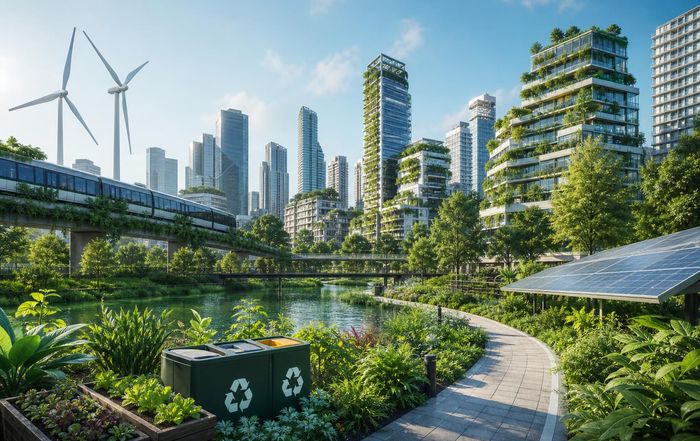
Sustainability Strategies for Growing Urban Areas
Urban Growth at a Turning Point
Across the world's rapidly expanding cities, a quiet transformation is taking place. Urban areas, once seen primarily as engines of economic growth and consumption, are increasingly being reimagined as laboratories for climate solutions, social innovation, and regenerative design. From compact European capitals to fast-growing Asian megacities and revitalizing North American downtowns, local governments, businesses, and citizens are experimenting with new sustainability strategies that seek to reconcile growth with planetary boundaries.
For outdoor loving individuals follow developments in sustainable living, recycling, plastic-free innovation, organic food, wildlife protection, and sustainable business, the evolution of cities is not an abstract planning issue; it is the setting for everyday choices, community engagement, and long-term environmental impact. Urban areas now house more than half of the world's population, and according to the United Nations Department of Economic and Social Affairs urbanization prospects, this share is projected to continue rising in coming decades, especially in Asia and Africa. How cities grow, build, move, feed themselves, and manage waste will shape the global climate trajectory, biodiversity outcomes, and public health for generations.
This article explores core sustainability strategies for growing urban areas, focusing on practical, evidence-based approaches that are already being implemented in cities across the United States, Europe, Asia, Africa, and beyond. It highlights how individuals, communities, and businesses can align with these strategies, and how platforms such as Eco Natur can help translate high-level policy into everyday action and inspiration.
Readers who wish to explore foundational concepts can find an introduction to sustainable living and broader sustainability principles on eco-natur.com.
Compact, Connected, and Nature-Positive Urban Design
One of the most important shifts in urban planning is the move away from car-dependent sprawl toward compact, connected, and nature-positive cities. Research from organizations such as C40 Cities and the International Transport Forum indicates that dense, mixed-use neighborhoods, when combined with high-quality public transport and active mobility infrastructure, can significantly reduce per capita emissions, infrastructure costs, and land consumption compared with low-density sprawl.
Cities like Paris, Barcelona, and Melbourne are experimenting with "15-minute city" and "20-minute neighborhood" concepts, where most daily needs can be met within a short walk or bike ride. Learn more about these approaches through resources from UN-Habitat and the World Resources Institute's Ross Center for Sustainable Cities. In Asia, Singapore continues to refine integrated land-use and transport planning, while in North America, cities such as Portland and Vancouver have long pursued compact growth strategies that align with climate goals.
At the same time, there is growing recognition that urban design must restore and protect biodiversity rather than simply accommodate human infrastructure. The Convention on Biological Diversity and the IUCN highlight the role of "nature-based solutions" in cities, such as restoring wetlands, daylighting rivers, and expanding tree canopy, to manage stormwater, reduce heat islands, and provide habitat corridors. The concept of "biophilic cities," championed by networks like Biophilic Cities, encourages urban planners to weave nature into streetscapes, buildings, and public spaces.
Readers interested in the intersection of urban development and ecosystems can explore more about biodiversity and wildlife protection strategies on Eco Natur, where these themes are connected to practical actions in neighborhoods and homes.
Sustainable Housing, Green Buildings, and Regenerative Design
As cities grow, the construction and operation of buildings represent a major share of energy use and emissions. According to the International Energy Agency, buildings account for a substantial portion of global final energy consumption and energy-related CO₂ emissions, when both operations and construction materials are considered. To address this, urban areas are increasingly adopting energy-efficient building codes, performance standards, and incentives for deep retrofits of existing stock.
Green building certification systems such as LEED from the U.S. Green Building Council, BREEAM in the United Kingdom, and DGNB in Germany have helped mainstream sustainable design practices, including high-performance envelopes, efficient HVAC systems, and responsible material sourcing. More recently, attention has turned to "embodied carbon" in construction materials such as cement and steel, with initiatives like the World Green Building Council's "Advancing Net Zero" campaign encouraging cities and companies to decarbonize building lifecycles.
In parallel, architects and designers are exploring regenerative and circular design principles, using natural materials such as mass timber, prioritizing adaptive reuse over demolition, and designing buildings that can be disassembled and reused at the end of their life. The Ellen MacArthur Foundation provides extensive analysis on circular economy strategies in the built environment, while design-focused organizations such as Architecture 2030 offer guidance on pathways to zero-carbon buildings.
Urban residents and businesses can support these shifts by choosing energy-efficient homes, advocating for building performance standards, and favoring renovation over new construction when possible. Eco Natur's page on design explores how regenerative design principles can be applied not only to large-scale projects but also to interiors, product choices, and everyday living spaces.
Low-Carbon Mobility and the Future of Urban Transport
Transport remains one of the most visible and contested aspects of urban sustainability. Congestion, air pollution, traffic injuries, and transport-related emissions are pressing challenges in many growing cities. The World Health Organization has repeatedly emphasized the health impacts of air pollution, much of which is linked to road traffic in urban areas, while the Intergovernmental Panel on Climate Change (IPCC) has identified transport decarbonization as a core component of climate mitigation pathways.
In response, cities worldwide are implementing integrated strategies that prioritize walking, cycling, and public transport, while carefully managing the role of private vehicles. European cities such as Amsterdam, Copenhagen, and Berlin continue to expand protected cycling networks and low-emission zones, supported by national policies in countries like Denmark, the Netherlands, and Germany. In Asia, Seoul and Tokyo have invested heavily in high-capacity public transport systems, while Bogotá and other Latin American cities have pioneered bus rapid transit (BRT) as a cost-effective alternative to new metro lines.
Electrification is another major trend. According to the International Energy Agency's Global EV Outlook, electric vehicle adoption has accelerated dramatically in markets such as China, Europe, and the United States, supported by policy incentives and declining battery costs. However, experts from organizations like the International Transport Forum caution that electrification alone cannot solve congestion or land-use challenges; it must be combined with mode shift to active and shared transport.
For individuals and businesses aligned with Eco Natur, supporting low-carbon mobility can mean choosing active or public transport where feasible, advocating for safe cycling infrastructure, and considering electric or shared vehicles when car use is necessary. Readers can connect these transport decisions to broader sustainable lifestyle choices that reduce environmental impact while improving health and community cohesion.
Circular Urban Economies: Waste, Recycling, and Zero Waste
Rapid urban growth often leads to mounting waste streams, from packaging and food waste to construction debris and electronic waste. A central pillar of sustainable urban strategy is the transition from a linear "take-make-dispose" model to circular economies where materials are kept in use for as long as possible, and waste is minimized through design, reuse, and high-quality recycling.
Cities such as San Francisco, Seoul, and Ljubljana have become reference points for ambitious waste reduction and recycling programs. San Francisco's zero waste policies, for example, include mandatory composting and recycling, producer responsibility measures, and bans on certain single-use plastics. The European Environment Agency documents how European Union directives on waste and packaging have driven higher recycling rates in countries like Germany, the Netherlands, and Sweden, though performance still varies significantly across member states.
The global conversation on plastic pollution has intensified, with negotiations under the auspices of the United Nations Environment Programme toward a legally binding international instrument on plastic pollution. Research from organizations such as The Pew Charitable Trusts and SYSTEMIQ indicates that a combination of upstream design changes, reuse models, and improved waste management is required to meaningfully reduce plastic leakage into oceans and ecosystems.
For Eco Natur readers, these developments connect directly to everyday choices around packaging, product selection, and participation in local recycling systems. The platform's guides on recycling, plastic-free living, and zero waste offer practical steps to align household and business practices with emerging circular economy principles. External resources from Zero Waste Europe, The Recycling Partnership, and WRAP UK provide additional region-specific insights.
Sustainable Food Systems, Organic Choices, and Urban Agriculture
Feeding growing urban populations sustainably is a challenge that spans climate, health, equity, and land-use. Global food systems are responsible for a significant share of greenhouse gas emissions, deforestation, and biodiversity loss, as documented by the Food and Agriculture Organization (FAO) and the IPCC. At the same time, urban residents face rising rates of diet-related diseases, and many low-income communities in both the Global North and South continue to experience food insecurity.
Cities are responding with integrated food policies that promote local and regional supply chains, healthy diets, and reduced food waste. Networks such as the Milan Urban Food Policy Pact bring together cities from all continents to share strategies on urban agriculture, farmers' markets, public procurement, and nutrition education. In North America and Europe, community-supported agriculture (CSA), farmers' markets, and organic certification schemes have become important channels for connecting urban consumers with more sustainable producers. In Asia, cities like Shanghai and Bangkok are exploring peri-urban agriculture and rooftop gardening, while in Africa, urban agriculture in cities such as Nairobi and Cape Town contributes to both livelihoods and food access.
Organic and agroecological farming practices are frequently highlighted by organizations such as IFOAM - Organics International and the UN Food Systems Summit processes as pathways to reduce chemical inputs, protect soil health, and support biodiversity. While scientific debate continues about yields and scalability in different contexts, there is growing consensus that shifting diets toward more plant-based foods and reducing food waste are among the most powerful levers for lowering the environmental footprint of food systems, as emphasized by institutions like the EAT-Lancet Commission.
For individuals and businesses following Eco Natur, choosing organic food when possible, supporting local producers, reducing meat consumption, and avoiding unnecessary packaging are tangible actions that align with these global trends. Additional guidance from organizations like Slow Food, WWF, and Harvard T.H. Chan School of Public Health can help connect sustainable food choices to health and climate outcomes.
Renewable Energy and Urban Decarbonization
Energy systems sit at the heart of sustainable urban development. As cities grow, their demand for electricity, heating, and cooling intensifies, but so does their capacity to drive the transition to renewable energy and efficient systems. The International Renewable Energy Agency (IRENA) and the IEA both document rapid growth in solar photovoltaics, wind power, and battery storage, accompanied by declining costs, which has made renewable energy increasingly competitive with fossil fuels in many markets.
Urban areas are leveraging these trends in multiple ways. Many cities, including New York, London, and Sydney, have set targets for 100 percent renewable electricity for municipal operations or even citywide consumption, often in partnership with utilities and regional authorities. District heating and cooling systems, common in parts of Europe and increasingly explored in Asia and North America, allow waste heat from industry or data centers, as well as geothermal and other renewable sources, to be used efficiently at scale. Building-level solutions such as rooftop solar, heat pumps, and energy storage are becoming more accessible to households and small businesses, supported by policies and incentives in countries such as Germany, the United States, and Australia.
The integration of renewable energy with smart grids, demand response, and digital management systems is another emerging frontier, with research and pilots supported by institutions like the Rocky Mountain Institute, Fraunhofer Institutes, and National Renewable Energy Laboratory (NREL). While there are still technical and regulatory challenges, especially regarding grid flexibility and equity of access, the direction of travel is clear: cities are central actors in the global clean energy transition.
Readers of Eco Natur can explore more about renewable energy and its role in sustainable living and business, including how household-scale installations, community energy projects, and procurement choices contribute to broader urban decarbonization efforts.
Health, Well-Being, and Social Equity in Sustainable Cities
Sustainability strategies for growing urban areas are not only about emissions and infrastructure; they are fundamentally about human well-being and fairness. The World Health Organization, in its work on healthy cities, emphasizes that access to clean air, safe water, green spaces, active mobility, and healthy food are core determinants of public health. Urban planning decisions that prioritize car traffic over pedestrians, or that concentrate polluting industries in low-income neighborhoods, have long-lasting health and social consequences.
The COVID-19 pandemic highlighted both the vulnerabilities and the resilience of urban systems, prompting renewed interest in local public spaces, active transport, and community networks. Many cities temporarily reallocated road space to pedestrians and cyclists, and some of these changes have since been made permanent. At the same time, the pandemic exposed deep inequalities in housing, employment, and access to healthcare, reinforcing the need for inclusive urban policy.
Equity-focused sustainability strategies include ensuring that low-income households benefit from energy efficiency programs, that affordable housing is accessible near public transport, and that green spaces are equitably distributed across neighborhoods. Organizations such as The New Urban Agenda under UN-Habitat, The World Bank, and OECD provide policy guidance on inclusive urban development. Civil society groups, from local environmental justice organizations in the United States to community-based planning groups in Latin America, Europe, and Asia, play a crucial role in holding governments and businesses accountable.
For nature, nurturing people coming, here, this dimension of sustainability connects directly to personal and community health. The site's focus on health and sustainable living underscores how choices about housing, mobility, food, and consumption intersect with mental and physical well-being, and how advocating for fair and healthy environments is part of a holistic sustainability ethic.
Sustainable Business, Green Jobs, and the Urban Economy
Growing urban areas are also economic hubs, where businesses, startups, and financial institutions increasingly recognize that sustainability is not merely a compliance issue but a core driver of innovation, resilience, and competitive advantage. The rise of environmental, social, and governance (ESG) investing, the proliferation of corporate net-zero pledges, and evolving regulations in regions such as the European Union, the United Kingdom, and parts of North America and Asia reflect this shift.
Organizations such as the World Business Council for Sustainable Development, CDP, and the Task Force on Climate-related Financial Disclosures (TCFD) have helped standardize how companies measure and report climate and environmental risks. At the urban level, green jobs are expanding in sectors such as renewable energy, building retrofits, sustainable mobility, circular economy services, and ecosystem restoration. The International Labour Organization (ILO) notes that a well-managed green transition can create net employment gains, though it also stresses the importance of just transition policies to support workers in high-carbon sectors.
Cities such as London, Berlin, San Francisco, and Shenzhen are home to clusters of cleantech startups and social enterprises, while financial centers in New York, Frankfurt, Singapore, and Hong Kong are increasingly involved in green bonds and sustainable finance. In the Global South, urban innovation hubs in cities like Nairobi, Cape Town, São Paulo, and Bangalore are pioneering locally appropriate solutions, from off-grid solar to circular fashion.
Eco Natur's focus on sustainable business and the green economy offers caring people insight into how enterprises of all sizes can align with these trends, from adopting science-based targets and circular product design to engaging employees and customers in meaningful sustainability initiatives. External resources from OECD, UNEP Finance Initiative, and Global Reporting Initiative (GRI) can further guide businesses seeking to embed sustainability into core strategy rather than treating it as an add-on.
Citizen Engagement, Digital Tools, and Local Action
While policies, technologies, and business models are essential, the success of sustainability strategies in growing urban areas ultimately depends on citizen engagement and cultural change. Around the world, residents are shaping their cities through community gardens, repair cafés, neighborhood energy cooperatives, participatory budgeting processes, and local environmental campaigns. These initiatives not only reduce environmental footprints but also strengthen social ties and democratic participation.
Digital tools are amplifying this engagement. Open data platforms, mobile apps, and online participation portals allow citizens to track air quality, report issues, co-design public spaces, and monitor progress on climate and sustainability commitments. Cities such as Barcelona, Helsinki, and Taipei have become known for digital democracy experiments, while global networks like ICLEI - Local Governments for Sustainability and C40 Cities provide frameworks and peer learning opportunities for local governments and civil society.
For a growing audience, including readers in the United States, Europe, Asia, Africa, and the Americas, platforms like Eco Natur serve as bridges between global frameworks and local action. By curating stories of successful initiatives, offering practical guides on topics from sustainable living to recycling and plastic-free lifestyles, and connecting individuals with resources and organizations, eco-natur.com helps translate complex sustainability agendas into accessible, inspiring pathways.
Additional external resources such as UN-Habitat's Urban Agenda, The World Resources Institute, The New Climate Economy, and The Cities Alliance provide further analysis on how citizen engagement and governance reforms can accelerate sustainable urban transformation.
A Shared Urban Future: From Vision to Practice
As the world moves deeper into the 2020s, growing urban areas stand at a crossroads. The same forces that drive urbanization-economic opportunity, innovation, and cultural exchange-can either intensify environmental degradation and social inequality or be harnessed to create healthier, more resilient, and more just cities. The strategies outlined above-compact and nature-positive design, efficient and regenerative buildings, low-carbon mobility, circular economy practices, sustainable food systems, renewable energy, health and equity integration, and sustainable business-are not isolated solutions; they are interconnected components of a holistic urban transformation.
The experience of leading cities in North America, Europe, Asia, Africa, and Latin America demonstrates that progress is possible, though not always linear, and that context matters. What works in Copenhagen may need adaptation for Lagos or Jakarta, and policy instruments that succeed in Germany or Canada may require different approaches in Brazil or South Africa. However, certain principles are widely applicable: prioritize people and nature over cars and short-term profit, design for long-term resilience, involve communities in decision-making, and align economic incentives with environmental and social goals.
For community here built around respect for the environment, the task is both practical and hopeful. By making informed choices about energy, mobility, food, waste, and consumption, individuals and businesses contribute to broader urban sustainability trends. By supporting policies and leaders committed to climate action, biodiversity protection, and social equity, citizens help shape the direction of their cities. And by sharing stories of innovation and collaboration, platforms like eco-natur.com help build a culture in which sustainable urban living is not a niche aspiration but a widely shared norm.
Readers who wish to deepen their understanding of global trends can explore international perspectives through organizations such as the United Nations Environment Programme, IPCC, World Bank, and OECD, while returning to Eco Natur's home page for ongoing inspiration, guidance, and community. In this way, the evolving story of sustainable cities becomes not only a matter of policy and infrastructure but also a collective journey toward a thriving, regenerative urban future.
