
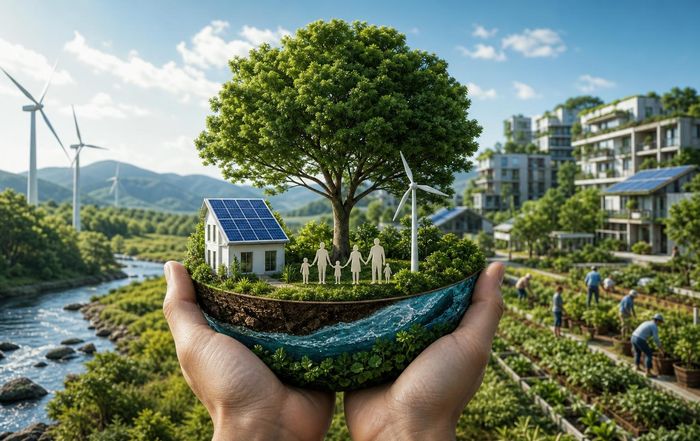
How Climate Resilience Strengthens Sustainable Communities
Climate Resilience as the Next Chapter of Sustainability
Across continents and cultures, the conversation about sustainability has evolved from reducing harm to actively building systems that can endure and adapt. Climate resilience has moved to the center of this transformation. Rather than focusing only on lowering emissions, communities, businesses and policymakers are increasingly asking how homes, cities, food systems and economies can withstand climate shocks while continuing to protect people and nature.
For Eco Natur, whose readers are deeply engaged with sustainable living, the rise of climate resilience is not a departure from familiar concerns such as plastic reduction, recycling or organic food; it is a framework that weaves these priorities into a more robust, future-proof vision of community life. Around the world, from coastal villages in Southeast Asia to urban neighborhoods in Europe and North America, the most inspiring examples of climate action are those that combine emissions reductions with targeted efforts to adapt, restore ecosystems and safeguard livelihoods.
International scientific assessments, including those of the Intergovernmental Panel on Climate Change (IPCC), emphasize that some climate impacts are now unavoidable due to past emissions, even under ambitious mitigation scenarios. Readers can explore the latest consensus in the IPCC's synthesis reports on the official IPCC website. This reality has accelerated the shift toward resilience: preparing for heatwaves, floods, droughts, wildfires and sea-level rise, while ensuring that the transition is fair, inclusive and compatible with long-term ecological health.
In this context, climate resilience is not a niche technical term. It is becoming the backbone of sustainable communities, shaping how neighborhoods are designed, how food is grown, how energy is generated, how economies function and how people live together on a warming planet.
Defining Climate Resilience in a Community Context
Climate resilience, as described by organizations such as the United Nations Environment Programme (UNEP) and the World Resources Institute (WRI), refers to the capacity of social, economic and environmental systems to anticipate, absorb, adapt to and recover from climate-related hazards in ways that maintain or even enhance essential functions. Unlike traditional disaster response, which often focuses on emergency relief after an event, resilience emphasizes preparation, learning and transformation before, during and after climate shocks.
At the community level, this means that climate resilience is not simply a matter of building higher sea walls or installing more air conditioners. It entails strengthening local governance, improving infrastructure, preserving ecosystems, investing in public health, diversifying local economies and ensuring that vulnerable groups have a voice in decision-making. Readers who wish to understand how these elements come together in practice can explore case studies from UN-Habitat on resilient cities and communities.
For a platform like eco-natur, which already highlights the interconnectedness of sustainability, biodiversity, health and the economy, climate resilience offers a unifying lens. A resilient community is one in which sustainable living is not an individual lifestyle choice alone, but a collective strategy to safeguard shared futures.
The Science of Risk and the Case for Local Action
Climate science has become increasingly granular, allowing communities to understand specific local risks rather than relying solely on global averages. Agencies such as the U.S. National Oceanic and Atmospheric Administration (NOAA) provide high-resolution data on sea-level rise, extreme precipitation and heatwaves, accessible through tools like the NOAA Climate Data Online portal. Similar services are offered by Copernicus Climate Change Service in Europe, which provides detailed datasets and projections at the Copernicus Climate website.
These tools reveal patterns that are highly relevant to the countries and regions that matter most to Eco Natur's audience. Coastal communities in the United States, the United Kingdom, Germany, the Netherlands and parts of Asia are confronting more frequent flooding and storm surges. Cities in Australia, Southern Europe, South Africa and Brazil face escalating heat stress and wildfire risks. Agricultural regions in Canada, China, India and the Mediterranean basin are grappling with shifting rainfall patterns and prolonged droughts that threaten food security.
In response, many municipalities and regions are adopting local climate adaptation plans, often supported by national or regional frameworks. For example, the European Environment Agency (EEA) documents adaptation strategies across Europe, which can be explored through its climate change adaptation platform. These strategies typically combine infrastructure upgrades, nature-based solutions, public awareness campaigns and policy reforms.
The scientific consensus is clear that early, well-designed adaptation efforts are significantly more cost-effective than reactive disaster recovery. Analyses by the Global Commission on Adaptation, hosted by the Global Center on Adaptation, indicate that investments in climate resilience can yield multiple times their cost in avoided damages and co-benefits, such as better health and higher productivity. Readers can delve into these findings on the Global Center on Adaptation website.
Nature-Based Solutions: Protecting Wildlife while Protecting People
One of the most powerful ways in which climate resilience strengthens sustainable communities is through nature-based solutions that simultaneously protect people and wildlife. Instead of relying solely on concrete infrastructure, communities are restoring wetlands, dunes, mangroves, forests and urban green spaces to buffer climate impacts.
Research from organizations such as The Nature Conservancy and WWF shows that healthy ecosystems can significantly reduce flood risks, moderate heat, stabilize coastlines and maintain water quality. Learn more about the role of natural infrastructure in climate adaptation through resources from The Nature Conservancy and WWF's climate initiatives.
For readers of Eco Natur who care deeply about wildlife conservation, this is a particularly inspiring development. Restored wetlands can provide vital habitat for migratory birds while absorbing storm surges. Urban tree planting projects can offer corridors for biodiversity while reducing urban heat islands and improving air quality. Rewilding initiatives in parts of Europe and North America, documented by organizations such as Rewilding Europe, are demonstrating how large-scale ecosystem restoration can help store carbon, regulate water cycles and create new eco-tourism opportunities, which in turn support local economies; more information is available at Rewilding Europe's website.
In coastal regions of Southeast Asia and Africa, mangrove restoration has become a flagship example of integrated resilience. Studies compiled by the International Union for Conservation of Nature (IUCN) show that mangroves can reduce wave energy, protect shorelines, support fisheries and sequester substantial amounts of carbon. Readers can explore these findings on IUCN's nature-based solutions page. These projects demonstrate that climate resilience does not have to come at the expense of nature; in many cases, it is strongest when ecosystems are allowed to recover and flourish.
Sustainable Living as Everyday Climate Adaptation
At the scale of households and neighborhoods, the habits and choices associated with sustainable living are increasingly recognized as building blocks of climate resilience. Simple actions such as water conservation, home insulation, urban gardening, composting and community sharing networks can collectively reduce vulnerability to climate shocks and resource disruptions.
For example, communities that invest in local food systems-through community-supported agriculture, farmers' markets, rooftop gardens and regenerative farming-tend to be more resilient to supply chain disruptions and price volatility. The Food and Agriculture Organization of the United Nations (FAO) has documented how agroecological and regenerative practices can improve soil health, increase yields under climate stress and reduce dependence on synthetic inputs; these insights can be explored on the FAO climate change and agriculture pages. For Eco Natur readers interested in how this intersects with daily choices, the platform's focus on organic food aligns closely with these resilience-oriented agricultural practices.
Similarly, home energy efficiency and decentralized renewable energy systems can help households cope with heatwaves, cold snaps and power outages. Organizations such as the International Renewable Energy Agency (IRENA) provide evidence that distributed solar and storage systems can enhance grid resilience while cutting emissions, as detailed on the IRENA website. Readers who wish to explore how clean energy contributes to community resilience can find additional perspectives in Eco Natur's coverage of renewable energy.
Sustainable living also encompasses mental and social resilience. Community gardens, repair cafés, tool libraries and local mutual aid networks strengthen social ties, which research consistently identifies as a critical factor in surviving and recovering from disasters. The American Psychological Association (APA) and other professional bodies have highlighted that social cohesion, a sense of agency and shared purpose can mitigate the psychological impacts of climate-related stress and trauma. More information on climate and mental health is available via the APA's climate change resources.
By presenting sustainable living not just as a moral obligation but as a practical strategy for resilience, Eco Natur helps its readers see their everyday choices as part of a broader community safety net.
The Circular Economy: Recycling and Plastic-Free Pathways to Resilience
Climate resilience is also closely tied to how societies manage materials and waste. A community that depends heavily on long, fragile supply chains and single-use products is more exposed to disruptions than one that embraces circularity, recycling and reuse.
The Ellen MacArthur Foundation has played a pivotal role in articulating the concept of the circular economy, in which products and materials are kept in use for as long as possible, waste is designed out and natural systems are regenerated. Their reports, accessible at the Ellen MacArthur Foundation website, highlight how circular strategies can reduce emissions, create jobs and improve resource security.
From a resilience standpoint, robust recycling systems, local remanufacturing, repair infrastructure and plastic-free alternatives reduce dependence on virgin materials and international shipments that can be disrupted by extreme weather, geopolitical tensions or pandemics. This is particularly relevant to Eco Natur's ongoing focus on recycling and plastic-free living. Communities that reduce single-use plastics also lower the risk of blocked drainage systems and polluted waterways, which can exacerbate flood damage and harm coastal protection ecosystems.
Evidence from cities in Europe, North America and Asia shows that well-designed zero-waste programs, deposit-return schemes and extended producer responsibility policies can significantly increase recycling rates and reduce litter. Organizations such as Zero Waste Europe and Break Free From Plastic publish case studies demonstrating that these policies can be implemented without sacrificing economic vitality; their findings can be explored via Zero Waste Europe and Break Free From Plastic.
Eco Natur's own emphasis on zero-waste principles places its community at the forefront of this transition. By normalizing repair, reuse and thoughtful consumption, the platform helps readers cultivate habits that make communities less brittle in the face of shocks.
Sustainable Business and a Resilient Green Economy
Climate resilience is not only a local or household concern; it is reshaping global markets and business models. Companies across sectors are recognizing that unmanaged climate risks can disrupt supply chains, damage assets, increase insurance costs and erode consumer trust. At the same time, investments in resilience can open new opportunities for innovation, job creation and long-term value.
Frameworks such as the Task Force on Climate-related Financial Disclosures (TCFD), now integrated into broader sustainability reporting standards overseen by the International Sustainability Standards Board (ISSB), encourage businesses to assess and disclose both physical and transition risks related to climate change. These frameworks can be explored through the IFRS sustainability standards site. Financial regulators in jurisdictions including the United States, the United Kingdom, the European Union and several Asia-Pacific countries are incorporating climate risk into supervisory expectations, making resilience a matter of fiduciary responsibility rather than voluntary goodwill.
At the same time, sustainable business models that prioritize long-term resilience are gaining traction. Enterprises that invest in energy efficiency, renewable energy, regenerative agriculture, circular product design and nature-based solutions are better positioned to withstand disruptions and regulatory changes. The World Business Council for Sustainable Development (WBCSD) documents how leading companies are integrating resilience into their strategies, accessible through the WBCSD website.
For Eco Natur's audience, which is increasingly interested in sustainable business practices and the broader green economy, this shift underscores that climate resilience is not a drag on competitiveness. Instead, it is becoming a hallmark of forward-looking organizations. Small and medium-sized enterprises, social enterprises and community cooperatives are often at the forefront of this change, demonstrating how local production, fair labor practices and ecological stewardship can reinforce one another.
In emerging markets and developing regions, climate-resilient business models are also critical for poverty reduction and inclusive growth. Institutions such as the World Bank and regional development banks are increasingly channeling finance into projects that combine mitigation, adaptation and social benefits, as described on the World Bank climate change portal. These investments support resilient infrastructure, climate-smart agriculture, sustainable forestry and clean energy access, demonstrating that resilience can be a driver of equitable development.
Health, Equity and the Human Dimension of Resilience
Climate resilience is ultimately about people: their health, safety, dignity and ability to pursue meaningful lives. Heatwaves, floods, droughts and storms do not affect everyone equally; their impacts are shaped by existing inequalities in income, housing quality, healthcare access and political representation. Public health institutions such as the World Health Organization (WHO) warn that climate change is already affecting disease patterns, air quality, water safety and nutrition, particularly for the most vulnerable populations. Readers can explore these dynamics through the WHO climate and health pages.
Sustainable communities that invest in resilience therefore pay close attention to equity. This includes ensuring that early warning systems reach all residents, that evacuation and recovery plans consider the needs of older people, children, people with disabilities and marginalized groups, and that adaptation investments do not displace vulnerable communities. The concept of "just resilience," increasingly discussed in policy circles, emphasizes that resilience strategies should reduce rather than entrench social inequalities.
For Eco Natur, whose content often connects environmental issues with health and well-being, this is a crucial message. Green infrastructure, clean energy, safe housing, accessible public transport and high-quality public spaces can simultaneously reduce climate risks and improve everyday quality of life. The Lancet Countdown on Health and Climate Change regularly publishes assessments showing that climate action can deliver substantial co-benefits for health by reducing air pollution, promoting active transport and improving diets; these findings are available at the Lancet Countdown website.
Mental health is another key dimension. As climate-related disasters become more frequent and media coverage more intense, many people experience anxiety, grief or a sense of helplessness. Community-based resilience initiatives that foster connection, shared purpose and visible progress can help counter these feelings. Eco Natur's focus on sustainable lifestyles and community engagement provides a platform for highlighting stories of agency and hope, which are essential ingredients of psychological resilience.
Global Collaboration and Local Leadership
While climate impacts are highly local, the knowledge, finance and technologies required to build resilience circulate globally. International agreements under the United Nations Framework Convention on Climate Change (UNFCCC), including commitments on adaptation and loss and damage, aim to support vulnerable countries and communities in strengthening their resilience. Information about these processes can be found on the UNFCCC website.
At the same time, networks of cities, regions and civil society organizations are sharing best practices and scaling up successful approaches. Initiatives such as the C40 Cities Climate Leadership Group and the Global Covenant of Mayors for Climate & Energy highlight urban climate resilience strategies, including cooling plans, flood-resilient infrastructure and inclusive adaptation policies. Their work can be explored at C40 Cities and the Global Covenant of Mayors.
For a globally oriented platform like eco-natur, which addresses readers across Europe, North America, Asia, Africa and South America, these collaborative efforts illustrate that climate resilience is a shared endeavor. Communities in Denmark and Singapore, South Africa and Brazil, Japan and New Zealand may face different specific hazards, but they can learn from one another's experiences and innovations.
Local leadership remains indispensable. The most successful resilience initiatives are grounded in local knowledge, culture and priorities. Indigenous communities, for example, often possess detailed understanding of ecosystems and climate patterns that can inform adaptation strategies, as recognized by organizations such as the UN Permanent Forum on Indigenous Issues and documented on the UNPFII site. Grassroots organizations, youth groups and neighborhood associations play critical roles in mobilizing volunteers, disseminating information and holding authorities accountable.
Eco Natur, by curating stories and resources from around the world on global environmental change and local solutions, helps bridge these scales, showing readers that their own actions are part of a much larger tapestry of resilience.
A Shared Path Forward for Eco Natur's Community
As the world moves deeper into the decisive decades for climate action, the integration of resilience into sustainable living, business and policy is becoming a defining feature of forward-looking communities. Climate resilience strengthens sustainable communities by making them safer, more equitable, more self-reliant and more connected to the natural systems that sustain life.
For the Eco Natur community, this means that familiar priorities-reducing plastic waste, supporting organic food, protecting wildlife, promoting recycling and advocating for sustainable business-are not isolated causes. They are interlocking pieces of a resilient future in which neighborhoods can withstand shocks without sacrificing their values or vitality.
By continuing to highlight practical guidance on sustainable living, thought leadership on sustainability, insights into the evolving green economy and inspiring stories of communities that are turning challenges into opportunities, Eco Natur can help readers not only understand climate resilience but actively build it where they live and work.
In doing so, the platform affirms a profoundly hopeful message: that even in an era of rapid environmental change, communities have the capacity to adapt, to protect what they cherish and to create new forms of prosperity that honor both people and the planet.
