
How Transportation Choices Are Reshaping Carbon Footprints in 2026
Transportation at the Heart of the Climate and Business Agenda
In 2026, transportation has moved from being a background contributor to climate change to a central focus of climate policy, business strategy, and personal lifestyle decisions, and for the global audience of eco-natur.com, it now represents one of the most tangible levers for aligning everyday behavior with long-term sustainability goals. The Intergovernmental Panel on Climate Change (IPCC) continues to underline that transport is responsible for roughly a quarter of global energy-related COâ emissions, with cars, vans, trucks, ships, and planes collectively shaping the climate trajectory of economies in North America, Europe, Asia, Africa, and South America. For many households and companies, transport has become the single largest and most visible component of their carbon footprint, surpassing even heating and electricity in some regions, which means that every decision about commuting, logistics, and travel has become a strategic choice rather than a passive habit.
As governments strengthen or refine their net-zero commitments under the Paris Agreement, transportation is being re-examined through the lenses of resilience, competitiveness, and health as much as through emissions accounting. The United States, the United Kingdom, Germany, Canada, Australia, France, Japan, South Korea, and the European Union as a whole have all introduced or updated policies to phase out internal combustion engine vehicles over the coming decades, expand electric charging infrastructure, and invest in low-carbon public transport. China, now the world's largest market for electric vehicles and high-speed rail, is reshaping global supply chains and standards, while emerging economies in Africa, Southeast Asia, and South America face the dual challenge of expanding mobility access without locking in high-carbon systems. For eco-natur.com, whose readers are already engaged with sustainable living and climate-conscious decision-making, this global realignment highlights that transportation is no longer just about moving people and goods efficiently; it is about redefining what responsible, future-proof mobility looks like in a carbon-constrained world.
Comparing Modes: Understanding the Real Climate Cost of Mobility
Effective action begins with a clear understanding of how different modes of transport compare in terms of emissions, resource use, and long-term impacts, and in 2026 these comparisons have become more nuanced as life-cycle data and real-world performance metrics have improved. Analyses from the International Energy Agency (IEA) show that conventional petrol and diesel cars still rank among the most carbon-intensive ways to move a single person, particularly when they carry only one occupant, which remains common in many cities across the United States, Canada, Australia, and parts of Europe. By contrast, electric rail, modern metro systems, and well-utilized buses typically emit far less COâ per passenger-kilometer, especially when powered by grids that are increasingly supplied by wind, solar, and other low-carbon sources; readers interested in the broader systemic context can explore how transport fits within a holistic understanding of sustainability that includes land use, energy, and economic structures.
Public agencies such as the U.S. Environmental Protection Agency (EPA) and the European Environment Agency (EEA) now provide more detailed emission factors and tools that allow individuals and companies to estimate their transport footprint with increasing precision, while independent platforms like Our World in Data and the International Transport Forum present comparative data across countries and modes. These resources reinforce a hierarchy of climate-friendly mobility: walking and cycling at the top, followed by public transport and shared mobility, then electric vehicles, with fossil-fuel private cars and frequent air travel representing the highest-carbon options. There is no single perfect solution, but there is a clear gradient of impact, and for readers of eco-natur.com, this gradient offers a practical framework for aligning mobility decisions with the principles of sustainable lifestyle choices and long-term environmental responsibility.
Walking and Cycling: The Human-Centered Core of Low-Carbon Transport
At the foundation of low-carbon mobility, walking and cycling remain the most climate-friendly, health-promoting, and space-efficient modes available, and in 2026 they are increasingly recognized as strategic infrastructure rather than marginal amenities. Cities such as Copenhagen, Amsterdam, Utrecht, and more recently Paris, Berlin, and Barcelona have demonstrated that when protected bike lanes, traffic-calmed streets, and pedestrian-priority zones are implemented at scale, cycling and walking can capture a substantial share of daily trips, especially those under three to five kilometers that dominate urban travel patterns. The World Health Organization (WHO) continues to highlight that active transport reduces the incidence of non-communicable diseases, improves mental health, and cuts healthcare expenditures, while also lowering greenhouse gas emissions and local air pollutants such as NOx and particulate matter.
For professionals and families aiming to embed sustainability into daily routines rather than treating it as an occasional project, walking and cycling offer a direct bridge between personal well-being and environmental stewardship, resonating with the integrated view of health and ecology presented on eco-natur.com. In dense neighborhoods in the United Kingdom, Germany, France, the Netherlands, and increasingly in cities like New York, Vancouver, Melbourne, Singapore, and Seoul, a large proportion of short trips can realistically shift from cars to active modes if safe infrastructure, secure parking, and supportive policies are in place. Employers who provide bike storage, showers, flexible dress codes, and incentives for employees who walk or cycle are not merely offering perks; they are actively reducing Scope 3 emissions and reinforcing a culture of sustainability that complements other initiatives such as eco-natur.com's focus on organic food systems and workplace wellness. Evidence from organizations like Sustrans in the UK and the European Cyclists' Federation suggests that such measures also correlate with higher employee satisfaction and productivity, demonstrating that the most climate-friendly modes can also be among the most economically beneficial.
Public Transport: Scaling Low-Carbon Mobility Across Regions
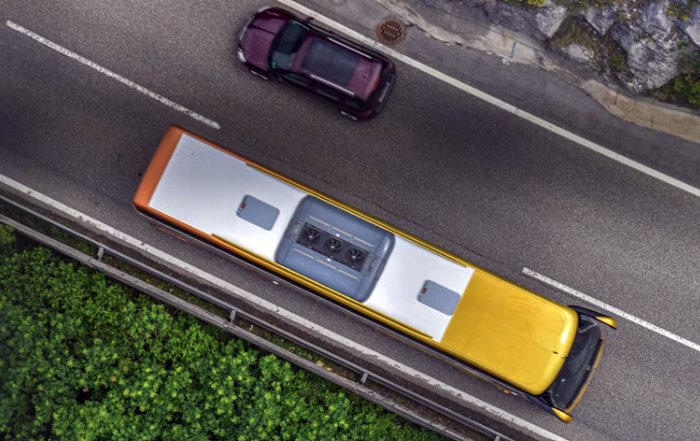
Public transport has emerged as one of the most powerful and scalable tools for reducing per-capita transport emissions, particularly in metropolitan regions where congestion, air pollution, and housing pressures intersect. Integrated systems that combine buses, trams, metro lines, commuter rail, and regional services can move vast numbers of people with far lower emissions per passenger-kilometer than private vehicles, especially when fleets are electrified or powered by low-carbon fuels. The International Association of Public Transport (UITP) and the World Bank have documented how sustained investment in high-capacity transit not only cuts emissions but also supports compact urban development, reduces travel times, and enhances economic productivity by improving access to jobs and services.
In countries such as Japan, South Korea, and Singapore, long-standing investments in rail and bus networks, integrated ticketing, and transit-oriented development have created systems where public transport is the default choice for most urban trips, while China's rapidly expanding metro and high-speed rail networks are reshaping mobility patterns across entire regions. Meanwhile, cities in the United States, Canada, Australia, and parts of Europe are accelerating bus rapid transit corridors, tram extensions, and suburban rail upgrades, often supported by climate-focused funding and green bonds. For the business readership of eco-natur.com, public transport is increasingly seen as a strategic asset: organizations that locate offices near transit hubs, offer transit passes, and design commuting policies around low-carbon options can meaningfully reduce their reported emissions and enhance their attractiveness to employees who prioritize environmental values. Those seeking to embed such measures into broader corporate planning can explore eco-natur.com's guidance on sustainable business strategies, where mobility is treated as a core dimension of environmental, social, and governance performance rather than a peripheral operational concern.
Electric Vehicles in 2026: Progress, Trade-Offs, and System Integration
By 2026, electric vehicles (EVs) have moved from early adoption to mainstream consideration in many markets, yet their role in decarbonizing transport is more complex than simple replacement narratives often suggest. Reports from the International Energy Agency, the International Council on Clean Transportation (ICCT), and independent academic studies consistently show that, on a life-cycle basis, battery-electric cars and vans emit significantly less COâ than internal combustion engine vehicles, particularly in countries where electricity grids are rapidly decarbonizing through wind, solar, hydro, and nuclear power. This is evident in markets such as Norway, Sweden, France, the United Kingdom, Germany, Canada, and parts of the United States, where the combination of cleaner grids and supportive policies has led to substantial emissions reductions per kilometer driven; readers interested in how renewable power underpins this shift can explore the role of renewable energy in the broader energy transition.
However, the sustainability profile of EVs depends on factors that extend beyond tailpipe emissions, including battery manufacturing, mining of critical minerals such as lithium, cobalt, and nickel, and end-of-life management. Automakers such as Tesla, BYD, Volkswagen, Hyundai, and Stellantis are investing heavily in battery efficiency, alternative chemistries, and supply-chain transparency, while regulatory frameworks in the European Union, the United States, and China are tightening requirements for responsible sourcing and battery recycling. Organizations like the Ellen MacArthur Foundation and the World Resources Institute (WRI) emphasize that integrating EVs into a broader circular economy is crucial to avoid shifting environmental burdens from use-phase emissions to upstream extraction and waste. For individuals and fleet managers, credible resources such as Consumer Reports, Transport & Environment, and Green NCAP provide independent assessments of vehicle efficiency, life-cycle impacts, and charging infrastructure, enabling more informed purchasing decisions that align climate objectives with financial and operational realities. Within the perspective of eco-natur.com, EVs are best understood not as a standalone solution but as one component of an integrated mobility strategy that prioritizes walking, cycling, public transport, and trip reduction wherever possible.
Aviation, Business Travel, and the New Norms of Connectivity
Aviation remains one of the most challenging sectors to decarbonize, and in 2026 its climate impact is scrutinized more closely than ever by regulators, investors, and climate-conscious travelers. Long-haul flights, particularly in premium cabins, generate disproportionately high emissions per passenger, and while the International Air Transport Association (IATA) and the Air Transport Action Group (ATAG) have articulated net-zero roadmaps involving more efficient aircraft, sustainable aviation fuels (SAF), and future hydrogen or electric propulsion for short-haul routes, independent analysis indicates that technology and fuel substitutions alone will not be sufficient in the near to medium term. Research from the ICCT, the International Council for Clean Transportation, and universities across Europe and North America suggests that demand management-reducing unnecessary flights, shifting to rail where feasible, and optimizing routes-will be essential to align aviation with global climate goals.
The shift toward remote collaboration, catalyzed by the COVID-19 pandemic and now embedded in corporate culture, has fundamentally altered expectations around business travel. Leading firms such as Microsoft, Salesforce, and Unilever have formalized policies that limit non-essential flights, integrate travel emissions into internal carbon pricing, and prioritize virtual meetings or rail travel for regional engagements, particularly in Europe and parts of Asia where high-speed rail networks offer competitive door-to-door times. For the global readership of eco-natur.com, especially those operating across the United States, United Kingdom, Germany, France, Spain, Italy, the Netherlands, China, Japan, Singapore, and beyond, rethinking travel norms aligns with a broader global sustainability perspective, where the necessity of each trip is weighed against its climate impact, available alternatives, and the organization's long-term resilience strategy. As voluntary carbon markets and offset schemes come under increasing scrutiny from organizations like the Integrity Council for the Voluntary Carbon Market, the emphasis is shifting from compensating for flight emissions to avoiding them where possible, reinforcing the principle that the lowest-carbon mile is the one not flown.
Freight, E-Commerce, and the Hidden Transport Footprint of Everyday Consumption
While passenger mobility attracts much of the public attention, freight and logistics represent a substantial and growing share of global transport emissions, driven by the rise of e-commerce, just-in-time manufacturing, and complex international supply chains. Analyses from the World Bank, the OECD, and the International Transport Forum show that heavy-duty trucks, ships, and air cargo collectively contribute significantly to global greenhouse gas emissions and local air pollution, particularly along major corridors in North America, Europe, China, India, Brazil, and Southeast Asia. For readers of eco-natur.com who are committed to plastic-free and zero-waste lifestyles, it is increasingly clear that the environmental impact of a product is shaped not only by its materials and packaging but also by the distance it travels, the mode used, and the speed of delivery promised.
Innovative logistics models are emerging to tackle this challenge. Urban consolidation centers, cargo-bike delivery networks, and micro-fulfilment hubs are being implemented in cities like London, Amsterdam, Paris, and Singapore, often in partnership with major logistics companies such as DHL, UPS, and Maersk, which are experimenting with electric vans, hydrogen trucks, and alternative fuels for ships. Digital optimization tools, powered by artificial intelligence and real-time data, are reducing empty runs, improving load factors, and cutting fuel consumption, while regulatory frameworks in the European Union and some U.S. states are beginning to set efficiency and emissions standards for freight vehicles. Organizations like the World Resources Institute and the Smart Freight Centre provide guidance for companies seeking to decarbonize logistics, from procurement policies and supplier selection to packaging design and reverse logistics. For businesses and consumers aligned with eco-natur.com's ethos, asking how goods move-choosing slower, consolidated shipping, supporting local producers, and favoring companies with transparent logistics strategies-has become an integral part of responsible consumption, on par with recycling effectively and minimizing single-use plastics.
Urban Design and Infrastructure: Locking In or Liberating Future Mobility
Transportation choices are deeply shaped by the built environment, and by 2026 it is widely recognized that urban design and infrastructure investment will either lock in high-carbon mobility patterns for decades or enable low-carbon alternatives to flourish. Compact, mixed-use neighborhoods, where homes, workplaces, schools, and essential services are located within walking or cycling distance, naturally reduce the need for long car journeys and support efficient public transport, while sprawling, car-dependent suburbs make high-carbon travel the default. The concept of the "15-minute city," popularized in Paris and explored in cities such as Melbourne, Barcelona, Portland, and Milan, encapsulates this vision of proximity-based living, where most daily needs can be met within a short walk or bike ride, thereby reducing emissions, improving quality of life, and enhancing social cohesion.
Urban planners and policymakers can draw on a growing body of evidence from organizations such as the C40 Cities Climate Leadership Group, UN-Habitat, and the World Resources Institute Ross Center for Sustainable Cities, which document best practices in transit-oriented development, pedestrianization, and street redesign. For eco-natur.com, which consistently highlights the interplay between thoughtful design, ecology, and human health, these urban transformations demonstrate that infrastructure decisions are, in effect, climate decisions. In rapidly urbanizing regions of Asia, Africa, and South America-such as Nigeria's megacities, India's tier-two cities, and Brazil's expanding metropolitan regions-the stakes are particularly high, as choices about road networks, metro investments, and land-use zoning will determine not only emissions trajectories but also resilience to heatwaves, flooding, and other climate impacts. Aligning transport planning with sustainable living principles thus becomes a central task for city leaders, developers, and communities seeking to create environments where low-carbon mobility is convenient, safe, and aspirational rather than restrictive.
Mobility, Wildlife, Biodiversity, and Public Health
Transportation systems do more than emit greenhouse gases; they reshape landscapes, fragment habitats, and influence public health in profound and often unequal ways, and in 2026 these broader impacts are increasingly integrated into mobility debates. Road and rail corridors that cut through forests, wetlands, and grasslands can disrupt wildlife movement, increase mortality, and degrade ecosystems, while associated noise, light, and chemical pollution further stress biodiversity. Organizations such as the International Union for Conservation of Nature (IUCN) and WWF have documented how infrastructure expansion in biodiversity hotspots-from the Amazon and the Congo Basin to Southeast Asian rainforests and European Natura 2000 sites-poses significant risks to species and ecosystem services. For readers engaged with wildlife protection and biodiversity conservation, low-carbon transport strategies that prioritize existing corridors, favor rail and public transport over new highways, and incorporate ecological impact assessments and wildlife crossings are essential components of a genuinely sustainable mobility agenda.
From a human health standpoint, the burden of transport-related air pollution remains substantial, particularly in densely populated urban areas and along major freight corridors. The World Health Organization and national health agencies in the United States, United Kingdom, Germany, India, China, and South Africa continue to document links between traffic emissions and respiratory illnesses, cardiovascular disease, premature deaths, and reduced cognitive development in children. Noise pollution from roads, airports, and railways also affects sleep, stress levels, and overall well-being. Reducing reliance on fossil-fuel vehicles, promoting active transport, and electrifying public and private fleets directly support public health objectives and align with eco-natur.com's emphasis on healthier, more resilient lifestyles. In this integrated perspective, choosing a bicycle over a car, a tram over a solo drive, or a neighborhood with safe pedestrian infrastructure is not only a climate action but also a health intervention and a contribution to the protection of ecosystems that underpin long-term economic stability.
Integrating Transportation into Sustainable Business Strategy
For businesses in 2026, transportation has become a core element of sustainability strategy, risk management, and brand positioning, rather than a narrow operational detail. Investors and regulators increasingly expect companies to measure, disclose, and reduce emissions associated with employee commuting, business travel, and logistics under frameworks such as the Task Force on Climate-related Financial Disclosures (TCFD) and the Science Based Targets initiative (SBTi), while reporting platforms like CDP and standards from the Greenhouse Gas Protocol provide structure for accounting and target-setting. Companies across sectors-from technology and finance in New York, London, and Singapore to manufacturing and retail in Germany, China, Brazil, and South Africa-are adopting comprehensive mobility strategies that encompass remote work policies, transit subsidies, fleet electrification, and low-carbon logistics partnerships.
Organizations such as the Rocky Mountain Institute (RMI) and the World Business Council for Sustainable Development (WBCSD) offer case studies and tools to help firms transition corporate fleets to electric vehicles, redesign commuting policies, and collaborate with suppliers on freight decarbonization. Internal carbon pricing on travel, where departments are charged a notional fee per ton of COâ emitted, is becoming more widespread, nudging decision-makers to question whether a flight is truly necessary or whether a virtual meeting or rail journey could deliver the same outcome with a fraction of the climate impact. For companies that align with the values promoted by eco-natur.com, integrating transportation into broader sustainable business planning is not only a matter of regulatory compliance but also a way to attract talent, build customer trust, and future-proof operations against volatile fuel prices and evolving carbon regulations. In this context, mobility becomes a strategic domain where climate ambition, innovation, and competitiveness intersect.
Personal Choices, Cultural Shifts, and the Eco-Natur.com Vision for 2026
Ultimately, the transformation of transportation is not solely a matter of technology and policy; it is also a profound cultural shift that touches identity, aspirations, and daily routines across societies from the United States and Canada to the United Kingdom, Germany, France, Italy, Spain, the Netherlands, Switzerland, China, Sweden, Norway, Denmark, Singapore, Japan, South Korea, Thailand, South Africa, Brazil, Malaysia, New Zealand, and beyond. For decades, car ownership and frequent flying have been associated with success, freedom, and modernity, particularly in North America, Europe, and parts of Asia, while public transport, cycling, and walking were often perceived as second-best options. In 2026, these narratives are being rewritten as cities, companies, and individuals demonstrate that low-carbon mobility can be comfortable, efficient, and aspirational, especially when embedded within broader commitments to sustainable living, responsible consumption, and community well-being.
The editorial perspective of eco-natur.com emphasizes that transportation choices cannot be separated from decisions about food, energy, materials, and economic systems; they are all expressions of the same underlying values and priorities. Choosing to cycle to work in London, commute by tram in Melbourne, take a high-speed train between Paris and Barcelona, share an electric car in Berlin, or participate in a car-free initiative in Singapore becomes part of a coherent lifestyle that may also include supporting organic food networks, practicing effective recycling, embracing plastic-free habits, and advocating for stronger climate and biodiversity protections. The tools available in 2026-from sophisticated emissions calculators and multimodal route-planning apps to expanding EV charging networks and integrated mobility platforms-mean that the knowledge and infrastructure required for low-carbon mobility are more accessible than ever. What remains is the collective willingness to prioritize long-term planetary and societal health over short-term convenience or outdated status symbols.
By aligning transportation choices with the principles of sustainability that underpin eco-natur.com, readers across continents can help drive a just and resilient transition in which mobility is not only low-carbon but also equitable, health-enhancing, and respectful of the ecosystems on which all economies depend. Whether in the dense urban centers of Europe, the sprawling metropolitan regions of North America, the rapidly growing cities of Asia and Africa, or the diverse landscapes of South America and Oceania, the decisions made today about how to move people and goods will shape climate outcomes, economic opportunities, and quality of life for decades. In this sense, every journey undertaken in 2026 is also a choice about the kind of future that individuals, businesses, and societies wish to create-one where transportation is integrated seamlessly into a sustainable, regenerative relationship with the natural world that eco-natur.com has long championed.
