
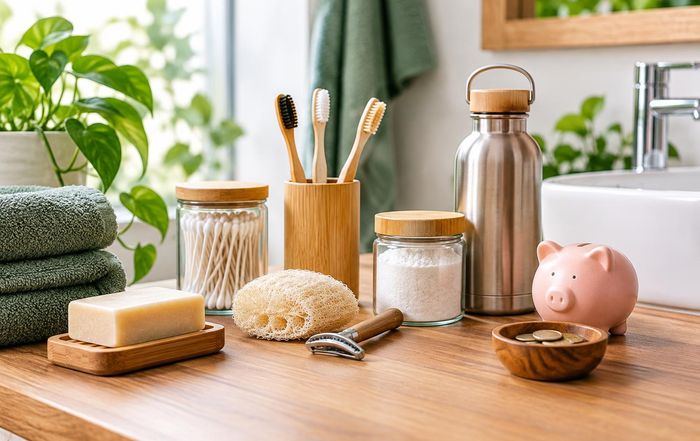
Plastic-Free Bathroom Swaps That Can Save Money Over Time
A plastic-free bathroom is often framed as a lifestyle choice, but it can also be a practical household upgrade. The biggest savings rarely come from buying a single "eco" product; they come from replacing frequent, disposable purchases with durable alternatives that last longer and reduce repeat spending. That matters in a room where many everyday items are designed to be thrown away quickly: shampoo bottles, razor cartridges, cotton swabs, toothbrushes, floss picks, and cleaning products packaged in plastic. For households trying to cut waste without increasing costs, the bathroom is one of the easiest places to start. The shift can also fit naturally alongside broader changes in sustainable living, plastic-free habits, and zero-waste routines.
The financial case is strongest when a swap reduces both packaging waste and unit cost over time. A reusable safety razor, for example, typically involves a higher upfront purchase than a disposable razor, but replacement blades are usually cheaper than repeatedly buying plastic cartridges or disposable razors. The same logic applies to bar soap, shampoo bars, refillable cleaners, and washable cloths. None of these choices is automatically cheaper in every market or for every household, but the pattern is consistent: the more often a product is replaced, the more likely a durable version will pay for itself. That is why plastic reduction in the bathroom is not just an environmental gesture; it is often a budgeting strategy disguised as a sustainability habit.
Start with the items you replace most often
The fastest savings usually come from the products that run out, wear out, or get discarded every week. Disposable razors, cotton pads, wipes, and single-use bottles all create recurring costs that are easy to underestimate because each purchase is small. Swapping even one of these categories can change the long-term math more than a pricier "green" version of a product you already buy infrequently. A household that replaces cotton rounds with washable pads, for instance, may spend more at the start but avoid buying another pack month after month. That same principle applies to recycling and waste reduction more broadly: the most effective changes are usually the ones that interrupt repetitive consumption.
Shampoo and body wash are another good starting point because liquid products are expensive to transport, heavy to package, and often sold in large plastic containers that become routine trash. Bars can last surprisingly well if stored properly, especially when a soap dish or draining tray keeps them dry between uses. For many households, the savings are not dramatic in a single week, but they accumulate because the purchase frequency drops. The same is true for toothpaste tablets or toothpaste in recyclable packaging, though the economics vary more widely by brand and region. In some cases, the plastic-free option costs more upfront but becomes competitive when measured by use per month rather than by shelf price.
Reusable tools usually beat disposable convenience
The bathroom is full of products that are marketed as convenient because they are meant to be replaced quickly. That convenience has a hidden price. A quality safety razor, for example, may cost more at first than a pack of disposable razors, but the handle is built to last and the blades are inexpensive relative to cartridge refills. Over time, that can mean lower annual spending and far less plastic waste. The same logic applies to a bamboo or wooden toothbrush handle paired with replaceable heads, though the exact savings depend on the brand and whether the replacement parts are easy to find locally.
Washable alternatives are often even more cost-effective. Reusable cotton rounds, microfiber cloths, and old-cut fabric wipes can replace many disposable bathroom products with little sacrifice in performance. For households already trying to reduce laundry impact, it helps to use a small set of cloths that can be washed with regular loads rather than creating a separate system. This is one reason sustainable swaps work best when they fit existing habits rather than demanding a complete lifestyle overhaul. Readers interested in the broader household design side of this often find useful overlap with design choices that support lower-waste routines and health-conscious home habits.
Refills, concentrates, and solid formats can change the economics
One of the most overlooked ways to save money is to buy less water and packaging. Many bathroom products are mostly water sold in bulky plastic bottles, which means consumers are paying for shipping, storage, and packaging as much as for the active ingredient. Concentrated cleaners, refill systems, and solid formats can reduce that overhead. In practical terms, that means fewer bottles in the bin and often fewer purchases over the year. Some brands now sell refill pouches, tablets, or concentrated liquids that are diluted at home, and while not every option is cheaper, the long-term cost can compare favorably when the product is used correctly.
This is also where consumers should be careful not to assume that "plastic-free" automatically means "budget-friendly." Some refill systems are genuinely efficient, but others are priced as premium sustainability products. The best value tends to come from simple, durable formats rather than novelty packaging. Bar soap, solid shampoo, and powder-based cleaners often cost less per use than heavily branded liquid alternatives, especially when bought in larger quantities from reputable suppliers. For shoppers trying to compare options across sustainable products and organic or low-toxicity household goods, the useful question is not whether a product looks eco-friendly, but whether it reduces both waste and ongoing spending.
What to buy once, and what to keep replacing
A useful way to approach bathroom swaps is to divide purchases into "buy once" items and "replace often" items. Buy-once items include a durable razor handle, a soap dish, a refillable dispenser, a sturdy storage container, and a few quality cloths. These are the pieces that can anchor the system and reduce future purchases. Replace-often items include blades, soap bars, toothpaste, and cleaning refills. The goal is not to eliminate all recurring spending, which is unrealistic, but to make sure the recurring purchases are functional and low-waste rather than disposable by default.
The most successful households usually make this shift gradually. Replacing everything at once can lead to overspending, especially if products are bought before there is a clear sense of what will actually get used. A better method is to start with one category, track how long the replacement lasts, and compare it with the previous habit. This makes the savings visible. It also helps prevent buying specialized plastic-free products that end up unused in a drawer. If the bathroom is part of a larger effort to simplify household consumption, the same approach can be extended to lifestyle changes and broader sustainable business and consumer trends that favor durability over disposability.
The products that usually deliver the best value
Some swaps tend to offer a stronger mix of savings and waste reduction than others. A safety razor is often one of the clearest examples because the handle lasts for years and blade packs are relatively inexpensive. Bar soap is another reliable option, especially if the household already uses body wash or hand soap frequently. Reusable cloths and pads can also be cost-effective because they replace products that are bought over and over again. Toothbrushes are more mixed: a standard manual brush is already inexpensive, so a bamboo version may not save money unless it is priced competitively or bought in multipacks. The same is true for floss and toothpaste, where the environmental benefit may be clearer than the financial one.
That does not make the smaller savings unimportant. A household that replaces several low-cost disposables with reusable or lower-packaging alternatives may not notice a dramatic change in a single shopping trip, but over a year the difference can be meaningful. The key is to focus on categories with frequent turnover, then choose products that are easy to maintain. A reusable item only saves money if it is actually used for a long time. If it is difficult to clean, uncomfortable, or incompatible with the household's routine, the theoretical savings disappear quickly. For that reason, the best swaps are usually the ones that feel less like a sacrifice and more like a better version of a familiar habit.
Buying less is often the real savings strategy
The most durable lesson from plastic-free bathroom swaps is that the cheapest product is often the one that gets used fully and replaced rarely. That means the real savings come not from chasing every new eco-label, but from buying fewer, better-suited items and using them longer. A bathroom stocked with a small number of reliable, low-waste products usually costs less to maintain than one filled with single-use convenience items. It also creates less clutter, which is an overlooked benefit in itself.
For friendly people comparing options, the best next step is simple: identify one recurring plastic item and replace it with a reusable or refillable version that matches the household's actual routine. Then watch what happens to both the trash bin and the shopping bill over the next few months. That is where the case for plastic-free bathrooms becomes most convincing. The environmental gains are real, but the budget gains are often what turn an intention into a lasting habit.
