
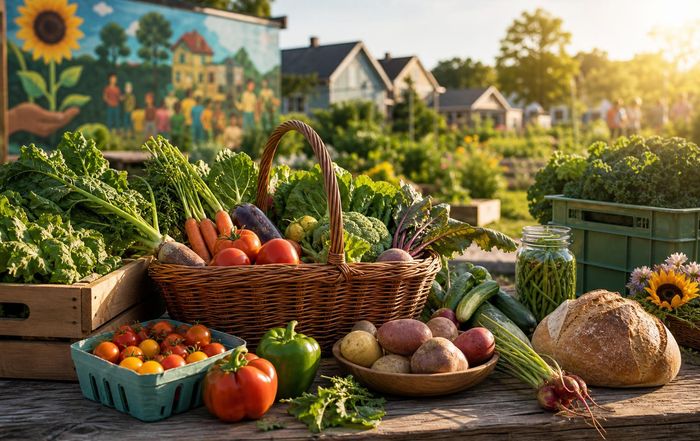
How Local Food Systems Strengthen Community Resilience?
Local Food as the Backbone of Resilient Communities
Across continents and cultures, local food systems are emerging as one of the most practical, hopeful responses to an era of climate disruption, geopolitical uncertainty, and fragile global supply chains. From community gardens in London and New York to regenerative farms in Germany, Brazil, and South Africa, citizens, farmers, entrepreneurs, and policymakers are rediscovering the power of growing, processing, and distributing food closer to home. For environmental followers who are already exploring sustainable living, this movement represents a tangible way to translate environmental values into everyday action, while also strengthening social ties and local economies.
Local food systems are not defined solely by geography; they are defined by relationships. They connect producers and consumers, urban and rural communities, soil health and human health, and short-term needs with long-term ecological stability. Institutions such as the Food and Agriculture Organization of the United Nations (FAO) have highlighted how diversified, territorially rooted food systems can improve food security, support smallholder livelihoods, and reduce environmental impacts when thoughtfully managed. Readers who wish to learn more about sustainability in a holistic sense will find that local food is a natural gateway into broader questions of climate resilience, equity, and economic transformation.
Understanding Local Food Systems in a Globalized World
In a global economy where food can travel thousands of kilometers from farm to fork, defining "local" is not always straightforward. Many organizations, including USDA in the United States, often use distance-based thresholds, such as food produced within a certain radius or within the same state or region. However, researchers and practitioners increasingly emphasize that a local food system is characterized less by a fixed distance and more by shorter, more transparent supply chains, direct relationships, and a shared sense of responsibility for land, water, and community wellbeing.
Local food systems typically include small and medium-sized farms, urban agriculture projects, farmers' markets, community-supported agriculture (CSA) schemes, food co-operatives, school and hospital procurement programs, and regional processing and distribution hubs. Reports by The World Bank and OECD show that when these elements are connected through supportive policies, infrastructure, and market access, they can coexist with international trade while reducing vulnerability to external shocks. Rather than rejecting globalization outright, resilient local food systems seek to balance global flows with robust regional capacity, a theme that aligns closely with Eco Natur's focus on sustainable business models and regenerative economies.
Climate Resilience and the Power of Shorter Supply Chains
Climate change is already disrupting harvests through heatwaves, floods, droughts, and shifting pest and disease patterns, with pronounced effects in regions such as North America, Europe, Asia, and Africa. Scientific assessments by the Intergovernmental Panel on Climate Change (IPCC) indicate that these disruptions will intensify, placing increasing pressure on long, centralized supply chains that depend on predictable weather, stable transport routes, and cheap fossil fuels. Local food systems, when diversified and ecologically grounded, can help buffer communities against such volatility.
Shorter supply chains reduce the number of intermediaries and transport stages that can fail during crises. During recent global disruptions, including pandemic-related lockdowns and extreme weather events, many communities observed that farmers' markets, local delivery schemes, and direct-to-consumer sales were often able to adapt more quickly than large-scale, just-in-time logistics networks. Studies published by institutions such as Chatham House and UNEP have documented how diversified local production, including urban agriculture and peri-urban farming, can enhance food availability when international routes are disrupted.
From a mitigation perspective, local systems that emphasize agroecology, reduced synthetic inputs, and careful management of soil and biodiversity can sequester carbon and reduce greenhouse gas emissions, particularly when they minimize long-distance refrigerated transport and energy-intensive processing. Readers interested in the energy dimension of food resilience can explore how local food strategies intersect with renewable energy transitions, including the use of solar-powered irrigation, cold storage, and processing facilities.
Soil Health, Biodiversity, and Wildlife Protection
Healthy local food systems are rooted in healthy ecosystems. Organizations such as IPBES and IUCN have repeatedly warned that biodiversity loss and ecosystem degradation threaten both food security and wildlife. Yet there is growing evidence that well-managed local agriculture can support biodiversity rather than deplete it, especially when it adopts agroecological and regenerative practices.
Local farmers often have the flexibility to integrate techniques such as crop rotation, cover cropping, agroforestry, hedgerows, and reduced chemical inputs, which improve soil structure, increase water retention, and create habitats for pollinators, birds, and beneficial insects. Research from institutions like FAO and CIRAD shows that diversified landscapes can simultaneously produce food and provide ecosystem services, including pollination, natural pest control, and flood mitigation. This contrasts with highly simplified monocultures that may yield high volumes in the short term but are more vulnerable to climate stress and pests.
For Eco Natur's readers who care deeply about wildlife conservation, local food systems offer a way to align daily food choices with the protection of species and habitats. Initiatives such as agroforestry cocoa in West Africa, shade-grown coffee in Latin America, and hedgerow restoration in the United Kingdom and France demonstrate how farming and wildlife corridors can coexist. Global organizations like WWF and BirdLife International provide case studies showing that when communities have a direct stake in the land that feeds them, they are more likely to support long-term conservation efforts.
Organic, Regenerative, and Nutrient-Dense Local Food
Health-conscious consumers in the United States, Europe, Asia, and beyond are increasingly seeking food that is not only local but also grown without harmful pesticides and synthetic fertilizers. Organic and regenerative farming practices, when verified and well-implemented, can improve soil health, reduce chemical residues, and support more nutrient-dense produce. While scientific debates continue about the exact nutritional differences between organic and conventional food, multiple meta-analyses, including research published in journals like the British Journal of Nutrition, suggest that organic crops often have higher concentrations of certain antioxidants and lower levels of pesticide residues.
Local organic farmers can adapt quickly to community preferences, experimenting with heritage varieties, seasonal vegetables, and regionally adapted grains that may not fit into industrial supply chains. Organizations such as IFOAM - Organics International and national organic associations provide guidance and certification frameworks that help ensure integrity and transparency. For readers exploring organic food and health, local supply networks make it easier to know who grows their food, how it is produced, and what standards are followed.
Regenerative agriculture, which focuses on rebuilding soil organic matter and restoring degraded lands, is attracting attention from both small-scale farmers and large food companies. Reports from The Rodale Institute and Regeneration International highlight how practices like minimal tillage, diverse cover crops, and managed grazing can increase soil carbon, improve water infiltration, and boost resilience to drought and heavy rainfall. When these methods are implemented in localized food systems, communities benefit from both healthier landscapes and more reliable harvests.
Plastic-Free and Zero-Waste Approaches to Local Food
Packaging waste, especially single-use plastics, is a growing concern among environmentally conscious consumers worldwide. Local food systems offer distinctive opportunities to reduce packaging and move toward plastic-free lifestyles, because shorter supply chains and direct relationships make reusable containers, bulk sales, and deposit-return schemes more feasible.
Farmers' markets, community-supported agriculture boxes, and neighborhood food co-operatives can encourage customers to bring their own bags, jars, and containers, significantly reducing the need for disposable packaging. In many cities across Europe, North America, and Asia, zero-waste grocery shops and refill stations are partnering with local producers to create closed-loop systems. Organizations such as Zero Waste Europe and Plastic Pollution Coalition document innovative local initiatives that demonstrate how waste reduction and food resilience can go hand in hand.
Local processing and distribution hubs can also minimize food loss by finding outlets for "imperfect" produce, surplus harvests, and by-products, turning potential waste into value-added products such as jams, pickles, soups, or animal feed. Readers interested in taking this further can explore Eco Natur's guidance on zero-waste strategies and recycling best practices, applying these principles to both household consumption and community-level initiatives.
Community Health, Nutrition, and Social Cohesion
Local food systems do more than feed bodies; they nurture social fabric and mental wellbeing. Public health organizations, including the World Health Organization (WHO), have emphasized the importance of diets rich in fruits, vegetables, whole grains, and minimally processed foods for preventing non-communicable diseases such as obesity, diabetes, and cardiovascular illness. Yet in many urban and rural areas, especially in low-income neighborhoods, access to fresh, affordable produce remains limited.
Community gardens, urban farms, and local markets can help address these gaps by bringing fresh food closer to residents, often accompanied by nutrition education and cooking workshops. Research published in journals like Public Health Nutrition and Health & Place suggests that participation in community gardening is associated with increased vegetable intake, improved mental health, and stronger social networks. For readers exploring the intersection of environment and wellbeing, Eco Natur's resources on health and sustainable lifestyles provide further insights into how food choices affect both personal and planetary health.
Local food projects frequently become hubs of community life, bringing together people across generations, cultures, and income levels. Shared workdays on urban farms, seed-saving exchanges, and neighborhood harvest festivals create opportunities for collaboration and mutual support. In times of crisis, these networks can quickly mobilize to distribute food, share information, and care for vulnerable neighbors, illustrating how local food systems contribute to emotional resilience as well as nutritional security.
Economic Resilience and Local Prosperity
A resilient community is one in which economic value circulates locally, supporting livelihoods, small enterprises, and public services. Studies by organizations such as Local Futures and The New Economics Foundation (NEF) have found that money spent with local food producers and independent retailers tends to generate more local employment and secondary economic activity than equivalent spending at distant, vertically integrated supply chains. While exact multipliers vary by context and methodology, the core idea-that shorter, more relational supply chains keep value closer to home-is widely supported.
For farmers and food entrepreneurs, local markets can provide better price transparency, more stable relationships, and opportunities to differentiate products based on quality, story, and environmental performance. Direct sales through farmers' markets, CSAs, and farm shops can reduce dependence on volatile commodity markets and large buyers with significant bargaining power. These dynamics support Eco Natur's vision of a sustainable economy where small and medium-sized enterprises play a central role in delivering environmental and social value.
Local governments and regional development agencies in countries such as Germany, Canada, and New Zealand are increasingly recognizing local food as a strategic sector. Through supportive procurement policies, infrastructure investments, and training programs, they are creating conditions for local food businesses to thrive. Organizations like ICLEI - Local Governments for Sustainability and C40 Cities showcase examples of municipalities integrating local food strategies into climate action plans, green job creation, and inclusive economic development.
Sustainable Business Models in Local Food
For Eco Natur's audience interested in sustainable business innovation, local food systems offer fertile ground for creativity and impact. Entrepreneurs are developing new models that combine environmental stewardship, social justice, and financial viability, often leveraging digital tools to connect producers and consumers more efficiently.
Online platforms and apps are enabling direct farm-to-consumer sales, dynamic pricing for surplus produce, and neighborhood-level logistics that reduce delivery miles and emissions. Social enterprises and co-operatives are emerging to manage shared infrastructure such as refrigerated storage, processing facilities, and distribution hubs, lowering barriers to entry for small producers. Reports from organizations like Ellen MacArthur Foundation and WEF highlight how circular economy principles can be applied to food systems, designing out waste and pollution while regenerating natural systems.
Impact investors and community finance initiatives are beginning to recognize the long-term value of resilient local food systems, funding regenerative farms, urban agriculture projects, and regional food hubs. While access to capital remains a challenge in many regions, especially in parts of Africa, Asia, and Latin America, there is a growing ecosystem of funds, grants, and blended finance mechanisms that prioritize social and environmental returns alongside profit. Readers can deepen their understanding of these dynamics by exploring Eco Natur's broader coverage of global sustainability trends.
Policy, Governance, and the Role of Cities
Public policy plays a critical role in shaping the possibilities for local food systems. Land use regulations, zoning laws, food safety standards, procurement policies, and agricultural subsidies can either support or hinder local production and distribution. In recent years, an increasing number of cities and regions have adopted comprehensive food strategies that integrate health, environment, and social equity goals.
Networks such as the Milan Urban Food Policy Pact, signed by over 250 cities worldwide, encourage municipalities to develop inclusive, resilient, and sustainable food policies, including support for urban agriculture, local procurement, and waste reduction. Case studies from cities like Toronto, Copenhagen, and Seoul show how coordinated policies can expand access to local, healthy food while reducing greenhouse gas emissions and supporting small producers. International organizations, including UN-Habitat and RUAF, provide guidance on integrating food into urban planning and climate adaptation strategies.
National and regional governments also influence local food systems through agricultural research, extension services, and rural development programs. In the European Union, for example, the Common Agricultural Policy (CAP) has been gradually incorporating stronger environmental requirements and support for small farms, although debates continue about the adequacy and implementation of these reforms. Similar discussions are taking place in the United States, Brazil, India, and other major agricultural producers, where civil society organizations advocate for policies that prioritize agroecology, land access, and food sovereignty.
Technology, Innovation, and Equity in Local Food
Technological innovation is transforming local food systems, from precision agriculture tools that help small farmers optimize inputs, to vertical farms and controlled-environment agriculture that bring production into dense urban areas. Companies and research institutions in countries such as Japan, the Netherlands, Singapore, and the United States are experimenting with LED-lit vertical farms, aquaponics, and data-driven greenhouse management to produce fresh vegetables close to consumers with reduced land and water use. Organizations like FAO and World Resources Institute (WRI) analyze both the potential and limitations of these technologies, noting that their sustainability depends on energy sources, materials, and integration with broader food systems.
Digital platforms are also improving transparency and traceability, enabling consumers to learn more about where their food comes from and how it is produced. Blockchain pilots, mobile payment systems, and farmer-focused apps can help smallholders in Africa, Asia, and Latin America access markets, credit, and agronomic advice. However, experts caution that technology must be deployed in ways that address, rather than deepen, existing inequalities. Access to land, water, and fair markets remains a fundamental challenge that cannot be solved by technology alone.
Eco Natur's readers, many of whom are already engaged with sustainable lifestyle choices, can play a role in shaping the ethical and equitable use of technology in local food systems by supporting initiatives that prioritize smallholder inclusion, data privacy, and community ownership.
Practical Steps for Individuals and Communities
Local food resilience is not only a matter for policymakers and entrepreneurs; it is built through the cumulative actions of households, neighborhoods, and civic organizations. Individuals can support local farmers and food artisans by shopping at farmers' markets, joining CSAs, choosing restaurants that source locally, and asking retailers to stock regional products. Growing even a small portion of one's own food, whether in a backyard, balcony, or community garden, can deepen understanding of seasonal cycles, soil health, and the labor behind every meal.
Community groups, schools, and workplaces can initiate projects such as shared gardens, educational workshops, and local food festivals that celebrate regional crops and culinary traditions. Faith communities and non-profits can partner with producers to create solidarity purchasing schemes or food box programs for low-income households, ensuring that the benefits of local food are shared broadly. These efforts align closely with Eco Natur's mission to inspire practical, inclusive approaches to sustainable living that are grounded in everyday choices.
At the household level, reducing food waste, planning meals around seasonal produce, and embracing simple preservation techniques such as freezing, fermenting, and canning can extend the reach of local harvests throughout the year. Resources from organizations like Too Good To Go, ReFED, and national food waste campaigns in countries such as the United Kingdom and Sweden offer practical guidance on minimizing waste and maximizing value.
A Vision of Resilient, Regenerative Local Food Futures
As communities around the world navigate the intertwined challenges of climate change, biodiversity loss, economic inequality, and public health crises, local food systems stand out as a unifying, solutions-oriented field of action. They invite participation from farmers and urban gardeners, chefs and policymakers, scientists and students, investors and activists. They connect the soil underfoot with the global atmosphere, the wellbeing of pollinators with the nutrition of children, and the vibrancy of local cultures with the stability of regional economies.
In this decade, the most inspiring local food initiatives are those that combine ecological integrity with social justice, recognizing that resilience is not only about withstanding shocks but about ensuring that all community members have access to nutritious, culturally appropriate food. Organizations such as Slow Food, La Via Campesina, and countless grassroots groups on every continent continue to articulate visions of food sovereignty and agroecology that place local communities at the heart of decision-making.
For this site and the community, the path forward involves both imagination and commitment: imagining food systems in which every purchase supports healthy ecosystems and dignified livelihoods, and committing to the daily choices and collective efforts that bring that vision closer to reality. By deepening engagement with topics such as sustainability, recycling and circularity, organic and regenerative food, and sustainable economic models, the Eco Natur community can help shape local food systems that are not only resilient in the face of uncertainty, but regenerative, equitable, and full of life.
