
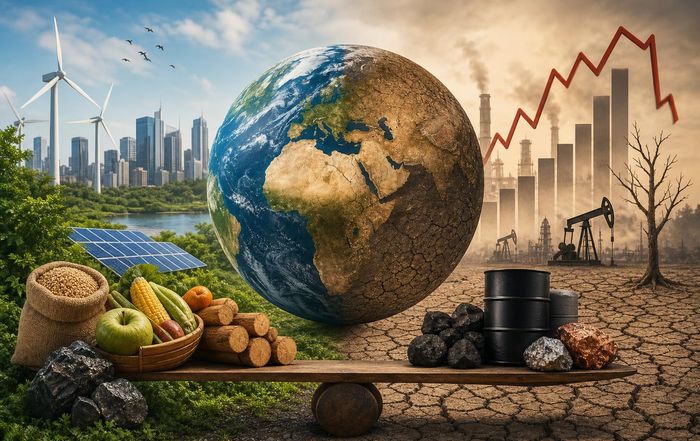
How Resource Scarcity Shapes the Global Economy
Introduction: Scarcity in an Age of Abundance
The global economy is entering an era in which natural resource scarcity is no longer a distant concern but a central force shaping markets, policies, and everyday life. From dwindling freshwater reserves and degraded soils to volatile energy supplies and critical mineral shortages, constraints on natural systems are increasingly visible in trade data, investment flows, and geopolitical strategies. At the same time, innovation in clean technologies, circular business models, and regenerative agriculture is redefining what prosperity can look like in a resource-constrained world.
For Eco Natur, whose environmentally minded readers are deeply engaged in sustainable living, recycling, and the broader transition to a resilient green economy, understanding how resource scarcity reshapes the global landscape is not merely academic; it is essential for making informed choices as citizens, consumers, professionals, and investors.
Understanding Resource Scarcity in a Globalized World
Resource scarcity refers not only to the absolute physical limits of materials like water, land, forests, and minerals, but also to the economic and political conditions that restrict access to them. A resource can be abundant in geological terms yet scarce in practice due to lack of infrastructure, unequal distribution, or environmental degradation that reduces its quality or accessibility.
Organizations such as the United Nations Environment Programme (UNEP) describe this challenge as one of "decoupling" economic growth from resource use, highlighting that global material extraction has more than tripled since 1970, driven largely by construction minerals, fossil fuels, and biomass. Readers can explore this trend in more depth through UNEP's Global Resources Outlook. At the same time, the International Resource Panel emphasizes that unchecked extraction and waste are key drivers of climate change, biodiversity loss, and pollution, binding resource scarcity to the wider planetary crisis.
In this context, Eco Natur positions daily updated resource awareness as a core element of sustainability, encouraging individuals and organizations to rethink how they consume, reuse, and regenerate materials in daily life and in business.
Water: The Invisible Driver of Economic Stability
Water scarcity is one of the most consequential and complex forms of resource constraint, with direct implications for agriculture, energy production, industry, and public health. According to the World Resources Institute (WRI), which maintains the Aqueduct Water Risk Atlas, a significant share of the world's population lives in regions facing high or extremely high water stress, where withdrawals regularly exceed available renewable supplies.
In major agricultural exporters such as the United States, Spain, and parts of Australia, groundwater depletion and prolonged droughts threaten food production and rural livelihoods. The Food and Agriculture Organization (FAO) has documented how water scarcity is already constraining yields in staple crops, influencing global food prices and trade flows; readers can explore related analyses in FAO's reports on water and food security.
Urbanization compounds these pressures. Megacities in regions such as South Asia, the Middle East, and parts of Africa are grappling with aging infrastructure, pollution, and climate-induced variability in rainfall. The World Bank has warned that water scarcity, exacerbated by climate change, could reduce some regions' GDP by up to several percentage points by mid-century if no action is taken, as discussed in its analysis on water and the economy.
For Eco Natur readers, this underscores why everyday choices around water-efficient appliances, plant-based diets, and support for watershed restoration are more than lifestyle preferences; they are contributions to a more stable global economy. The platform's focus on sustainable living and health-conscious consumption aligns with a growing recognition that personal behavior, when scaled across millions of households, can significantly reduce pressure on freshwater systems.
Energy and the Transition from Fossil Fuel Scarcity
Energy has long been the most geopolitically sensitive resource, and the global economy's dependence on fossil fuels has historically made it vulnerable to supply disruptions and price shocks. While proven reserves of oil and gas are still substantial, the concept of scarcity has shifted from physical depletion toward constraints imposed by climate policy, social license, and the environmental impacts of extraction.
The International Energy Agency (IEA), in its evolving World Energy Outlook, notes that the rapid growth of renewable energy capacity, particularly solar and wind, is reshaping energy markets, yet fossil fuels still account for a large share of global primary energy. Volatility in oil and gas prices, driven by geopolitical tensions and supply chain disruptions, continues to affect inflation, trade balances, and household energy bills across regions from Europe to Asia and North America.
At the same time, the rise of clean energy technologies introduces a new dimension of resource scarcity: the availability of critical minerals such as lithium, cobalt, nickel, and rare earth elements used in batteries, wind turbines, and electric vehicles. Reports from the IEA and the World Bank on critical minerals and the energy transition highlight concerns about concentrated supply chains, environmental and social impacts of mining, and the need for recycling and substitution to avoid new forms of dependency.
For Eco Natur, the energy transition is not only a matter of decarbonization but also of responsible resource management. The site's coverage of renewable energy emphasizes how decentralized solar, wind, and storage solutions can reduce local pollution, increase energy security, and open opportunities for community-owned power, while also calling attention to the importance of recycling batteries and designing products for long lifespans to ease pressure on mineral supplies.
Land, Soil, and Food Systems Under Strain
Land and fertile soil are foundational resources that underpin food security, biodiversity, and rural economies. Yet they are under severe pressure from deforestation, urban expansion, intensive agriculture, and climate change. The Intergovernmental Panel on Climate Change (IPCC) Special Report on Climate Change and Land has documented how land degradation affects hundreds of millions of people and interacts with climate impacts through feedback loops such as reduced carbon sequestration and altered rainfall patterns.
In regions such as the Amazon basin, Southeast Asia, and parts of Africa, deforestation driven by agriculture, logging, and infrastructure development threatens both local communities and global climate stability. The World Wildlife Fund (WWF), through its Living Planet Report, has highlighted steep declines in wildlife populations associated with habitat loss and land conversion, underscoring the interconnectedness of land scarcity and biodiversity collapse.
Agricultural soils themselves are being depleted by erosion, overuse of chemical inputs, and monoculture practices. Organizations like the Food and Agriculture Organization (FAO) and the European Environment Agency (EEA) warn that soil degradation undermines long-term productivity, increases vulnerability to drought and floods, and can force farmers to expand into previously uncultivated areas, creating a vicious cycle of land scarcity.
The movement toward regenerative and organic agriculture offers a hopeful counter-trend. Practices such as cover cropping, reduced tillage, agroforestry, and integrated pest management can restore soil health, enhance biodiversity, and sequester carbon while maintaining or improving yields in many contexts. Readers interested in how food choices connect to these issues can explore Eco Natur's focus on organic food, which emphasizes not only personal health but also the broader ecological and economic benefits of supporting farmers who steward land responsibly.
Materials, Waste, and the Rise of the Circular Economy
Beyond water, energy, and land, the global economy depends on a vast flow of materials-from metals and plastics to construction aggregates and biomass-that are extracted, processed, consumed, and often discarded after a short lifespan. This linear "take-make-waste" model is both a driver and a consequence of resource scarcity, as easily accessible deposits are depleted and waste accumulates in landfills, oceans, and ecosystems.
The Organisation for Economic Co-operation and Development (OECD) has projected that global material use could more than double by mid-century without significant policy changes, with associated increases in greenhouse gas emissions and pollution. Its analyses on global material resources underline the urgency of moving toward a circular economy, in which products and materials are kept in use for as long as possible through repair, reuse, remanufacturing, and recycling.
Plastic is a particularly visible symbol of this challenge. Studies compiled by organizations such as the Ellen MacArthur Foundation and the United Nations Environment Programme show that plastic production has surged over recent decades, while recycling rates remain low in many countries, leading to widespread pollution in rivers, oceans, and soils. Learn more about the global plastics problem and circular solutions through the Ellen MacArthur Foundation's work on the new plastics economy.
Eco Natur has made the reduction of plastic a central theme, offering guidance on plastic-free living and zero-waste strategies that empower individuals and businesses to cut unnecessary packaging, choose durable products, and support companies that design for recyclability and reuse. By treating waste as a design flaw rather than an inevitability, the circular economy reframes scarcity as an opportunity for innovation, job creation, and improved resilience.
Wildlife, Biodiversity, and the Hidden Economic Value of Nature
Resource scarcity is often discussed in terms of commodities, but the living fabric of the planet-its biodiversity and ecosystems-constitutes a critical, though frequently undervalued, form of natural capital. Pollinators, healthy forests, wetlands, and oceans provide services such as crop pollination, water filtration, carbon storage, and storm protection that underpin economic activity and human well-being.
The Intergovernmental Science-Policy Platform on Biodiversity and Ecosystem Services (IPBES) has warned that one million species face extinction, largely due to habitat loss, overexploitation, pollution, invasive species, and climate change. Its global assessment, accessible via IPBES resources, highlights that the degradation of ecosystems threatens not only wildlife but also food security, health, and cultural identity.
Economists and policymakers are increasingly recognizing these risks. The Dasgupta Review on the economics of biodiversity, commissioned by the UK government and available through HM Treasury, argues that conventional economic measures have systematically undervalued nature, leading to overuse and depletion. Integrating natural capital into decision-making-through mechanisms such as biodiversity credits, conservation finance, and ecosystem restoration projects-is seen as essential for aligning economic incentives with ecological stability.
For Eco Natur readers, who often care deeply about wildlife and biodiversity, this perspective reinforces the idea that protecting habitats, supporting conservation organizations, and advocating for stronger environmental policies are not only ethical commitments but also prudent economic choices. Healthy ecosystems reduce the risk of resource shocks, buffer communities against climate extremes, and sustain the cultural and recreational values that enrich human life.
Global Trade, Geopolitics, and Resource Security
Resource scarcity has always influenced geopolitics, but in an interconnected, trade-dependent global economy, localized shortages can quickly ripple across borders. Energy disputes, water sharing arrangements, and competition for critical minerals all shape diplomatic relations and trade policies.
Analyses by institutions such as Chatham House and the Stockholm International Peace Research Institute (SIPRI) have explored how climate change and resource pressures can act as "threat multipliers," exacerbating existing tensions over land, water, and migration. For example, studies on climate security indicate that droughts and crop failures can contribute to social unrest and displacement, particularly in fragile states with weak governance.
At the same time, resource-rich countries are reassessing how they manage their assets. Some governments are implementing export controls on critical minerals, while others are using sovereign wealth funds to transform finite resource revenues into diversified financial assets. International initiatives, such as the Extractive Industries Transparency Initiative (EITI), promote greater transparency in resource governance to reduce corruption and ensure that citizens benefit from natural wealth.
For importing nations, diversification of supply, investment in recycling, and development of domestic alternatives have become central strategies. The European Union's efforts to secure critical raw materials, the United States' policies to strengthen domestic manufacturing of batteries and semiconductors, and Asian economies' investments in renewable energy and efficiency all reflect an understanding that resource security is now a core component of economic resilience.
Readers of Eco Natur, spread across regions from Europe and North America to Asia, Africa, and South America, are increasingly aware that personal and corporate choices-such as supporting ethical sourcing, fair trade, and transparent supply chains-can influence these global dynamics by rewarding responsible producers and discouraging exploitative practices.
Sustainable Business and the Economics of Scarcity
Resource scarcity is altering the fundamentals of business strategy. Companies that once assumed cheap, abundant inputs now face rising costs, regulatory scrutiny, and reputational risks if they fail to manage environmental impacts. Conversely, firms that anticipate constraints and innovate accordingly are discovering new markets and competitive advantages.
Frameworks such as environmental, social, and governance (ESG) investing, along with initiatives like the Task Force on Climate-related Financial Disclosures (TCFD) and the emerging Taskforce on Nature-related Financial Disclosures (TNFD), encourage companies and investors to assess how resource and climate risks affect their operations and portfolios. More information on these frameworks can be found through the TCFD and TNFD websites.
Businesses are responding by improving resource efficiency, adopting circular design principles, and engaging in sustainable sourcing. Sectors as diverse as fashion, electronics, construction, and food are experimenting with rental models, take-back schemes, recycled materials, and low-impact production methods. The World Business Council for Sustainable Development (WBCSD) and the World Economic Forum (WEF) regularly highlight case studies of companies that have reduced costs and risks while enhancing brand value by embracing sustainability; readers can explore corporate initiatives through WBCSD's work on circular economy.
Within this landscape, Eco Natur offers guidance for entrepreneurs and managers seeking to align profitability with planetary boundaries through its coverage of sustainable business and the evolving green economy. By showcasing examples of companies that design for longevity, transparency, and regeneration, the platform helps demonstrate that resource-conscious strategies are not a constraint on growth but a pathway to long-term value creation.
Households, Lifestyles, and the Power of Individual Action
While governments and corporations play crucial roles in addressing resource scarcity, households and communities also hold significant influence through their consumption patterns, voting behavior, and cultural norms. The shift toward more mindful lifestyles-emphasizing sufficiency, quality, and connection over sheer volume of goods-is gaining traction in many countries, from the United States and Europe to parts of Asia and Latin America.
Lifestyle choices that prioritize energy efficiency, public and active transport, plant-rich diets, reduced food waste, and minimal packaging can collectively ease pressure on water, land, and energy resources. Organizations such as Project Drawdown provide accessible analyses of high-impact climate and resource solutions, available on their website Project Drawdown Solutions, illustrating how individual and community actions can scale to global significance.
Eco Natur plays a distinctive role in this cultural transformation by curating practical advice, scientific insights, and inspiring stories that make sustainable choices feel both accessible and aspirational. Through its sections on sustainable living, health, and lifestyle, the platform emphasizes that resource-aware habits are not about deprivation but about designing a life that is healthier, more resilient, and more aligned with the natural systems on which everyone depends.
Innovation, Policy, and the Path Forward
Addressing resource scarcity requires coordinated action across technology, policy, finance, and culture. Encouragingly, many of the tools needed to build a more resilient and equitable global economy already exist, and new solutions are emerging rapidly.
On the technological front, advances in renewable energy, energy storage, precision agriculture, desalination, water recycling, and material science are expanding the possibilities for producing more value with fewer inputs. Research institutions and agencies such as the National Renewable Energy Laboratory (NREL) in the United States and the Fraunhofer Society in Germany are at the forefront of developing and testing these innovations, which can be explored through NREL's research programs and Fraunhofer's sustainability initiatives.
Policy frameworks are also evolving. Many countries are adopting extended producer responsibility schemes for packaging and electronics, setting targets for renewable energy and energy efficiency, and introducing regulations to protect forests, wetlands, and marine areas. International agreements, such as the Paris Agreement on climate change and ongoing negotiations for a global treaty on plastic pollution under the auspices of the UN Environment Assembly, aim to coordinate efforts across borders. Information on these developments can be found through the UNFCCC website on climate agreements and UNEP's page on plastic pollution.
Financial institutions are increasingly integrating climate and nature risks into lending and investment decisions, while green bonds and sustainability-linked loans channel capital toward projects that enhance resilience and reduce environmental impact. Cities, regions, and community organizations are experimenting with local currencies, cooperative ownership models, and participatory budgeting to ensure that the benefits of sustainable development are broadly shared.
Through its global perspective and commitment to trustworthy, solution-oriented content, Eco Natur supports readers in navigating this rapidly changing landscape. The site's global outlook, combined with practical resources on topics from recycling to design for sustainability, helps connect high-level policy shifts and technological breakthroughs with the concrete decisions that individuals, families, and businesses make every day.
Conclusion: From Scarcity to Stewardship
Resource scarcity is reshaping the global economy in profound ways, influencing everything from food prices and energy markets to geopolitical alliances and investment strategies. Yet scarcity need not lead to competition and decline; it can also catalyze a new era of stewardship, innovation, and collaboration.
By recognizing the true value of water, land, energy, materials, and biodiversity, societies can design economic systems that operate within ecological limits while expanding opportunities for human flourishing. This requires not only better technologies and smarter policies but also a cultural shift toward sufficiency, care, and long-term thinking.
Eco Natur stands as a independent partner in this transformation, offering insights and inspiration for readers across the world who wish to align their lives and work with the principles of sustainability, regeneration, and respect for the natural world. As resource constraints become ever more central to economic and political debates in the years ahead, informed, engaged communities will play a decisive role in shaping a future where prosperity is measured not by how much is extracted and consumed, but by how wisely and fairly the Earth's shared wealth is used and renewed.
For those ready to deepen their engagement, the main Eco Natur premium website portal provides a continually evolving gateway to knowledge, tools, and stories that illuminate how a resource-conscious global economy can be built, one thoughtful decision at a time.
