
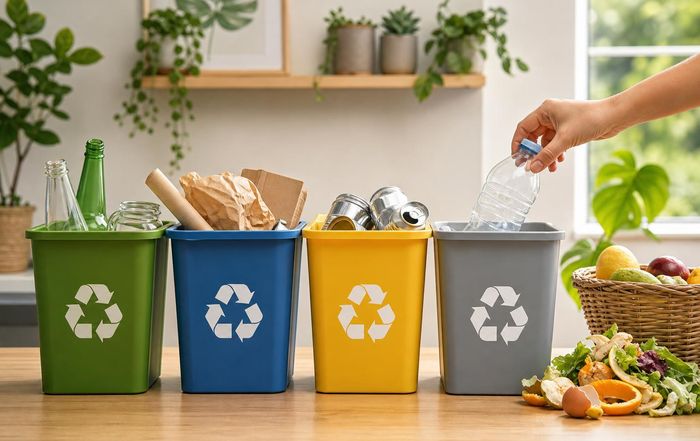
How to Sort Household Recycling More Accurately
Accurate household recycling has become one of the most practical and impactful ways for individuals and families to support a healthier planet, yet confusion about what belongs in which bin continues to undermine recycling systems across the world. Contamination from incorrectly sorted items can cause entire batches of recyclables to be landfilled or incinerated, wasting resources and eroding public trust. As municipal programs, national regulations, and producer responsibilities evolve, the need for clear, reliable guidance has never been greater. The hard-working team here is committed to helping readers move beyond guesswork and toward confident, informed recycling that truly supports a more sustainable future.
In many regions, recycling infrastructure and policies have changed significantly over the past decade, influenced by stricter import rules for waste, advances in sorting technology, and growing awareness of plastic pollution. To navigate this complexity, households benefit from combining local information with globally recognized best practices. By understanding how materials are actually processed, how contamination happens, and how to adapt habits at home, it becomes possible to transform everyday waste management into a cornerstone of sustainable living.
Why Accurate Sorting Matters More Than Ever
Recycling is often promoted as a simple environmental solution, but the reality is more nuanced. When materials are sorted correctly, they can be turned back into valuable products, conserving resources and reducing emissions. When they are sorted poorly, however, contamination can damage equipment, endanger workers, and reduce the quality of recycled materials, making them less attractive to manufacturers. Reports from organizations such as The Recycling Partnership and Ellen MacArthur Foundation indicate that contamination rates in some curbside programs, particularly in North America and Europe, can reach 20-25 percent or higher, meaning a significant portion of what residents place in recycling bins is not actually recyclable in that system.
Learn more about how recycling fits into broader sustainability goals, and it becomes clear that accurate sorting is not merely a matter of civic duty but a key part of a circular economy. According to the U.S. Environmental Protection Agency (EPA), recycling aluminum cans saves up to 95 percent of the energy required to make the same amount of aluminum from raw materials, while recycling paper and cardboard reduces deforestation pressure and water use. The European Environment Agency (EEA) similarly emphasizes that high-quality recycling can significantly cut greenhouse gas emissions compared with landfilling or incineration, provided that contamination is minimized.
However, not all recycling systems are created equal. Different countries, and even neighboring municipalities, accept different materials based on local processing capacity, market demand, and regulatory frameworks. This means that advice found on packaging or on social media may be inaccurate for a specific location. To sort more accurately, households must combine general principles with up-to-date local rules, while also understanding that recycling is only one part of a broader strategy that includes waste prevention, reuse, and, where possible, plastic-free choices.
Understanding the Recycling Stream: From Bin to Reprocessor
To sort recycling effectively, it helps to visualize what happens after materials leave the curb. Most residential recycling in developed countries goes to a materials recovery facility (MRF), where mixed recyclables are separated by type and prepared for sale to reprocessors. Facilities in the United States, the United Kingdom, Germany, Canada, Australia, and many other regions increasingly use a combination of manual labor and automated technologies, such as optical sorters, magnets, eddy current separators, and air jets, to distinguish between paper, metals, different plastics, and glass. Eunomia Research & Consulting and WRAP UK (Waste and Resources Action Programme) have documented how such technologies improve recovery rates when contamination is kept low.
At the MRF, items that do not belong in the stream-such as plastic bags, textiles, electronics, and food-soiled containers-can cause serious problems. Plastic film can wrap around machinery, forcing shutdowns; sharp or hazardous objects pose risks to workers; and heavily contaminated paper or cardboard may be downgraded or discarded. Recycling Council of Ontario and similar organizations in Europe and Asia report that contamination increases costs for municipalities and ultimately for taxpayers, because facilities must spend more time and labor removing unsuitable materials.
Once sorted, clean bales of paper, cardboard, PET bottles, HDPE containers, aluminum cans, and steel cans are sold to mills and manufacturers. These buyers demand consistent quality, and in recent years, countries like China have imposed strict contamination limits on imported recyclables. According to China's National Sword policy, implemented in 2018 and refined in subsequent years, contamination thresholds for many imported scrap materials were set at very low levels, which prompted exporting countries to improve sorting and reduce contamination. This global shift has made accurate household sorting even more important, as entire export markets can be affected by poor quality control.
By understanding this journey, readers of Eco Natur can appreciate why a seemingly small decision-such as rinsing a yogurt pot or keeping plastic film out of the mixed recycling-can influence outcomes in facilities that process thousands of tons of material each month.
Core Principles for Accurate Sorting at Home
Although local rules differ, several core principles apply across most modern recycling systems and can guide households toward more accurate decisions. These principles complement the practical guidance offered in eco-natur resources on recycling and zero-waste lifestyles, and they can be adapted to the specific requirements of cities in Europe, North America, Asia, and beyond.
The first principle is to follow local instructions above all else. Municipal or regional authorities, such as city councils in the United Kingdom, county waste departments in the United States, or regional waste management agencies in Germany and Scandinavia, publish detailed lists of accepted and prohibited items. Official websites, local apps, and printed guides are generally more reliable than packaging claims alone, because they reflect actual processing capabilities. For example, Recycle Now in the UK (recyclenow.com) and Earth911 in North America (earth911.com) provide location-based search tools that help residents identify where and how to recycle specific items.
The second principle is to keep recyclables clean and dry. While rinsing containers does not need to be perfect, removing visible food residues and liquids helps prevent mold, odors, and contamination of paper and cardboard. EPA guidance recommends a quick rinse or scrape for items such as jars, cans, and bottles, and allowing them to dry before placing them in the bin. In climates with high humidity, keeping paper and cardboard away from rain and damp conditions is particularly important, as wet fiber can break down and become unsuitable for recycling.
The third principle is to avoid "wishcycling," the practice of placing questionable items in the recycling bin in the hope that they will be sorted correctly. Waste management experts, including those at National Waste & Recycling Association (NWRA) and GreenBlue's Sustainable Packaging Coalition (sustainablepackaging.org), stress that wishcycling often does more harm than good. Items such as plastic cutlery, coffee pods, flexible packaging, and heavily mixed materials are rarely recyclable in household streams, even if made of plastic or metal, and they can interfere with machinery or contaminate valuable materials.
Finally, households benefit from simplifying their approach by focusing on the major, widely accepted categories: clean paper and cardboard, certain rigid plastics, metal cans, and glass bottles and jars. By learning the specific rules for these categories in their area, individuals can build confidence and minimize errors, while using separate channels for more complex items such as electronics, batteries, textiles, and hazardous waste.
Paper and Cardboard: Avoiding Hidden Contaminants
Paper and cardboard remain among the most commonly recycled materials worldwide, forming an essential part of circular resource use in many economies. The American Forest & Paper Association (AF&PA) and Confederation of European Paper Industries (Cepi) report that recycling rates for paper and cardboard in regions such as Europe and North America are relatively high compared with other materials, although quality concerns persist.
Accurate sorting of paper products begins with distinguishing between clean, dry paper and items that are coated, heavily soiled, or combined with non-paper components. Most curbside programs in the United States, Canada, the United Kingdom, Germany, and other European countries accept newspapers, office paper, magazines, paper mail, cereal boxes, shipping boxes, and similar fiber products, provided they are free of food residues and plastic liners. Eco Natur encourages readers to flatten cardboard boxes to save space and to remove any plastic packaging materials or tape where feasible, though small amounts of tape are generally tolerated by most facilities.
Greasy pizza boxes and heavily food-soiled paper are more controversial. Some municipal programs, including many in the United States and parts of Europe, explicitly exclude heavily stained or greasy cardboard from recycling because oil contamination weakens fiber quality and can cause issues in pulping processes. Other jurisdictions allow lightly soiled boxes if the clean portions are separated from the greasy sections. Because guidance varies, households are advised to check local rules or consult resources such as Recycling Locator tools and the EPA's recycling basics page, and when in doubt, to compost food-soiled cardboard where local composting infrastructure exists.
Coated and composite papers, such as laminated gift wrap, coffee cups with plastic linings, and certain frozen food boxes, present another challenge. Studies by Zero Waste Europe (zerowasteeurope.eu) and National Resources Defense Council (NRDC) note that many fiber-based food and beverage containers are difficult to recycle in standard paper mills because of their plastic or chemical coatings. Some specialized facilities can handle these items, but access remains limited and inconsistent across regions. Household recyclers should look for clear instructions from local authorities or recognized certification labels, such as FSC (Forest Stewardship Council), while avoiding the assumption that all paper-like packaging is automatically recyclable.
By focusing on clean, uncoated paper and cardboard and using composting or residual waste channels for heavily soiled or composite items where appropriate, households can support high-quality fiber recycling and reduce contamination, aligning with eco-natur values of resource efficiency and sustainable living.
Plastics: Navigating Complexity and Reducing Confusion
Plastic recycling remains one of the most complex and debated areas of household waste management. There are many different types of plastic, each with distinct properties and recycling pathways, and not all are accepted in curbside programs. Internationally, plastics are often marked with resin identification codes (numbers 1 through 7 within a triangle), but these symbols indicate polymer type rather than recyclability, and they can be misleading. Organizations such as Greenpeace and Beyond Plastics have highlighted that many plastics labeled with chasing arrows are not actually recycled at scale, especially in regions without robust infrastructure.
In many cities across North America, Europe, and parts of Asia-Pacific, curbside programs commonly accept PET (1) bottles and containers, HDPE (2) bottles and jugs, and sometimes PP (5) containers, particularly for food and household products. Studies by PlasticsEurope (plasticseurope.org) and the Association of Plastic Recyclers (plasticsrecycling.org) confirm that PET and HDPE have relatively well-established recycling markets compared with other resins. However, acceptance of items such as clamshell containers, colored plastics, and rigid mixed plastics varies widely, and some facilities may only want bottles and jugs, not tubs or trays.
Soft plastics and films, including shopping bags, bread bags, shrink wrap, and flexible pouches, are a leading source of contamination in many MRFs. These materials frequently tangle in machinery and are often excluded from curbside collections. In some countries, such as the United Kingdom and Australia, retailers and specialized schemes collect certain types of plastic film at store drop-off points, but these programs have faced challenges and changes, and their availability is not universal. Households should consult local guidance and, where film recycling is not available, consider strategies to reduce plastic use through plastic-free alternatives and reusable packaging.
Another key practice is to avoid combining different materials in a way that complicates sorting. For example, plastic bottles should be emptied and, in most systems, caps can be replaced before recycling if they are made of compatible plastic, as many modern facilities can capture small caps when attached. However, pumps, trigger sprays, and mixed-material closures may need to be removed if local instructions specify. Black plastic, which is difficult for optical sorters to detect, is often not accepted in standard recycling streams, and colored plastics may have lower value than clear ones.
To cut through confusion, households can rely on updated information from trusted organizations such as Recycling Partnership (recyclingpartnership.org) and government agencies, and they can also focus on prevention by choosing products with minimal, recyclable packaging and exploring Eco Natur guidance on plastic-free lifestyles and sustainable design. Over the longer term, policy initiatives such as extended producer responsibility (EPR) and deposit return schemes in Europe, Canada, and parts of the United States aim to make plastic packaging more recyclable and to improve collection rates, but accurate household sorting remains a critical piece of the puzzle.
Glass and Metals: Simple Steps with Significant Impact
Glass and metals, particularly aluminum and steel, are among the most durable and infinitely recyclable materials in the household waste stream. When sorted and processed correctly, they can be recycled repeatedly without significant loss of quality. International Aluminum Institute (world-aluminium.org) and Metal Packaging Europe (metalpackagingeurope.org) highlight that recycling metals saves substantial energy compared with producing them from virgin ore, while FEVE - The European Container Glass Federation (feve.org) notes that recycled glass (cullet) is a key ingredient in new glass production, reducing energy use and raw material extraction.
For household recyclers, the main task is to separate glass and metals according to local system design. Some municipalities use single-stream collections where glass, metals, and other recyclables are mixed, while others collect glass separately to reduce breakage and contamination. In regions where glass is collected in color-separated banks or containers, residents are asked to sort by clear, green, and brown glass to support efficient remanufacturing. In all cases, glass bottles and jars should be emptied and, where possible, rinsed lightly. Metal lids and caps can often be recycled with metal streams, but local instructions may specify whether to leave them attached or place them separately.
Ceramics, pyrex, window glass, mirrors, and light bulbs are typically not accepted with container glass because they have different melting points and compositions, which can cause defects in new glass products. Similarly, aerosol cans, paint cans, and gas cylinders may be subject to special rules due to safety concerns. Official guidance from local authorities or national bodies such as Environment and Climate Change Canada (canada.ca) and UK Environment Agency helps clarify which metal containers are safe for curbside recycling and which require hazardous waste or take-back programs.
By focusing on clean glass bottles and jars, aluminum beverage cans, and steel food cans, and by respecting local safety and contamination rules, households can achieve significant environmental benefits with relatively simple sorting habits, aligned with Eco Natur's broader emphasis on a circular, low-carbon economy.
Organic Waste, Contamination, and the Role of Composting
Food scraps and other organic waste are often overlooked in discussions about recycling, yet they play a crucial role in the overall performance of waste systems. When organic material ends up in recycling bins, it contaminates paper, cardboard, and some plastics, making them harder or impossible to recycle. At the same time, when food waste is landfilled, it decomposes anaerobically and produces methane, a potent greenhouse gas. Organizations such as Project Drawdown (drawdown.org) and Food and Agriculture Organization of the United Nations (FAO) identify food waste reduction and better organics management as major climate solutions.
In many cities in North America, Europe, and parts of Asia-Pacific, separate collection of food waste and yard trimmings for composting or anaerobic digestion is expanding. Municipalities such as San Francisco, Seattle, Milan, and several German and Scandinavian cities have implemented mandatory or strongly encouraged organics programs, which divert biodegradable materials from landfills and produce compost or biogas. For households, participating in these programs requires a parallel sorting habit: keeping food scraps, coffee grounds, tea leaves, and suitable compostable paper out of recycling bins and placing them in dedicated organics containers.
Home composting also offers a practical solution for many families, particularly those with gardens or access to community compost sites. When residents learn to compost fruit and vegetable scraps, yard waste, and certain uncoated paper products, they reduce contamination risks in recycling and return nutrients to the soil, supporting biodiversity and Eco Natur's vision of regenerative living. However, caution is needed with so-called "compostable" plastics and packaging, as these items often require industrial composting conditions and may not break down effectively in home systems; local rules and credible certifications such as OK compost or BPI should be consulted.
By treating organic waste as a valuable resource rather than an afterthought and keeping it separate from recyclables, households contribute to healthier soils, lower emissions, and cleaner recycling streams.
Building Household Systems that Make Accurate Sorting Easy
Accurate recycling is not solely a matter of knowledge; it is also a question of design and habit. Households that create simple, intuitive systems at home are more likely to sort correctly, even on busy days. Eco Natur encourages readers to think of recycling as part of an integrated, sustainable lifestyle, where physical spaces and daily routines support environmental intentions.
One effective strategy is to position multiple clearly labeled containers in convenient locations, such as near the kitchen sink or main waste area. Separate bins for paper/cardboard, plastics and metals, glass (where collected separately), and residual waste help family members and guests make quick, correct decisions. Using labels with both words and images can assist children and visitors, while a small reference chart or magnet on the refrigerator summarizing local rules reduces confusion. Some municipalities and organizations, including Love Food Hate Waste (lovefoodhatewaste.com) and WRAP, provide printable guides that can be adapted for home use.
Regularly reviewing and updating household practices in light of new local guidance or changes in packaging trends is also important. For example, as more products adopt lightweight flexible packaging or multi-material pouches, households may need to shift toward prevention and reuse strategies rather than relying on recycling. Articles on eco-natur about sustainable business and organic food can help consumers choose brands that prioritize recyclable, minimal, or refillable packaging, aligning purchasing decisions with waste reduction goals.
Education and shared responsibility within the household enhance success. Involving children in sorting, explaining why certain items cannot be recycled, and celebrating improvements can turn recycling from a chore into a shared commitment. For multi-family buildings or communities, collaboration with neighbors and building managers to ensure clear signage, adequate bin capacity, and regular feedback can dramatically improve sorting accuracy and reduce contamination, as documented in case studies by ICLEI - Local Governments for Sustainability (iclei.org).
Connecting Accurate Recycling to a Broader Sustainable Future
Sorting household recycling more accurately is a practical, achievable step that individuals and families across the world can take to support cleaner environments, more efficient resource use, and a more resilient circular economy. Yet it is only one part of a larger transformation that includes reducing unnecessary consumption, embracing reuse and repair, supporting renewable energy, protecting wildlife, and promoting health through cleaner air, water, and food systems.
In recent years, governments, businesses, and civil society organizations have intensified efforts to align waste management with climate and biodiversity goals. Initiatives such as the United Nations Environment Programme's (UNEP) work on a global plastics treaty, the European Union's Circular Economy Action Plan, and extended producer responsibility schemes in countries from Canada and Germany to South Korea and Japan are reshaping how products are designed, sold, and recovered. These policy shifts, combined with technological innovations in sorting and recycling, create new opportunities for households to participate in meaningful change.
For climate caring individuals here, accurate recycling serves as a bridge between personal values and systemic transformation. By taking the time to learn local rules, clean and separate materials properly, avoid wishcycling, and integrate composting and waste prevention, individuals not only reduce their own environmental footprint but also send a clear signal to governments and companies that high-quality, transparent recycling systems matter. Over time, this collective engagement can help drive improvements in infrastructure, product design, and regulatory frameworks, contributing to a future where resources are conserved, ecosystems are respected, and communities thrive.
As the world continues to grapple with the intertwined challenges of climate change, pollution, and resource depletion, the simple act of sorting a bin correctly becomes a quiet yet powerful expression of care. Through clear guidance, practical tools, and an unwavering commitment to evidence-based sustainability, we aim to empower every household to turn that daily action into lasting positive impact.
