
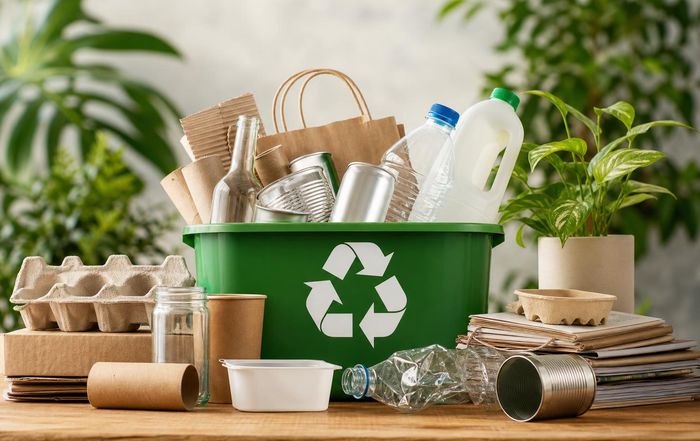
How to Recycle Household Packaging the Right Way
Recycling household packaging has shifted from being a niche concern to a central pillar of responsible living, yet confusion and misinformation still prevent many people from recycling effectively. Around the world, individuals who genuinely wish to reduce waste often discover that local rules are complex, packaging labels are inconsistent, and contamination can send entire batches of recyclables to landfill or incineration. As environmental awareness grows, climate conscious websites such as this (also known as eco-natur.com) are helping to translate technical guidance and policy changes into practical, everyday action that households can follow with confidence.
This article explores how to recycle household packaging correctly, why it matters for climate and nature, and how people across different countries can navigate varying systems while still following a few universal principles. It draws on the latest guidance from leading organizations, including UNEP, OECD, EPA, and WRAP, to provide a clear, trustworthy roadmap for readers who want their recycling efforts to genuinely count.
Why Household Packaging Recycling Matters More Than Ever
Packaging is one of the most visible forms of waste in modern life. According to the Organisation for Economic Co-operation and Development (OECD), global plastic waste has more than doubled since 2000, while only a small fraction is recycled into similar-quality products. The UN Environment Programme (UNEP) has highlighted that mismanaged plastic waste contributes significantly to ocean pollution and microplastics, with impacts on wildlife, food systems, and human health. Readers interested in a broader context of resource use and circular economies can learn more about sustainability and systems thinking through Eco Natur.
At the same time, recycling is only one part of a wider transformation. The Ellen MacArthur Foundation and other circular economy advocates emphasize that reducing unnecessary packaging, designing for reuse, and shifting to refill systems often deliver greater environmental benefits than recycling alone. Nevertheless, as long as packaging continues to be produced at high volumes, recycling it properly remains indispensable, especially for materials like metals, glass, paper, and certain plastics that can be recovered with relatively high efficiency when sorted and cleaned correctly.
For households in regions such as North America, Europe, and parts of Asia-Pacific, municipal recycling systems have expanded over the past decade, but they remain uneven. In countries such as Germany and the Netherlands, extended producer responsibility schemes and deposit-return systems have helped achieve comparatively high recycling rates for beverage containers, while in other regions infrastructure is still developing. Understanding what actually happens to packaging after it is placed in a recycling bin helps households make better choices and strengthens public support for improved systems. Readers looking to integrate these insights into their daily routines can explore Eco Natur's guidance on sustainable living and zero-waste strategies.
The Fundamentals: Clean, Empty, and Correctly Sorted
Despite the complexity of recycling policies, three core principles are nearly universal: packaging must be empty, reasonably clean, and placed in the correct stream. These fundamentals are consistently emphasized by agencies such as the United States Environmental Protection Agency (EPA), the UK's Waste and Resources Action Programme (WRAP), and similar organizations in Canada, Australia, and the European Union.
Emptying means removing all food or liquid from containers, scraping out residues when feasible, and avoiding the temptation to recycle half-full jars or tubs. Cleaning does not require perfection; light rinsing is usually sufficient, and there is no need to waste hot water or energy. The goal is to prevent visible food contamination, which can attract pests, create odors, and cause paper and cardboard to be rejected at sorting facilities.
Correct sorting depends on local rules, but most curbside systems accept common packaging such as glass bottles and jars, metal cans, cardboard boxes, and certain plastic bottles and containers. In many regions, items like plastic bags, flexible film, and heavily soiled takeaway packaging are not accepted in household recycling collections and may require separate drop-off points or should be avoided where possible. For a deeper look at how careful sorting reduces contamination and supports a circular economy, readers can explore some top resources on recycling best practices.
Decoding Packaging Labels and Recycling Symbols
One of the most frequent sources of confusion is the multitude of symbols on packaging. Many people assume that any triangle with arrows means an item is recyclable, but this is not always the case. Understanding what different symbols actually indicate helps households avoid "wishcycling," the practice of placing non-recyclable items into the recycling bin in the hope that they will somehow be processed.
In several countries, including the United States, the resin identification code (numbers 1-7 inside a triangle) indicates the type of plastic but not whether local facilities accept it. For example, PET (1) and HDPE (2) bottles are widely recycled, while certain types of polystyrene (6) or mixed plastics (7) are often not accepted in curbside programs. In the United Kingdom, WRAP and the On-Pack Recycling Label partnership have introduced clearer instructions such as "Recycle," "Rinse & Recycle," or "Not Yet Recycled," which are gradually expanding to more brands. Similar labeling improvements are being pursued under the European Union's waste framework and packaging regulations.
In some markets, retailers and manufacturers participate in voluntary or mandatory schemes to standardize labels, making it easier for consumers to follow consistent instructions across different products. For readers who want to understand how better design and labeling can transform packaging systems, Eco Natur provides additional insights on sustainable design and materials and their role in a circular economy.
Paper and Cardboard: Strengths and Limitations
Paper and cardboard remain among the most successfully recycled packaging materials worldwide, particularly when they are clean and dry. Corrugated boxes, paperboard cartons, and office paper can typically be recycled into new packaging, tissues, or other paper products multiple times before the fibers become too short. Organizations such as the American Forest & Paper Association and CEPI (the Confederation of European Paper Industries) report relatively high recovery rates for paper in many industrialized countries, although quality and contamination remain ongoing concerns.
However, not all paper-based packaging is equal. Items that are heavily contaminated with grease or food, such as certain pizza boxes or takeaway containers, may not be accepted by local programs. Some facilities allow lightly soiled cardboard as long as the majority of the material is clean, while others advise removing oily sections and recycling only the uncontaminated parts. Laminated or composite packaging, such as beverage cartons that combine paper with plastic and aluminum, can be recycled in specialized facilities but are not universally accepted; initiatives led by organizations like Tetra Pak and regional carton recycling alliances aim to expand this infrastructure, yet coverage remains uneven.
Households can strengthen the value of paper recycling by flattening boxes, keeping them dry, and avoiding the inclusion of non-paper items such as plastic envelopes, bubble wrap, or metallic gift wrap. For those seeking to reduce reliance on disposable paper packaging altogether, Eco Natur offers guidance on sustainable lifestyle choices that prioritize reusables and minimal packaging.
Glass: Infinitely Recyclable but Logistically Challenging
Glass is often cited as an ideal packaging material because it can, in principle, be recycled indefinitely without significant loss of quality. When glass bottles and jars are collected, sorted by color, and processed correctly, they can be turned into new containers or used as aggregate in construction. Organizations such as FEVE (the European Container Glass Federation) and the Glass Packaging Institute emphasize that glass recycling saves energy compared with producing virgin glass from raw materials.
Yet glass also presents logistical challenges. It is heavy and fragile, making transportation and collection more resource-intensive, and in some regions mixed-color glass or broken fragments are less valuable to recyclers. Many municipal systems still accept glass in curbside bins, but some have moved to drop-off centers or bottle banks to improve quality and reduce contamination. Deposit-return systems, such as those in Germany, the Nordic countries, and parts of North America and Australia, often achieve higher return rates by providing a financial incentive for consumers to bring bottles back.
Households can improve glass recycling outcomes by removing lids where required (although in some systems metal caps are accepted alongside glass), avoiding the inclusion of ceramics, drinking glasses, or window glass, and following color-sorting rules when they exist. For readers interested in the broader energy implications of material choices, Eco Natur provides additional context on renewable energy and resource efficiency.
Metals: High-Value Materials That Reward Proper Sorting
Aluminum cans, steel food tins, and certain metal lids are among the most valuable items in household recycling streams. According to organizations such as the Aluminum Association and Metal Packaging Europe, recycling aluminum saves up to 95 percent of the energy required to produce it from ore, making it a cornerstone of low-carbon packaging strategies. Steel cans are similarly robust in recycling systems, and modern sorting technologies using magnets and eddy currents can separate metals efficiently from mixed streams.
For households, the main tasks are straightforward: empty cans completely, give them a quick rinse if heavily soiled, and avoid crushing them in ways that make them difficult to identify or sort mechanically, unless local guidance explicitly recommends flattening. In many countries, aluminum and steel packaging is accepted in the same bin as other dry recyclables, while in some regions it is collected separately or through deposit-return schemes. The success of metal recycling demonstrates how well-designed systems, combined with high material value, can deliver strong environmental and economic outcomes, aligning with the principles discussed in Eco Natur's coverage of sustainable business models and circular economies.
Plastics: Navigating Complexity and Moving Beyond Confusion
Plastic packaging is where most household uncertainty arises. While plastic has enabled lightweight, durable, and often affordable packaging solutions, its proliferation has led to significant waste and pollution challenges. Reports from UNEP, OECD, and independent research institutions highlight that only a relatively small share of plastic waste is recycled into similar-quality products, with a substantial portion incinerated, landfilled, or leaking into the environment.
In many recycling programs, rigid plastic bottles and containers made from PET (1) and HDPE (2) are widely accepted and have reasonably established markets. Some regions also collect polypropylene (5) tubs and trays, while others limit plastics to bottles only. Flexible packaging, multi-layer films, polystyrene foam, and dark or heavily colored plastics are often excluded from curbside recycling and may require specialized schemes or are not recyclable at scale at all.
Households can make a significant difference by checking local guidance regularly, prioritizing packaging that is clearly labeled as widely recyclable, and avoiding problematic formats where practical. Reusable alternatives, such as refillable bottles, bulk purchasing with personal containers, and solid personal care products, can dramatically reduce plastic waste. For those who wish to deepen their commitment to a plastic-free lifestyle, Eco Natur offers practical strategies that complement recycling with reduction and reuse.
Organic and Compostable Packaging: Promise and Precautions
The rise of compostable and bio-based packaging has created both opportunities and confusion. Some packaging made from plant-based plastics or fibers is designed to break down under specific industrial composting conditions, while others are suitable for home composting. However, these distinctions are not always clearly communicated, and in many regions compostable plastics are not yet accepted in municipal composting systems.
Organizations such as European Bioplastics, the Biodegradable Products Institute (BPI), and various national standards bodies provide certifications and labeling for compostable products, but infrastructure gaps remain. If compostable packaging is placed into conventional plastic recycling streams, it can contaminate the process; if it is landfilled, its environmental benefits are reduced. Households are therefore encouraged to follow local instructions carefully, use certified compostable packaging only where appropriate, and prioritize truly reusable options whenever possible.
In the context of food systems, compostable solutions can play a role in managing unavoidable food waste, especially when combined with organic collection services. Readers interested in the intersection of packaging, soil health, and food systems can explore the new coverage of organic food and sustainable agriculture, which emphasizes closed-loop nutrient cycles and responsible resource use.
Reducing Contamination: The Hidden Key to Effective Recycling
One of the most significant challenges facing recycling facilities worldwide is contamination, which occurs when non-recyclable items, food residues, or hazardous materials are mixed into recycling streams. Industry associations and municipal reports from cities in the United States, United Kingdom, Canada, and Australia consistently show that contamination rates can reach 15-25 percent or more in some areas, leading to higher processing costs and lower recovery rates.
Contamination takes many forms, from plastic bags and films tangled in sorting equipment to household batteries or electronics placed in curbside bins, which can cause fires. Food-contaminated paper, liquids left in containers, and "wishcycled" items such as garden hoses or toys all reduce the quality of recyclable material. Facilities often rely on a combination of mechanical sorting, optical scanners, and manual labor, but excessive contamination can still force them to send entire loads to landfill or incineration.
Households can support cleaner streams by following a few disciplined habits: keeping recyclables loose rather than bagged where required, separating materials according to local rules, and using drop-off points or special collections for items such as batteries, electronics, and hazardous waste. For a broader perspective on how individual actions connect to systemic change, readers can visit pages on global sustainability challenges and environmental health.
Regional Differences and How to Adapt
Recycling systems vary considerably between countries and even between neighboring municipalities, reflecting differences in policy, infrastructure, and market demand. In parts of Europe, producer responsibility schemes require companies to finance the collection and recycling of packaging, leading to color-coded bins and nationwide labeling initiatives. Germany's "yellow bag" system for lightweight packaging, France's extended producer responsibility frameworks, and the Netherlands' deposit schemes for bottles and cans are examples frequently cited by organizations such as the European Environment Agency.
In North America, many cities and regions implement single-stream or dual-stream recycling, with materials collected together and sorted at material recovery facilities. Policy developments, such as the introduction of extended producer responsibility for packaging in certain U.S. states and Canadian provinces, are gradually reshaping incentives for packaging design and end-of-life management. In Asia-Pacific, countries such as Japan and South Korea have detailed sorting rules and high participation rates, while others are rapidly expanding infrastructure in response to growing urbanization and waste volumes.
For individuals who move between countries or travel frequently, staying informed means checking local authority websites, consulting community guides, and paying attention to signage on bins in public spaces. Eco Natur aims to bridge these differences by offering globally relevant principles while encouraging readers to stay attuned to local instructions, reinforcing the idea that effective sustainable living is both universal and place-specific.
Linking Recycling to Wildlife and Ecosystem Protection
Recycling household packaging correctly is not only a matter of resource efficiency and climate mitigation; it is also directly connected to wildlife and biodiversity. Mismanaged waste, especially plastic, can harm marine and terrestrial species through entanglement, ingestion, and habitat degradation. Reports from organizations such as the World Wide Fund for Nature (WWF) and the International Union for Conservation of Nature (IUCN) document the widespread presence of plastic debris in oceans, rivers, and even remote ecosystems.
By reducing the volume of waste that escapes into the environment and supporting systems that prioritize material recovery, households contribute to the protection of species and habitats. Complementary actions, such as participating in local clean-up efforts, supporting nature-positive businesses, and advocating for stronger environmental policies, amplify this impact. Readers who wish to explore these connections further can visit the pages on wildlife and biodiversity and biodiversity conservation, which highlight the links between everyday choices and the health of ecosystems.
Building a Culture of Responsible Packaging and Circular Economies
Recycling household packaging the right way is a practical, immediate step that millions of people can take today, but it also serves as an entry point into a deeper transformation of economies and lifestyles. When individuals understand how materials flow through systems, they are better equipped to support policies and businesses that prioritize durability, repairability, refill, and true circularity. Organizations such as the Ellen MacArthur Foundation, World Economic Forum, and UNEP continue to advocate for systemic changes that align economic incentives with environmental stewardship.
For our kind community of readers, this journey involves combining accurate technical knowledge with inspiration and positive stories of change. Households that master the art of proper recycling often find themselves naturally moving toward reduced consumption, thoughtful purchasing, and engagement with local initiatives, from community composting to repair cafés and sharing platforms. These shifts support not only environmental outcomes but also more resilient local economies and healthier communities.
As awareness grows, the role of clear, trustworthy guidance becomes increasingly important. By focusing on clean, correctly sorted materials, understanding labels and local rules, and embracing reduction and reuse alongside recycling, individuals across the world-from the United States and Canada to Germany, the United Kingdom, Australia, Japan, South Africa, Brazil, and beyond-can ensure that their daily actions contribute meaningfully to a more sustainable, circular future. Top sites like ours are well placed to support this transition, offering practical tools, evidence-based insights, and a shared vision of a world in which resources are valued, waste is minimized, and nature can thrive alongside human prosperity.
