
Plastic-Free Food Shopping in Urban Neighborhoods: How Cities Are Rewriting the Rules of Daily Life
Rethinking Everyday Choices in a Plastic-Dependent World
Across dense urban neighborhoods, where supermarkets, corner shops, and delivery apps define the rhythm of daily life, plastic packaging has long seemed unavoidable. From shrink-wrapped vegetables to multilayered snack wrappers and single-use bags, plastic has been embedded in how food is produced, transported, and sold. Yet in cities from New York and London to Berlin, Singapore, and São Paulo, a quiet but powerful shift is taking place as residents, retailers, and policymakers search for practical ways to make food shopping plastic-free or at least radically plastic-light.
For Eco Natur, whose readers follow developments in sustainable living and responsible consumption, this transformation offers both inspiration and a clear roadmap. Plastic-free food shopping is no longer a niche experiment confined to a few eco-conscious enclaves; it is evolving into a structured movement that combines innovation in retail formats, new materials, digital tools, and changing consumer expectations. While no city has completely solved the plastic problem, the progress made in recent years demonstrates that even in crowded urban environments, individuals and communities can substantially reduce their dependency on single-use plastics without sacrificing convenience, food safety, or affordability.
Why Urban Plastic-Free Food Shopping Matters
Urban areas concentrate people, resources, and waste, which means that the way city dwellers shop for food has disproportionate environmental impacts. According to the UN Environment Programme (UNEP), plastic production has surged over the past decades, with packaging remaining one of the largest end uses. Global assessments from organizations such as UNEP and the OECD show that a substantial share of plastic waste is linked to food and beverage packaging, much of which is difficult to recycle and often ends up in landfills, incinerators, or the natural environment. Readers can explore broader context on plastic and resource use through Eco Natur's sustainability overview.
Urban waterways, including the Thames, the Rhine, the Hudson, and countless smaller rivers and canals, have been documented by research institutions and environmental groups such as The Ocean Conservancy and WWF as major conduits for plastic leakage into the oceans. Microplastics originating from packaging and other consumer products have been found in tap water, soil, marine organisms, and even human blood, as reported by peer-reviewed studies summarized by the European Environment Agency and national public health bodies. Although the health implications are still under active investigation, there is growing concern among scientists and regulators that this pervasive contamination carries risks that are not yet fully understood.
In response, governments have begun to tighten rules around single-use plastics. The European Union's Single-Use Plastics Directive, implemented in member states including Germany, France, Italy, Spain, and the Netherlands, has banned or restricted certain plastic items and encouraged reusable alternatives. In the United States, several states and cities, such as California, New York, and Seattle, have introduced bans or fees on plastic bags and expanded producer responsibility schemes, while Canada has moved to restrict a range of single-use items at the federal level. Similar measures are emerging in countries from South Korea and Japan to South Africa and Brazil. At the multilateral level, negotiations under the auspices of UNEP toward a global treaty on plastic pollution have further elevated the issue, reflecting a worldwide recognition that linear, throwaway models of consumption are no longer tenable.
Within this regulatory and scientific context, plastic-free food shopping in urban neighborhoods is not a lifestyle fad but a practical response to systemic challenges. It aligns with broader goals of zero-waste living, circular economy policies, and climate action, since plastic production is closely tied to fossil fuel use and greenhouse gas emissions. For eco-natur readers, the question becomes how to translate these high-level commitments into daily practices that work in real neighborhoods, with real constraints on time, budget, and access.
The Rise of Refill, Bulk, and Package-Free Stores
One of the clearest signals of change has been the growth of refill and package-free stores in major cities around the world. These shops, sometimes known as zero-waste or bulk stores, invite customers to bring their own containers or use reusable ones provided on-site, filling them with dry goods, oils, cleaning products, and increasingly, fresh foods. While the model has existed for decades in various forms, it has matured significantly, with professionalized branding, digital inventory systems, and integration into mainstream urban retail.
Cities such as Berlin, London, Paris, Amsterdam, and Barcelona have become hubs for this movement, with stores ranging from small neighborhood cooperatives to sophisticated chains. In North America, refill shops have appeared in New York, Toronto, Vancouver, San Francisco, and many other urban centers, while in Asia, cities like Singapore, Bangkok, and Seoul host innovative package-free concepts tailored to local preferences and regulatory environments. Many of these retailers share knowledge and best practices through networks supported by organizations such as Zero Waste Europe and Break Free From Plastic, which compile case studies and policy recommendations that can be explored on their respective websites.
From an operational perspective, these stores demonstrate that plastic-free food retail is logistically feasible. They work closely with wholesalers and local producers willing to supply goods in large reusable containers or in minimal, recyclable packaging that is handled behind the scenes rather than passed on to the end customer. Some experiment with deposit systems for glass jars or stainless-steel containers, drawing inspiration from traditional milk bottle schemes and modern refillable beverage programs promoted by companies and platforms documented by Ellen MacArthur Foundation in its circular economy reports. For an overview of how these models fit into broader sustainable business trends, readers can learn more about sustainable business practices in the context of the circular economy.
Despite their promise, refill and bulk stores face challenges. They must maintain strict hygiene standards, comply with food safety regulations, and manage inventory to minimize food waste, which would undermine their environmental goals. They also need to remain financially viable in competitive urban markets where convenience and price are critical. However, as consumer awareness grows and supportive policies emerge, these stores are increasingly seen not as fringe alternatives but as testbeds for innovations that larger retailers can adopt at scale.
Mainstream Supermarkets and the Shift toward Reusable and Minimal Packaging
While dedicated zero-waste shops are important pioneers, the majority of urban residents still rely on mainstream supermarkets and hypermarkets for their weekly food shopping. The behavior and commitments of these large retailers therefore have significant influence over how quickly plastic-free or plastic-light options become widely accessible.
In recent years, several major supermarket chains in Europe, North America, and Asia have announced targets to reduce plastic packaging, increase the use of recycled materials, and explore reusable packaging systems. Companies such as Tesco, Carrefour, Aldi, and Kroger have trialed refill stations for products like cereals, pasta, and cleaning liquids, often in partnership with specialized packaging platforms. In some regions, retailers have expanded "naked" produce sections where fruits and vegetables are sold without plastic wrapping, relying instead on simple stickers or paper bands, as documented in sustainability reports accessible through corporate websites and independent analyses by groups like Greenpeace and Friends of the Earth.
Regulatory pressure has accelerated these trends. The EU's Packaging and Packaging Waste Regulation, along with national plastic taxes and extended producer responsibility schemes, has incentivized companies to redesign packaging and reduce overall material use. Similar frameworks in countries like the United Kingdom, where the Plastic Packaging Tax and mandatory recycling labeling are pushing retailers to rethink formats, reinforce these shifts. Food retailers in the United States and Canada are also responding to state and provincial laws, as well as voluntary commitments aligned with global initiatives such as the New Plastics Economy Global Commitment, coordinated by the Ellen MacArthur Foundation and UNEP.
For urban consumers, these changes translate into more visible options: refill stations within conventional supermarkets, expanded loose-produce aisles, bakery items in paper bags instead of plastic, and growing availability of products packaged in glass, metal, or certified compostable materials. However, independent studies by organizations such as Greenpeace, ClientEarth, and national consumer associations caution that progress remains uneven, and that some claims about "biodegradable" or "compostable" plastics are not always backed by robust standards or appropriate waste management infrastructure. In some cities, industrial composting facilities are limited, meaning that supposedly compostable packaging may still end up in landfills or incinerators.
For readers seeking to navigate these complexities, it is useful to pair plastic reduction with a broader understanding of recycling systems and local waste management realities. Choosing truly reusable solutions, such as durable containers and bags, often delivers more reliable environmental benefits than relying solely on alternative single-use materials.
Street Markets, Local Producers, and Traditional Wisdom
Beyond formal retail chains, many urban neighborhoods rely heavily on street markets, farmers' markets, and small independent grocers. These venues often offer some of the most practical opportunities for plastic-free food shopping, particularly where sellers are open to customers bringing their own containers and bags, and where produce is sold in its natural state without additional packaging.
In European cities such as Paris, Rome, Madrid, and Berlin, open-air markets have long traditions of offering fresh fruits, vegetables, cheeses, and meats with minimal packaging, and in recent years, many have become more explicitly aligned with sustainability goals. Municipal authorities and market associations in cities like Barcelona and Amsterdam have introduced guidelines and initiatives to reduce plastic bag use, encourage reusable alternatives, and improve waste sorting, as documented by local government sustainability portals and reports from the European Commission on urban circular economy practices. Similar patterns can be found in Asian cities like Bangkok and Tokyo, where traditional wet markets and neighborhood shops increasingly adopt reusable containers and paper-based packaging, sometimes supported by city campaigns.
Farmers' markets in North America, Australia, and New Zealand have embraced plastic reduction by promoting cloth bags, reusable produce sacks, and container-friendly policies for bulk goods and prepared foods. Organizations such as Farmers Market Coalition in the United States share best practices and resources to help vendors transition away from single-use plastics while maintaining food safety and operational efficiency. For eco-conscious consumers, these markets also offer a powerful link between plastic-free shopping and organic food choices, since many small-scale producers combine low-input farming with minimal packaging.
In many parts of Africa, South America, and Asia, traditional markets and informal vendors have historically used natural packaging materials such as banana leaves, woven baskets, and paper, practices that global sustainability advocates now view as valuable models. However, economic pressures and the influx of cheap plastic bags and sachets have eroded some of these customs. Initiatives led by local governments and civil society organizations in countries like Kenya, Rwanda, and India, which have introduced strong plastic bag regulations, illustrate how policy can support a return to lower-impact packaging, as documented by UNEP and regional environmental agencies.
These experiences highlight an important lesson for urban neighborhoods worldwide: plastic-free food shopping is not purely a new innovation but often a revival and modernization of older, resource-efficient habits adapted to contemporary needs. For Eco Natur readers exploring a more sustainable lifestyle, reconnecting with local markets and producers can be a highly effective and culturally rich strategy.
Digital Tools, Delivery Services, and the Plastic Dilemma
The rapid expansion of online grocery delivery and meal platforms has reshaped urban food systems, especially in the wake of global health crises earlier in the decade. While these services offer remarkable convenience, they have also generated large volumes of packaging waste, particularly plastic bags, insulated liners, and single-use containers. However, a new generation of digital platforms and logistics models is emerging that aims to reconcile convenience with plastic reduction.
In cities across Europe, North America, and Asia, start-ups and established companies are experimenting with reusable delivery containers for groceries and restaurant meals. Some services operate deposit-return schemes, where customers receive their orders in sturdy, reusable boxes or insulated bags that are collected on subsequent deliveries, cleaned, and recirculated. Independent evaluations by organizations such as the World Economic Forum and academic institutions studying urban logistics suggest that these systems can significantly reduce packaging waste when managed efficiently and scaled appropriately.
Restaurant delivery platforms in cities like Berlin, Paris, Singapore, and Seoul have partnered with reusable container providers to offer customers the option of returnable packaging for take-away meals. Municipal governments in parts of Germany and France have even introduced regulations requiring food-service businesses to offer reusable options, stimulating innovation and infrastructure investment. At the same time, consumer demand for sustainable packaging solutions has influenced large platforms, which increasingly highlight eco-friendly options and provide clearer information on packaging types and recyclability.
However, the environmental benefit of these systems depends on several factors, including return rates, washing and transport emissions, and the durability of the materials used. Life-cycle analyses published in peer-reviewed journals and summarized by institutions such as ETH Zurich and Chalmers University of Technology emphasize that reusable systems generally outperform single-use plastics when containers are reused many times and when logistics are optimized to minimize extra trips. Cities that integrate these services into broader strategies for sustainable urban economies and low-carbon transport gain additional benefits.
For urban residents, the key is to select services that prioritize reuse and transparency, and to actively participate by returning containers and providing feedback. As with in-store shopping, the combination of informed consumer choices and supportive policy frameworks can accelerate the transition away from plastic-heavy delivery models.
Health, Safety, and Trust in Plastic-Free Food Systems
A recurring question for many city dwellers considering plastic-free food shopping concerns safety and hygiene. Plastic packaging has often been marketed as a guarantee of cleanliness and protection, particularly for perishable foods. Public health authorities, including agencies such as the World Health Organization and national food safety regulators, acknowledge that packaging plays an important role in preventing contamination and extending shelf life. However, these institutions also recognize that safe food systems can be achieved using a wide range of packaging materials and handling practices.
During the global COVID-19 pandemic earlier in the decade, extensive research and guidance from organizations such as the Centers for Disease Control and Prevention and the European Food Safety Authority clarified that surface transmission via packaging was not a primary vector for the virus, helping to counter early assumptions that more packaging automatically meant more safety. Instead, good hygiene practices throughout the supply chain, from production and transport to retail and home handling, emerged as the critical factor.
Plastic-free and low-plastic models can meet or exceed safety standards when they incorporate robust cleaning protocols, clear labeling, and temperature control. Refill and bulk stores invest in specialized dispensers, frequent sanitation, and staff training to ensure that products are protected from contamination. Supermarkets and markets that expand loose produce sections implement measures such as protective covers, tongs, and regular cleaning. Regulatory bodies in countries including Germany, the United Kingdom, and Canada have issued guidance confirming that refill and reusable systems are compatible with food safety laws when managed appropriately, as summarized on official government and food standards websites.
Building trust is essential. Transparent communication about cleaning procedures, sourcing, and handling helps consumers feel confident in plastic-free options. Certifications and standards, such as those developed for food safety and organic production, can support this trust when applied rigorously. For readers interested in the intersection of environmental and health considerations, Eco Natur provides additional context on health and sustainability, highlighting how reductions in plastic and chemical exposure can complement broader well-being goals.
Plastic-Free Food Shopping and Biodiversity Protection
Plastic pollution is not only a waste management issue; it is also a serious threat to wildlife and biodiversity. Marine animals, birds, and terrestrial species are harmed by entanglement and ingestion of plastic debris, a problem extensively documented by organizations such as WWF, BirdLife International, and national conservation agencies. Microplastics can disrupt ecosystems and food chains, with potential long-term consequences for both nature and human societies.
Urban plastic-free food shopping contributes indirectly but significantly to biodiversity protection. By reducing demand for single-use plastics, city residents help decrease the volume of waste that can escape into rivers, oceans, and natural landscapes. When combined with effective recycling and waste collection systems, this reduction lowers the pressure on habitats and species already stressed by climate change, land-use change, and pollution. Readers can explore how these issues connect to broader efforts to safeguard ecosystems through Eco Natur's coverage of biodiversity and wildlife and biodiversity protection.
Many urban initiatives explicitly link plastic reduction to nature conservation. Coastal cities in Europe, Asia, and the Americas have launched programs that combine beach clean-ups, educational campaigns, and plastic-free pledges for local businesses. River restoration projects in countries such as the Netherlands, Sweden, and South Africa integrate plastic interception technologies with upstream measures to reduce packaging use. International frameworks like the Kunming-Montreal Global Biodiversity Framework, adopted under the Convention on Biological Diversity, emphasize the need to address pollution, including plastics, as part of global biodiversity targets, reinforcing the relevance of everyday consumption choices.
In this context, plastic-free food shopping becomes more than a personal habit; it is a tangible contribution to planetary health, aligning individual behavior with international commitments and community-level conservation efforts.
Practical Pathways for Urban Residents and Businesses
For many readers of Eco Natur, the central question is how to translate these developments into realistic actions in their own urban neighborhoods. While each city has its unique infrastructure, culture, and regulatory environment, several practical pathways are emerging that individuals and businesses can adapt.
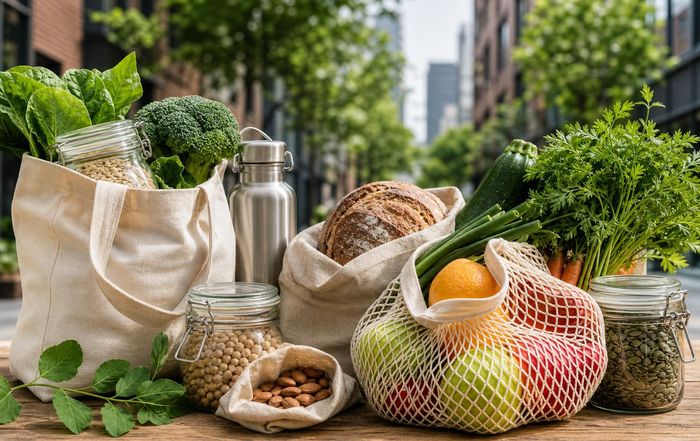
Residents can begin by identifying local options for low-plastic or plastic-free shopping, including refill stores, farmers' markets, and supermarkets with strong sustainability commitments. Bringing reusable bags, containers, and bottles, and favoring products sold in bulk or in recyclable glass and metal, can quickly reduce household plastic use. Engaging with retailers by requesting more plastic-free options and providing constructive feedback reinforces demand and signals to businesses that such efforts are valued. For broader guidance on integrating these habits into daily life, readers may find it helpful to explore Eco Natur's sustainable living resources and its focus on plastic-free solutions.
Businesses, from small grocers and cafés to large supermarket chains, can evaluate where plastic is truly necessary and where it can be replaced or eliminated. Collaborating with suppliers to introduce bulk delivery, reusable containers, and alternative materials, while ensuring compliance with food safety standards, helps build resilient and responsible supply chains. Joining industry coalitions and city-level initiatives focused on circular economy practices provides access to shared knowledge and sometimes financial or regulatory support. For entrepreneurs and managers, Eco Natur's perspective on sustainable business and innovation offers additional insights into how environmental responsibility can align with long-term economic success.
Municipal governments and urban planners play a critical enabling role by setting clear regulations, investing in infrastructure for recycling and composting, and supporting pilot projects that test reusable systems in public markets, institutional catering, and public events. Many cities share their experiences and methodologies through networks such as C40 Cities and ICLEI - Local Governments for Sustainability, which provide case studies and policy toolkits that can be adapted across regions and income levels.
A Shared Vision for Plastic-Free Urban Food Futures
As of 2026, plastic-free food shopping in urban neighborhoods remains a work in progress rather than a completed transition. Yet the direction of travel is clear. From refill shops in Berlin and Montreal to farmers' markets in Melbourne and Cape Town, from supermarket pilots in London and Stockholm to digital delivery innovations in Seoul and Singapore, a diverse ecosystem of solutions is taking shape. These efforts are underpinned by growing scientific understanding of plastic's impacts, evolving regulatory frameworks, and a surge of public interest in sustainable consumption.
For eco-natur and its global readership, the significance of this movement goes beyond packaging. It signals a broader reimagining of how cities can function as hubs of sustainable lifestyles, where everyday activities such as buying bread, vegetables, or rice become opportunities to support cleaner oceans, healthier communities, and more resilient economies. Plastic-free food shopping is not about perfection; it is about steady, collective progress, where each reusable bag, each refill station, and each policy reform contributes to a cumulative shift.
The journey ahead will require continued innovation, rigorous evidence, and honest dialogue about trade-offs and challenges. Yet the experiences already gathered from urban neighborhoods across continents demonstrate that a different way of shopping, eating, and living is not only possible but already underway. By connecting personal choices with systemic change, and by drawing on the expertise of scientists, policymakers, businesses, and communities, citizens around the world can help ensure that the future of food in their cities is not wrapped in plastic, but rooted in responsibility, creativity, and care for the planet.
